


A 2026 Guide by Sellingantiques
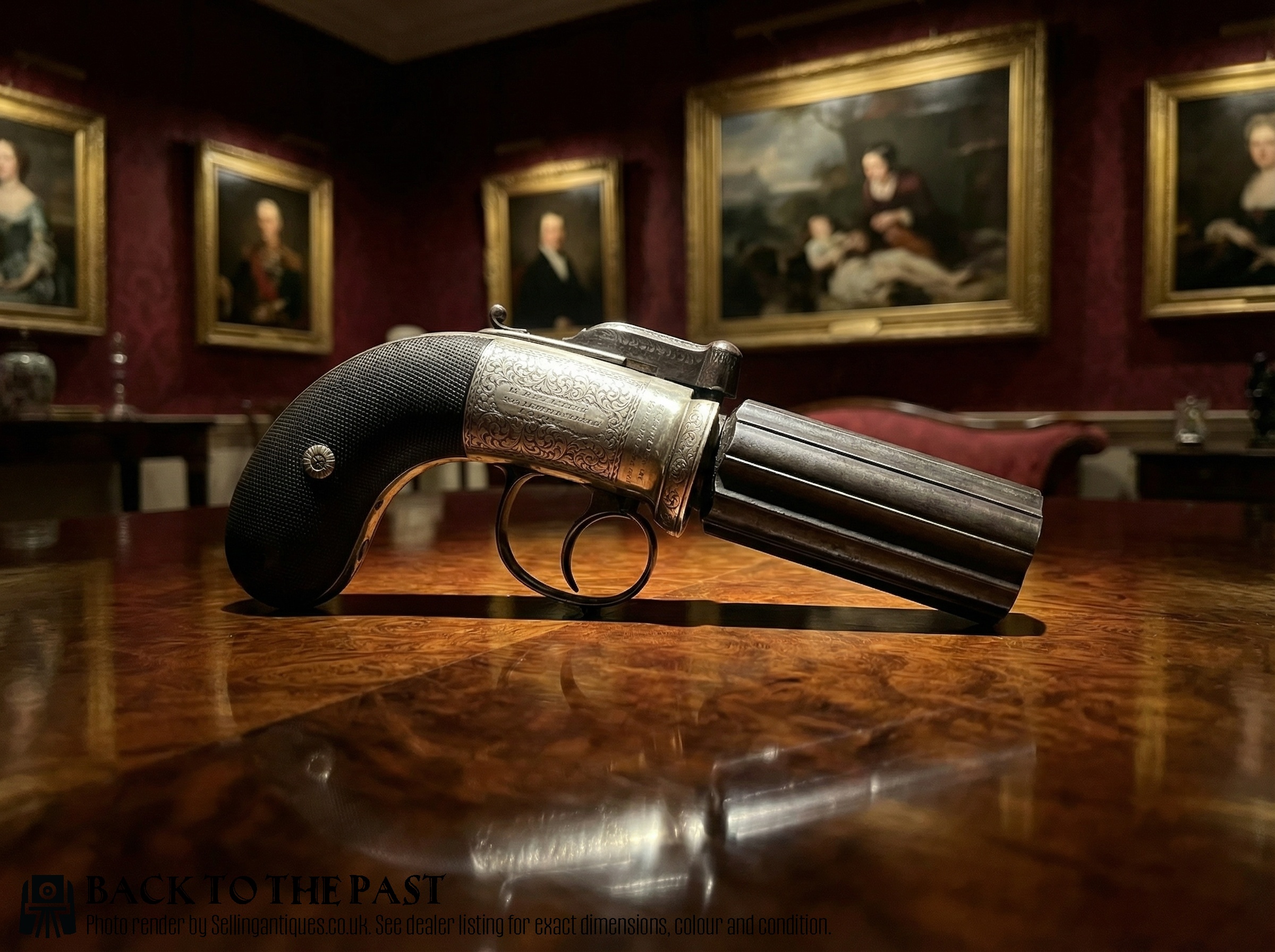
Pepper Pot Pistol Regency, 1850
Priced at £2,450 from Sovereign Antiques Of Nuneaton
Early wheellock mechanisms gave way to flintlocks during the seventeenth century.
Officers purchased their own sidearms privately. Government ordnance supplied the heavier antique pistols carried by regular cavalry troopers.
Look at the transition to the percussion cap. It changed the trade in the 1820s, removing the need for a flint and frizzen.
Gentlemen bought matched duelling sets specifically to ensure fairness during disputes. These cased pairs became a staple of late Georgian sporting culture.
John Manton operated in London from 1781 to 1831. His shop produced some highly refined flintlock duelling and pocket pistols.
Study the locks signed by Durs Egg. He worked between 1772 and 1831, supplying ordnance contracts and producing breech-loaders alongside standard sidearms.
Boutet directed the Versailles manufactory from 1792 until 1815. The presentation firearms made there feature heavy silver inlay and deep relief carving.
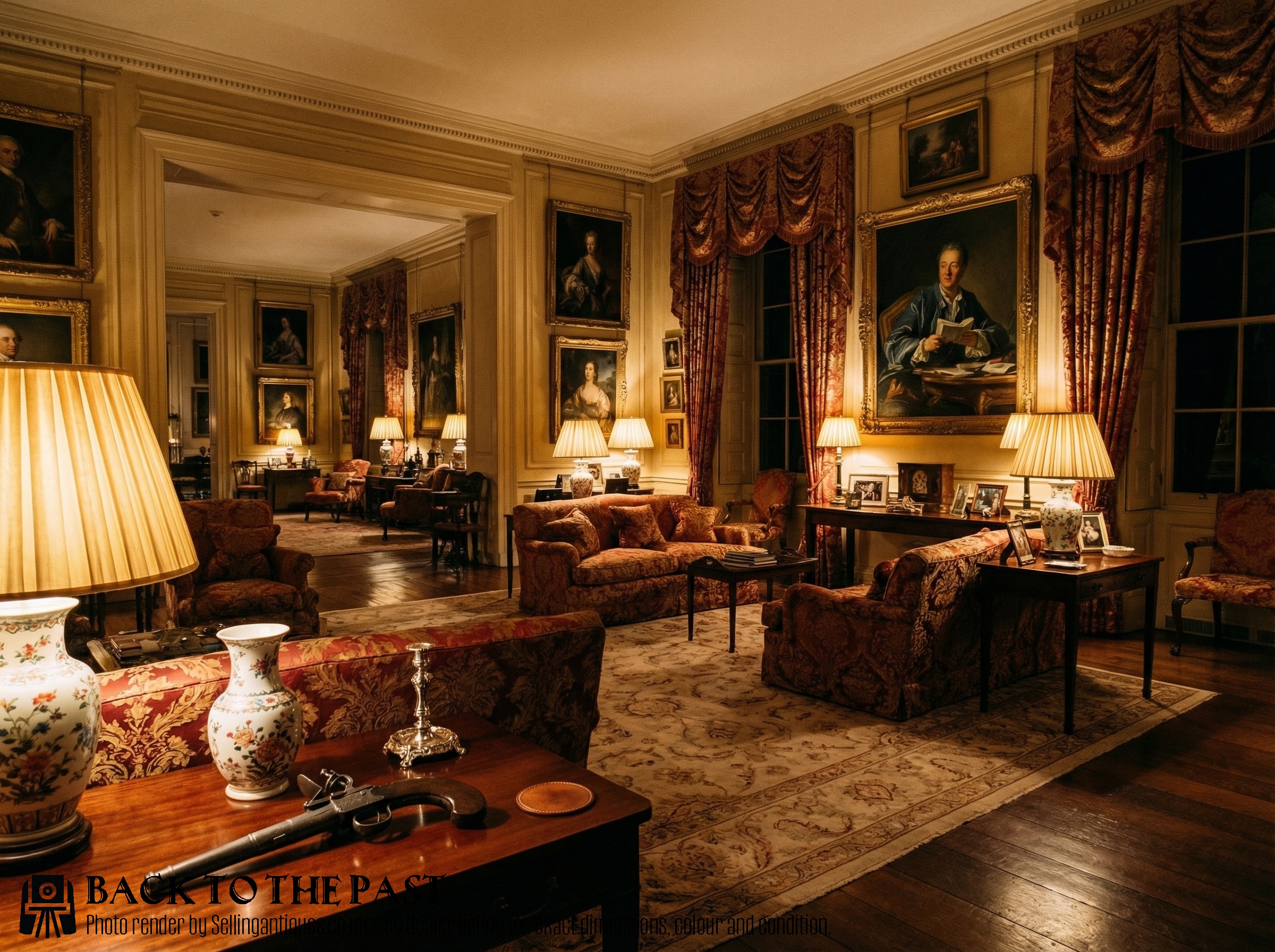
18th C Flintlock Pistol, 18th Century
Priced at £765 from Mytton Antiques - Jerrard Nares
The 2026 retail price guide for Antique Pistols is drawn from a proprietary archive of over 1.1 million retail prices indexed by Sellingantiques since 2003. This guide relies exclusively on their own internal data; no external sources or auction records are used.
Analysing nearly 25 years of UK antique market history alongside current retail values, the data indicates that typical UK retail prices for Antique Pistols range between £400 and £2,700. Entry-level prices generally fall under £400 and premium examples upwards of £2,700.
Ramrods sit beneath the barrel in a grooved channel. Military versions often have a swivel link preventing them dropping in action.
Notice the side plate opposite the lock. This flat piece of metal stops the lock-screws from biting into the wooden stock.
Octagonal barrels turn up on target and duelling examples. They provide a flat top surface for sighting.
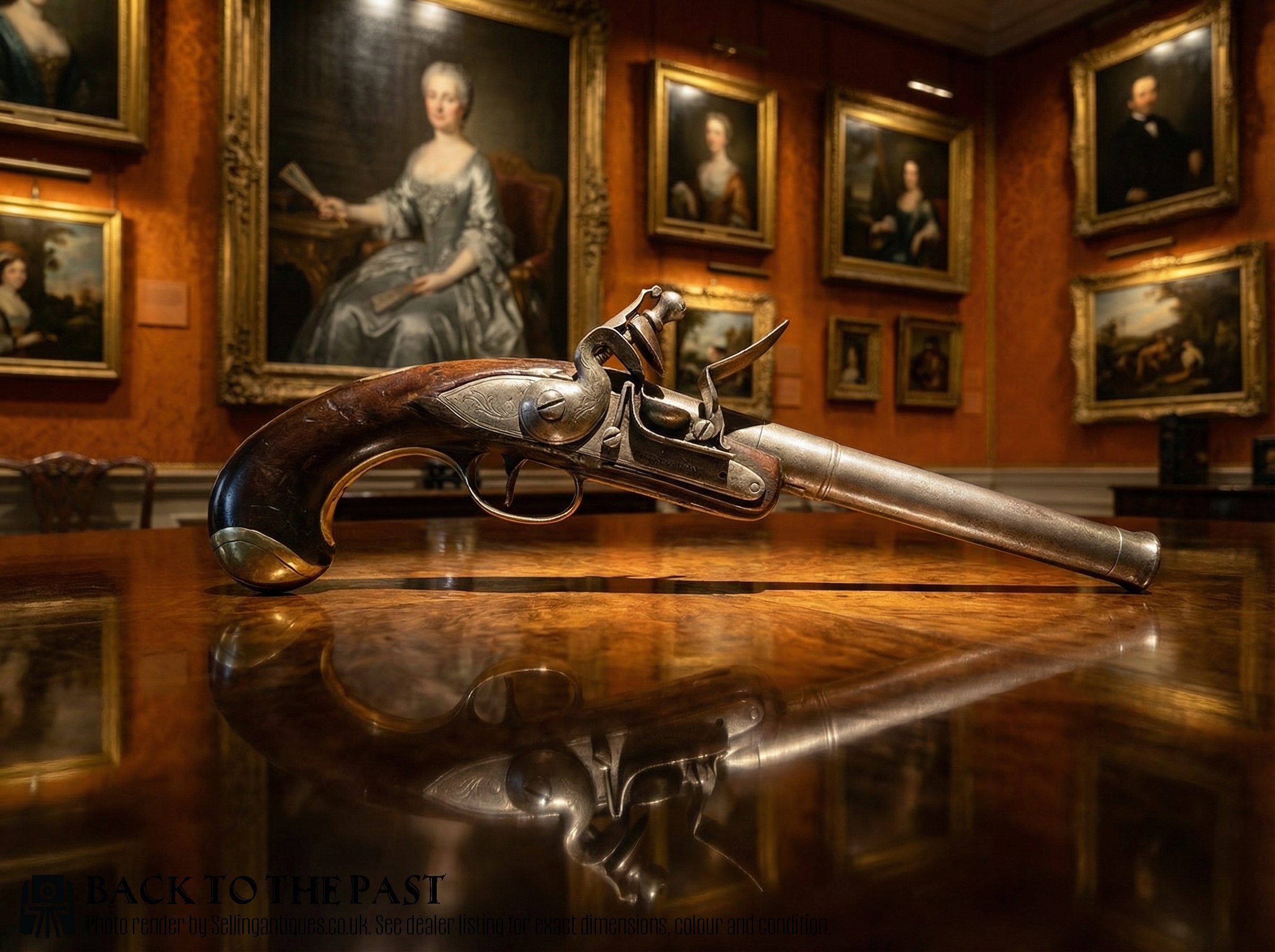
English Queen Anne Flintlock Turn-off Pistol, Thomas Henshaw, London. Circa 1720–1735., 18th Century
Priced at £950 from Peter Harris Clocks & Militaria
Locksmithing emerged as a separate trade. Barrel makers forged the tubes, while independent lock makers filed the internal geometry of the tumblers.
Feel the chequering on the grip. Stock makers cut these intersecting lines by hand using a dedicated file to provide friction for the shooter.
Browning processes developed during the early nineteenth century. Gunsmiths applied acidic solutions to rust the barrel before carding it back, reducing glare.
"Screw-barrel pistols load from the breech rather than the muzzle. The shooter unscrews the barrel with a lugged tool to seat the ball."
"Turn over a military pistol to see the proof marks. These stamped symbols underneath the barrel confirm it passed a high-pressure firing test."
"Many cased sets include specialised loading tools. Bullet moulds and powder flasks often match the specific bore of the weapon."
Based on almost 25 years of Sellingantiques UK antique market data, Antique Pistols appeared 701 times (out of 1,100,000 antiques) which gives it a rarity score of 87/100.
This score measures scarcity within the Sellingantiques archive only and is not a survey of the entire antiques market, so these statistics may not be indicative of the general availability of Antique Pistols elsewhere.
Leave the wood alone if it just has a dark patina. You can apply a light coat of microcrystalline wax with a soft cloth to protect the surface.
Never use modern spray polishes or harsh solvents. These strip the historic finish and seep into the grain, causing the wood to swell against the metalwork.
A few drops of light mineral oil on the moving parts won't hurt. Antique mechanisms dry out over decades of storage, and dried grease often binds the tumbler and sear inside the lock.
Don't force the hammer if it refuses to move after oiling. The internal mainspring is under high tension and brittle. Snapping a historic spring turns a functional lock into a broken one.
Have a gunsmith dismantle the lock if the stiffness persists. They use proper turnscrews that fit the narrow slots of antique fasteners without burring the metal.
Calibre varies in early firearms because makers built them to custom specifications. Military patterns generally followed standard bores, like the carbine bore used for British cavalry pistols.
You measure the internal diameter of the muzzle to find the gauge. Dealers use callipers for this, but historic lead balls were often cast slightly smaller than the bore to allow for the paper patch.
Don't rely on the bore size alone to identify a civilian piece. Gunsmiths bored barrels to whatever size suited the customer or whatever mandrels they had to hand.
Those stamps are proof marks. The proof house struck them into the barrel after testing it with an overcharged load of powder to ensure it wouldn't burst in use.
They tell you the country and often the city of manufacture. London and Birmingham had different proof marks, and the specific symbols changed over the decades as regulations updated.
They rarely point to the individual owner. Occasionally a maker's mark sits alongside the proof stamps, giving you the initials of the barrel forger.
Please note: This Antique Pistols guide and its associated pricing data are provided for general informational purposes only. It does not constitute formal financial, investment, or appraisal advice and should not be relied upon as the sole basis for any commercial activity, purchasing, or sales decisions. Sellingantiques.co.uk accepts no liability for any actions taken in reliance on this information. Always consult with a qualified professional or independent appraiser.

