
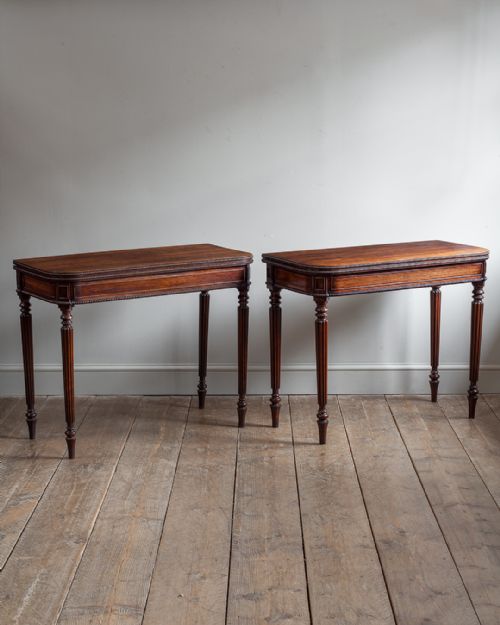
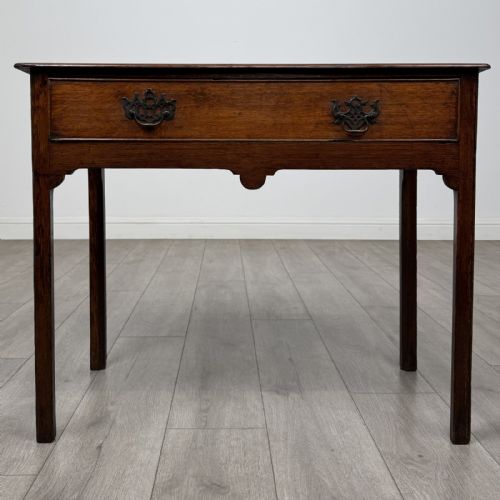
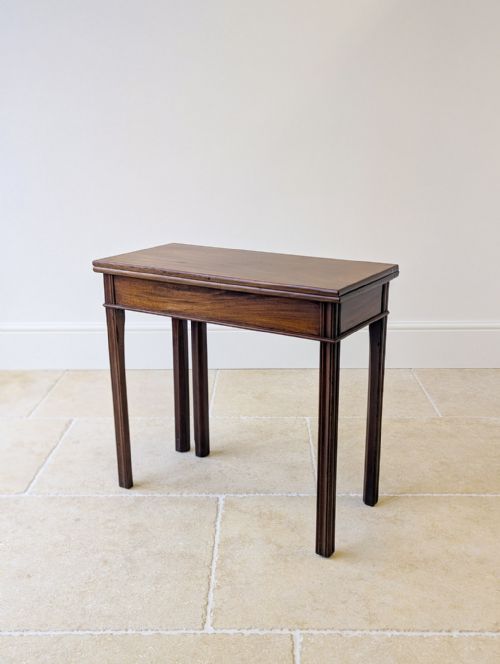
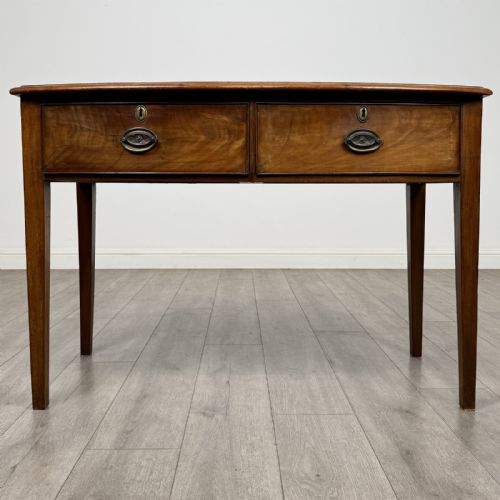
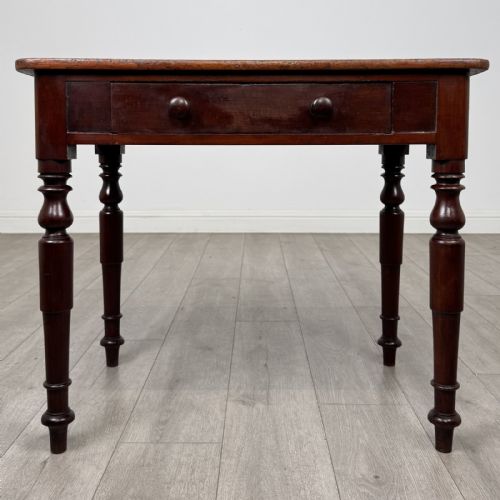
Antique Hall Tables
A narrow table made to stand against a wall in an entrance hall or passage, shallow enough to leave room to walk past, for setting down gloves, cards, candles or a lamp.
Antique Hall Tables
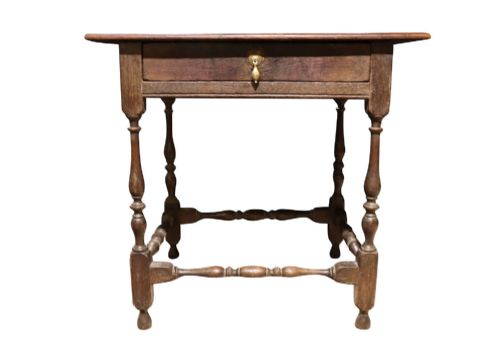
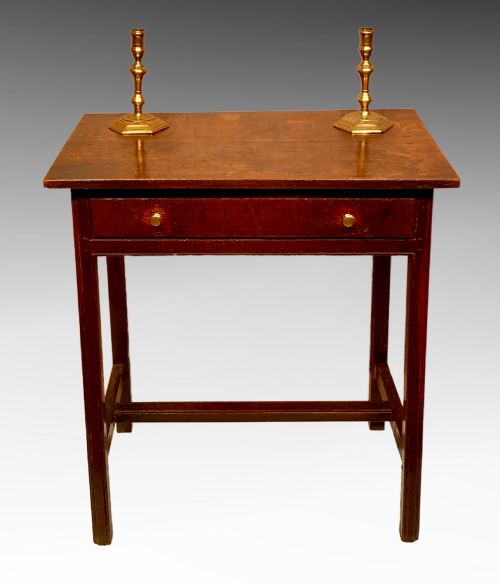
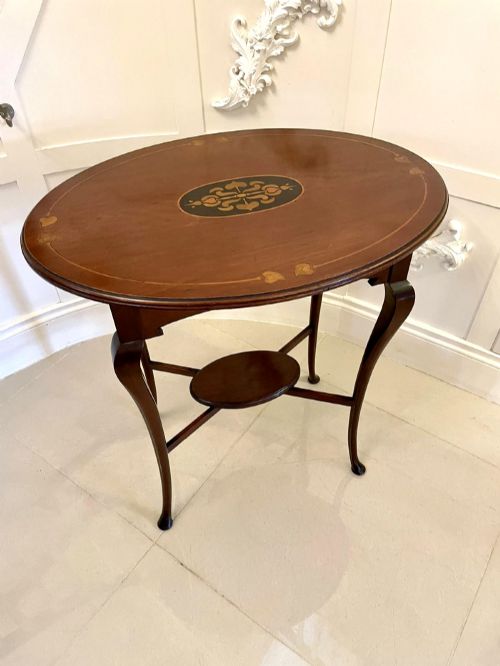
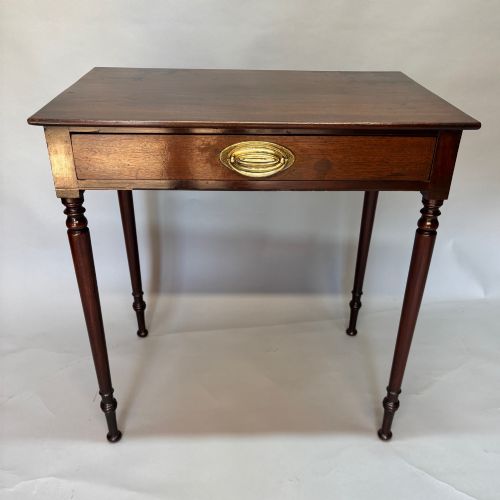
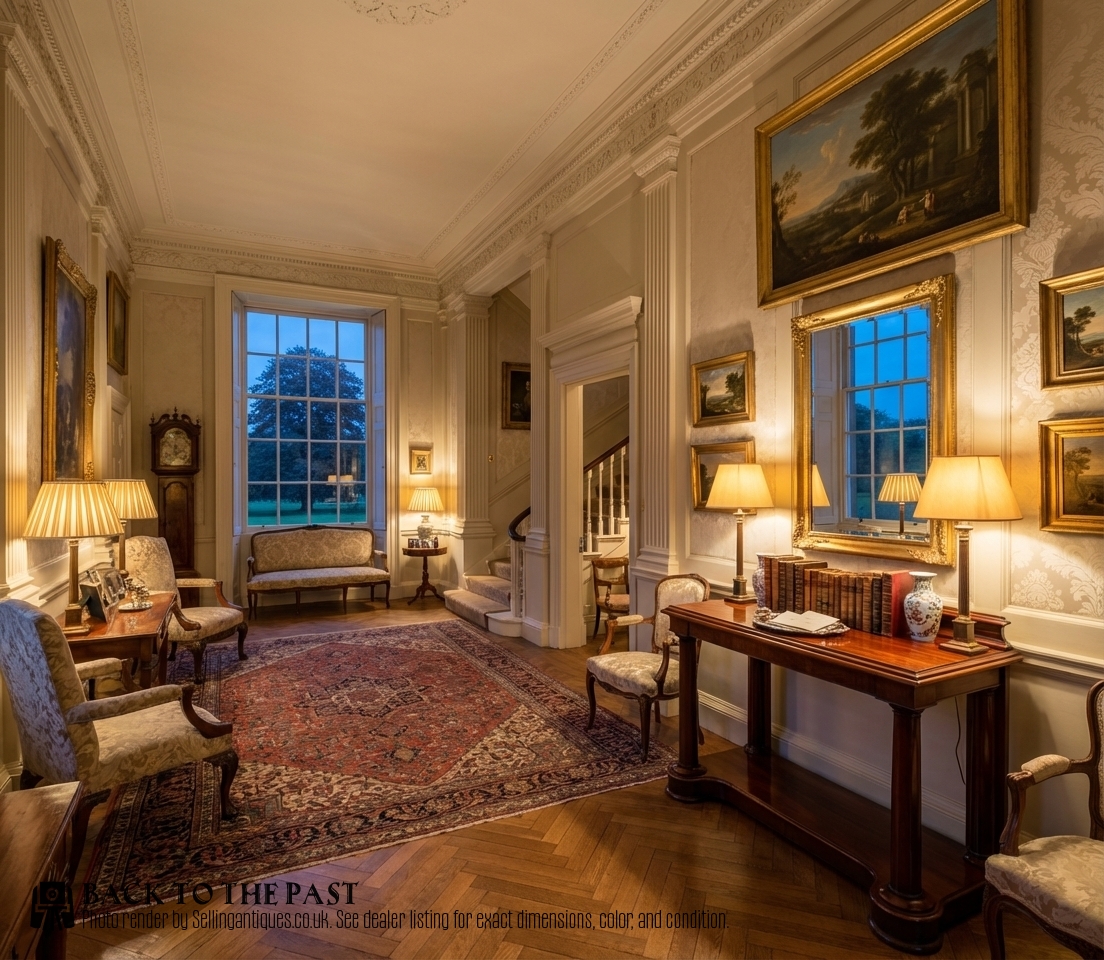
The heading covers narrow wall-standing and free-standing occasional tables: side tables, console and pier tables, lamp tables, centre and serving tables, and lowboys. Tops are rectangular, bow-fronted, serpentine or demi-lune, carried on four legs, turned supports or a pier-style base. Depth is given up to keep a passage clear, which is why the form stays shallow and is often shaped at the front.
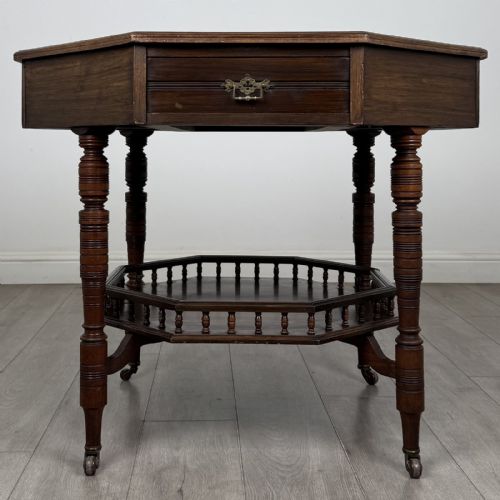
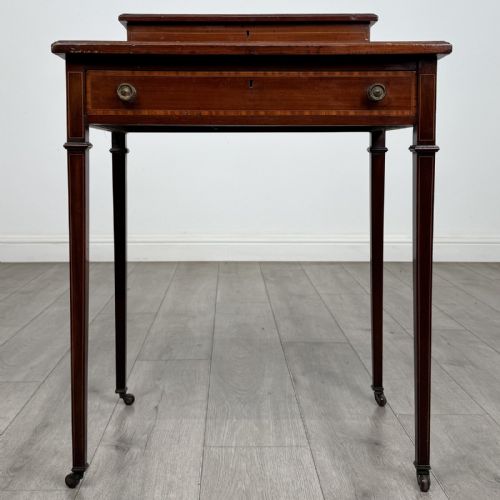
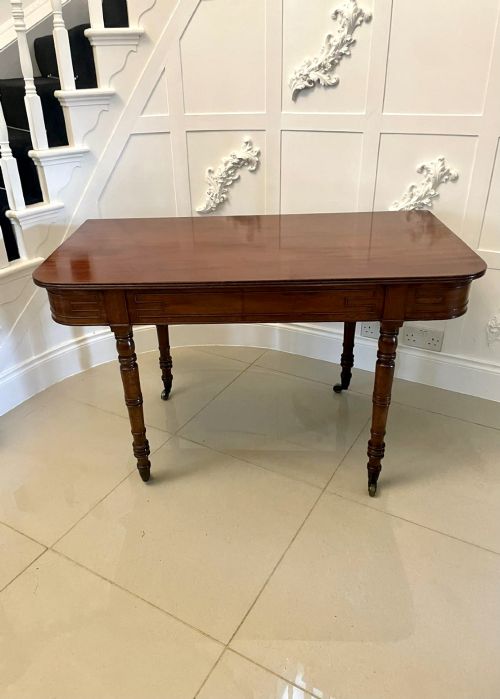
The table you're most likely to meet is a single 19th-century side or hall table in mahogany or oak, with one or two drawers in the frieze. Timber leads the titles: mahogany first, then oak, walnut, rosewood and pine, with satinwood, amboyna, kingwood, yew, elm, padouk and Ceylonese calamander turning up in ones and twos.
One object often carries four labels at once. A title reading 'Table hall side lamp console Victorian Mahogany' is describing one table, not four forms, so the words hall, side, console and lamp overlap heavily across the category. Console and pier tables, including demi-lune and marble-topped examples, make up about a quarter; lamp and occasional tables roughly one in ten; carved oak, Gothic and Arts and Crafts pieces a visible minority.
The dated field runs from 1700 to 1960. The 19th century holds the largest share, ahead of the 18th, with Victorian, Georgian and Regency the commonest reign labels and Edwardian close behind. Charles II oak tables and a Dutch parquetry table of about 1690 sit at the early end; a handful of 1930s Art Deco pieces mark the late one. French and Italian pieces lead a small run of continental work, alongside Chinese altar and Qing consoles, Swedish and Gustavian painted tables, and Anglo-Indian examples.
What Separates Them
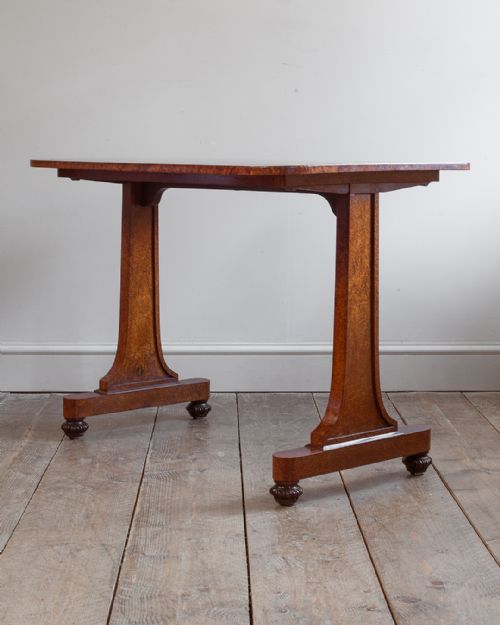
Timber does most of the sorting. Burr walnut, rosewood, satinwood, amboyna, kingwood, laburnum and calamander sit at the top of the range; plain oak and pine cluster at the bottom. Figure matters as much as species, which is why burr veneers are named so often in titles that a plain board would leave unmentioned.
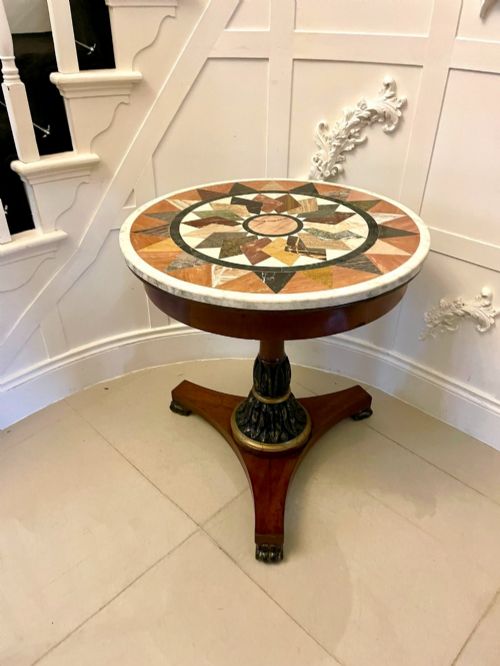
Above that, decoration and materials lift a table. Marble tops, giltwood and parcel gilding, ormolu mounts, carving, inlay, marquetry and original paint all recur through the higher reaches. Pairs stand above singles, and pairs of console, demi-lune and hall tables appear near the top of what's been sold on Sellingantiques.
A name adds to all of it. Gillows appears both as a maker and as 'in the manner of', and attributions of that kind cluster in the upper part of the range. Most tables in the category carry no name at all and are judged on timber, shape and decoration alone.
Antique Hall Tables Retail Price Guide 2026
Typical UK retail prices for hall tables, calculated from the Sellingantiques database of over a million retail prices indexed since 2003. This retail price guide relies exclusively on Sellingantiques data; no external sources or auction records are used, so the figures do not describe the wider market.
The most expensive hall table ever sold on Sellingantiques was a pair of signed Philadelphia mahogany console and games tables of about 1810, sold in December 2023.
Gillows
The Antique Hall Tables Glossary
- Console table
- A shallow table meant to stand against a wall, sometimes fixed to it. The word appears in hundreds of titles across the category.
- Demi-lune
- A half-round top with the flat edge to the wall. Also spelled demilune, and once, by one dealer, 'Demi Loon'.
- Bow front
- A front bowed outward in a single convex sweep, as against a straight or serpentine front.
- Serpentine
- A front shaped in a double curve, waisted in the centre and swelling at the ends.
- Lowboy
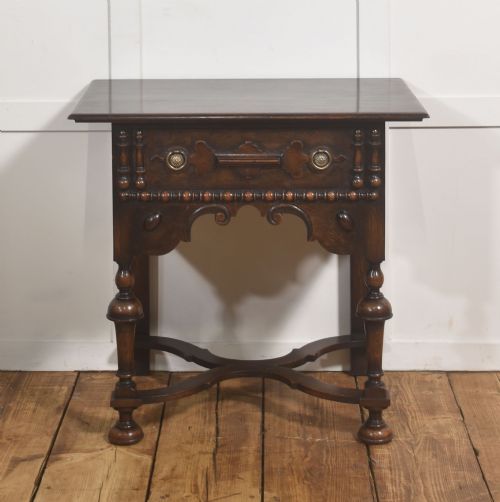
- A low chest-like side table on legs with drawers set in the frieze, catalogued here alongside hall and side tables.
- Green Man
- A foliate carved mask found on a recurring group of carved oak hall tables, listed by more than one dealer.
Antique Hall Tables: Frequently Asked Questions
What's the difference between a hall table and a console table?
Often nothing. Titles on Sellingantiques regularly stack the words hall, side, console and lamp against a single table, so the same object turns up under several names.
Where the distinction holds, console describes a shallow table designed to stand against a wall, sometimes fixed to it. A pier table is the same idea placed on the pier, the wall between two windows, and often paired with a mirror.
Which timbers are most common?
Mahogany leads by a wide margin, then oak, with walnut, rosewood and pine following. Timber is the single most-named feature in titles.
Rarer woods appear in ones and twos: satinwood, amboyna, kingwood, laburnum, yew, cherry, elm, birch, chestnut, ash, padouk and Ceylonese calamander.
How old are most hall tables for sale?
The dated field runs from 1700 to 1960, and the 19th century holds the largest share, ahead of the 18th.
Victorian, Georgian and Regency are the commonest reign labels, with Edwardian behind them. The datable mass sits in the 1860s, 1880s, 1900s and 1920s.
Earlier pieces exist but are scarce: Charles II oak tables of around 1660 to 1680, and a Dutch parquetry table of about 1690.
Do hall tables come in pairs?
More often than you might expect. Pairs run to over a hundred titles, mostly consoles, demi-lunes and hall tables.
Pairs sit above singles in the range, and pairs of console and demi-lune tables recur near the top of what's been sold.
Are marble tops usual on these tables?
They're a minority. Marble is named in a modest slice of titles, mostly on console and pier tables rather than plain oak side tables.
Marble tends to travel with gilding, so giltwood and ormolu-mounted consoles with marble tops group together in the dearer part of the category.
What are the more unusual hall tables that turn up?
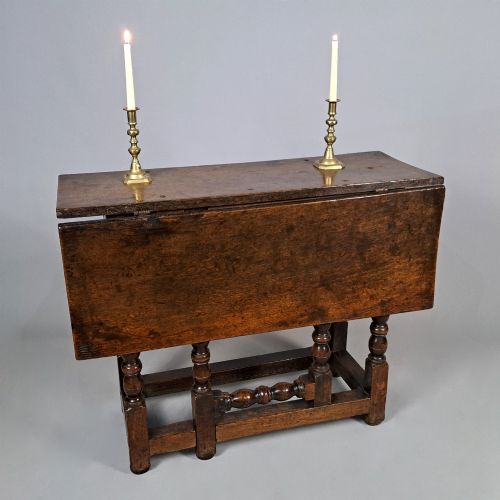
Carved oak with a Green Man mask surfaces repeatedly, from more than one dealer, and Gothic and Arts and Crafts oak tables form a small steady group.
Occasionally something further off-piste arrives: a zebra-hide occasional table, an alabaster and brass console, a cast-iron and marble hall table, an up-cycled industrial machine base, and a three-metre French pine and oak community hall table.