


Antique Stick Stands
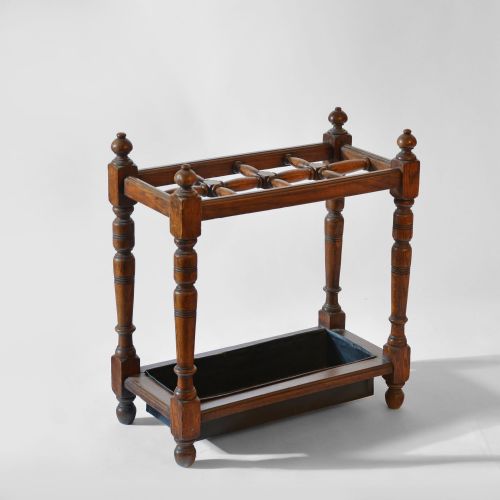
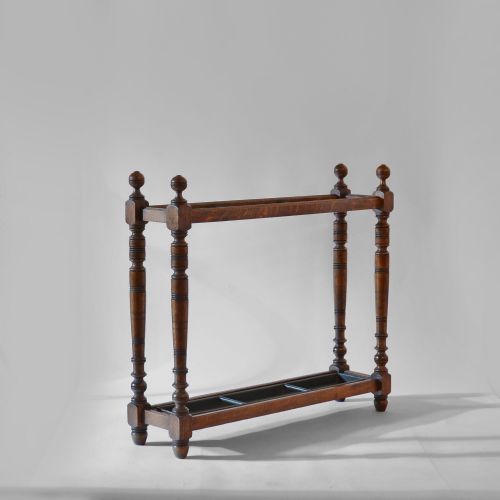
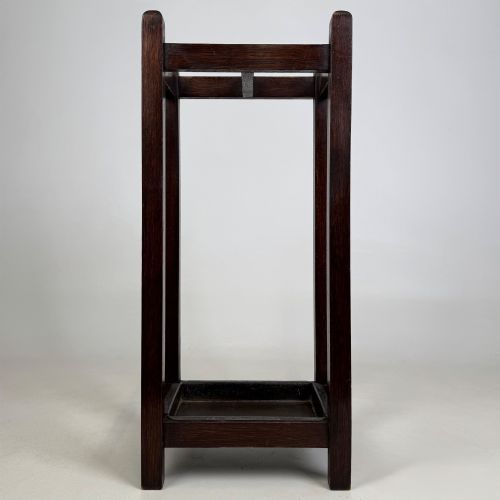
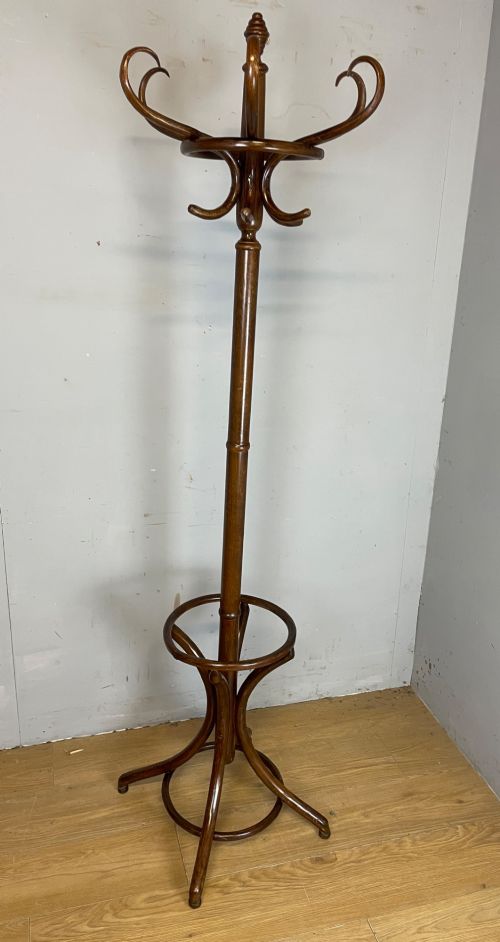
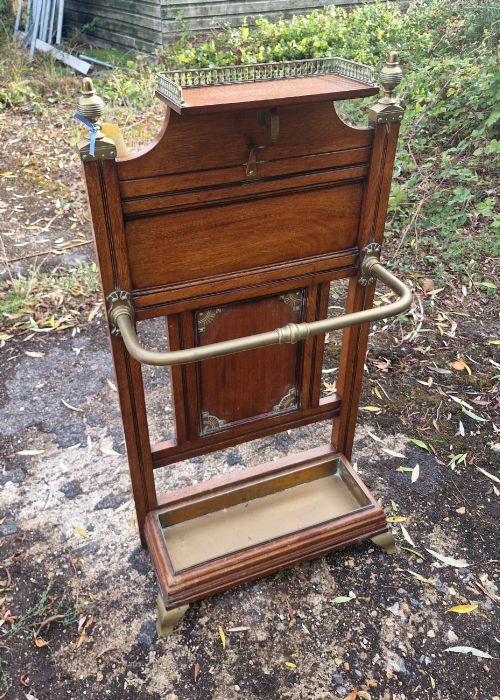
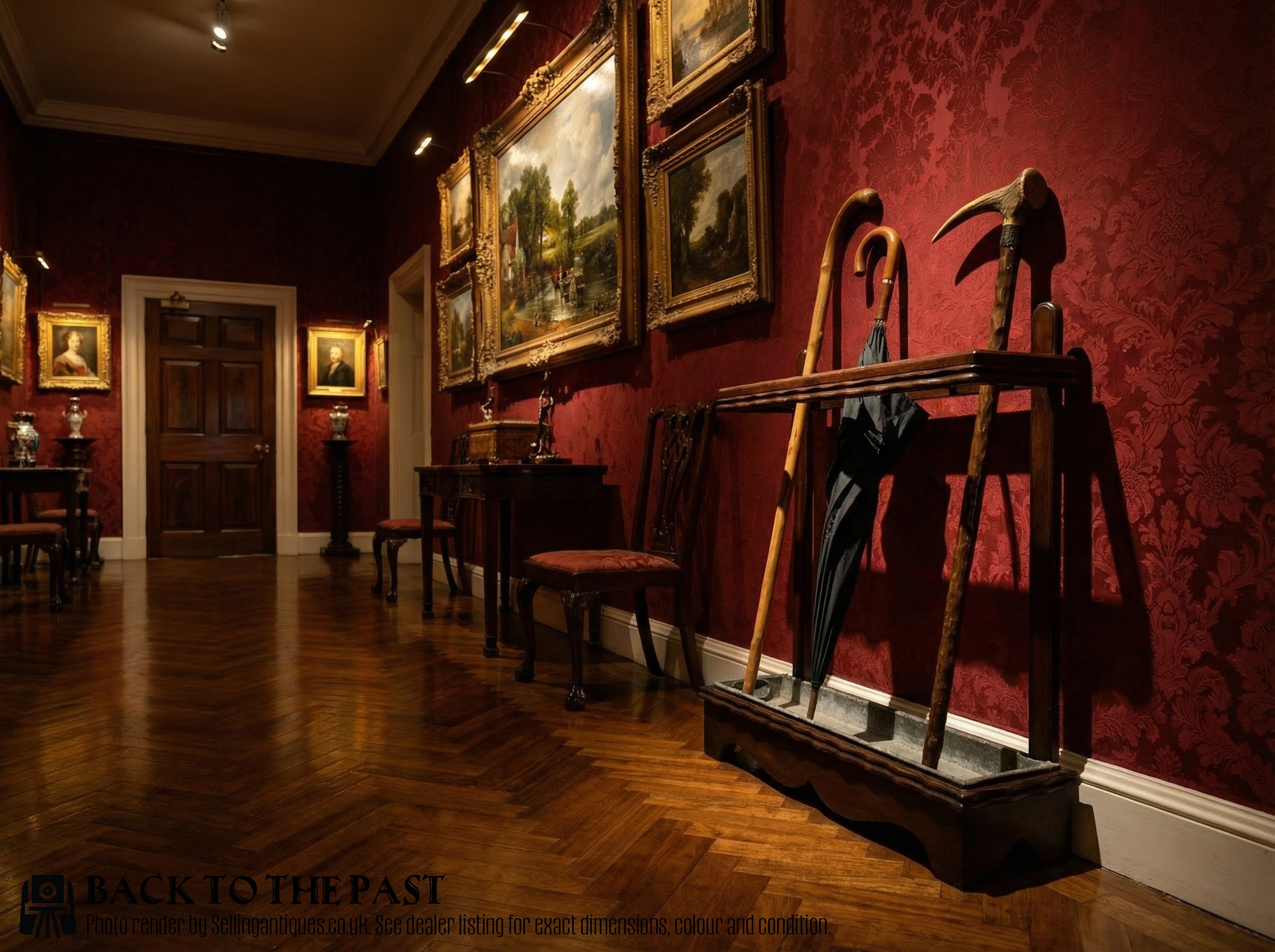
A free-standing hall vessel, usually waist-high and open-topped, made to hold walking sticks and umbrellas upright and drain them somewhere near the front door.
Antique Stick Stands
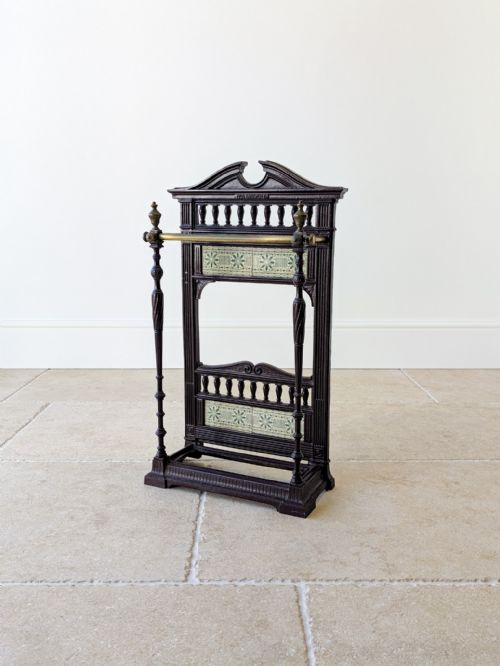
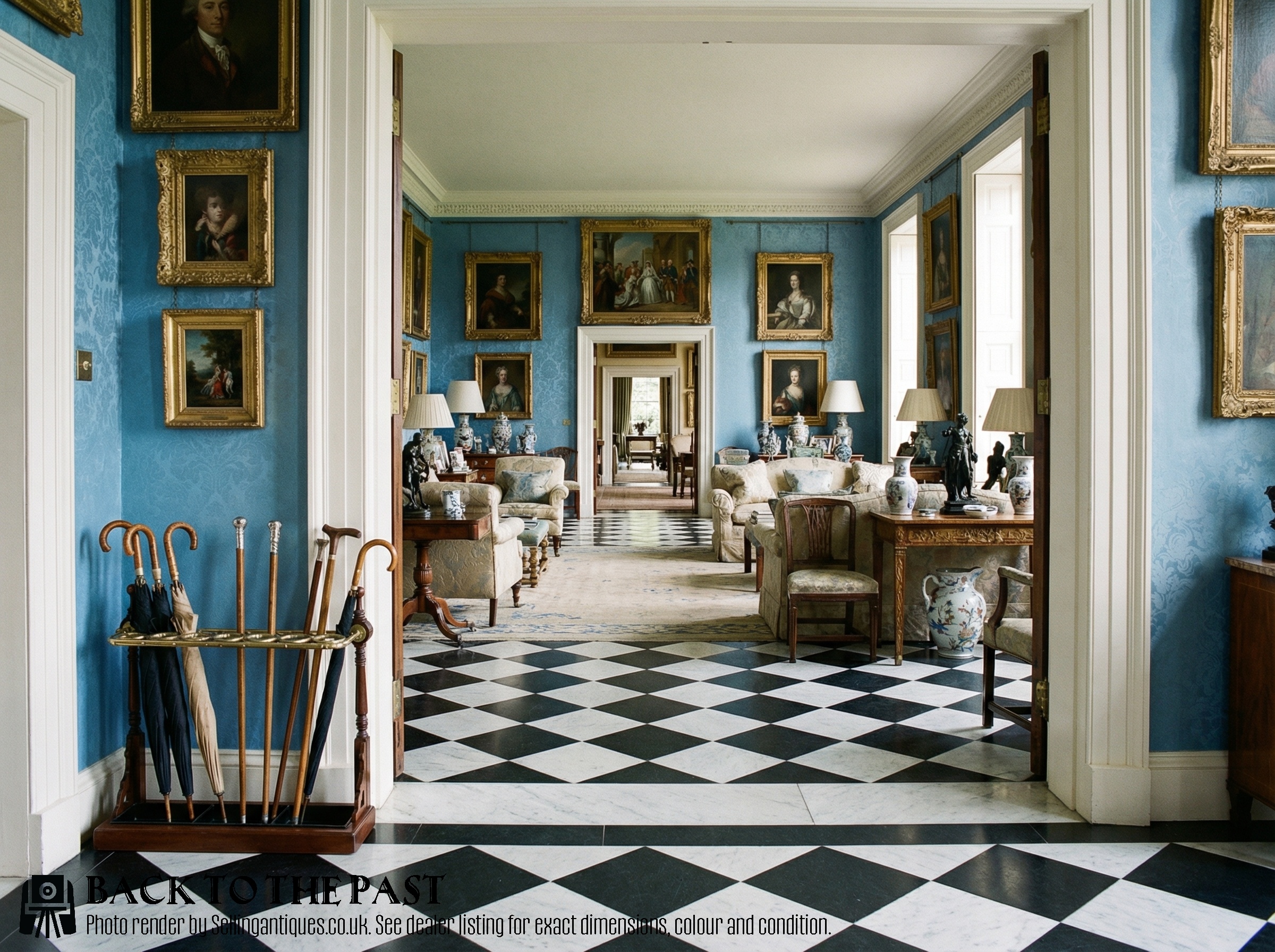
Purpose-made stands for canes and umbrellas became a standard hall fitting in the nineteenth century, once carrying a stick or umbrella was routine and halls needed somewhere for wet ones to go. Cheap architectural iron casting and the fashion for fitted-out hallways spread the form through town and country houses alike.
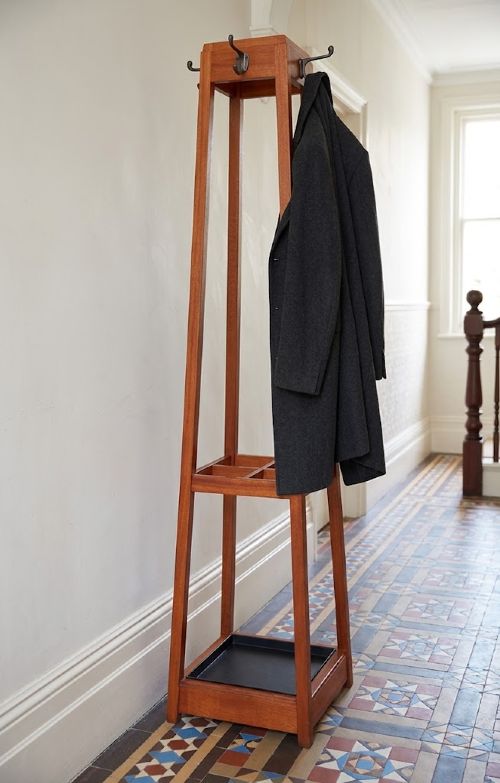
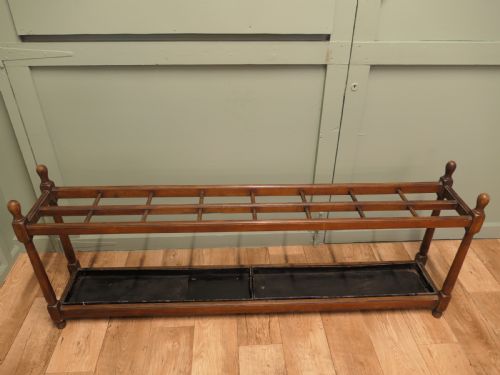
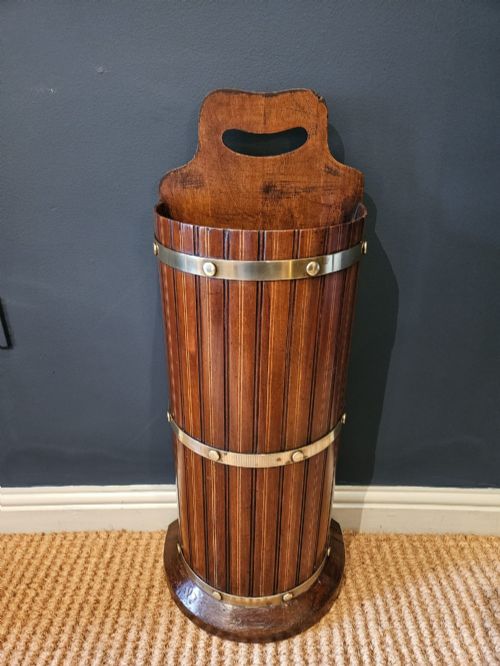
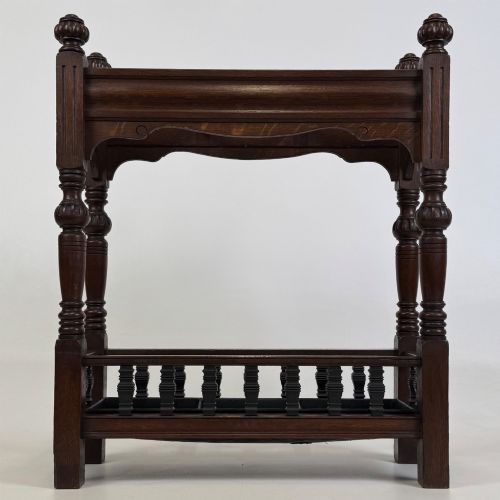
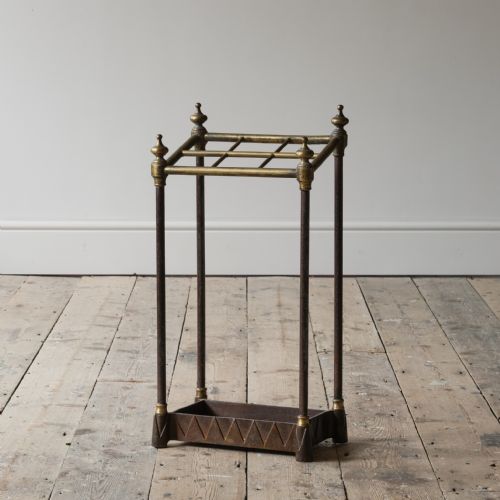
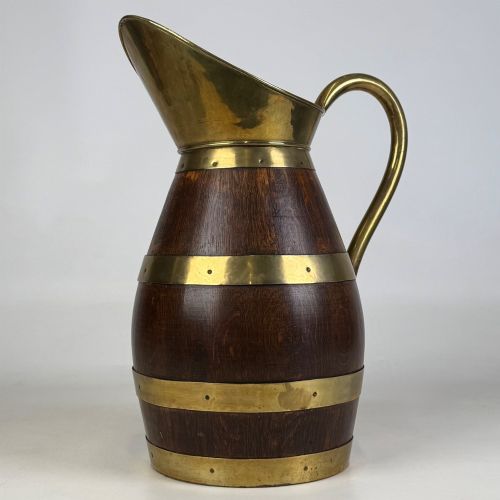
Two constructions dominate. The first is a metal framework of divisions on a weighted base, commonly a brass frame on cast iron, sold by the number of compartments it holds: four, five, six, eight, ten, twelve, and twice at twenty-four rings. The second is a wooden tub, barrel or panelled box, led by oak, with mahogany and walnut behind it. Drip trays, removable or fixed at the base, are named often enough to count as part of the form.
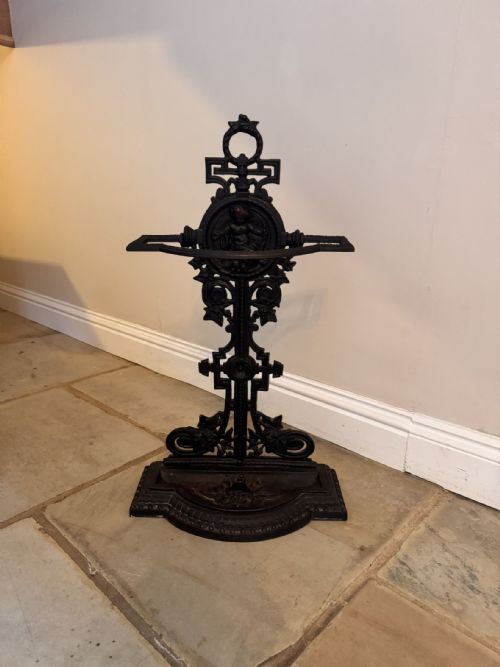
Cast iron carries a branch of its own, sold by subject rather than pattern. Dolphins, swans, an entwined snake, a cherub, gun dogs, a footballer, Hercules and the serpent, William Wallace and Jack and the Beanstalk all turn up. Alongside them sit oak barrel and coopered stands, Arts and Crafts and Art Nouveau pieces in oak, copper and brass, and a small run of carved Black Forest bears and animals.
Dating language leans Victorian and nineteenth century, with decades clustering from the 1880s to the 1910s and a tail into the 1920s and 1930s. The dated listings on Sellingantiques start at 1800; anything earlier than about 1850 is uncommon and tends to be flagged Georgian, Regency or William IV in the title rather than by year. Nearly half the archive is titled umbrella stand rather than stick stand, and the two words describe the same shelf of objects.
Where The Range Splits
Sculpture separates the top from the bulk. The carved Black Forest bears and animals, only twenty titles in the whole archive, sit above everything else, the largest recorded at 100cm tall. Below them, cast iron sold by its subject prices above the plain sectioned brass-and-iron frame, which is the workhorse of the category.
Scale and count do real work. Large and country-house stands run to thirty-odd titles apiece, and stands advertised as ten, twelve or twenty-four division, or double sized, sit in the upper half. Pairs, eighteen titles, sit markedly higher than singles of the same type.
A name in the title lifts a stand above its anonymous equivalent, whether that is a foundry or a London retailer. The survival of the original drip tray matters too, and dealers say so plainly, singling out an original removable copper tray or twin trays where they are there.
Antique Stick Stands Retail Price Guide 2026
Typical UK retail prices for stick stands, calculated from the Sellingantiques database of over a million retail prices indexed since 2003. This retail price guide relies exclusively on Sellingantiques data; no external sources or auction records are used, so the figures do not describe the wider market.
The earliest examples on Sellingantiques are a pair of oval brass-bound barrel stands put at 1800 and around 1810, and a Georgian cast-iron four-division rack.
James Shoolbred & Co·Coalbrookdale
The Antique Stick Stands Glossary
- Division or section
- One compartment of the frame. Stands are counted by them, from four up to twenty-four, and the number goes in the title.
- Drip tray
- The metal pan at the base that catches water off wet umbrellas. Often removable, and named when it is the original.
- Demi-lune or half-round
- A stand flat at the back and bowed at the front, made to sit against a hall wall.
- Bow front
- The same idea described from the front: a convex face on an otherwise straight stand.
- Coopered
- Built from staves like a barrel and held by hoops or bands, rather than joined up as a box. Brass bound means the tub is encircled by brass bands.
- Barley twist
- Spirally turned uprights or supports on a wooden stand, also called candy twist.
Antique Stick Stands: Frequently Asked Questions
What is the difference between a stick stand and an umbrella stand?
Nothing, in the trade's usage. Of 889 titles on Sellingantiques, 390 say umbrella stand and the rest say stick stand, describing the same waist-high hall vessel.
Some listings use both words in one title. The compartments hold sticks and umbrellas equally well.
Which materials are most common?
Metal leads. Brass appears in 260 titles and iron in 253, frequently combined as a brass frame on a cast-iron base.
Wood runs close behind, with oak in 194 titles, then mahogany and a handful in walnut. Copper shows up in the Arts and Crafts and Art Nouveau group.
Ceramic examples exist but only as isolated titles rather than a branch of the category.
How old are most of these?
The dated listings run from 1800 to 1930. Where a decade is given it usually falls between the 1880s and the 1910s.
A great many carry a label rather than a year: 19th Century and Victorian between them cover more entries than any single decade, which places those pieces only within a fifty-year span.
Why do listings count divisions?
Because it is how the frames were made and how the trade sells them. A stand is advertised at four, five, six, eight, ten or twelve divisions, and twice at twenty-four rings.
The count is a rough guide to scale. Ten and twelve division stands sit in the upper half of the range, alongside those described as large or country house.
What are Black Forest stick stands?
Carved wooden stands worked as bears and other animals. Twenty titles in the archive, and they occupy the entire top of the range.
The tallest recorded stands at 100cm. A terracotta bear and a Black Forest dog appear among them.
Are unusual one-off stands ever listed?
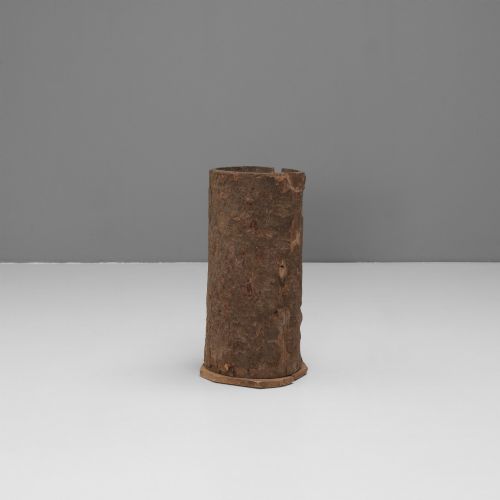
They surface now and then. A leather Royal Navy cordite carrier converted to a stand, a bomb-shell stand, a dug-out tree trunk, a whip rack and a mechanical snooker cue stand have each appeared once.
A treen miniature hall stick stand and a Japanese porcelain example sit in the same bracket of one-offs.