


A 2026 Guide by Sellingantiques

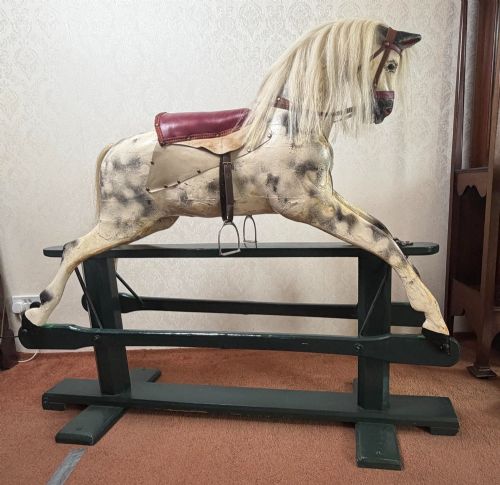
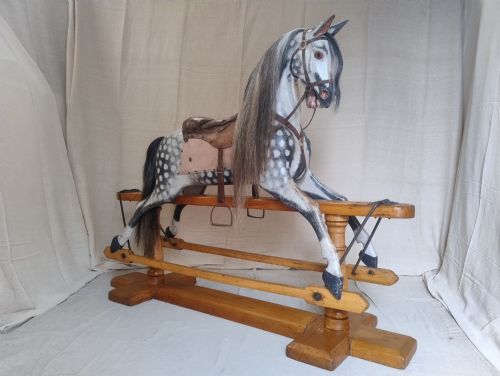
Extra Large Size Collinson Rocking Horse, 1930
Priced at £1,500 from Elmgarden
Early designs emerged in the seventeenth century as solid wooden blocks set on heavy bows.
Victorian makers hollowed out the carcase. This made the antique rocking horses lighter and much less prone to splitting in centrally heated houses.
Look at the mounting system. The safety stand was patented by Philip Marqua, replacing the long floor rockers.
Edwardian examples often feature a more naturalistic carving style with flared nostrils and carved teeth.
Lines Brothers operated out of London from the mid-nineteenth century. They produced thousands of horses and often branded their stands with a thistle motif.
F.H. Ayres represents a high standard. Their carving is distinct with well-defined musculature and separate carved teeth.
J.R. Smith worked in the late nineteenth century. You can sometimes find their maker's mark stamped directly onto the swing irons.
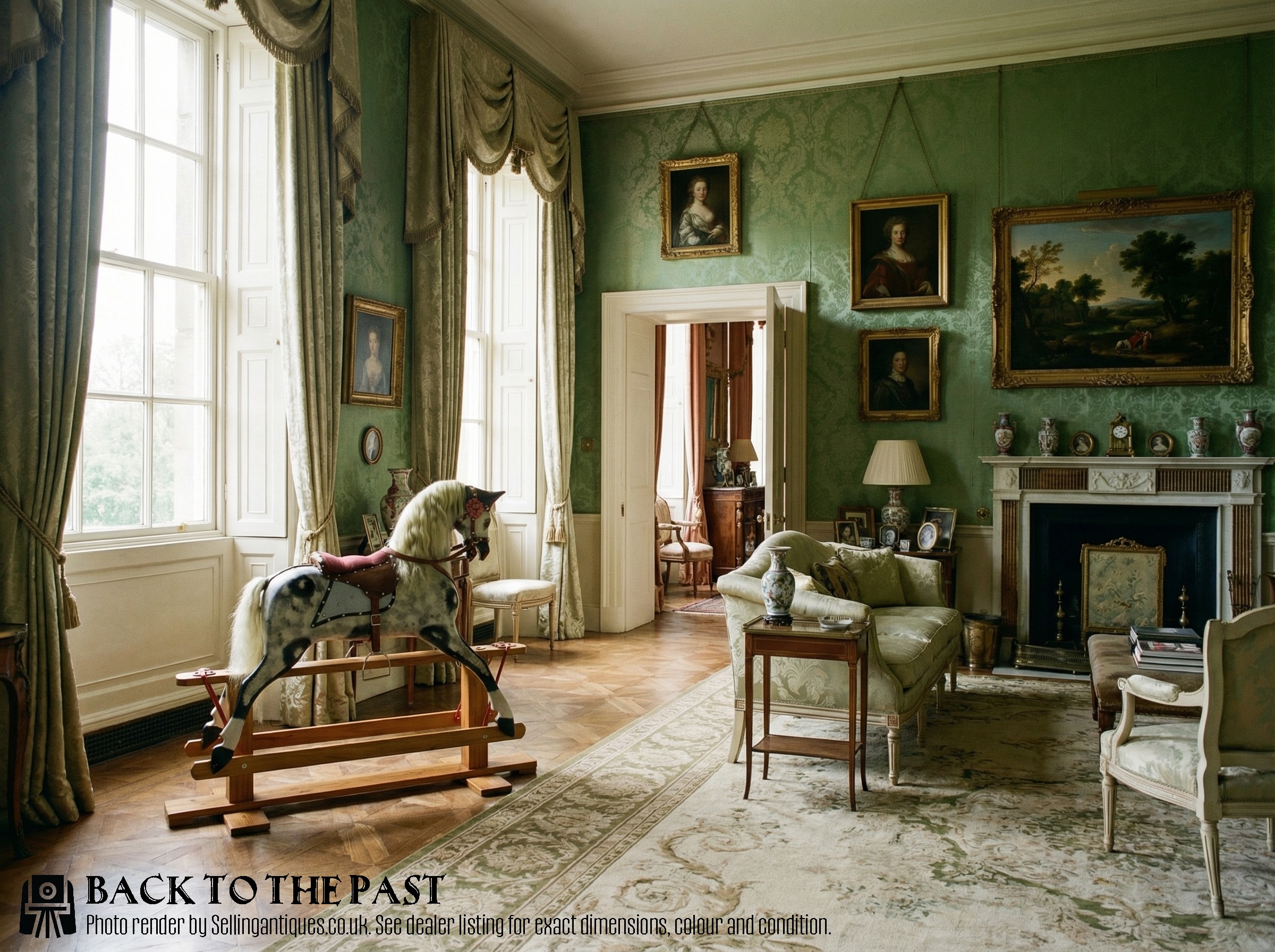
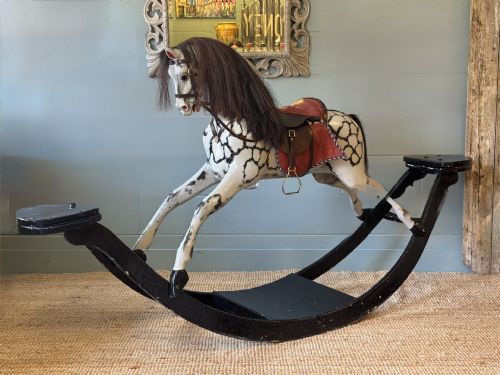
Rocking Horse, 1940
Priced at £995 from Midwinter Antiques
The 2026 retail price guide for Antique Rocking Horses is drawn from a proprietary archive of over 1.1 million retail prices indexed by Sellingantiques since 2003. This guide relies exclusively on their own internal data; no external sources or auction records are used.
Analysing nearly 25 years of UK antique market history alongside current retail values, the data indicates that typical UK retail prices for Antique Rocking Horses range between £500 and £1,900. Entry-level prices generally fall under £500 and premium examples upwards of £1,900.
Dappled grey paintwork remains the classic finish. Some makers opted for varnished natural wood or a painted roan pattern.
Glass eyes give these pieces life. Earlier models might just have painted eyes or simple wooden pegs driven into the socket.
Check the tack. A side-saddle pommel often indicates a piece made for a girl in the nineteenth century.
Early carcases were built from solid planks pegged together. Later makers glued hollow box-sections to save weight and timber.
Legs join the body using heavy mortise and tenon joints. The joint needs immense strength to take the weight of a moving rider.
Run a hand over the neck. Craftsmen often turned the head slightly to one side to give the piece a dynamic stance.
"Many hollow horses contain a secret compartment inside the belly. Children would drop coins or small toys through a slot under the saddle."
"Some makers offered a bespoke paint service. Parents could request the finish to match the markings of a favourite family pony."
Based on almost 25 years of Sellingantiques UK antique market data, Antique Rocking Horses appeared 322 times (out of 1,100,000 antiques) which gives it a rarity score of 94/100.
This score measures scarcity within the Sellingantiques archive only and is not a survey of the entire antiques market, so these statistics may not be indicative of the general availability of Antique Rocking Horses elsewhere.
There is no standard size. Makers offered a range of heights from tiny floor models for toddlers up to large nursery fixtures.
Measure the space you have available before buying. You need at least three feet of clearance at both ends of a bow rocker.
Replacing missing hair is standard practice. Dealers and restorers fit new manes and tails using natural horsehair sourced from equestrian suppliers.
The old hide base was often tacked into a carved groove in the neck. You can gently pry out the old rusty tacks and fit the new piece into the same channel.
A solid antique rocking horse can often take an adult's weight. The heavy mortise joints handle rough treatment.
Swing irons on safety stands bend if overloaded. Keep them for children.
Start by dusting it lightly with a soft brush. Do not use wet cloths on flaking paint. The water gets under the cracked surface and causes the gesso ground to swell.
A conservator can consolidate the loose flakes using specialised adhesives. Until then, handle it gently and keep it away from direct heat sources like radiators.
Please note: This Antique Rocking Horses guide and its associated pricing data are provided for general informational purposes only. It does not constitute formal financial, investment, or appraisal advice and should not be relied upon as the sole basis for any commercial activity, purchasing, or sales decisions. Sellingantiques.co.uk accepts no liability for any actions taken in reliance on this information. Always consult with a qualified professional or independent appraiser.
