


A 2026 Guide by Sellingantiques
Paris dominated the early trade in these optical tools during the nineteenth century.
Theatre attendance soared across Europe, creating broad demand for portable viewing devices.
Look at the large volume of surviving examples. It shows just how common they became.
Binocular vision offered a major improvement over the older single-tube prospect glasses.
Early versions of antique opera glasses required adjusting each barrel separately before central focus took over.
Chevalier produced highly regarded optical instruments in Paris throughout the nineteenth century.
Look out for Lemaire. Their bee trademark frequently appears on the metal bridge.
Colmont stamped their star emblem onto thousands of brass frames exported across Europe.
The 2026 retail price guide for Antique Opera Glasses is drawn from a proprietary archive of over 1.1 million retail prices indexed by Sellingantiques since 2003. This guide relies exclusively on their own internal data; no external sources or auction records are used.
Analysing nearly 25 years of UK antique market history alongside current retail values, the data indicates that typical UK retail prices for Antique Opera Glasses range between £100 and £400. Entry-level prices generally fall under £100 and premium examples upwards of £400.
Central focusing wheels sit between the barrels on a threaded rod.
Many pairs include extending handles to rest the arms during long performances.
Turn the eyepieces. You might spot makers' marks stamped directly onto the rims.
Stamped brass components replaced cast parts as industrial pressing techniques improved.
Pearl cutters shaped thin veneers to match the curve of the brass tubes.
Notice the fine engine-turned guilloché patterns beneath translucent enamel finishes on the better pairs.
"Some models conceal tiny compasses or scent compartments inside the handle mechanisms."
"Aluminium examples from the late nineteenth century show off what was then a novel, precious metal."
"Theatre patrons often rented simple brass models for the evening directly from the usher."
Based on almost 25 years of Sellingantiques UK antique market data, Antique Opera Glasses appeared 353 times (out of 1,100,000 antiques) which gives it a rarity score of 93/100.
This score measures scarcity within the Sellingantiques archive only and is not a survey of the entire antiques market, so these statistics may not be indicative of the general availability of Antique Opera Glasses elsewhere.
Mother-of-pearl panels are difficult to replace matching the original curve and colour. Modern restorers struggle to source shell with the correct nineteenth-century iridescence.
You might find a specialist willing to try, but the repair often stands out against the older sections. It is usually better to leave small cracks alone.
The lenses might have fallen out of alignment. Drops slightly bend the brass frame, stopping the tubes from pointing together.
Internal dust is another common issue. A gentle clean by an optical specialist usually sorts it out.
These lorgnette handles usually rely on friction rather than a mechanical release catch. The metal tubes slide tightly inside one another and seize up when dirt or old grease hardens in the joints.
Applying a tiny drop of penetrating oil where the segments meet can help. Leave it to sit for a few days before trying to twist it gently.
If it remains stuck, leave it as it is. Twisting too hard often snaps the handle off the main bridge.
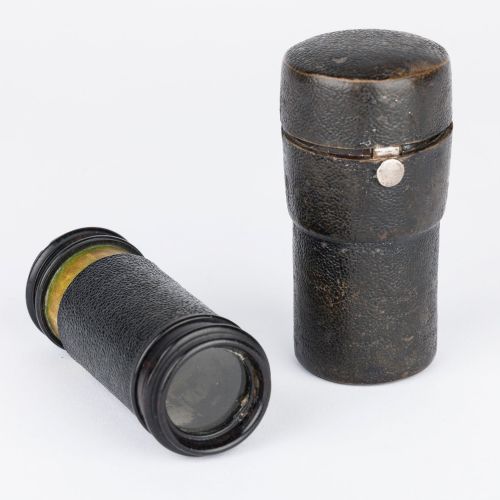
Black leather finishes generally point to outdoor use rather than theatre evenings. Makers aimed these at people attending race meetings, polo matches or field sports where rugged cladding proved more practical.
The optical setup remains the same as the dressier versions. They were just marketed to a different crowd who needed better grip and durability.
Please note: This Antique Opera Glasses guide and its associated pricing data are provided for general informational purposes only. It does not constitute formal financial, investment, or appraisal advice and should not be relied upon as the sole basis for any commercial activity, purchasing, or sales decisions. Sellingantiques.co.uk accepts no liability for any actions taken in reliance on this information. Always consult with a qualified professional or independent appraiser.

