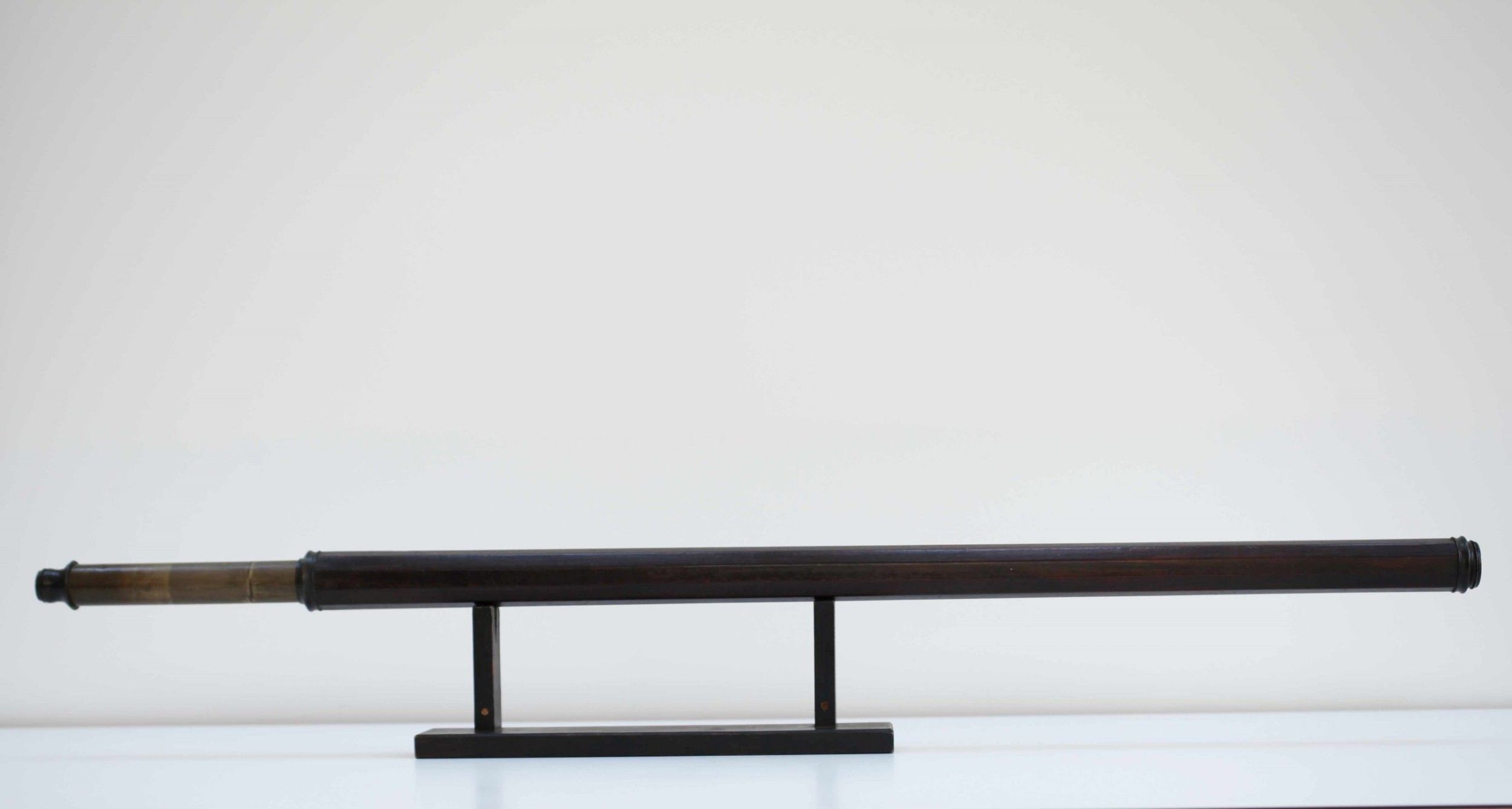
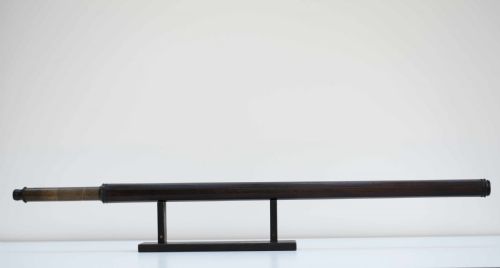
Jason Clarke Antiques has dated this Antique Decagonal Wooden Telescope to the 1750s.
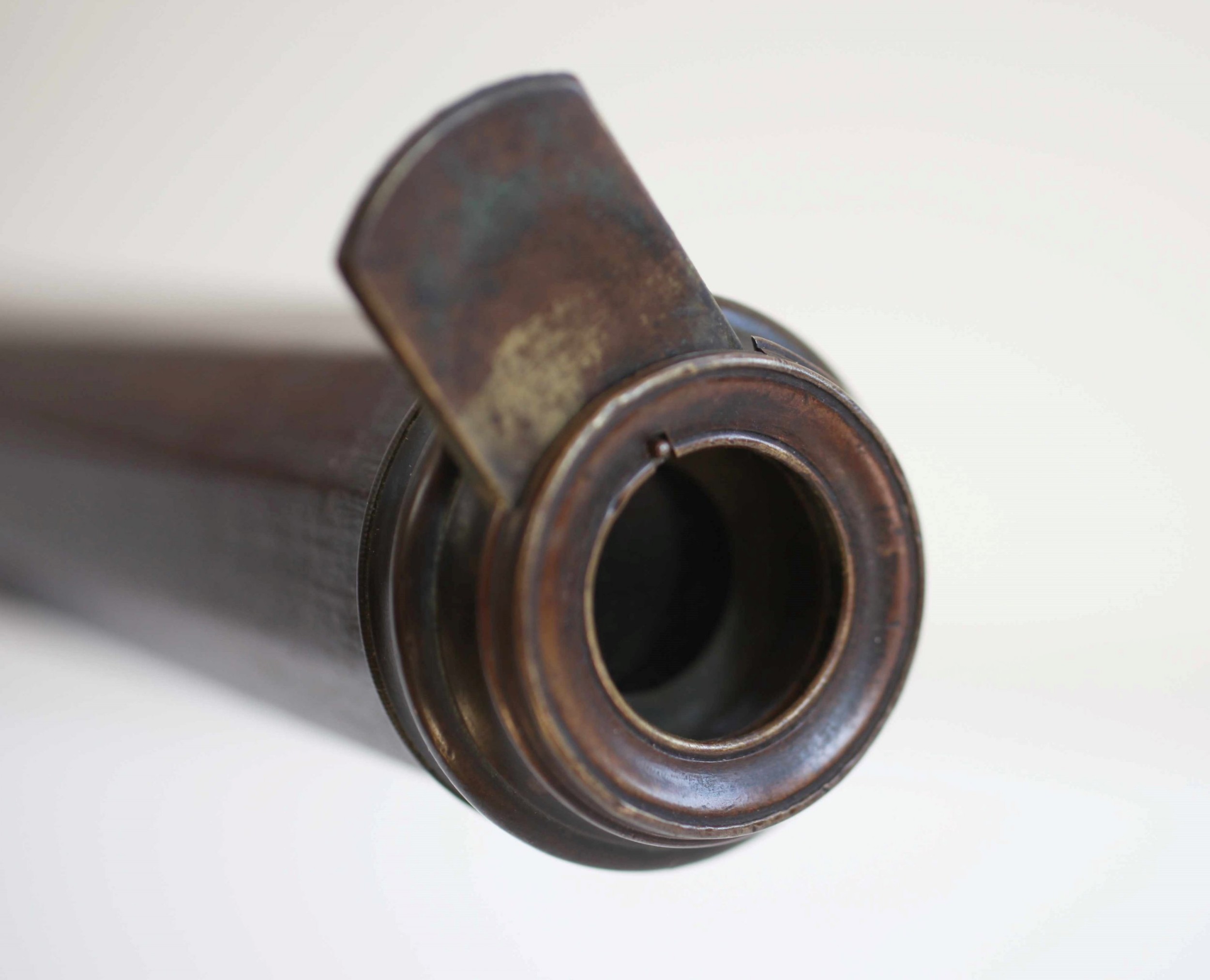
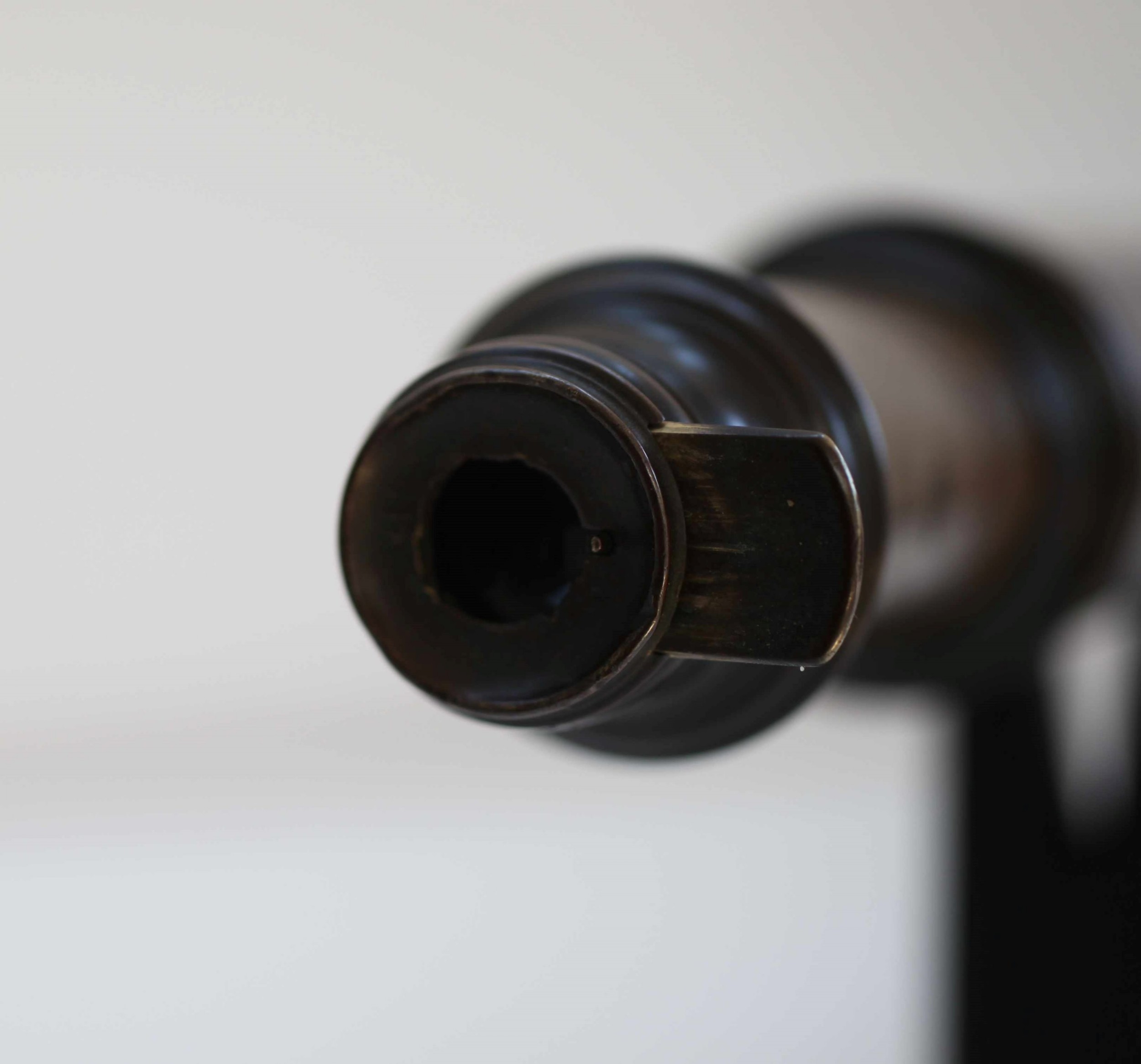
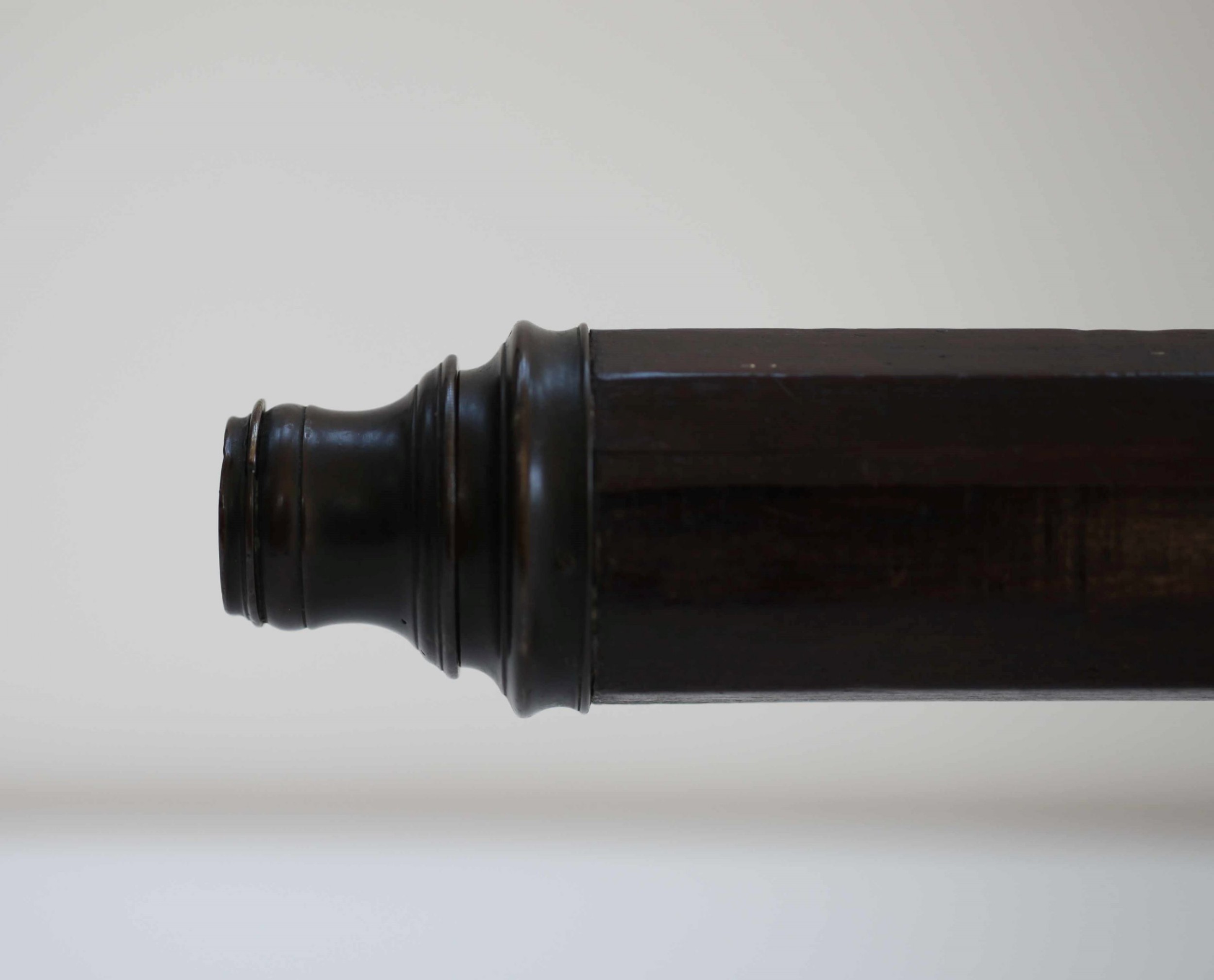
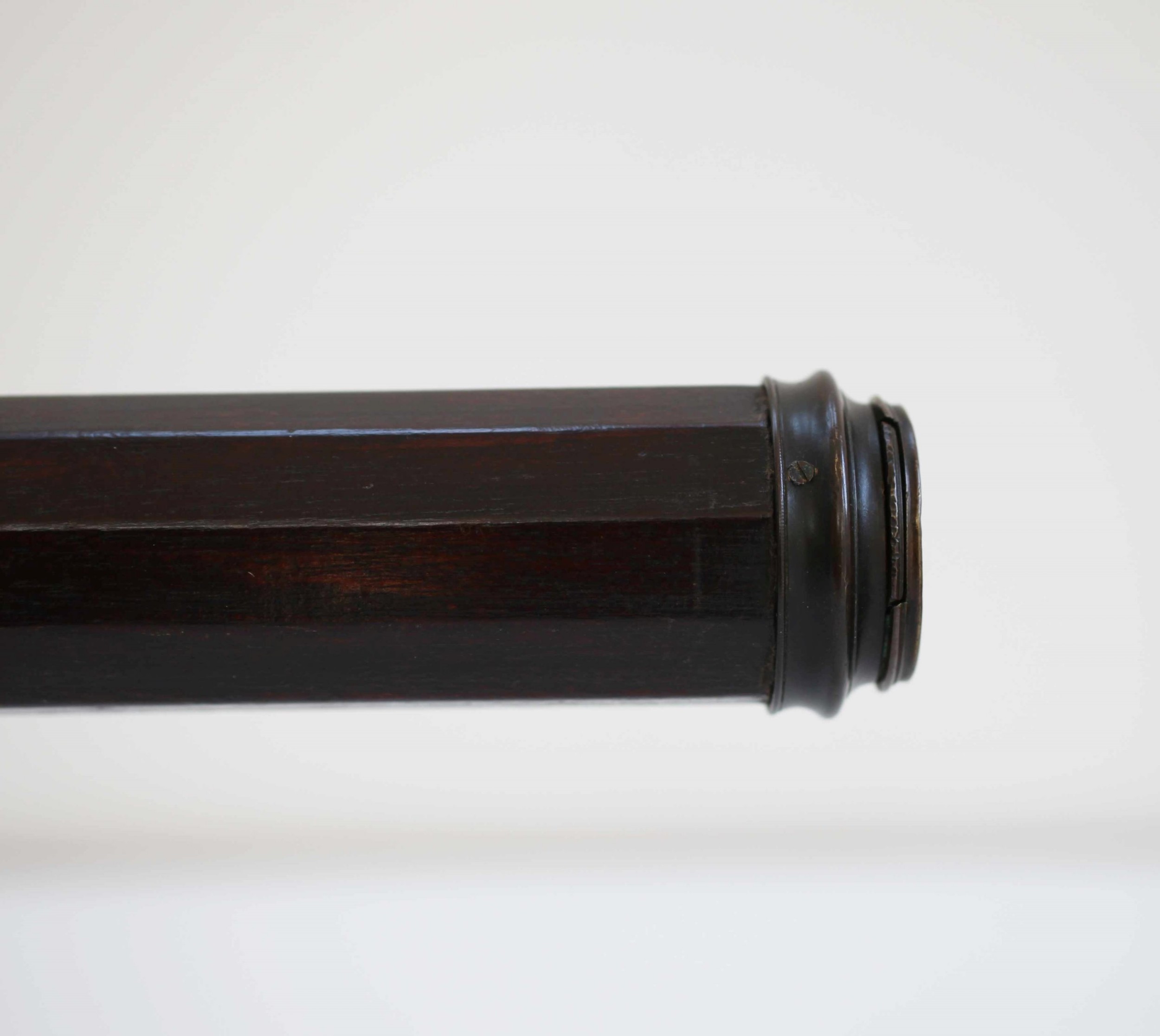
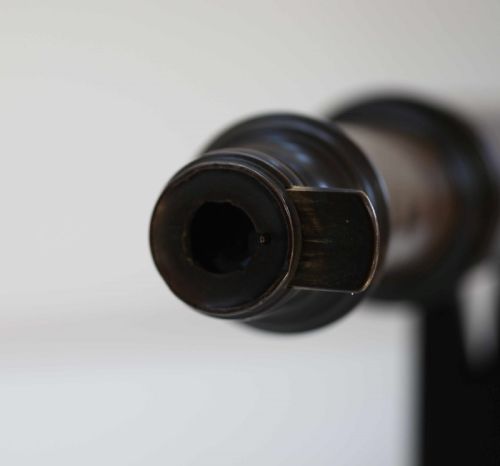
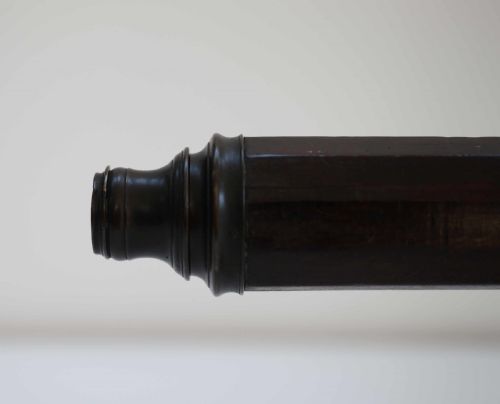
The mahogany ten sided tapered barrel holds a single draw tube containing five lenses and is completed with a bulbous type eyepiece with dust slide, common during the period.
The “improved- field non-achromatic terrestrial” lens arrangement of the draw tube is crucial for dating. The use of more than three lenses was adopted around 1753 by a lot of the leading London makers as a way in which to improve the field of view without increasing chromatic aberration. Within five years, the Dollond’s had famously patented the achromatic couplet, a move which eventually changed the nature of telescope manufacture forever.
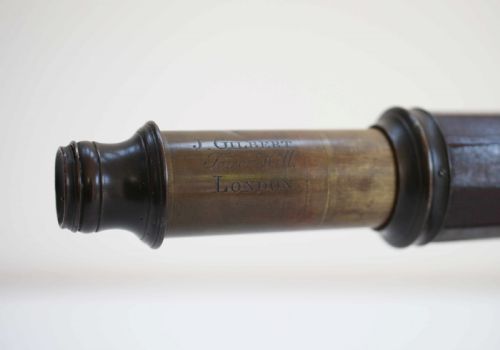
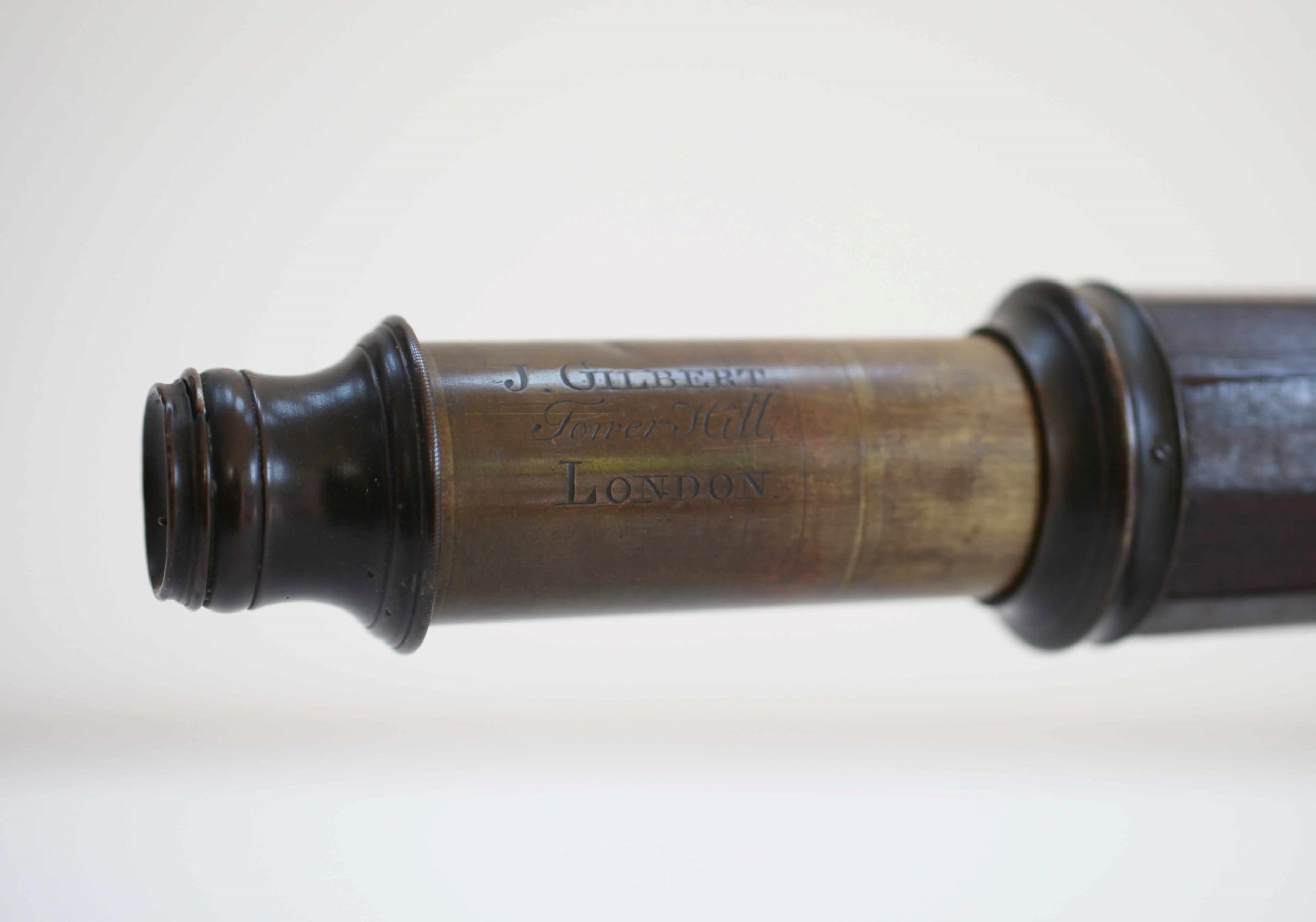
As is reflected within the company history below, John Gilbert (II) is most likely to have been responsible for the manufacture of this rare survivor. His Father is likely to have died around 1750 which would have been slightly too early for this short lived lens arrangement. John Gilbert (II) is also one of the few London makers that also had a contract arrangement with the Dollonds’ for selling their patented achromatic lenses and this was certainly the case by 1764, perhaps earlier. It would seem sensible to assume then that although these improved field non-achromatic telescopes continued to be manufactured by other London makers who had no access to Dollond’s secrets, Gilbert would have been unlikely to have continued them for long. The family had a good relationship with the Dollonds with Gilbert’s son undertaking an apprenticeship with the Dollond firm.
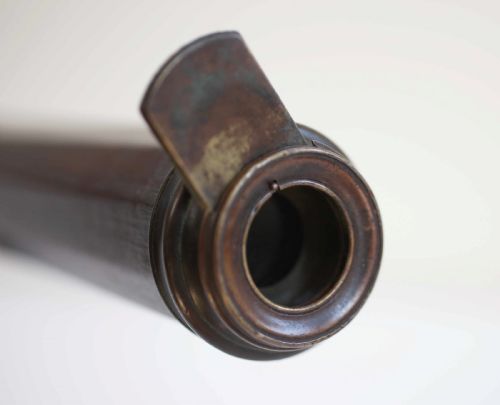
Circa 1755
During the eighteenth and early nineteenth centuries, the Gilbert family of Tower Hill carried a huge reputation, rivalling that of the Dollond and Ramsden for their skill of manufacture. The first family member to come to prominence as a scientific instrument maker was John Gilbert Snr. After beginning an apprenticeship in 1709 with a John Johnson he began trading after the customary seven years in 1716, entering the Company of Grocers. In 1726, he is referred to by the scientist, John Peter Biester as the chosen maker for his “Portatoris”, an instrument intended to solve the issue of longitude by observing the moon’s distance from a known star as it crossed the meridian. Clearly the device was not ultimately successful for Biester but he was confident enough to show his work to Isaac Newton and The Royal Society which should give you a flavour of the circles in which the elder John Gilbert was already moving.
Amongst a number of apprentices, his son John Gilbert the younger was enrolled in 1736 and following his eventual freedom in the early 1740’s, the family traded as Gilbert & Son and notably acquired the sole rights to manufacture and sell John Hadley’s hugely popular patent reflecting quadrant. The elder Gilbert’s date of death is not recorded but he became a member of the Livery of the Grocer’s Company in 1749 alongside notable instrument makers Thomas Heath and the hugely renowned George Adams of Fleet Street.
It seems fairly certain that the younger was trading under his own name by the 1750’s and he maintained a number of apprentices including his sons John (III) in 1764 and his second son William in 1769 although the latter was soon turned over to Peter Dollond, an enormously shrewd move on Gilbert’s part given the Dollond family’s recent patenting of the achromatic lens. Records show that by 1764, Gilbert was one of the few instrument makers that was given the rights to sell the achromatic lens by the Dollond family and William’s apprenticeship may have been a positive gesture by the Dollonds for the continued support and loyalty shown by Gilbert during the various famous legal issues that endured over the patent throughout this p
Jason Clarke Antiques has dated this Antique Decagonal Wooden Telescope to the 1750s.

You can view the stock and full dealer information on the Jason Clarke Antiques Profile Page
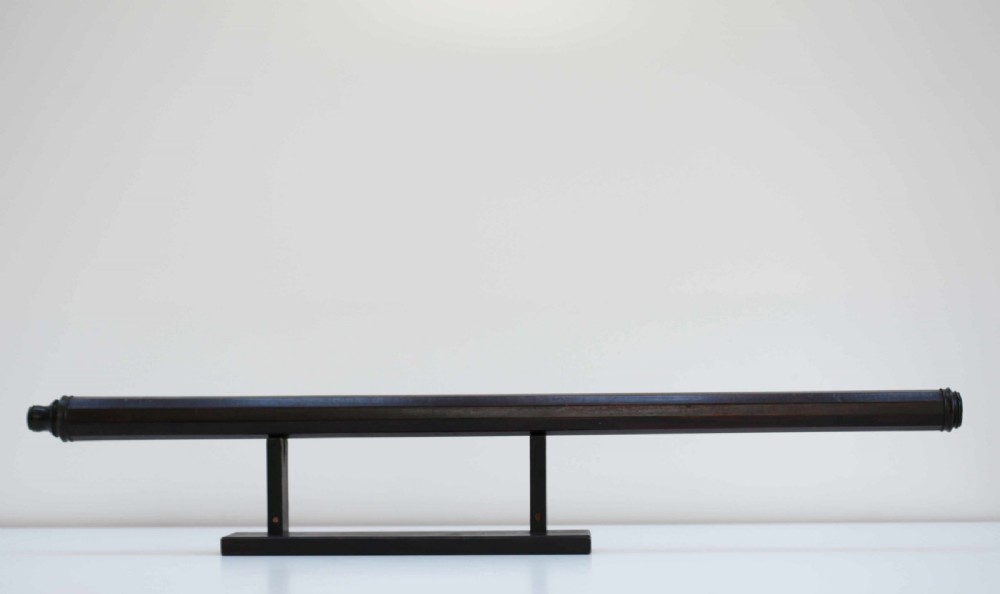
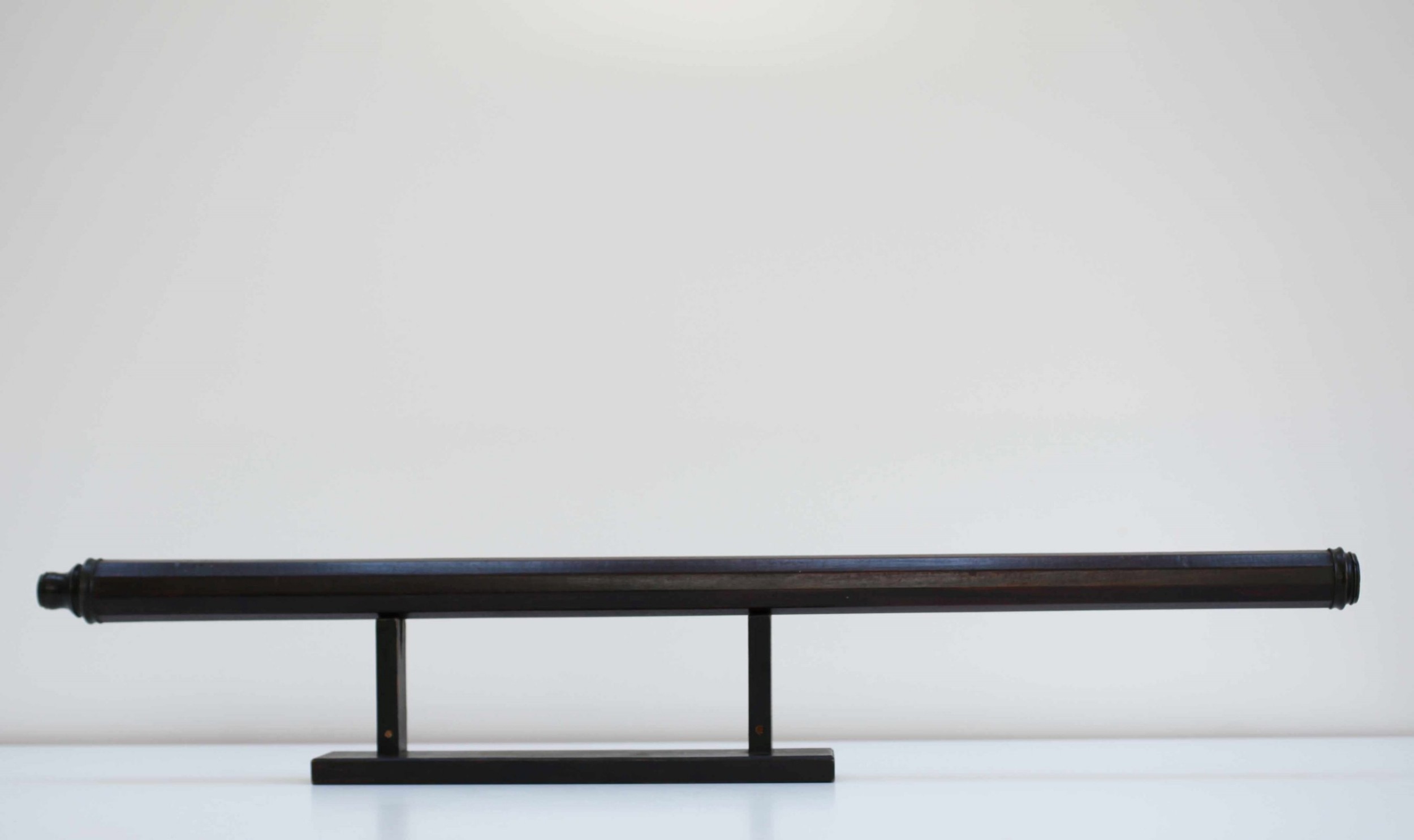
Mid Eighteenth Century Non Achromatic Decagonal Reverse Taper Telescope by John Gilbert