


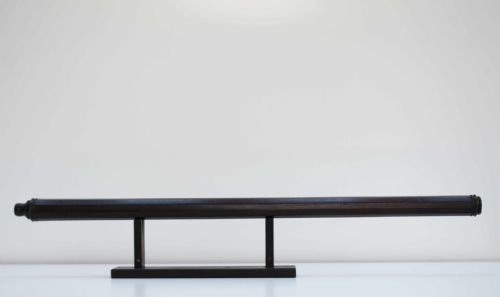
Antique Nautical Scope
These antique nautical scope examples are brass and leather instruments designed for maritime navigation, offering a direct connection to historical seafaring.
Antique Nautical Scope
When you search for an antique nautical scope, you are looking at portable optical instruments designed for use at sea and on land during past centuries. The pieces on this page span several distinct eras, stretching from the mid eighteenth century through the Regency, Victorian, and Edwardian periods up to the First World War. You are most likely to encounter Victorian examples, often configured with multiple brass draws and covered in stitched leather.
The forms vary from simple two-draw pocket versions to complex four-draw instruments mounted on wooden stands. Makers such as Ross of London, Newton & Co, and Broadhurst Clarkson & Co produced much of what you see here, alongside specialised makers like Voigtländer & Sohn AG and John Gilbert. These instruments served naval officers, watch officers, and civilian navigators who required reliable magnification for spotting land, ships, and weather changes.
How they were made
Makers constructed these scopes primarily using turned brass for the draw tubes and main barrel, which provided durability in harsh marine environments. Many examples feature outer wrappings of stitched leather to ensure a secure grip with wet hands on deck.
Optical systems relied on glass lenses fitted into hand-adjusted draws, ranging from simple non-achromatic designs in eighteenth-century models to multi-draw terrestrial configurations in later Victorian pieces. Wood components such as oak and mahogany appeared both in fitted carrying cases and on specialised display stands.
Some scopes were designated for day or night use, swapping light gathering capability to help watch officers peer through maritime gloom.
What varies in quality
The sophistication of the optical arrangement separates basic handheld spotters from instruments built for precision naval work. Earlier non-achromatic designs offer a different viewing experience compared to later multi-draw lenses produced by established opticians.
The precision of the brass turning and the quality of the leather stitching dictate the tactile appeal of an instrument. Signed pieces by recognised makers demonstrate a higher level of workshop finish than anonymous examples.
Voigtländer & Sohn AG·Ross of London·Newton & Co·Broadhurst Clarkson & Co·Chadburn Brothers of Sheffield·John Gilbert
The Antique Nautical Scope Glossary
- Draw
- A sliding brass tube section that extends the length of the telescope body. Most instruments on this page feature between two and six draws.
- Achromatic
- An optical lens design corrected to bring red and blue light to the same focus point. This reduces false colour fringes around high contrast edges.
- Terrestrial
- An optical setup configured to show upright images rather than inverted views. This makes distant land and sea objects easy to identify.
- Decagonal
- Having ten sides in cross section. This geometric shape appears on the barrel of specialised eighteenth century instruments.
- Naval telescope
- A sturdy optical instrument designed specifically for use aboard ship. These often include protective leather sheathing and sliding sunshades.
Antique Nautical Scope: Frequently Asked Questions
What is an antique nautical scope used for?
These instruments were utilised at sea and on land for navigation, spotting vessels, and coastal surveying. Officers of the watch relied on them to scan the horizon during changing weather and light conditions.
Today, they serve as decorative objects and historical artefacts that appeal to collectors of maritime instruments. They can still be focused to view distant objects outdoors.
How do I date an antique nautical scope?
Dating relies on maker signatures, mechanical complexity, and material combinations recorded across different eras. Regency and early Victorian pieces often feature simpler two-draw constructions, while later Victorian examples utilise up to six draws.
Signatures from recorded makers help anchor the instrument to a specific working period. Stylistic details like decagonal barrels point directly to mid-eighteenth-century manufacturing practices.
What materials are used in these scopes?
Brass forms the primary structural material for the barrels and extending draw tubes. Leather is frequently stitched around the main body to provide a comfortable grip.
Glass lenses provide the magnification, housed within the brass fittings. Fitted wooden cases and display stands often incorporate oak or mahogany.
How do I care for an antique telescope?
Keep the instrument in a stable environment away from extreme humidity and direct heat sources. This protects the historic leather and prevents the brass from tarnishing too rapidly.
Handle the extending draws with care, pulling them straight without applying lateral force. Clean the glass lenses only with specialised optical cloth.