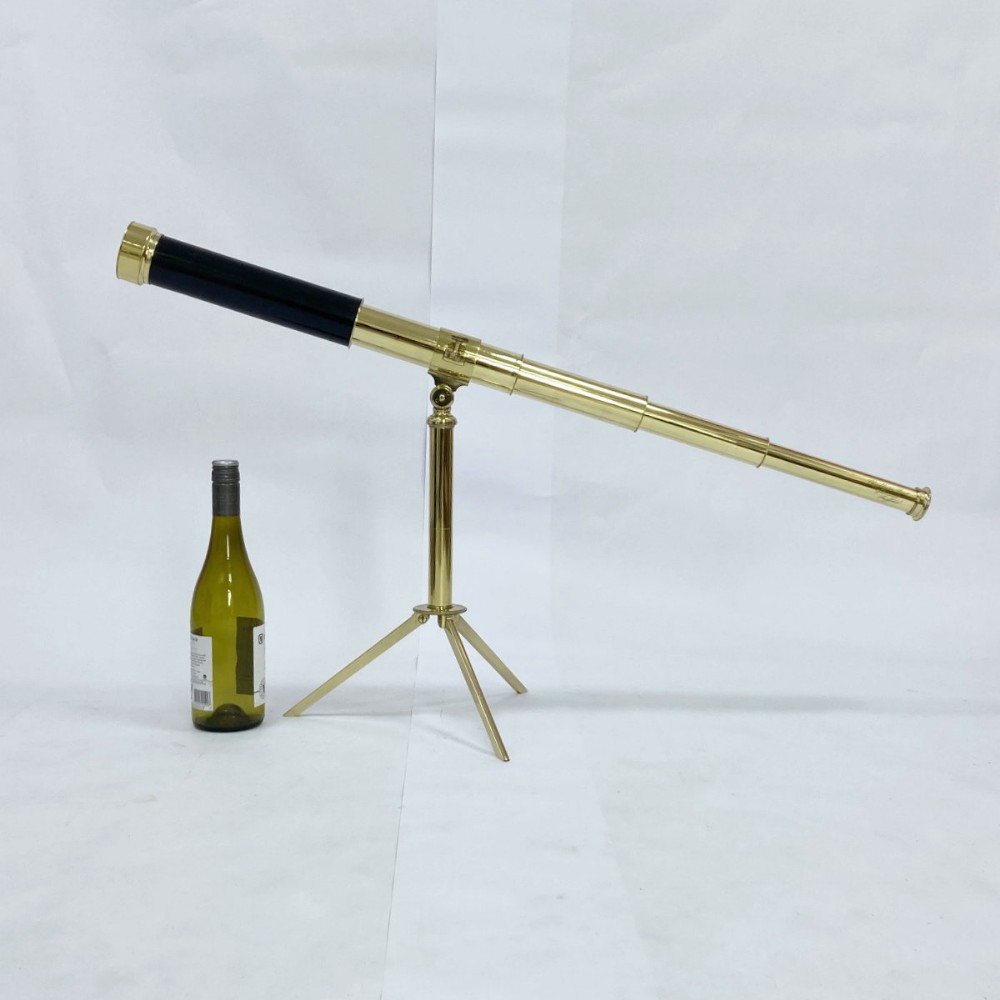
Jason Clarke Antiques has dated this Victorian Cased Brass Telescope to the 1850s.
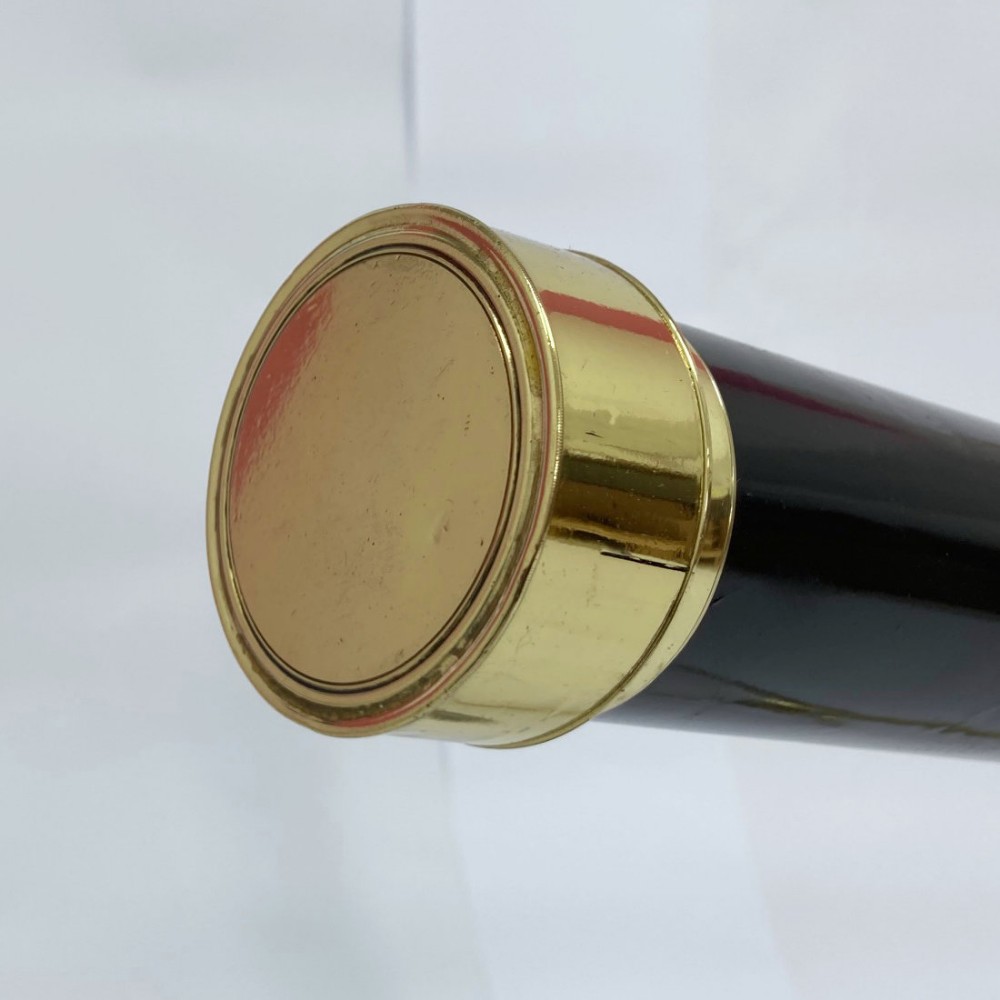
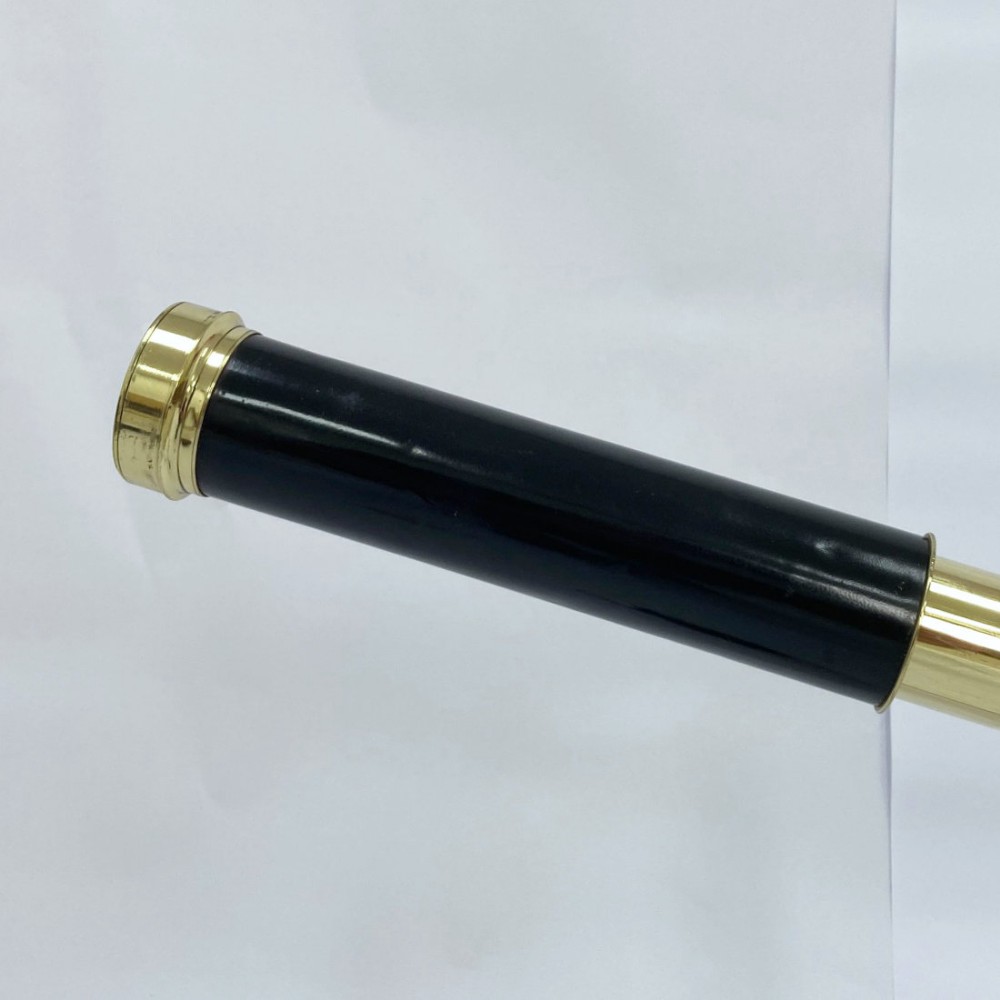
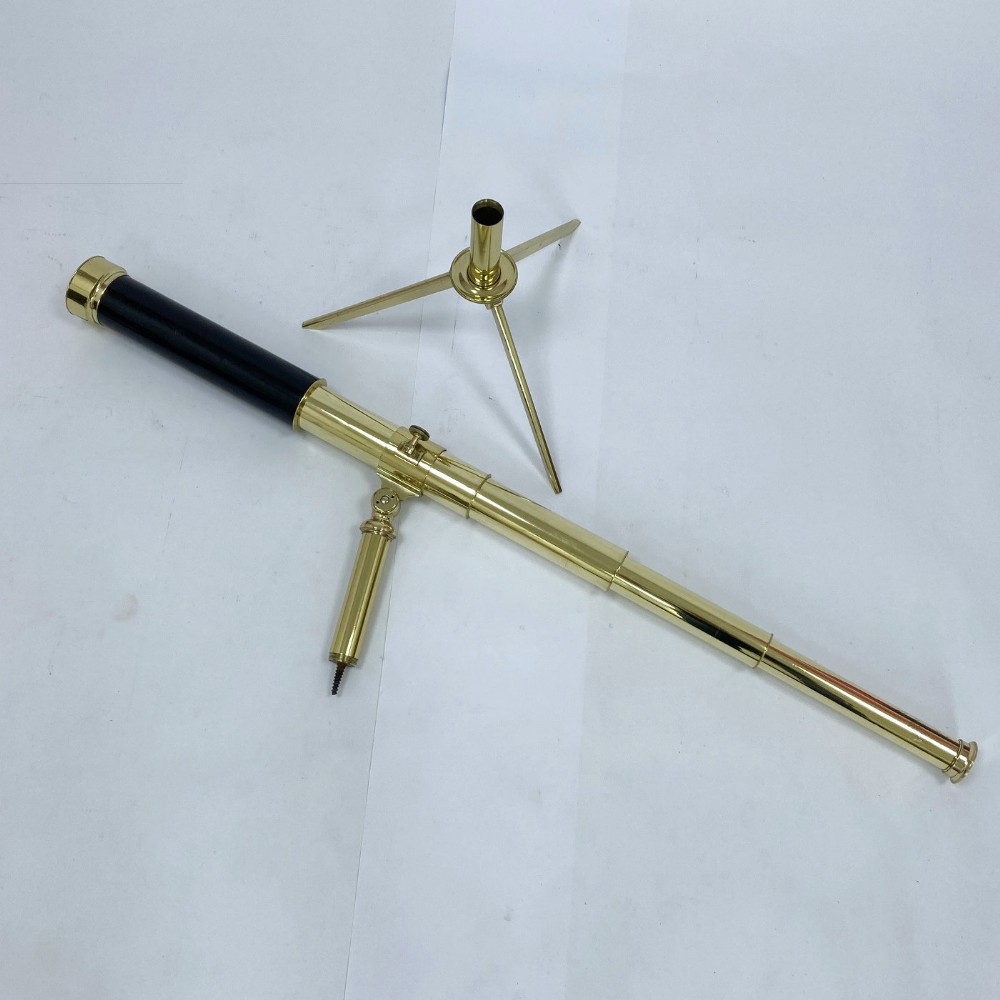
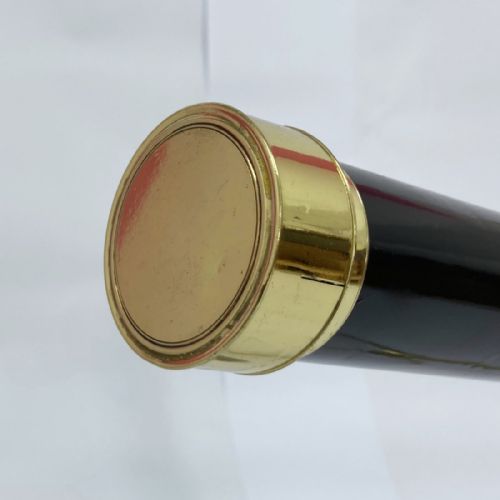
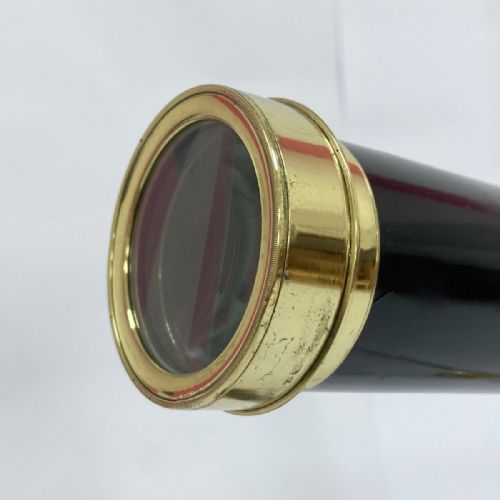
The telescope is comprised of a black painted barrel with four draws measuring 27.5cms when closed and 90cms fully extended.
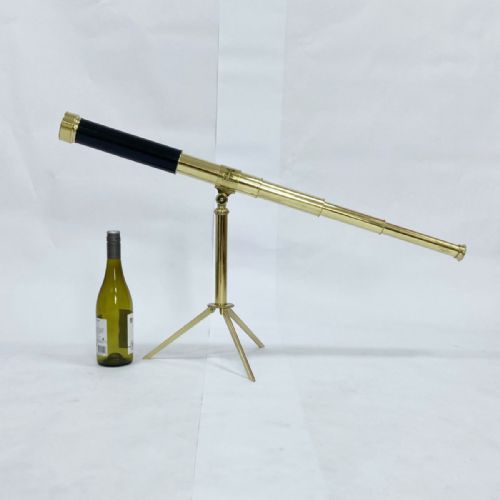
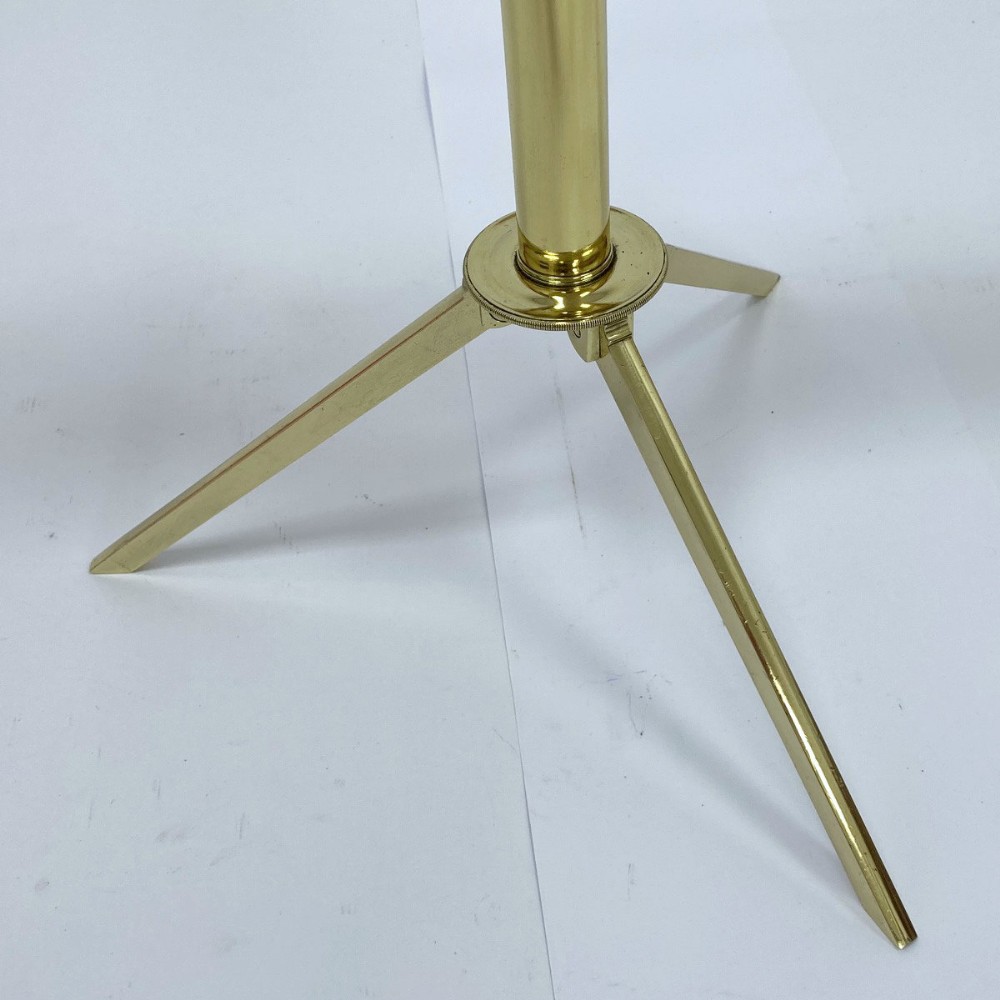
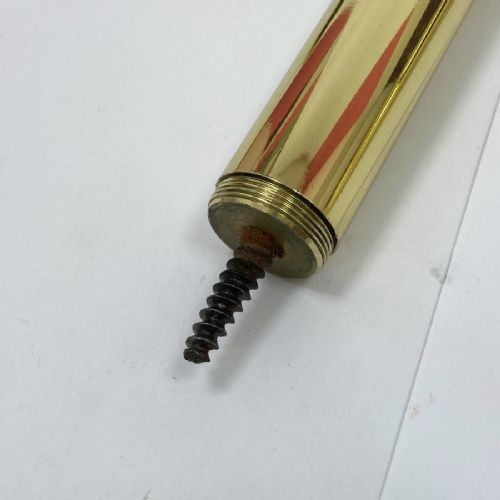
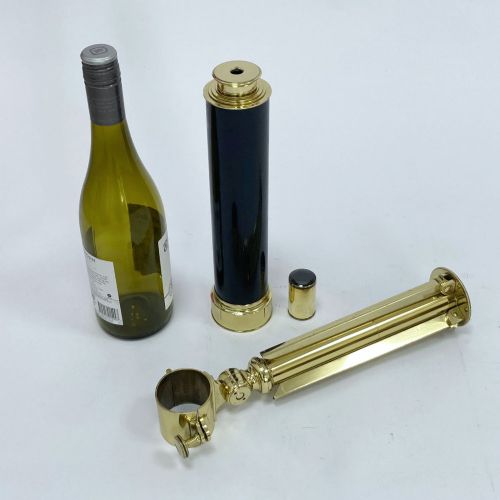
The two sectioned tripod is provided with a rotating, hinged circular collar to the top which clasps the telescope barrel by means of a knurled screw to one side. The shaft is also finished with a threaded base onto which the tripod legs are screwed. This ingenious design allows the legs to be splayed outwards for use and then screwed back onto the shaft upside down for packing. The shaft of the tripod is also sectioned in two pieces which can be unscrewed to reveal a separate screw thread. This feature would allow the telescope to be mounted in the field on a tree branch or a fence post as required.
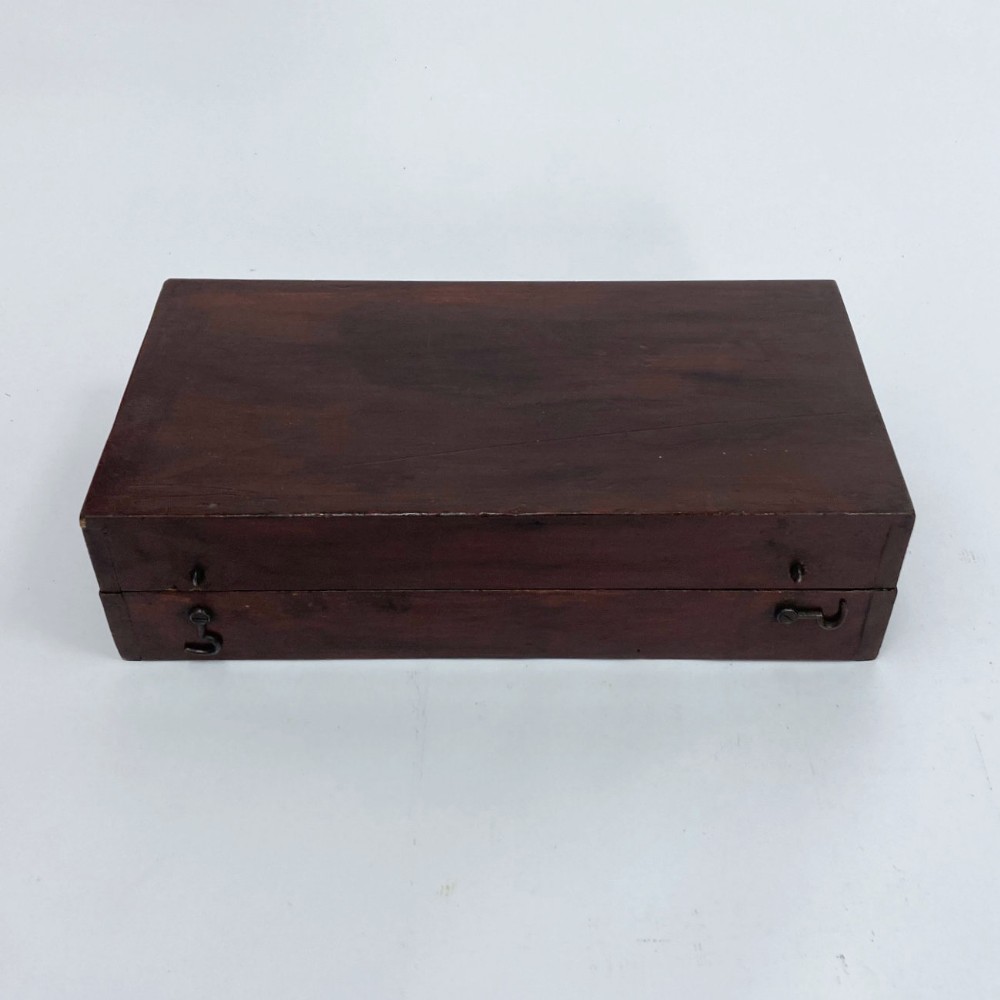
Both the tripod and the telescope are complete with their original stained and polished pine fitted case with hook and eye fasteners to the front.
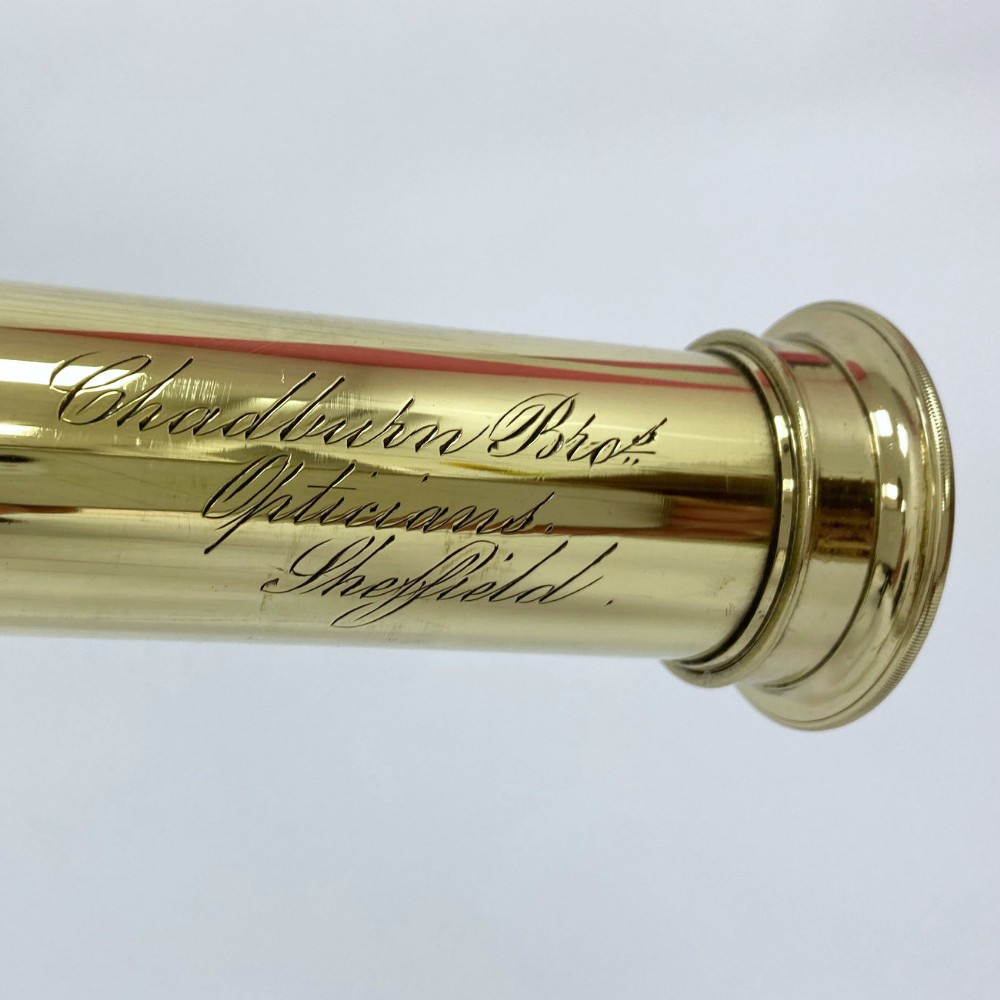
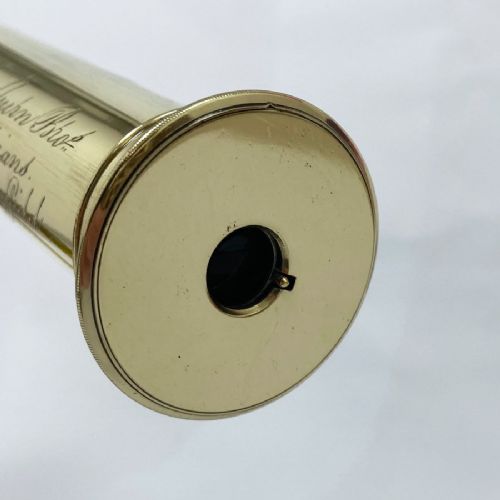
The Chadburn family had a long history of involvement in the manufacture of scientific instruments. Beginning as a partnership in 1818 between William Chadburn and David Wright, by 1838 the business seems to have been bequeathed to the Chadburn’s sons, Alfred & Francis Wright, (the latter’s middle name presumably a dedication by his Father to David Wright his business partner) and in 1841 a third brother, Charles Henry joined the company which was subsequently renamed as Chadburn Brothers.
The Sheffield company’s adverts of the early 1840’s proudly state their address at Nursery Street, conveniently situated “near the railway station”, an entirely new form of transport for Sheffield which had only arrived in 1838. They also provide a list of instruments and products too voluminous to be reproduced, but its sheer size and breadth provides some insight into the firm’s manufacturing capability. It is also clear that they quickly understood the commercial benefits of the speed in which the railways could transport both people and goods. Even at this early stage, they were advertising their position as appointed agents to historic London firms such as Watkins & Hill and Newton & Son bringing with it a level of prestige which helped to make them one of the most recognisable regional instrument making firms of their day. By the end of the decade they had added continental maker’s products to their growing stock list and in 1847 a Royal Association was gained with all further advertising naming the firms as “opticians to HRH Prince Albert”.
In 1845, Charles Henry Chadburn relocated to Liverpool to open a new branch at Lord Street, a sensible extension northward towards the new industrial heartlands of the northwest rather than trying to compete with established London firms further south. This new branch would also allow goods to flow from London to Liverpool with an in-house manufacturing base in both Sheffield and Liverpool.

With their countrywide reach and a newly formed relationship with Prince Albert, it is little surprise that the Chadburn Brothers appeared on the exhibitor’s list of The Great Exhibition, the brainchild of their new patron. The company is listed as Exhibitor 259 in Class 10 – Philosophical, Musical, Horological & Surgical Instruments, where they are referenced as having manufacturing bases in Sheffield & Liverpool and with an array of goods as follows:
“Spectacle glasses & lenses. Telescopes and microscopes, in various stages of manufacture. Agricultural and surveyor’s levels, magnets, steam and vacuum gauges, barometers, syringes, Galvano electric machines. Craig’s charactograph etc.”
The explanation provides evidence that Chadburns continued to be both retail and wholesale suppliers and for their efforts they gain
Jason Clarke Antiques has dated this Victorian Cased Brass Telescope to the 1850s.

You can view the stock and full dealer information on the Jason Clarke Antiques Profile Page
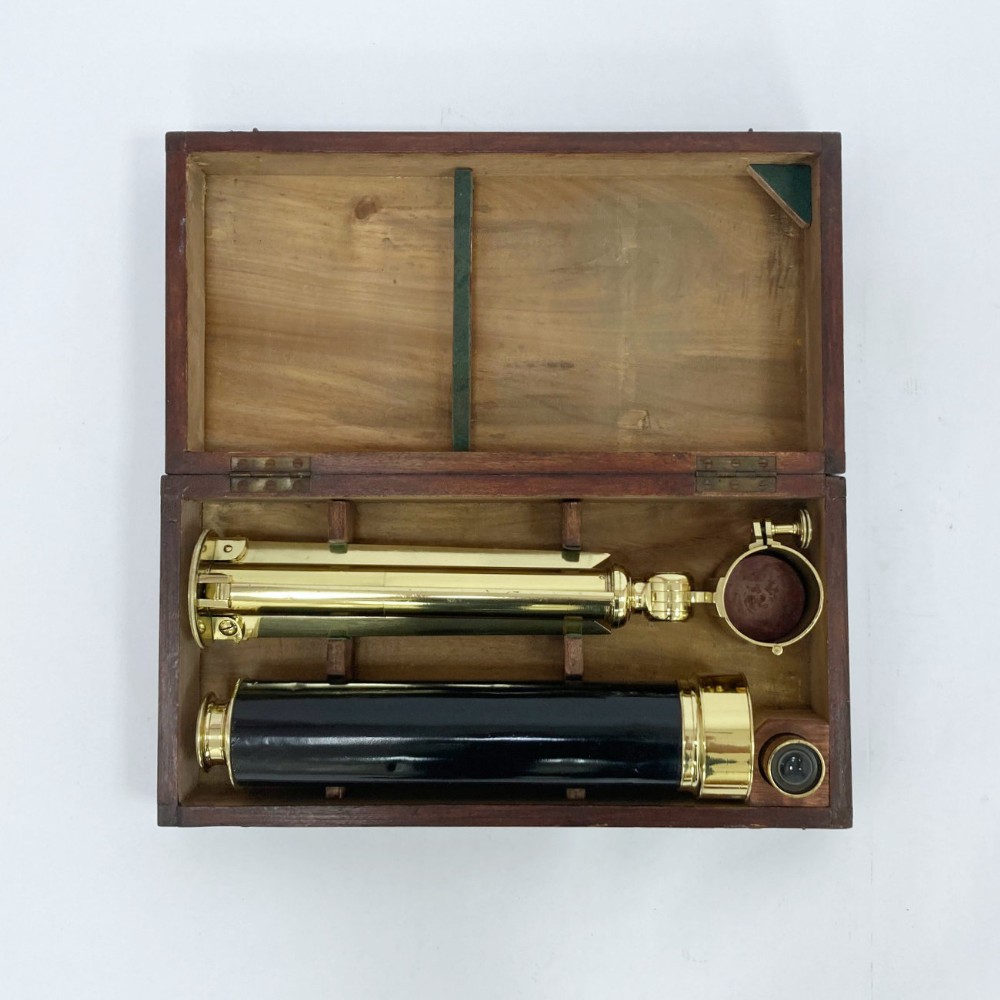
Early Victorian Cased Four Draw Telescope on Stand by Chadburn Brothers of Sheffield