




Antique Brass Monocular
These antique brass monocular and telescope pieces offer precision optical work from the Georgian, Victorian, and Edwardian eras.
Antique Brass Monocular
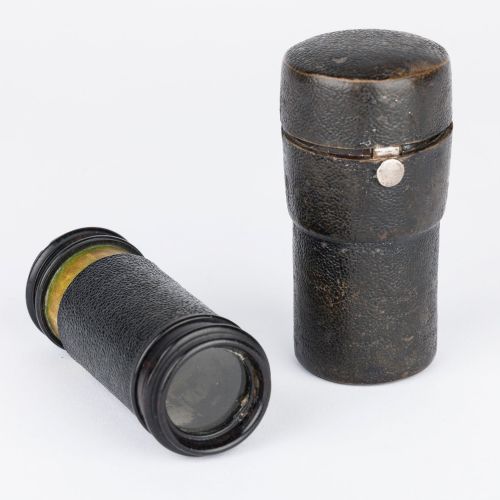
When you search for an antique brass monocular, you are looking at optical instruments designed for field use, navigation, and scientific study. The selection encompasses pocket spyglasses, marine telescopes, and single or multi-draw terrestrial scopes produced across the eighteenth, nineteenth, and early twentieth centuries.
You are most likely to meet Victorian and Edwardian examples on this page, alongside earlier Georgian and eighteenth-century pieces. These items frequently combine brass with materials such as mahogany, leather, and wood.
The forms range from compact hand-held pocket devices to larger library and naval telescopes, reflecting the diverse applications of historical optics. Some specimens arrive housed in original wooden cases or wrapped in stitched leather coverings.
Distinctions in craftsmanship and preservation
Quality in these instruments rests upon the precision of the lens grinding and the tightness of the draw tube fit. Finer pieces demonstrate crisp optical clarity and smooth mechanical action without excessive play between the sliding sections.
The choice of secondary materials also separates standard production from superior work. Examples dressed in well-preserved leather, figured mahogany, or signed by notable opticians command greater interest than plain utility items.
Antique Brass Monocular Retail Price Guide 2026
Typical asking prices for brass monocular among the pieces listed under this phrase on Sellingantiques today, from the lower quarter to the upper quarter. They describe what is for sale here now, not the wider market.
The listings span the 18th Century, Georgian, Regency, Victorian, Edwardian, and early 20th Century periods.
Nairne & Blunt of London·Ross of London·H Hughes & Son London·Voigtländer & Sohn AG Braunschweig·Newton & Co·Swift & Son·Chadburn Brothers of Sheffield·Latour Paris
The Antique Brass Monocular Glossary
- Monocular
- A single-barrel optical instrument used for magnified viewing with one eye. These range from small theatre scopes to field glasses.
- Draw
- A sliding section of a telescope tube that extends for focusing. Multi-draw instruments collapse into compact lengths for transport.
- Spyglass
- A small, portable refracting telescope used historically at sea or on land. They typically feature brass bodies covered in leather or wood.
- Terrestrial telescope
- An optical device designed for viewing objects on land, containing internal lenses to present an upright image. They appear frequently in Georgian and Victorian forms.
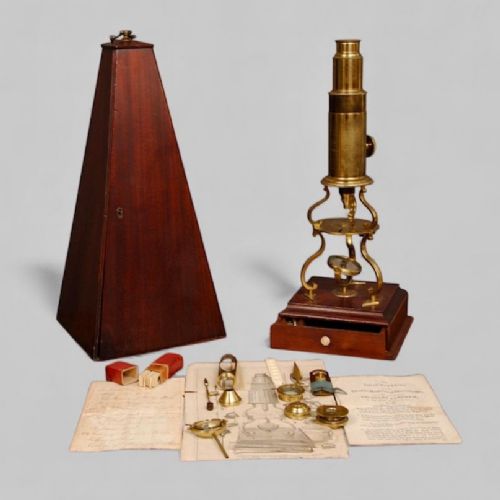
- Culpeper microscope
- An early form of tripod-mounted microscope developed in the eighteenth century. It uses a mirrored base to illuminate specimens from below.
Antique Brass Monocular: Frequently Asked Questions
What is the difference between a spyglass and a monocular?
A spyglass is a form of extending telescope designed primarily for distance viewing on land or at sea. A monocular is generally shorter and broader, often intended for theatre use or close observation.
Both rely on brass and glass construction, but their optical configurations serve different focal ranges.
How do I identify a Victorian telescope?
Victorian telescopes often feature multi-draw brass construction paired with leather sleeves or turned mahogany bodies. Maker signatures and addresses stamped into the brass draw tubes are also common.
Examination of the materials and typography on the instrument usually reveals the nineteenth-century production period.
Were these instruments used at sea?
Many of the surviving examples functioned as officer of the watch or marine telescopes. Their brass and leather construction resisted maritime handling.
Day or night lenses allowed naval officers to sight horizons under varying light conditions.
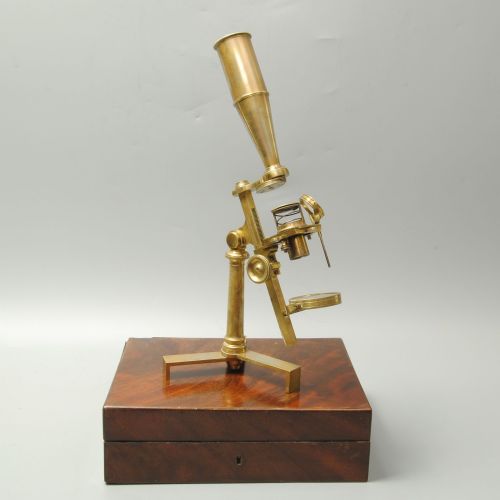
How should I display a cased microscope?
Cased scientific instruments are best kept in stable indoor environments away from direct sunlight and damp conditions. Keeping the instrument inside its original fitted wooden box protects the brass surfaces and delicate glass components.
Regular dusting with a soft cloth maintains the condition of both the wood and the metal.