

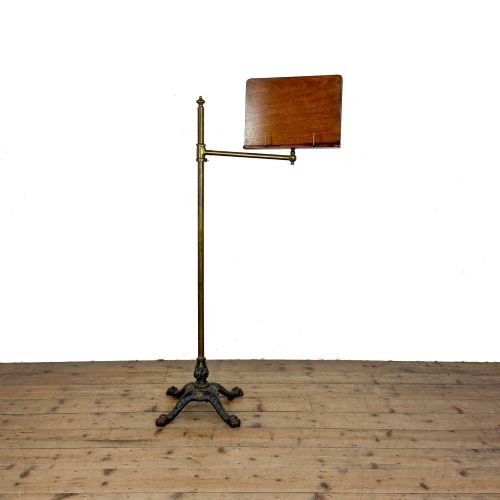


Mahogany Brass Telescope
A mahogany brass telescope combines optical brass and turned timber into a portable instrument designed for maritime, terrestrial or astronomical use.
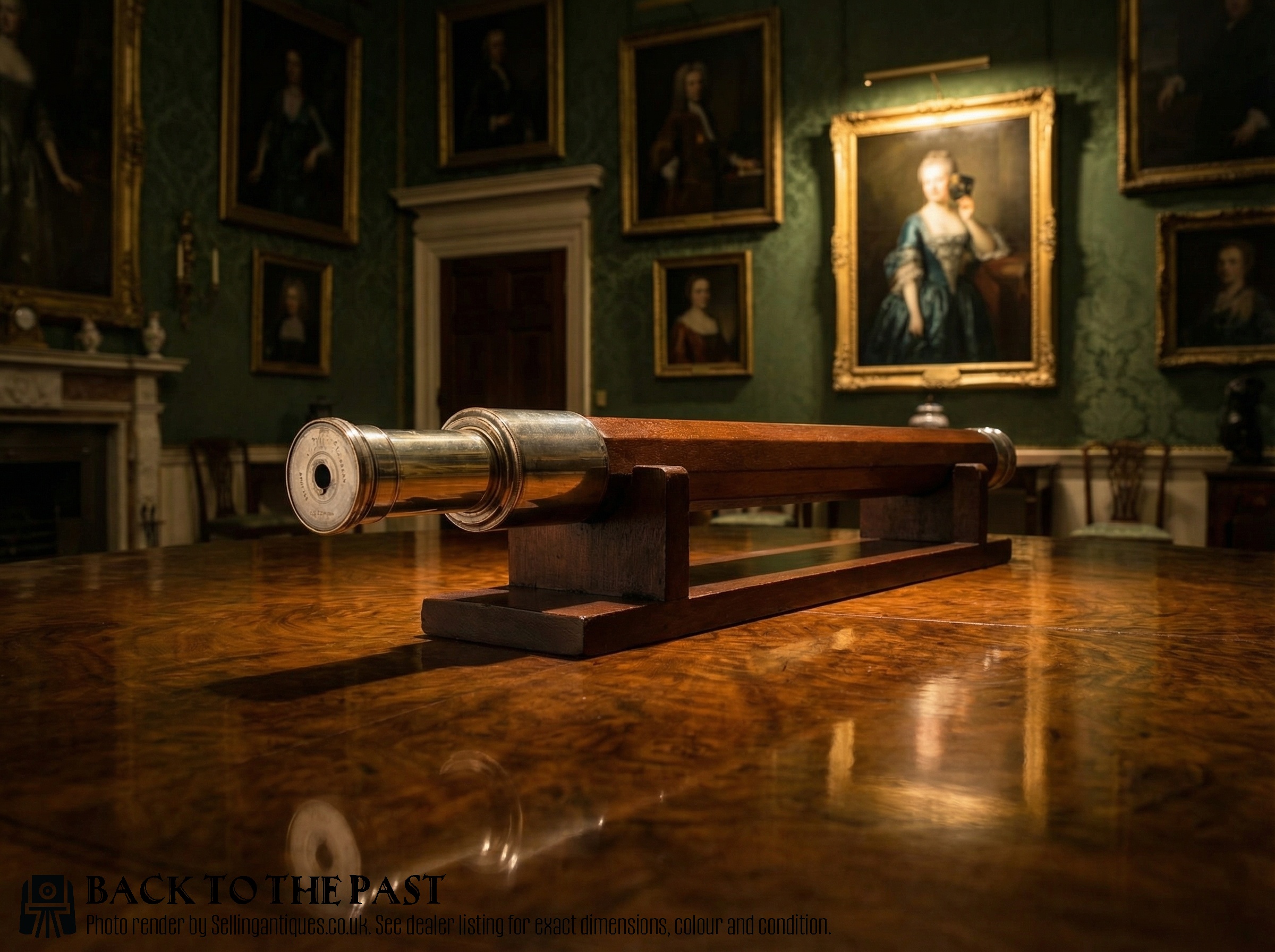
Mahogany Brass Telescope
When you search for a mahogany brass telescope, you encounter a selection of scientific and navigational instruments spanning the eighteenth, nineteenth, and early twentieth centuries. These pieces range from pocket-sized two-draw field glasses to larger library telescopes mounted on wooden or cast iron stands. Most examples found here combine polished metal tubes with timber barrels, often retaining their original cases or leather grips.
The material combination served a practical purpose during the Georgian and Victorian periods, providing a warm gripping surface while protecting the optical assembly. You will frequently find multi-draw sliding designs that collapse for travel or extend for focusing on distant horizons. Makers marked their optics with signatures denoting London, provincial English workshops, or international centres like Paris and Edinburgh.
Materials and construction
Makers constructed these instruments using heavy drawn brass for the inner draw tubes and optical housings, paired with turned mahogany barrels for the main body. The timber was typically seasoned, turned on a lathe, and polished to create a durable sleeve that shielded the inner metal tubes from knocks and temperature changes.
Lenses were ground from optical glass, housed within threaded brass cells that allowed for precise manual alignment and focusing. Many examples incorporated leather or shagreen coverings over the wooden sections, while others relied on exposed polished mahogany secured with brass end rings.
Mahogany Brass Telescope Retail Price Guide 2026
Typical asking prices for mahogany brass telescope among the pieces listed under this phrase on Sellingantiques today, from the lower quarter to the upper quarter. They describe what is for sale here now, not the wider market.
Listings feature mahogany brass telescope examples spanning the eighteenth, nineteenth, and early twentieth centuries, utilising brass, glass, and wood.
Assessing quality and execution
Quality in a mahogany brass telescope rests upon the precision of the draw action and the clarity of the lens configuration. Superior instruments slide smoothly between draws without lateral play, maintaining optical alignment across extended distances.
The execution of the maker's signature, often engraved directly onto the brass draw tube or eyepiece rim, indicates the workshop's standing. Finer examples exhibit crisp lettering, precise mechanical thread cutting, and carefully fitted mahogany components that withstand repeated use.
Nairne & Blunt·W. & T. Gilbert·Clarkson·Steward of London·Negretti & Zambra·Alexander Adie·Matthew Berge·G. Adams·WF Stanley·Bate of London·Broadhurst Clarkson & Co·W. Harris & Son·J.P. Cutts·Salom & Co·Rothwell Manchester
The Mahogany Brass Telescope Glossary
- Draw
- A sliding tubular section of a telescope that pulls out from the main barrel to alter the focal length. Multi-draw instruments collapse into compact lengths for transport.
- Terrestrial telescope
- An optical instrument designed for viewing objects on land, incorporating correcting lenses so the image appears the right way up. These contrast with simple astronomical setups.
- Library telescope
- A larger stationary instrument intended for indoor use, typically mounted on a dedicated wooden or iron stand rather than handheld. They offer greater magnification for studying distant terrestrial or celestial details.
- Achromatic
- An optical design that corrects for colour fringing by combining different glass types. This engineering development improved clarity across nineteenth-century scientific instruments.
Mahogany Brass Telescope: Frequently Asked Questions
What is the difference between terrestrial and astronomical types?
Terrestrial instruments include erecting lenses within the optical path so you view scenes upright and correctly oriented. This makes them suitable for maritime observation and landscape viewing.
Astronomical versions omit the erecting lenses to gather maximum light for studying stars and planets. Images through an astronomical setup appear inverted, which does not affect celestial observation.
How should I clean the brass and mahogany?
Wipe the mahogany barrel gently with a dry or lightly oiled cloth to maintain the finish of the timber. Avoid harsh commercial polishes that can degrade aged wood surfaces.
Clean the exposed brass using a soft cloth without abrasive cleaners, preserving the natural patina accumulated over the centuries. Leave optical glass untouched unless dust significantly impairs viewing.
Can I date a telescope from its signature?
Makers often engraved their business names, partnerships, and trading addresses onto the draw tubes. Cross-referencing these workshop directories establishes the active working window of the firm.
Changes in address or partnership titles provide narrow date ranges for individual instruments. Unsigned pieces rely on mechanical style, materials, and case construction for dating.