
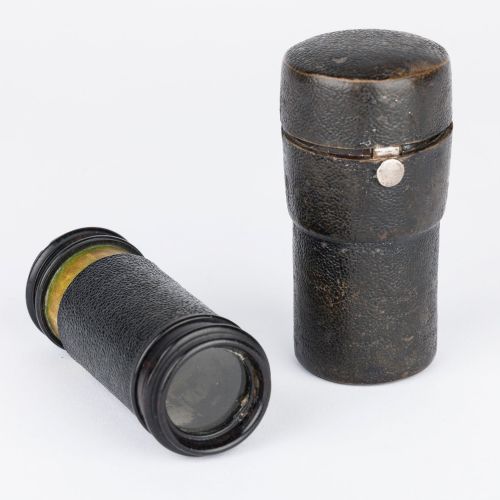




Antique Marine Telescope
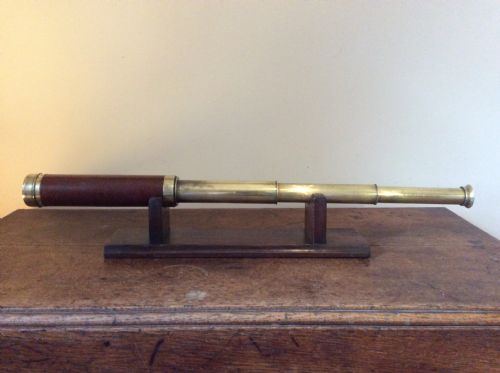
An antique marine telescope is a brass and leather draw instrument built for navigation and watchkeeping at sea.
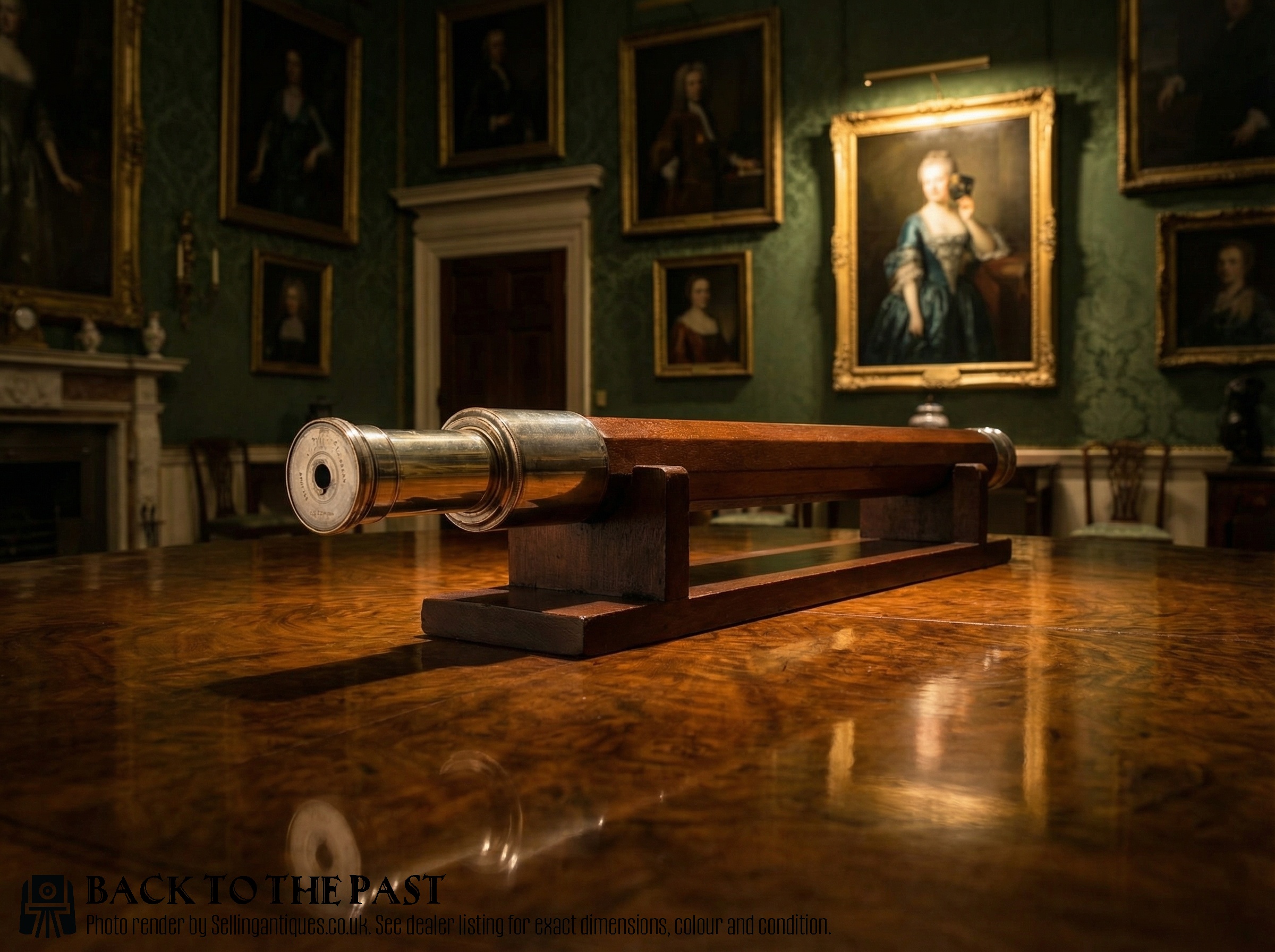
Antique Marine Telescope
When you search for an antique marine telescope, you look at optical instruments designed for use aboard ship during the Georgian, Regency, and Victorian eras. These range from single-draw spyglasses to multi-draw instruments intended for day or night viewing on deck.
The versions you meet most frequently on this page are English-made brass and leather draw telescopes, often housed in wood or leather bodies. Makers such as Ross of London and Broadhurst Clarkson & Co appear across the Victorian and Edwardian periods.
Object types span navigational instruments, pocket spyglasses, and officer of the watch telescopes. They reflect the practical requirements of maritime trade and naval operations over several centuries.
How they were made
Makers constructed these instruments using turned brass for the barrels and draw tubes, paired with optical glass lenses for magnification. Many barrels feature hand-stitched leather coverings or turned wood sections in mahogany, walnut, or oak to improve grip and protect the metal.
Construction methods involved sliding draw sections that extended smoothly to focus distant objects at sea. Finer examples incorporate multi-draw mechanisms and specialised day or night lenses for varying light conditions.
Antique Marine Telescope Retail Price Guide 2026
Typical asking prices for marine telescope among the pieces listed under this phrase on Sellingantiques today, from the lower quarter to the upper quarter. They describe what is for sale here now, not the wider market.
Some Victorian tubes are nine-sided, proving that even practical naval officers appreciated an unusual geometric grip on a rolling deck.
What varies in quality
Quality depends upon the precision of the optical lenses and the tightness of the draw tubes when extended. Instruments by established makers demonstrate superior metal-turning and lens clarity compared to uncredited workshop pieces.
The choice of exterior materials also distinguishes the range, from simple brass tubes to multi-draw brass bodies wrapped in quality leather or figured wood such as mahogany and walnut.
Ross of London·A Hurlimann Paris·Broadhurst Clarkson & Co·E & W Seagrove
The Antique Marine Telescope Glossary
- Draw
- A sliding section of a telescope barrel that extends to alter the focal length. Multi-draw instruments collapse into shorter lengths for portability.
- Spyglass
- A small, portable refracting telescope used for quick observation. Pocket versions were popular during the eighteenth century.
- Refractor
- An optical telescope that uses a lens to form an image. Marine instruments rely on this optical system to gather light at sea.
- Day or night
- A telescope configuration with objective lenses adjusted for different lighting conditions. These allowed officers to spot signals in low light.
Antique Marine Telescope: Frequently Asked Questions
What is an antique marine telescope?
An antique marine telescope is a portable optical instrument used by officers and sailors for navigation, signalling, and spotting land or other vessels at sea.
These instruments use brass tubes, glass lenses, and frequently leather or wood grips to withstand harsh marine environments.
How do you use a draw telescope?
You pull out each sliding section fully until the internal lenses lock into alignment, then adjust the final small eyepiece tube to bring the distant view into focus.
Keep the brass clean and support all the draw sections steadily when sighting objects across the water.
How do I tell a Georgian telescope from a Victorian one?
Georgian and Regency marine telescopes often feature timber bodies like mahogany or walnut with simpler brass mounts and single or three-draw configurations.
Victorian examples frequently introduce multi-draw brass designs, sometimes with hexagonal barrels or leather-wrapped exteriors signed by known London makers.
Were these used exclusively at sea?
While designed primarily for naval and merchant marine navigation, officers and gentlemen used them ashore for terrestrial viewing and sport.
Their portability made them practical instruments for travel, exploration, and coastal observation on land as well as on ship decks.