


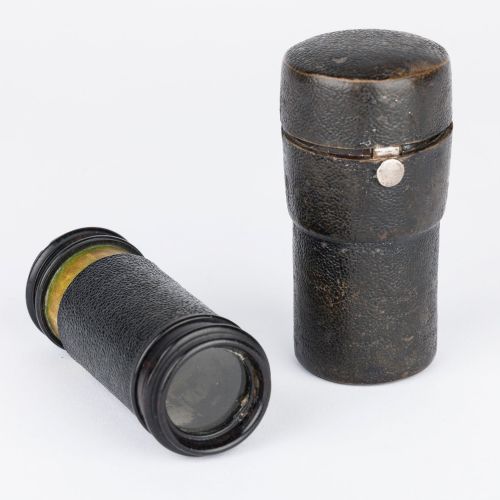
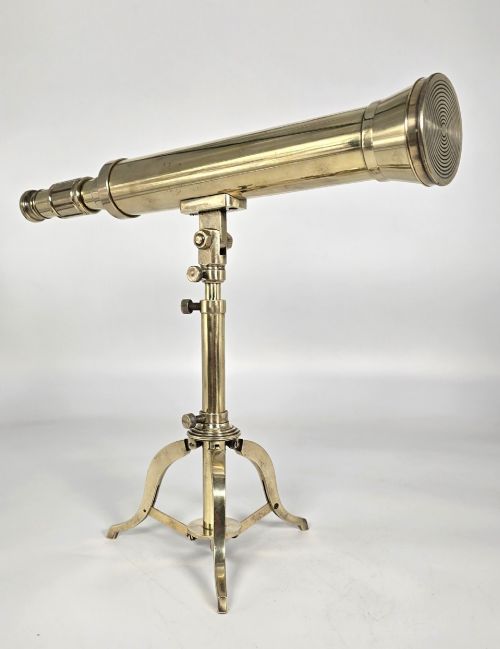


Vintage Brass Spyglass
These vintage brass spyglass pieces are practical optical instruments designed for distant observation, offering collectors a tangible connection to maritime and scientific history.
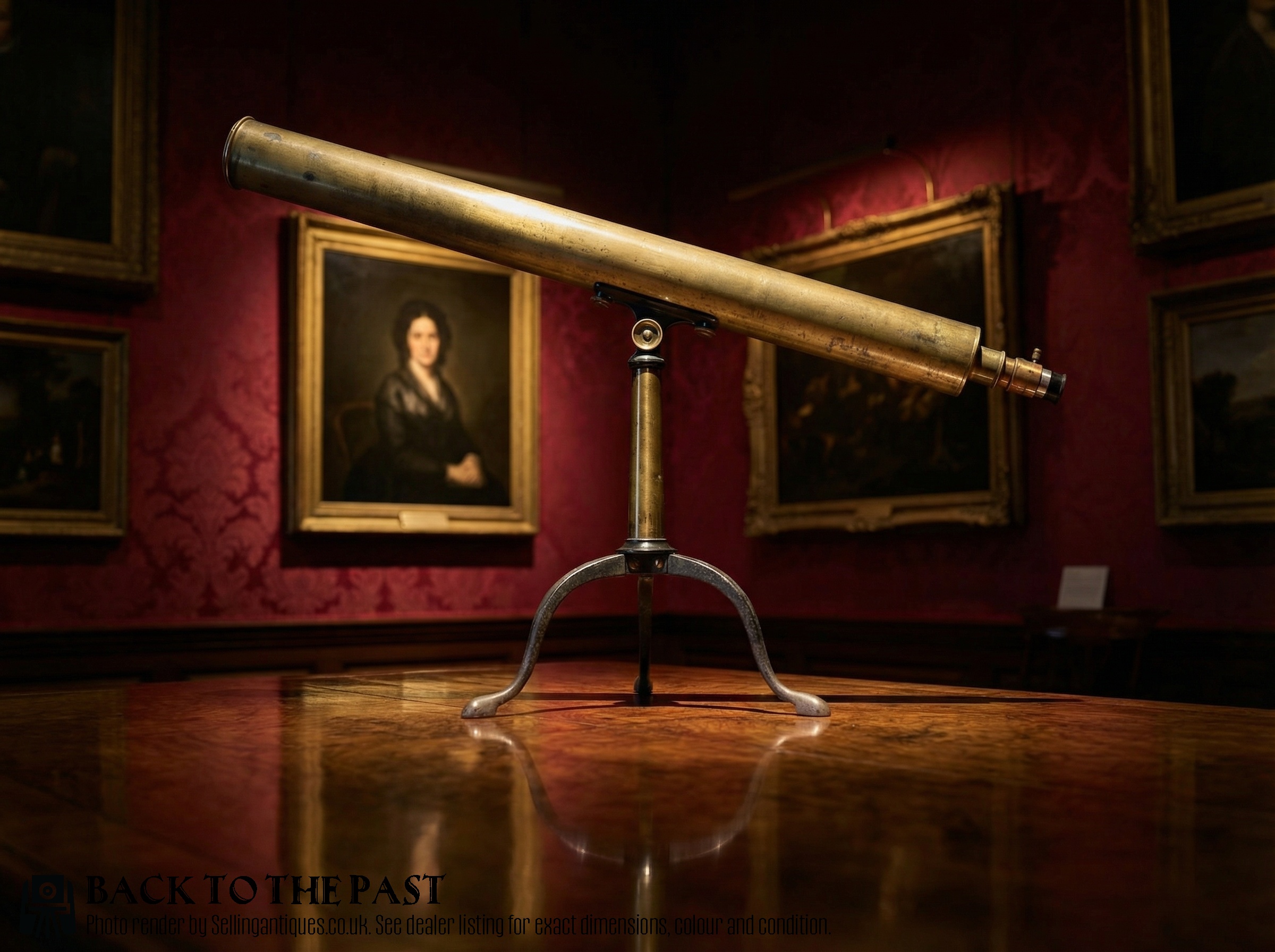
Vintage Brass Spyglass
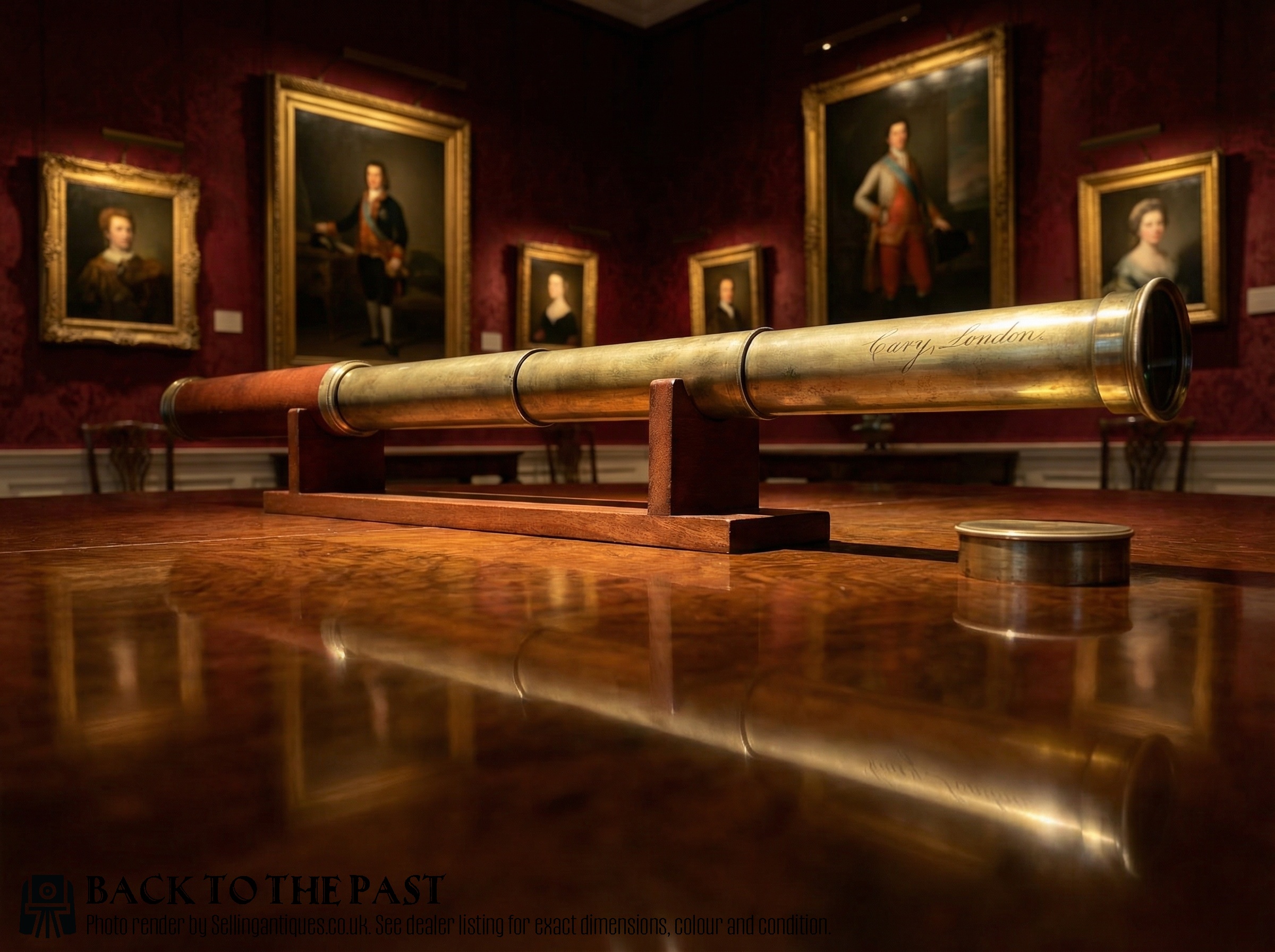
A vintage brass spyglass encompasses portable extending telescopes, pocket monoculars, and larger library instruments designed for terrestrial or maritime viewing. These objects range from compact multi-draw travel scopes enclosed in leather or wood to substantial optical devices mounted on folding brass tripods.
The selections on this page span several centuries, pulling together 18th-century scientific tools, Georgian navigation aids, Victorian marine instruments, and early 20th-century officer-of-the-watch models. Buyers frequently encounter English and German examples configured for naval duties, field exploration, or library study.
Form follows function across these instruments, with multi-draw pull-out tubes allowing the barrel to collapse into a portable size. Some pieces integrate protective sleeves of mahogany, oak, fruitwood, or leather, whilst others present polished hexagonal, decagonal, or nine-sided brass barrels.
Materials and construction methods
Makers utilised brass as the primary structural metal for its durability and capacity to be turned on a lathe into precise, interlocking sliding tubes. Glass lenses focus the light, while secondary materials such as leather, mahogany, walnut, and bone provide grip sleeves or protective casings.
Construction relied on hand-turned metal components, threaded fittings, and carefully fitted wooden or leather segments. Metal barrels were polished or gilt, and many instruments incorporated signed brass plaques or engraved maker details directly onto the final draw tube.
Vintage Brass Spyglass Retail Price Guide 2026
Typical asking prices for vintage brass spyglass among the pieces listed under this phrase on Sellingantiques today, from the lower quarter to the upper quarter. They describe what is for sale here now, not the wider market.
Listings feature brass, glass, leather, mahogany, and oak across Victorian, Georgian, and Edwardian periods.
Assessing quality in optical instruments
Quality rests in the precision of the optical glass and the smoothness with which the draw tubes slide and lock into alignment. Superior instruments maintain clear, sharp focus across multiple extending sections without excessive play or wobble in the joints.
The standard of finishing distinguishes everyday utility items from workshop masterworks. Finer examples display crisp maker signatures, precise barrel geometry such as multi-sided decagonal forms, and high-grade exterior dressings like stitched leather or figured mahogany.
Nairne & Blunt·Ross of London·Voigtländer & Sohn AG·W. & T. Gilbert·Clarkson·Steward of London·Richardson·Newton & Co·Broadhurst Clarkson & Co·Cary London·L. Casella·Chadburn Brothers·S & B Solomons·Matthew Berge·G. Adams·Dollond·John Gilbert
The Vintage Brass Spyglass Glossary
- Draw
- A sliding tubular section of a telescope barrel. Multiple draws allow a long focal length instrument to collapse into a compact size.
- Achromatic
- An optical lens design that corrects for colour fringing. This technological improvement provides a sharper, clearer image.
- Terrestrial
- An optical setup configured for viewing land objects rather than astronomical bodies. These scopes present images the correct way up.
- Monocular
- A single-barrel handheld viewing scope used for magnification. Pocket versions were popular for theatre and field use.
Vintage Brass Spyglass: Frequently Asked Questions
How do I use a multi-draw telescope?
Grip the main body tube firmly and gently pull each successive smaller draw section outward until fully extended. Adjust the final eyepiece draw slightly inward or outward to bring distant objects into sharp focus.
Take care when collapsing the instrument by pushing the tubes straight back in line rather than forcing them at an angle. Store the spyglass in a dry environment to protect the internal lenses and exterior materials.
Were these spyglasses used at sea?
Many of these instruments served military and naval personnel as deck glasses for identifying ships and landmasses from rolling vessel decks. Marine versions often featured protective leather or wood sleeves to withstand harsh saltwater conditions.
Officers of the watch relied on day-or-night configurations with larger objective lenses to gather maximum light during dawn or dusk patrols.
How do I date an antique brass telescope?
Examine the signature engravings on the draw tubes, as maker names and registered business addresses often provide active working dates. The number of draw sections and the choice of exterior materials also offer clues to the manufacturing period.
Earlier 18th-century examples frequently display simpler non-achromatic optics and distinct barrel shapes, whilst Victorian instruments tend toward multi-draw designs with standardised brass components.
What is the difference between a spyglass and a library telescope?
A spyglass is a portable, handheld optical instrument designed for travel, field use, and quick deployment. These pieces prioritize a compact footprint and collapsible draw tubes.
A library telescope is a larger, heavier instrument typically mounted on a folding wooden or brass table stand. These stationary pieces were intended for indoor study and extended viewing.