




19th Century Telescope
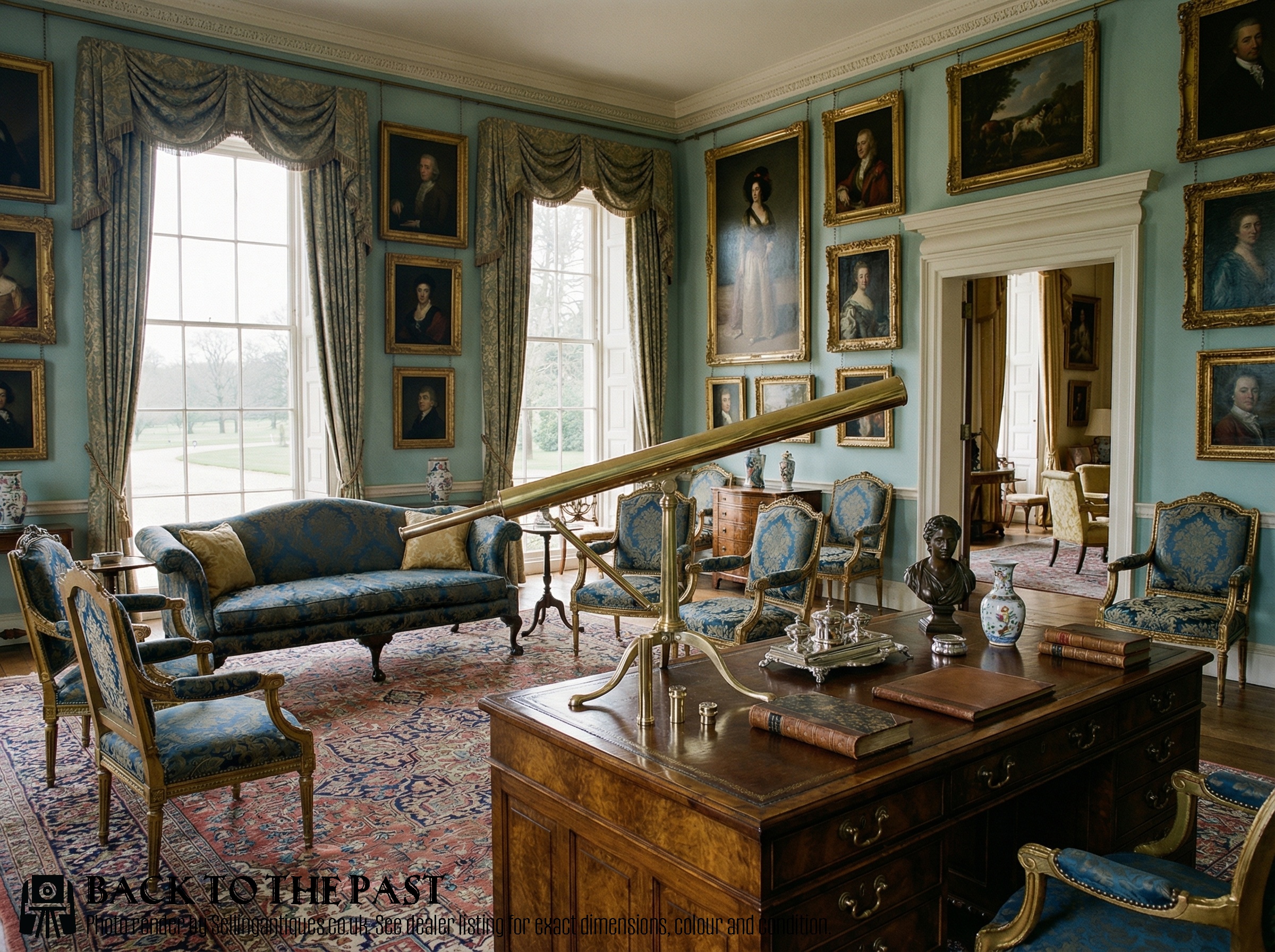
A 19th century telescope brings the precision optics and polished metal of the Victorian and Georgian eras straight into your study.
Understanding the 19th Century Telescope
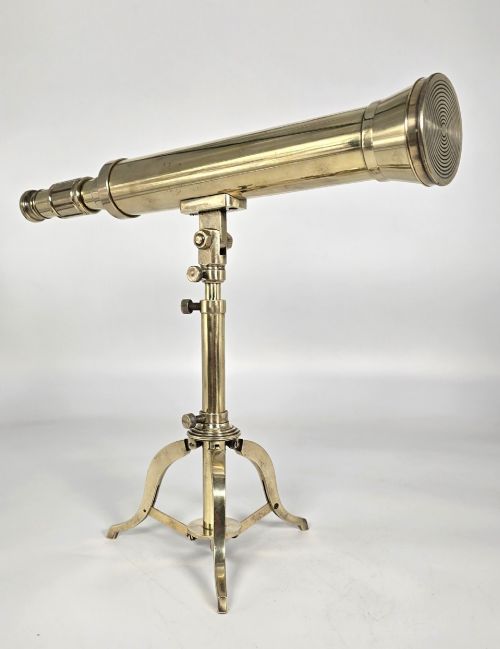
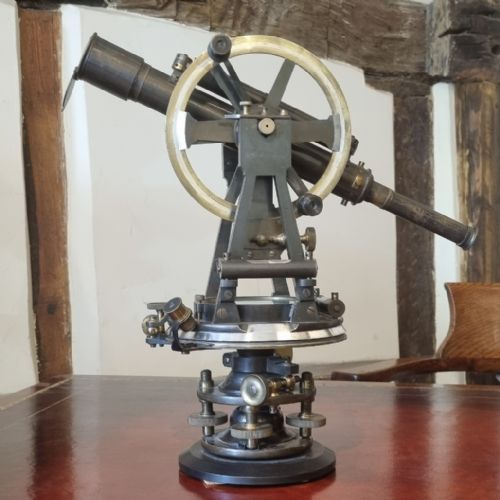
When you search for a 19th century telescope, you are looking at optical instruments designed for terrestrial viewing, marine navigation, and library study. These pieces range from compact pocket refractors and draw tubes to substantial table-top instruments mounted on folding brass tripods.
You are most likely to meet multi-draw brass and mahogany portable tubes or heavier library table models on this page. The forms span the Georgian, Regency, and Victorian periods, often supplied by notable London opticians of the day.
Objects of this type reflect an era when scientific instruments doubled as gentlemanly pursuits and essential navigational tools. Surviving examples frequently retain their original cases, lens caps, and fitted stands.
Materials and Construction
Makers constructed these instruments primarily from polished brass, often pairing draw tubes with turned mahogany barrels or leather-covered bodies. Iron, steel, and glass components provide the internal optical strength and focusing mechanics.
The combination of turned timber and bright metal required skilled lathe work and precise tube fitting to ensure smooth extension. Gilt finishes and fine engraved maker signatures on the draw tubes denote high workshop standards.
Retail Price Guide 2026
Typical UK retail prices for 19th century telescope, calculated from the Sellingantiques database of over a million retail prices indexed since 2003. This retail price guide relies exclusively on Sellingantiques data; no external sources or auction records are used, so the figures do not describe the wider market.
Materials across these listings include brass, glass, mahogany, steel, and iron.
Assessing Quality and Execution
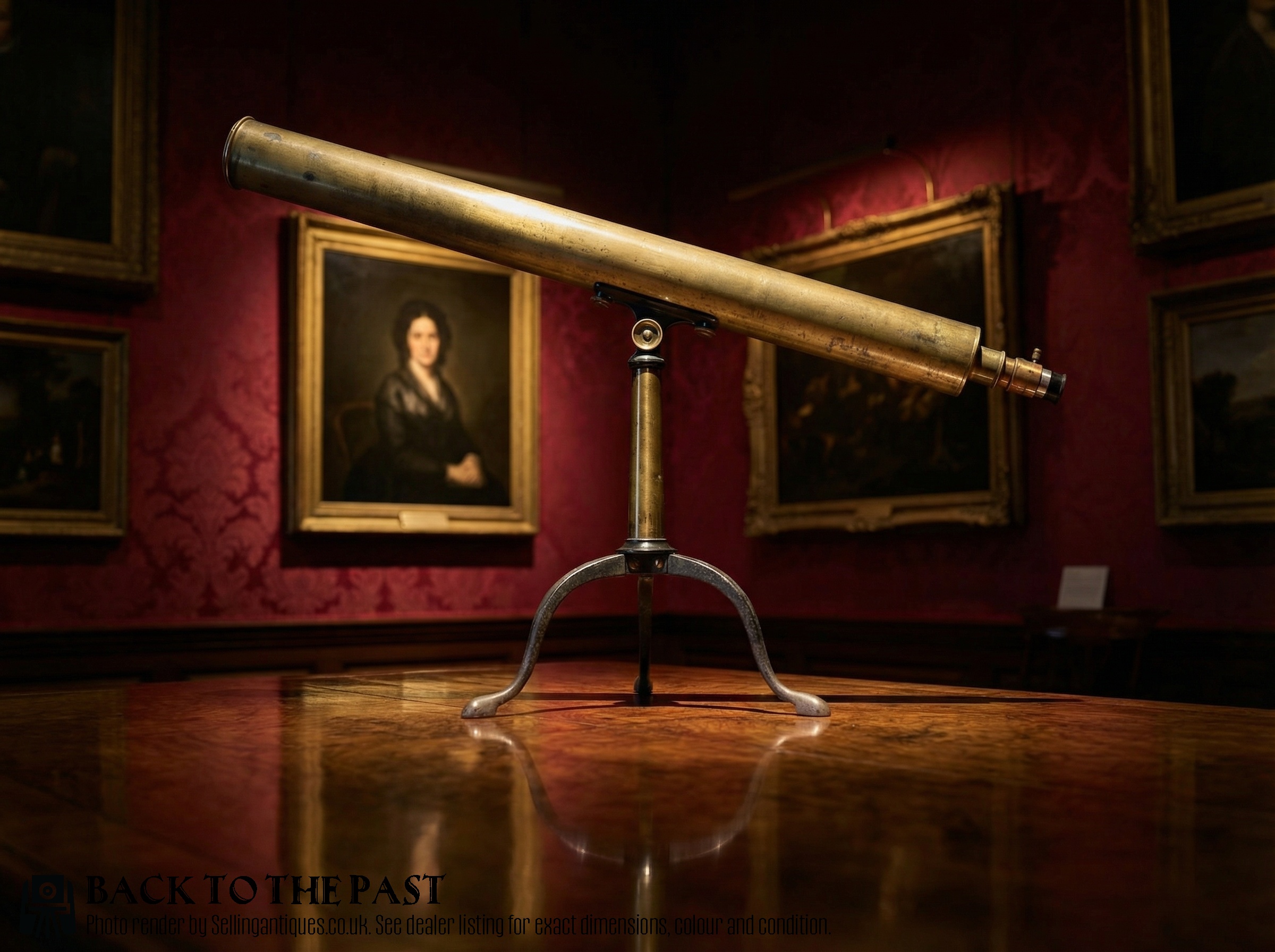
The distinction between standard portable units and superior library instruments lies in optical aperture and mechanical stability. Larger four-inch diameter lenses and sturdy folding brass tripod stands separate substantial scientific tools from simpler pocket spyglasses.
The presence of signed maker inscriptions from recognised London optical firms elevates the standing of an instrument. Complete original elements, such as fitted mahogany cases and leather wrappings, complete the picture of a well-preserved piece.
W. & T. Gilbert·Steward of London·S & B Solomons·Matthew Berge London·Marratt & Short·James Lucking & Co.·W. Harris & Son·Dollond London·Silberrad Aldgate·Callaghan Of New Bond St. London·Hillum of London
The 19th Century Telescope Glossary
- Refractor
- An optical telescope that uses a lens to form an image. This design defines the straight-tube configuration seen in portable spyglasses.
- Draw
- A sliding tubular section of a telescope barrel. Multiple draws allow the instrument to collapse for transport and extend for focus.
- Terrestrial
- Designed for viewing land objects rather than stars. These instruments include erecting lenses to ensure the image appears right-side up.
- Spyglass
- A small, handheld refracting telescope. Portable versions were widely used by mariners and gentlemen during the period.
Frequently Asked Questions
How do I use a draw telescope?
Extend all the sliding brass sections fully until the internal lenses lock into their correct focal positions. Support the barrel steadily and adjust the final draw near the eyepiece until the distant view sharpens.
Keep the optical glass clean using a soft brush. Store the instrument in a dry environment to protect the polished brass and wood surfaces.
What is a library telescope?
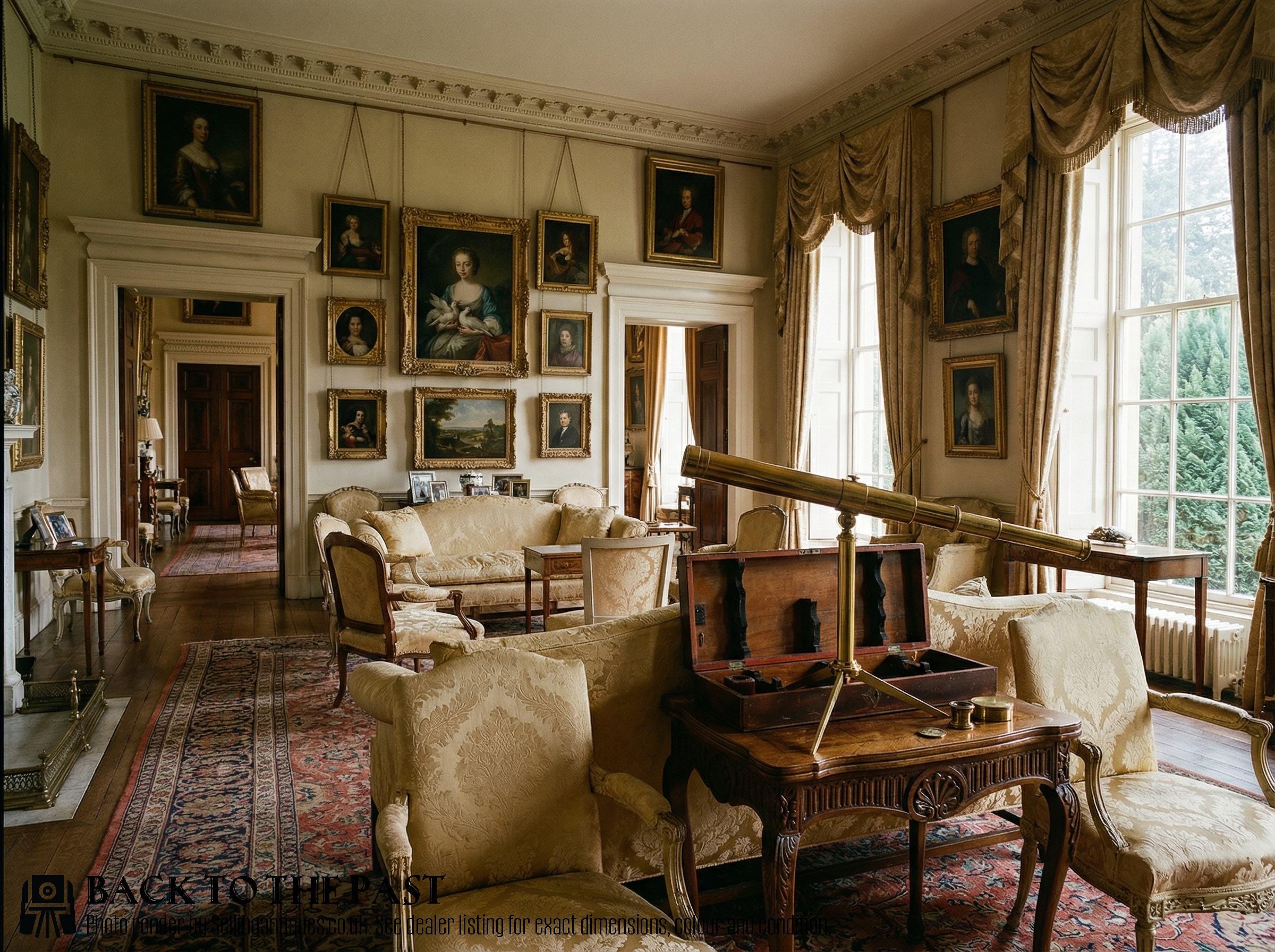
A library telescope is a larger table-top optical instrument designed for stationary indoor use rather than field travel. These models frequently rest on folding brass tripod stands.
They offer greater magnification and larger objective lenses suited for observing distant terrestrial landmarks from a study window.
How do I date these telescopes?
Examine the optical design, materials, and any engraved maker signatures on the draw tubes. Stylistic cues such as mahogany barrels and brass mounts help distinguish Georgian pieces from later Victorian examples.
Makers often recorded their working addresses on the instrument tubes, which cross-references with trade directories to narrow the production decade.
Were these used at sea?
Many multi-draw brass and mahogany or leather-covered tubes served as marine spyglasses for officers and travellers. The durable materials and collapsible draws suited life on deck.
Portable refractors protected by leather casings survived the damp conditions of maritime travel and gentlemanly excursions alike.