


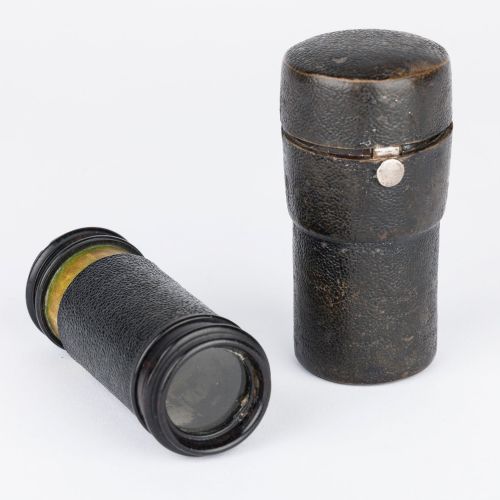
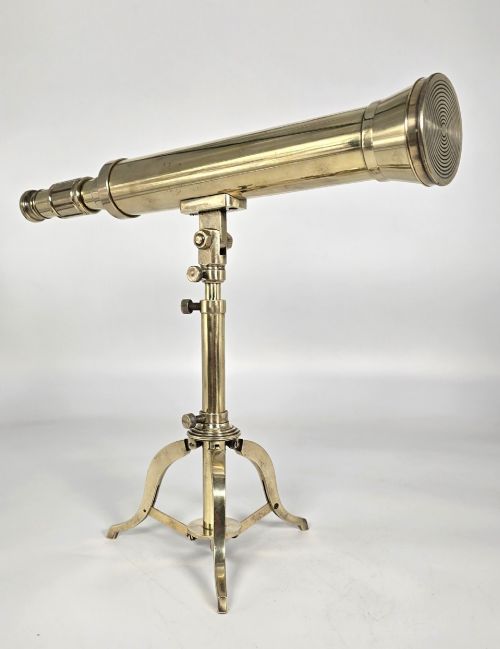


Antique Spyglass
An antique spyglass is a portable optical instrument designed for distance viewing, combining precise lens work with robust maritime and field construction.
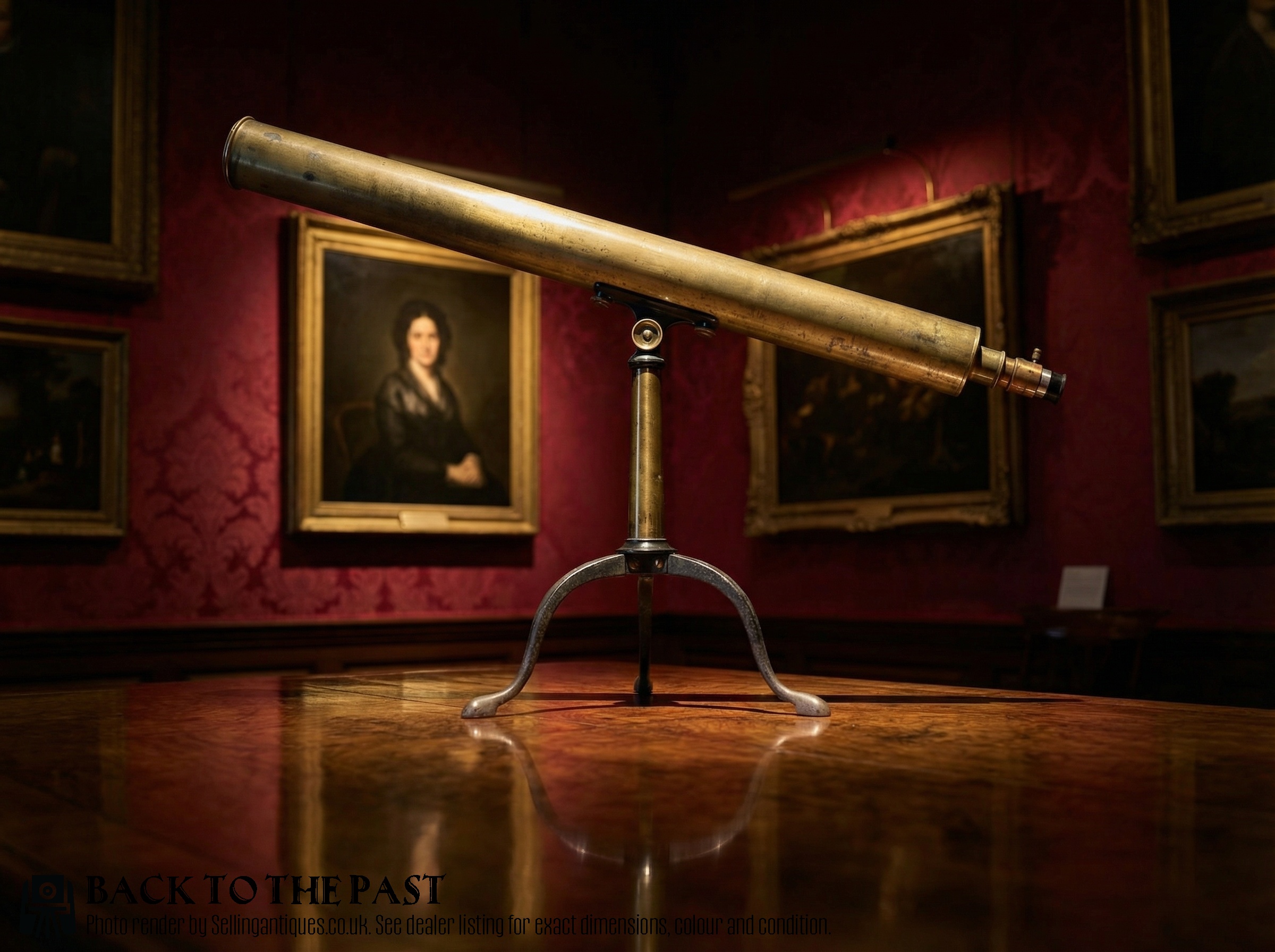
Antique Spyglass
An antique spyglass encompasses pocket-sized field instruments, extending marine telescopes, and library scopes on stands dating from the eighteenth century through the Edwardian era. Buyers encounter pocket versions alongside larger officer of the watch tubes and multi-draw terrestrial models.
The selections span Georgian, Regency, and Victorian periods, often taking the form of brass draw tubes wrapped in leather or mahogany. Examples range from compact two-draw pocket pieces to heavy multi-draw marine instruments and table-top library setups.
Materials and construction
Optics are housed within turned brass tubes that extend through multiple sliding draws, sometimes protected by stitched leather sleeves or mahogany and fruitwood barrels. Makers utilised glass for lenses alongside steel components and occasional bone fittings for walking cane handles.
Construction relies on precise tube-fitting to ensure smooth extension without slack, paired with glass lenses ground to focus terrestrial or astronomical views. Wood and leather coverings provide grip and protection for daily field use.
Makers represented include prominent London and regional workshops producing everything from pocket spyglasses to heavy marine and library telescopes.
Standards of craftsmanship
Quality rests in the precision of the brass draw action and the optical clarity of the glass lenses housed within. Finer examples exhibit crisp maker signatures engraved on the draw tubes and tight, parallel fitting of the barrel sections.
Weight distribution and the quality of external wrappings, such as finely stitched leather or polished mahogany, separate utilitarian instruments from workshop pieces made for scientific or naval officers.
Nairne & Blunt·Ross of London·W. & T. Gilbert·Clarkson·Steward of London·Newton & Co·Broadhurst Clarkson & Co·Cary London·L. Casella·Chadburn Brothers·S & B Solomons·Matthew Berge·G. Adams·John Gilbert·W Harris
The Antique Spyglass Glossary
- Draw
- A sliding brass tube section that extends from the main body of the telescope. Telescopes are commonly described by the number of draws they possess.
- Terrestrial
- An optical setup configured to show erect, right-side-up images for land viewing rather than inverted celestial views.
- Library telescope
- A larger instrument mounted on a folding brass tripod stand or table base, designed for stationary use indoors.
- Officer of the watch
- A maritime telescope configuration suited for naval signaling and horizon scanning in variable light conditions.
- Achromatic
- A lens combination designed to correct chromatic aberration, reducing false colour fringes around high-contrast objects.
Antique Spyglass: Frequently Asked Questions
How do I use an extending telescope?
Pull all the brass draw sections fully outward until each stage locks firmly into place. Sight the objective end toward a distant terrestrial object and adjust the smallest eyepiece tube until the view sharpens.
Keep the tubes clean and free of grit to prevent scratching the brass surfaces during extension and retraction.
What is the difference between a spyglass and a marine telescope?
Spyglass generally refers to compact, portable pocket tubes intended for quick field use. Marine telescopes are typically larger, multi-draw instruments built to withstand damp sea conditions.
Both utilise similar sliding brass draw configurations and glass lens arrangements.
Can I mount a table-top telescope?
Library and table-top models often feature original folding brass tripod stands or knuckle joints designed to screw directly into the barrel. These mounts allow the instrument to rest securely on a desk or table surface.
Ensure the mounting thread matches the collar on the telescope body before tightening.
How do I identify the date of a spyglass?
Examine the engraved maker signature on the draw tube, as optical firms often updated their partnership names and addresses over time. Material choices, such as mahogany barrels, bone fittings, and leather dressings, also point to specific manufacturing decades.
The number of draw sections and the presence of engraved military or naval ownership marks offer further clues to the period of use.