

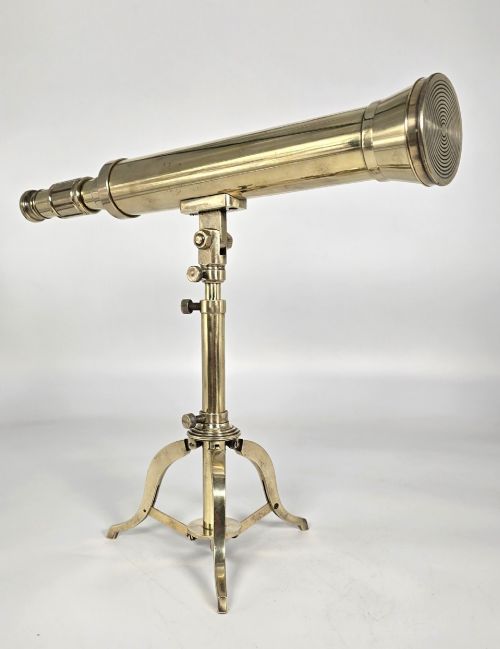


Tabletop Brass Telescope
These tabletop brass telescope items combine functional optics with period engineering, offering a tangible link to Georgian and Victorian scientific ingenuity.
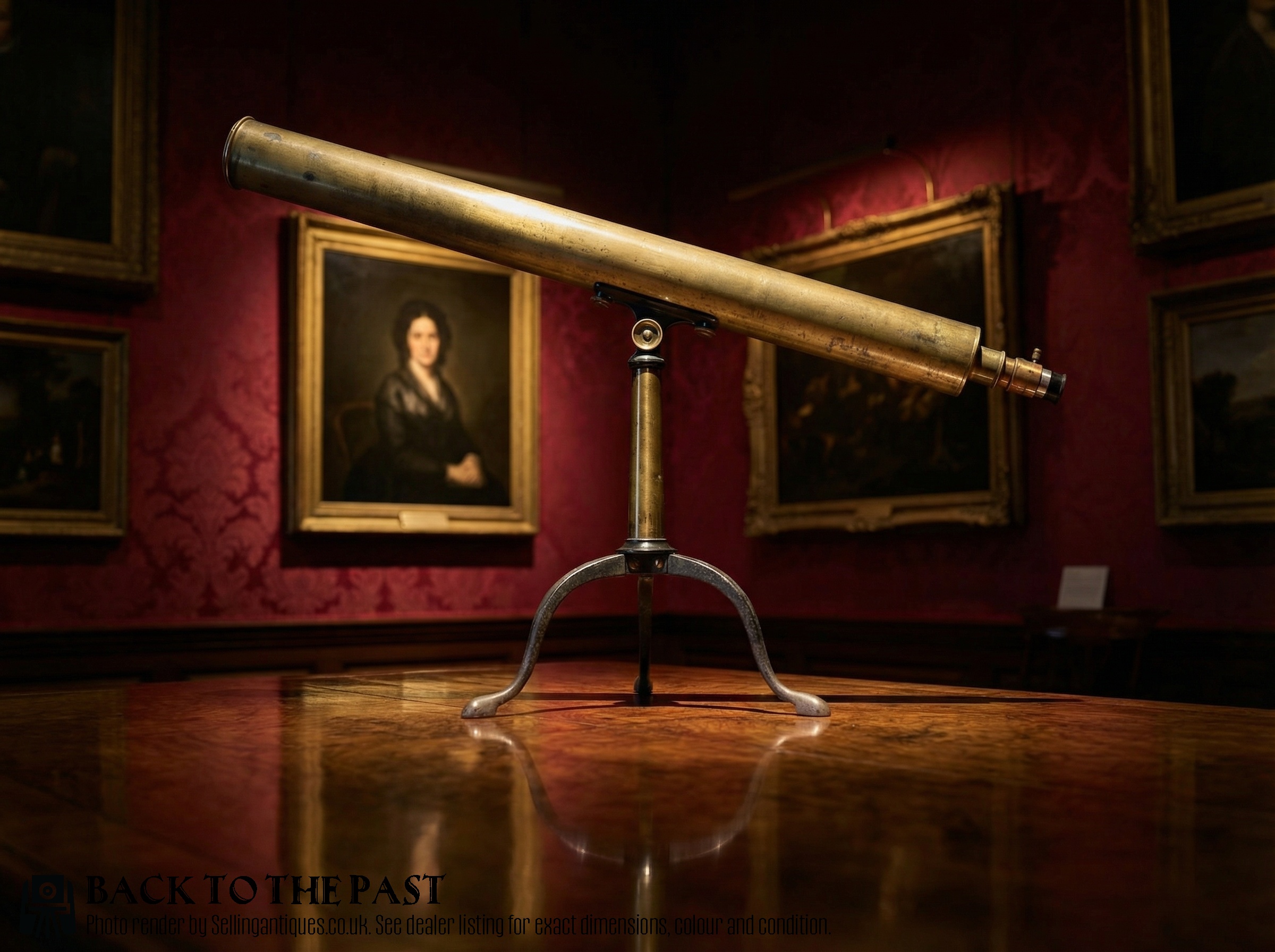
Identifying tabletop brass telescope items
A tabletop brass telescope is a precision scientific instrument designed for desktop study, land observation or library use, originating from periods such as the eighteenth century, the Georgian era and the Victorian age. The pieces appearing here span from simple single-draw configurations to sophisticated four-draw optical tubes mounted on folding brass tripods or fitted mahogany cases.
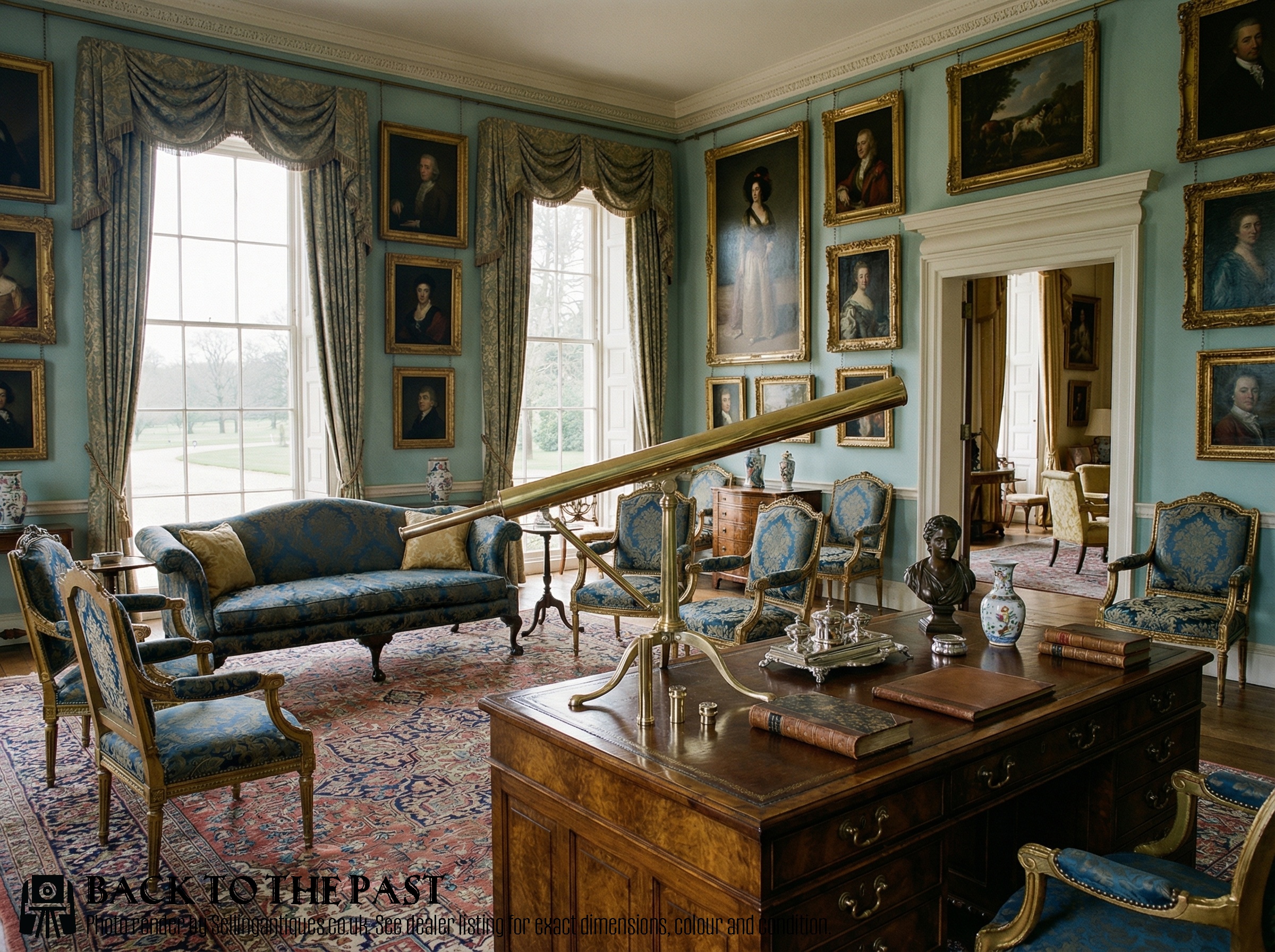
Most examples encountered on this page belong to the library telescope category, built to sit steadily upon a desk or table rather than being handheld in the field. These scientific instruments reflect the domestic and scholarly pursuits of their time, combining polished metal work with functional magnification optics.
Materials and construction
The primary structural components utilise polished brass for the optical tubes and mounting hardware, paired with clear glass lenses and enclosed by protective elements of wood, mahogany, iron or leather. Makers constructed the multi-draw barrels to slide smoothly against one another, maintaining alignment for clear terrestrial viewing.
Stands and cases often incorporate seasoned mahogany or other hardwoods, sometimes fitted with specialised hinges and securing hooks. Iron reinforcement appears in structural joints where stability is required for heavier optical assemblies.
Retail Price Guide 2026
Typical UK retail prices for tabletop brass telescope, calculated from the Sellingantiques database of over a million retail prices indexed since 2003. This retail price guide relies exclusively on Sellingantiques data; no external sources or auction records are used, so the figures do not describe the wider market.
Early makers ensured your desk stayed civilized by pairing precision brass optics with fitted wooden boxes disguised as fine library books.
Distinguishing quality and execution
Quality in a tabletop brass telescope rests in the precision of the maker's optical draw tubes and the stability of the accompanying stand. Finer examples exhibit crisp maker signatures engraved on the draw tubes alongside robust tripod folding mechanisms that support the heavy brass barrel without wobble.
The grade of materials also dictates standing, with superior specimens retaining original fitted mahogany cases and undamaged glass optics. Lesser pieces show signs of heavy field wear or replacement components that alter the original balance of the instrument.
Chadburn Brothers of Sheffield·S & B Solomons·Matthew Berge London·G.adams of london
The Tabletop Brass Telescope Glossary
- Draw
- A sliding tubular section of a telescope barrel. Multiple draws allow the instrument to collapse for storage and extend for focusing.
- Terrestrial telescope
- An optical instrument designed for viewing objects on land, containing erecting lenses so the image appears right side up.
- Library telescope
- A larger stationary instrument intended for indoor desk use rather than portable field navigation.
- Tripod stand
- A three-legged support structure, frequently folding, designed to hold the telescope steady during observation.
Frequently Asked Questions
How do I use a tabletop brass telescope?
Extend the sliding brass draws fully until the distant object comes into sharp focus through the glass lenses. Ensure the instrument rests securely on its folding stand or mahogany base during viewing.
Keep the brass polished with appropriate cloths and avoid touching the glass lenses directly to preserve the optical clarity of the historic instrument.
Where were these telescopes placed originally?
These instruments typically sat upon library desks, study tables or drawing room surfaces in Georgian and Victorian homes. Their primary function was terrestrial observation from a stationary indoor viewpoint.
The matching wooden cases kept the scientific tools protected when not deployed for study or stargazing.
How do I date a brass telescope?
Examine the style of the mounting stands, the number of draw tubes, and any engraved signatures left by the maker. Pieces from the eighteenth century and Georgian period often feature simpler, heavier construction compared to later Victorian iterations.
Makers' marks on the brass barrel provide the most direct link to active operational decades.
Are these telescopes meant for daily use?
While these pieces retain functioning glass optics and sliding brass draws, their age makes them primarily historical artefacts of scientific instruments. Gentle handling preserves the delicate alignment of the internal lenses.
Displaying them on a sturdy tabletop allows them to function both as decorative period objects and working optics.