

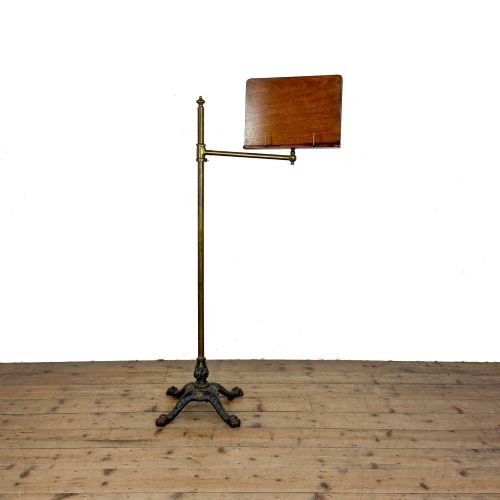

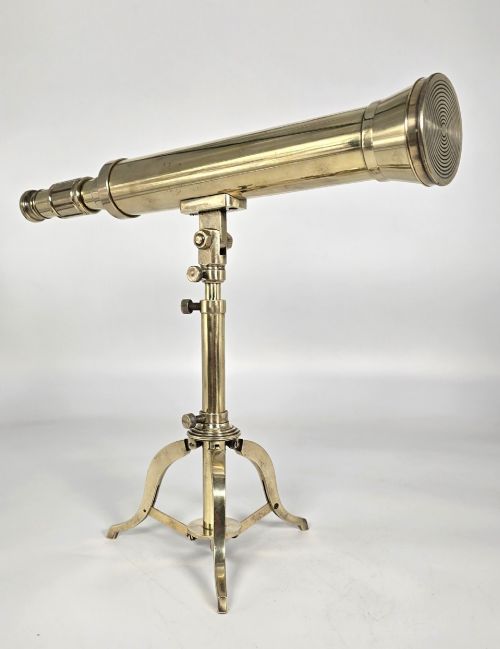


Brass Library Telescope
A brass library telescope is a serious optical instrument built for viewing terrestrial and celestial targets from a study or table.
What these instruments are
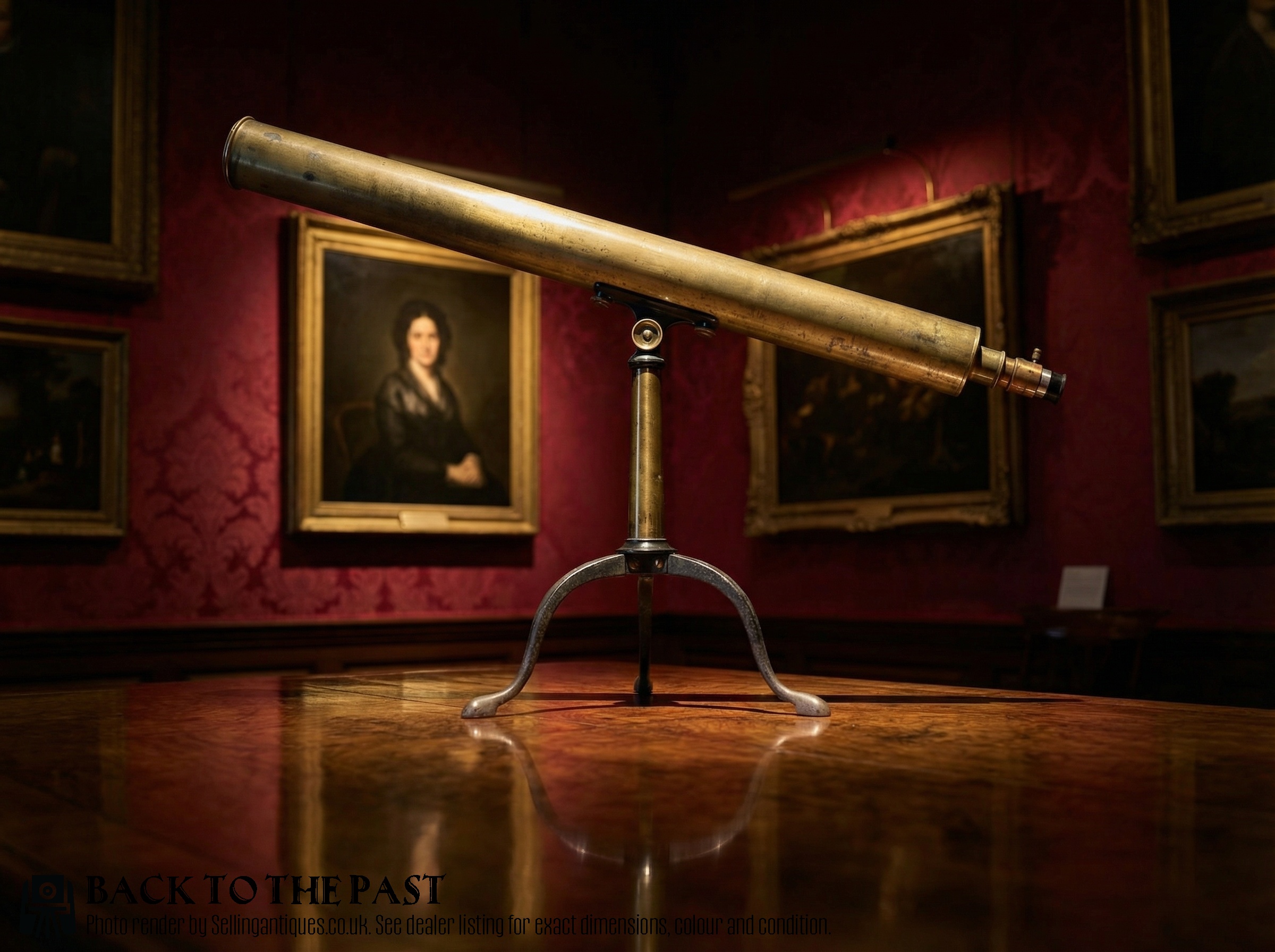
When you search for a brass library telescope, you encounter sophisticated optical devices designed for table use rather than handheld travel. These instruments appear most frequently from the Victorian period, though Georgian examples also occur.
The form spans various draw configurations, including four-draw and six-draw variants, alongside cased setups complete with folding brass or mahogany tripod stands. They serve both terrestrial and astronomical observation, reflecting the scientific interests of their original owners.
Materials and construction
Makers utilised heavy brass for the main tubes and mountings, often combining it with glass lenses and wooden cabinetry such as mahogany cases. Some examples incorporate leather-covered body tubes for grip and protection during adjustment.
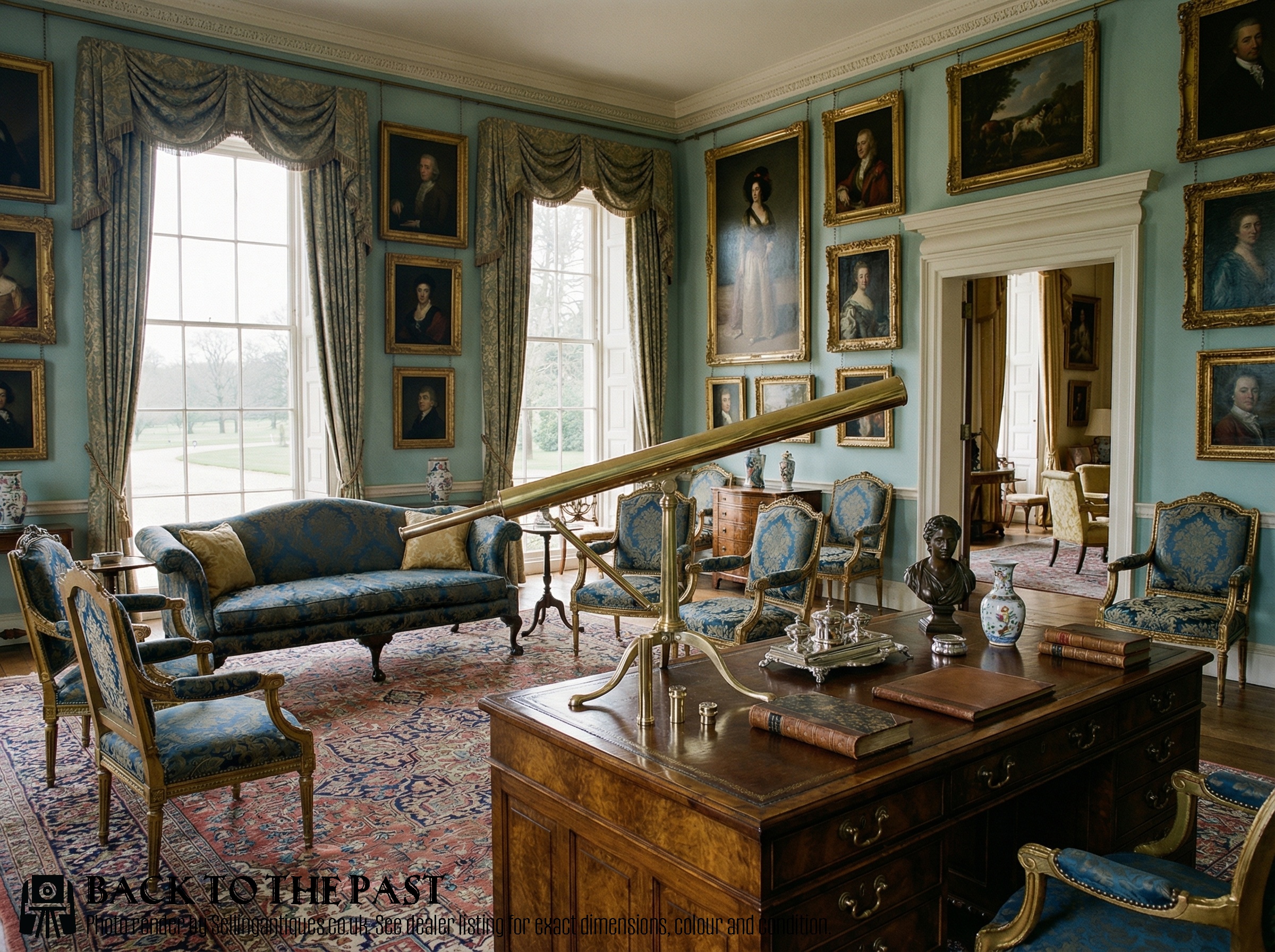
Support structures range from cast iron to wood and brass folding tripods, providing the stability necessary for high-magnification viewing. Every component was engineered by specialist opticians and instrument makers to ensure precise alignment.
Retail Price Guide 2026
Typical UK retail prices for brass library telescope, calculated from the Sellingantiques database of over a million retail prices indexed since 2003. This retail price guide relies exclusively on Sellingantiques data; no external sources or auction records are used, so the figures do not describe the wider market.
The inventory spans Victorian and Georgian periods alongside specific nineteenth-century dates.
Judging quality and execution
Quality rests in the precision of the optical glass and the mechanical smoothness of the draw tubes. Superior examples retain their original signed optics and fitted wooden cases rather than replacement parts.
The presence of robust original stands, whether folding brass tripods or fitted mahogany boxes, distinguishes the finest pieces from those lacking their complete mounting apparatus.
Chadburn Brothers of Sheffield·S & B Solomons·Matthew Berge London·Broadhurst & Co·Broadhurst Clarkson & Co·Bate of London·Dollond·R. Adie Liverpool·Callaghan Of New Bond St. London·Hillum of London
The Brass Library Telescope Glossary
- Terrestrial telescope
- An optical instrument configured to produce an upright image for viewing land-based subjects. These typically utilise erecting lenses within the draw tubes.
- Astronomical telescope
- A configuration designed primarily for viewing celestial bodies where image inversion is acceptable. They often yield higher magnification for star-gazing.
- Draw
- A sliding section of the telescope tube. Multiple draws allow the instrument to collapse for storage and extend for focus.
- Tripod
- A three-legged stand providing stable elevation. Library telescopes frequently utilise folding brass or wooden variants for table use.
Frequently Asked Questions
How do I use a library telescope?
Place the instrument upon a stable table or desk using its dedicated tripod or tabletop stand. Extend the draw tubes carefully until the image sharpens through the eyepiece.
Adjust the focus ring or final draw tube slowly until distant terrestrial or celestial targets appear clear and distinct.
Can I view stars with these?
Many historical examples were built for both terrestrial and astronomical viewing depending on the lens configuration. Astronomical variants provide the light-gathering power needed for night sky observation.
Check the specific optical setup of the instrument to determine its intended primary use for stargazing.
How do I date an antique telescope?
Examine the maker signature engraved upon the draw tube or barrel, as prominent opticians maintained active workshop dates. The number of draws, typography, and case construction also offer clues to the period.
Victorian and Georgian examples often display distinct design characteristics in their brass mountings and focus mechanisms.
Where should I keep my telescope?
Position the instrument in a stable environment away from extreme temperature fluctuations and direct humidity. A study or living room table makes an ideal display location where the brass can be admired.
Keep the lenses protected with caps when not in use to prevent dust accumulation on the glass surfaces.