




Antique Library Telescope
An antique library telescope brings distant views into sharp focus through polished brass and mahogany, grounding a study in the serious optics of past centuries.
Antique Library Telescope
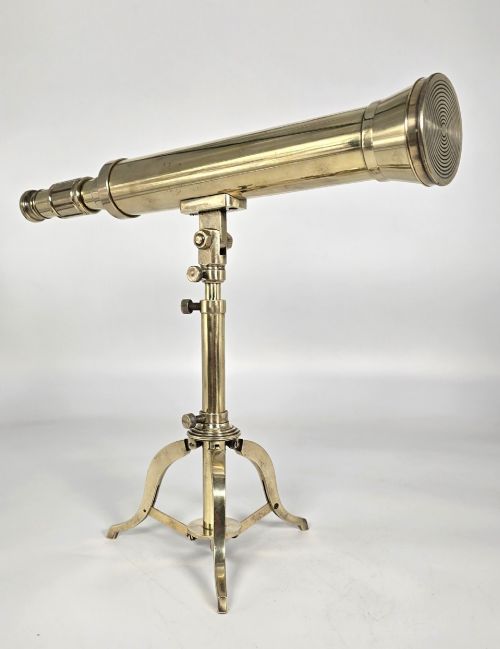
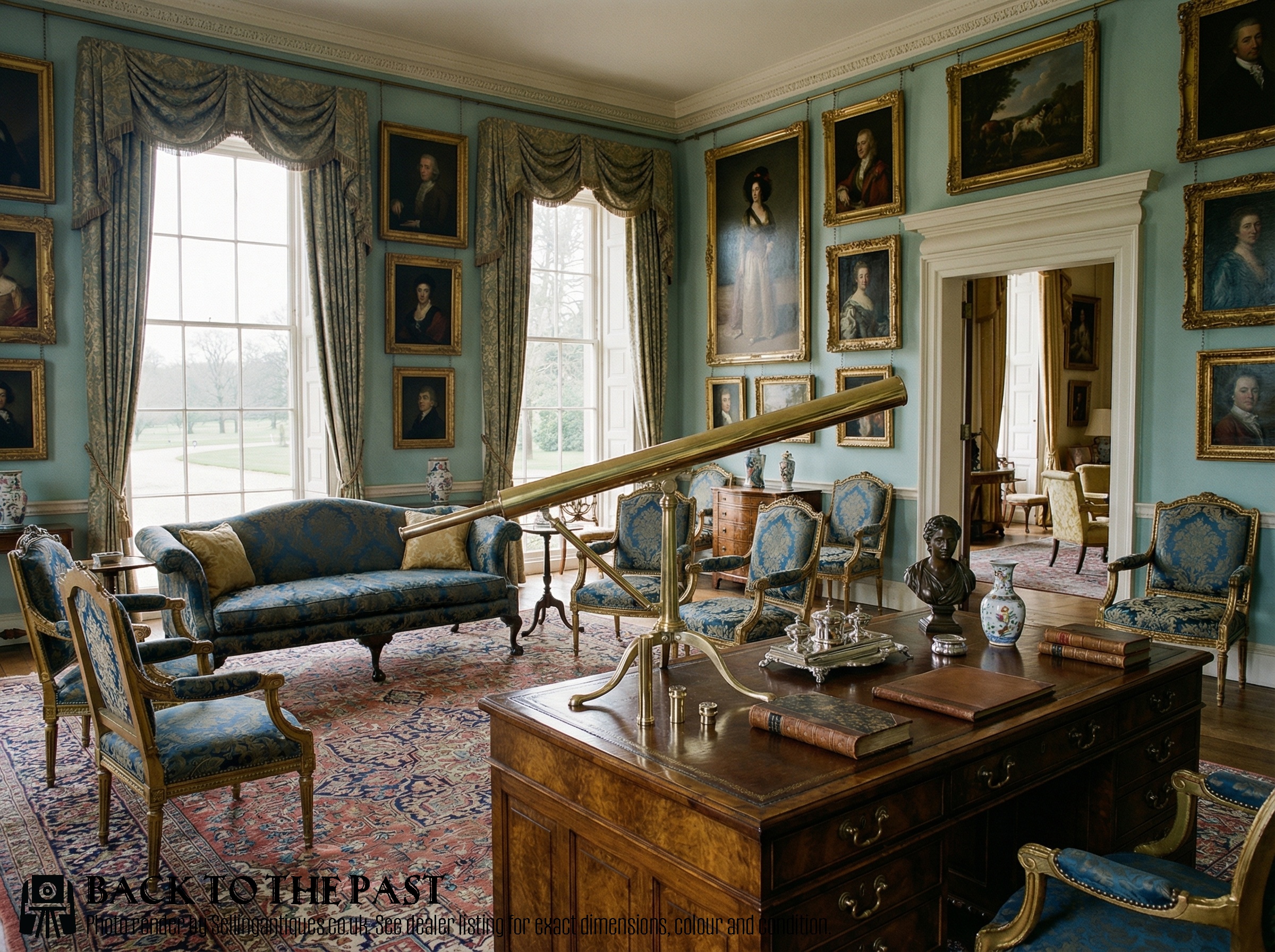
The antique library telescope is a precision optical instrument designed for desktop study or placement near a large window, shifting effortlessly between terrestrial landscape viewing and celestial observation. Most pieces meet on this page hail from the Georgian and Victorian periods, often emerging with substantial brass barrels and occasionally accompanied by their original folding tripod stands or fitted mahogany cases.
These instruments range from compact two-inch refracting scopes to large four-inch diameters capable of serious star gazing. Many examples feature multi-draw brass tubes that extend smoothly to achieve correct focal length, while others rest permanently upon dedicated iron or brass table stands. Makers frequently integrated leather body grips or wooden barrel segments to insulate the cold metal during prolonged viewing sessions.
Materials and construction
Makers relied primarily on turned brass for the optical tubes and mounting hardware, pairing the golden metal with rich secondary materials like mahogany, leather, and cast iron. Glass lenses required precise hand grinding and polishing to achieve achromatic correction, ensuring distant images remained sharp and free from false colour fringes.
The exterior woodwork often involved dense mahogany cabinets or barrel cladding turned on a lathe, while interior draws slid past one another with precise friction fits. Tripods and table stands utilised cast iron or heavy brass to anchor the heavy optics securely against vibration.
Antique Library Telescope Retail Price Guide 2026
Typical asking prices for library telescope among the pieces listed under this phrase on Sellingantiques today, from the lower quarter to the upper quarter. They describe what is for sale here now, not the wider market.
Several makers named their robust instruments after celestial bodies, offering astronomers a sturdy brass companion for late nights in drafty libraries.
Distinctions in quality
Optical clarity and mechanical integrity separate everyday instruments from masterwork examples, depending heavily on the original grinding of the glass and the tightness of the draw-tube joints. A signed barrel by a prominent optician with an intact matching case or tripod demonstrates superior workshop provenance.
The weight and gauge of the brass, the smoothness of the focus rack, and the preservation of the original lacquered or polished finish dictate the overall desirability of the piece. Surviving accessories like objective lens dust caps and fitted mahogany storage boxes further elevate the standing of an instrument.
Nairne & Blunt·W. & T. Gilbert·Clarkson·Steward of London·Chadburn Brothers·S & B Solomons·Matthew Berge·G. Adams·Broadhurst Clarkson & Co·Dollond·Negretti and Zambra·E. Lennie
The Antique Library Telescope Glossary
- Achromatic
- An optical lens designed to correct chromatic aberration by bringing red and blue light to the same focal point. This ensures that viewed objects display true colours without distracting halos.
- Draw
- A sliding tubular section of a telescope that extends to adjust focal length. Multiple draws allow a long instrument to collapse into a compact portable length.
- Terrestrial
- An optical configuration designed for viewing land-based subjects right-side up. These scopes include erecting lenses to correct the naturally inverted image produced by simple refractors.
- Astronomical
- A telescope configuration optimized for viewing stars and planets where image inversion matters less than maximum light gathering. These units typically provide higher magnifications than terrestrial counterparts.
- Refracting
- A design utilising a primary glass lens at the front to bend incoming light to a rear eyepiece. This fundamental optical architecture defines most antique handheld and library scopes.
Antique Library Telescope: Frequently Asked Questions
Can I actually look at stars with these?
Many larger examples were built specifically for astronomical work and perform remarkably well on clear nights. Their multi-inch lenses gather sufficient light to resolve lunar craters and bright planets.
Smaller terrestrial scopes excel at viewing distant landscape details or maritime traffic. Match your viewing expectations to the original optical design of the specific barrel.
How do I clean the brass and glass?
Dust the brass gently with a soft dry cloth and leave the aged patina undisturbed. Modern metal polishes can strip away historical finishes and diminish value.
Consult a professional optician before attempting to clean antique internal glass elements. Exterior objective lenses require only a gentle sweep with a camel hair brush.
How do I date an unmarked telescope?
Examine the construction methods, materials, and typography stamped onto the brass barrel or eyepiece collar. The transition from multi-draw mahogany-clad tubes to heavy all-brass stands helps narrow the production era.
Compare the lens diameter and mounting style with signed examples from known makers. Subtle shifts in design often point precisely to Georgian or Victorian workshop practices.