


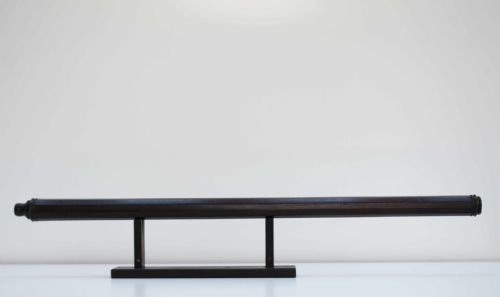
Brass Terrestrial Telescope
These brass terrestrial telescope examples are precision scientific instruments designed for daytime viewing, prized for their engineering and polished metal finish.
Brass Terrestrial Telescope
A brass terrestrial telescope is a portable optical instrument designed primarily for viewing distant land objects rather than stars. These pieces range from small pocket versions to large library instruments resting on stands.
The examples on this page are predominantly Victorian and Edwardian items with multiple draw tubes, though Georgian and earlier pieces also appear. Most are signed by London makers and constructed for practical observation in the field or at home.
Buyers will find multi-draw models featuring brass tubes sometimes wrapped in leather, mahogany, or fruitwood. They combine glass lenses with metal barrels to achieve focus over varying distances.
What varies in quality
Quality in a brass terrestrial telescope rests upon the clarity of the glass optics and the precision of the metal draw tubes. Instruments with clean, unmarked lenses and smooth, snug draws command greater attention.
The presence of a clear maker signature engraved on the draw tube elevates an instrument significantly. Finer examples also feature well-preserved leather or wood coverings and original fitted wooden cases.
The complexity of the optical design, such as multi-draw configurations and the inclusion of sunshades or dust caps, distinguishes standard field instruments from superior library pieces.
Brass Terrestrial Telescope Retail Price Guide 2026
Typical asking prices for brass terrestrial telescope among the pieces listed under this phrase on Sellingantiques today, from the lower quarter to the upper quarter. They describe what is for sale here now, not the wider market.
Certain models were sold as day or night glasses, supposedly helping sailors spot hazards when visibility dropped after sunset.
Steward of London·Broadhurst Clarkson & Co·Cary London·L Casella London·Davis of London·Starboy·John Gilbert·Broadhurst Clarkson·Ross
The Brass Terrestrial Telescope Glossary
- Terrestrial telescope
- An optical instrument designed to produce an upright image for viewing land objects. It includes erecting lenses inside the tube to correct the inverted image normal in astronomical setups.
- Draw
- A sliding section of the telescope tube. Instruments are frequently described by the count of these draws, such as three-draw or six-draw.
- Refractor
- A telescope that uses a lens to form an image. These instruments bend light through glass objectives and eyepieces.
- Achieving focus
- The adjustment of the draw tubes to bring a distant subject into sharp view. The movement alters the distance between objective and eyepiece lenses.
Brass Terrestrial Telescope: Frequently Asked Questions
How do I use a brass terrestrial telescope?
Extend all the draw tubes fully until the instrument locks rigid. Point the objective lens toward your distant subject and adjust the final eyepiece draw slowly until the view sharpens.
Keep the lenses clean using a soft cloth and store the instrument with the draws collapsed to protect the brass barrels.
Can I view stars with a terrestrial telescope?
These instruments are primarily built for daytime land viewing and contain erecting lenses to keep the image upright. While some pieces mention astronomical use, land observation remains their core design function.
For serious stargazing, dedicated astronomical configurations without erecting lenses are more appropriate.
How do I identify the date of a telescope?
Check the signature engraved on the draw tube near the eyepiece, as maker names often correlate with specific operational periods. The style of lettering and the presence of leather or wood coverings also offer clues to the decade of manufacture.
Consult historical trade directories to match the maker's address with active dates.
How should I display my telescope at home?
Largous library instruments often sit upon wooden or metal desk stands, making them suitable for placement on tables or shelves. Smaller pocket versions look well in cabinets or resting on flat surfaces alongside other scientific instruments.
Avoid placing brass items in damp environments to preserve the polished metal finish and any leather or wood wrappings.