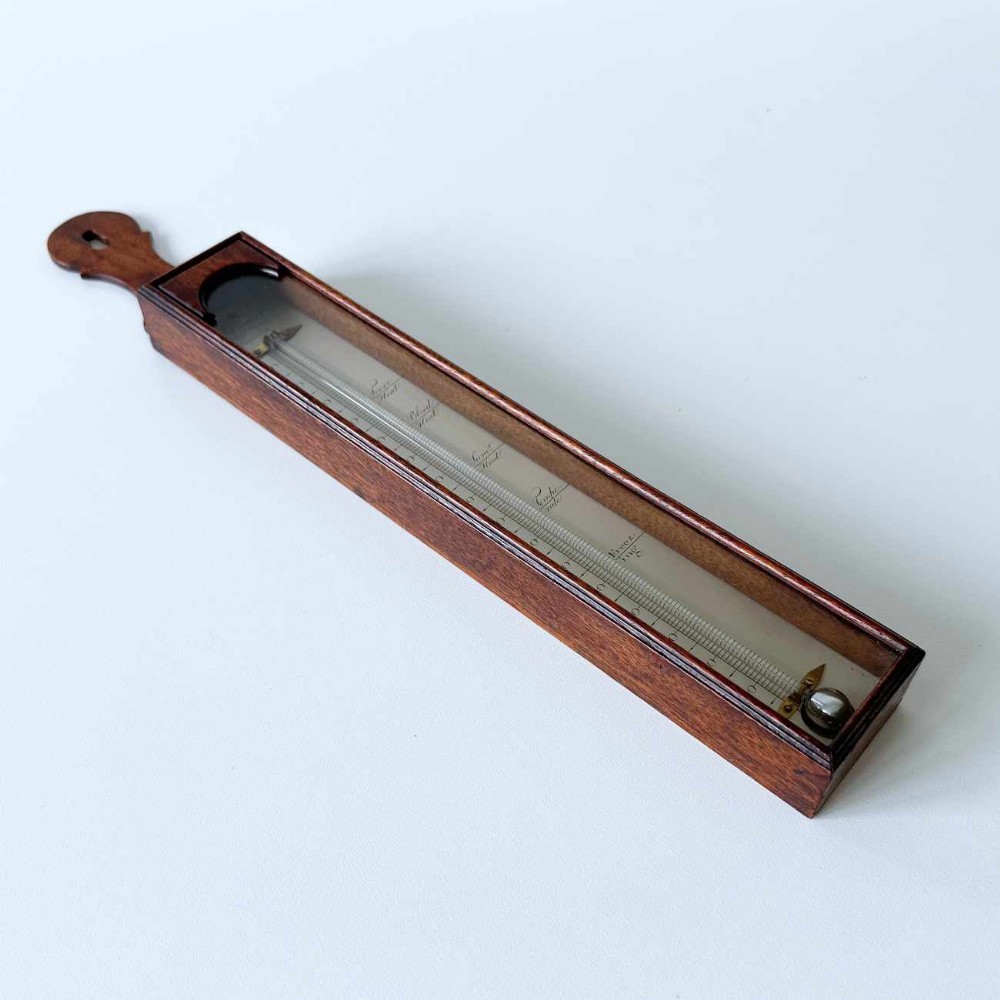
Jason Clarke Antiques has dated this Antique Mahogany Wall Thermometer to the 1750s.
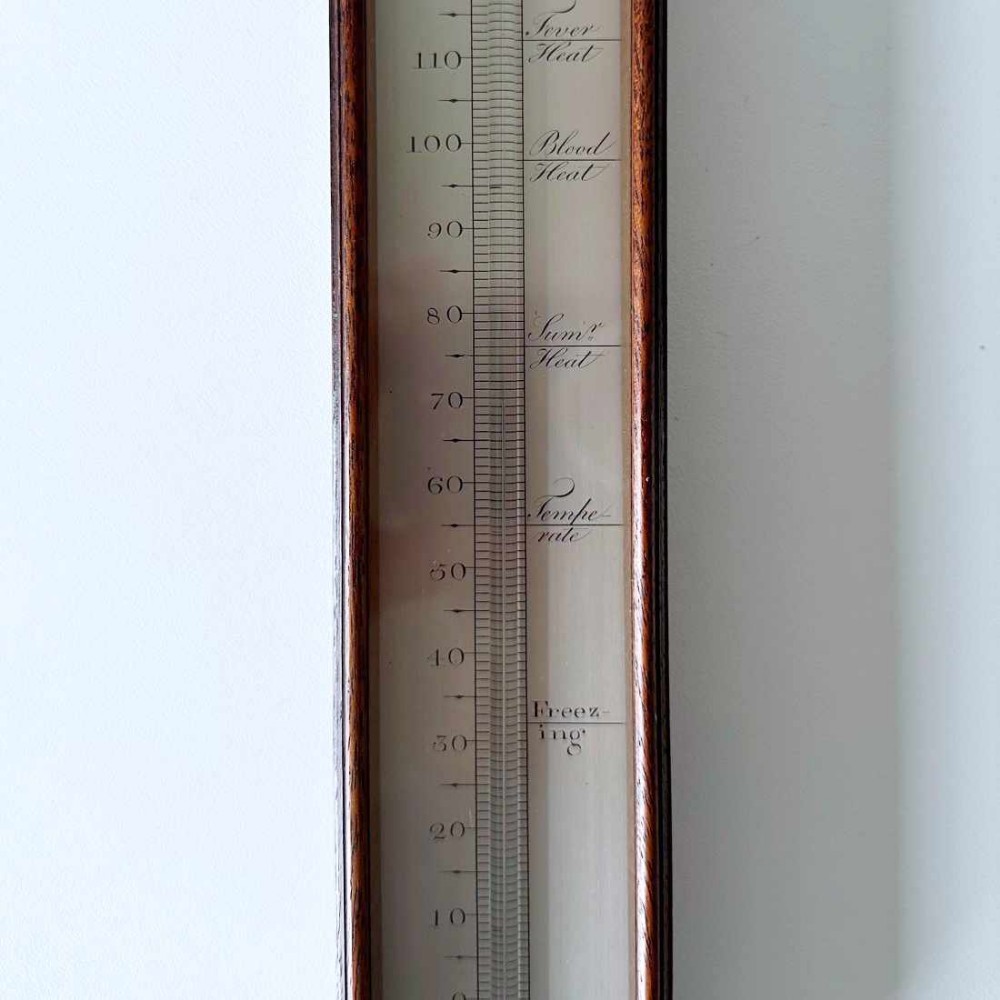
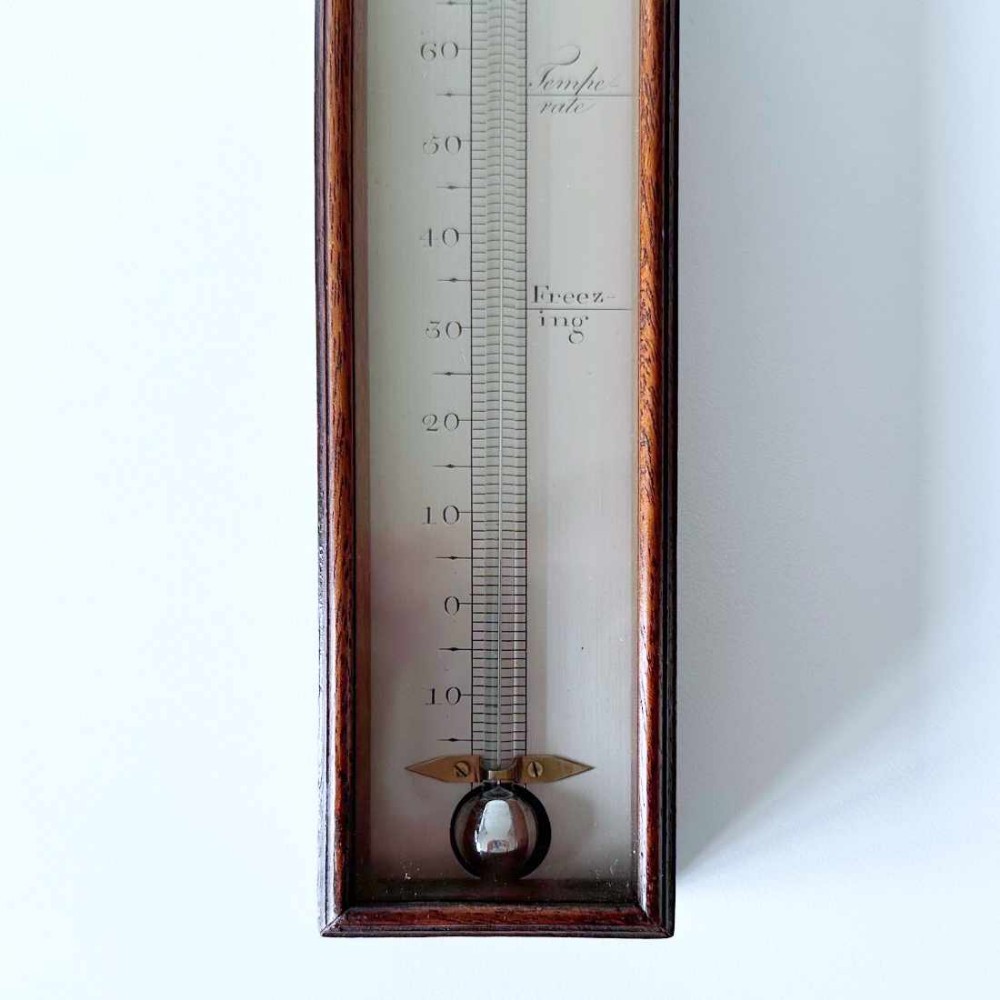
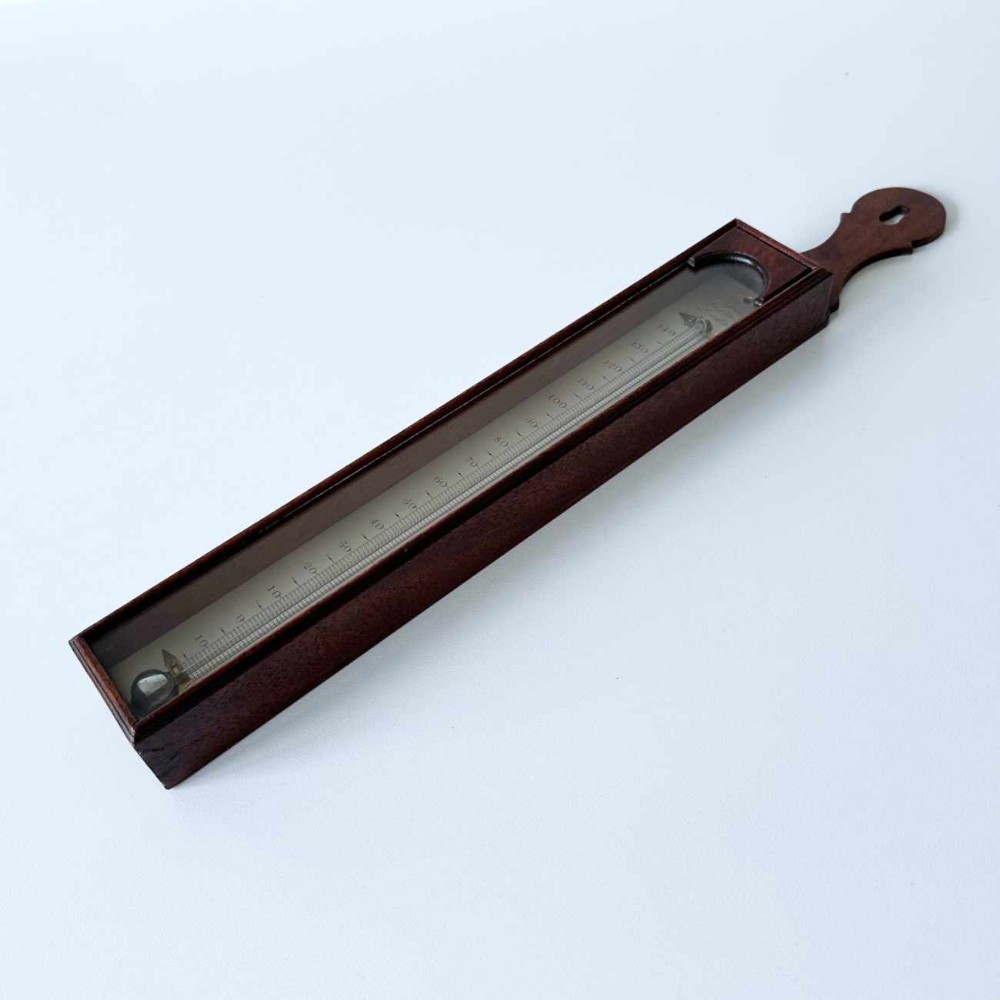
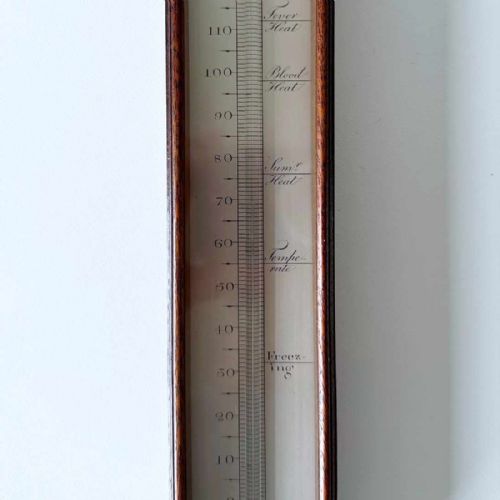
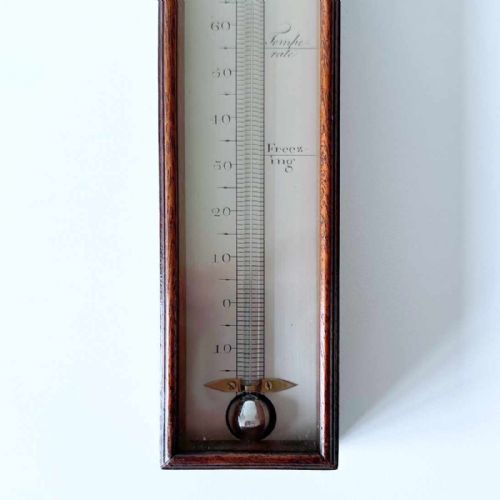
Comprised of a mahogany frame with glazed front with an 11” silvered thermometer scale
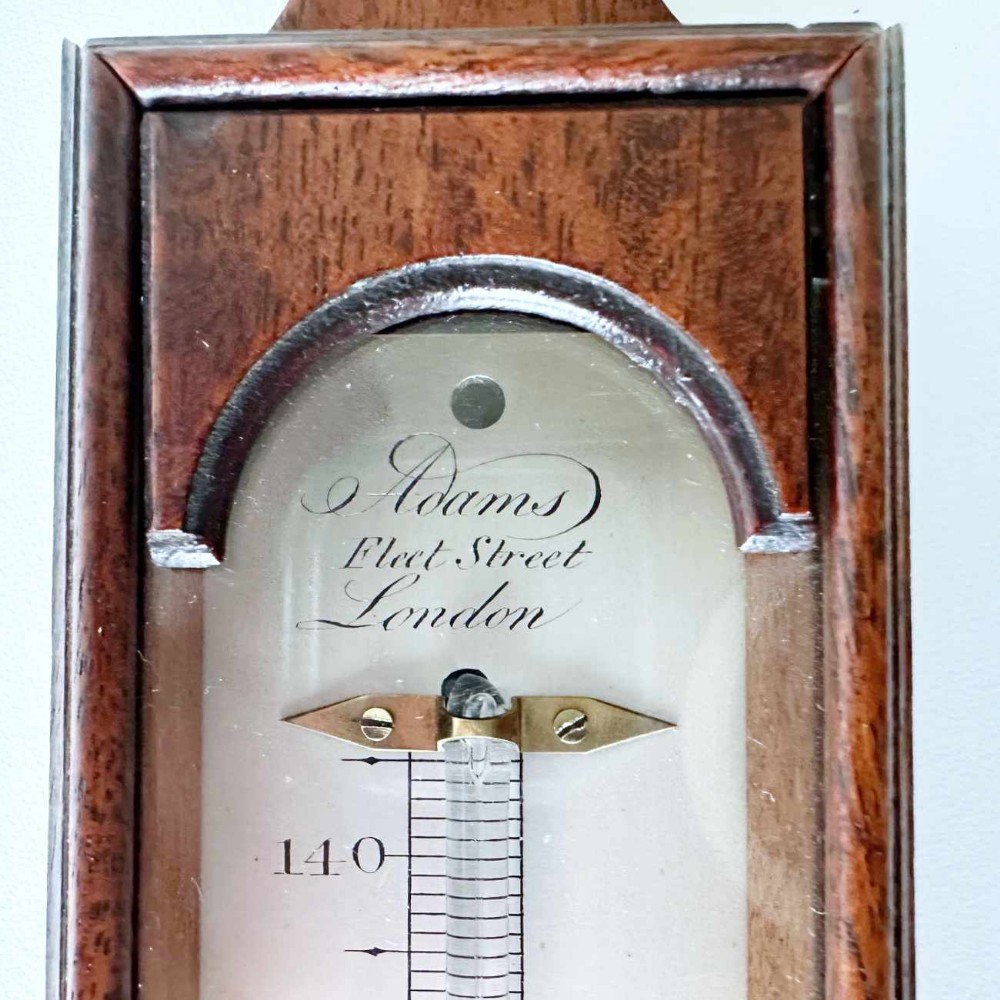
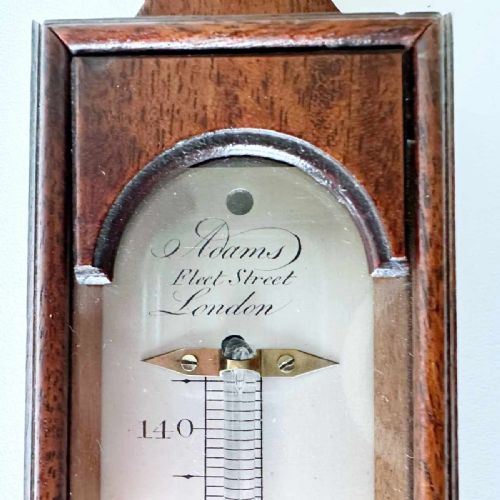
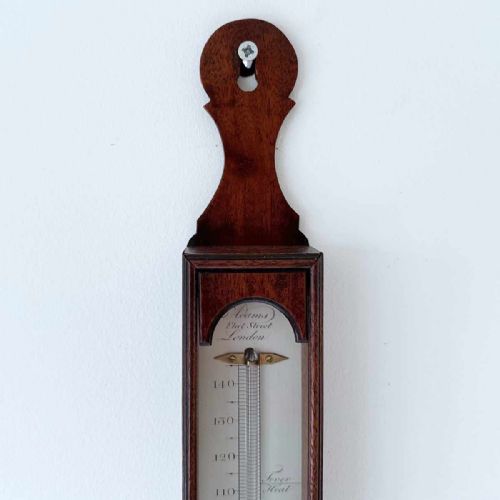
The right-hand side is engraved with simple guidance for the observer marking various points including “Freezing, Temperate, Summer Heat, Blood Heat and Fever Heat”. The thermometer is fixed to the scale by two brass clasps and can be removed for separate use by means of a removable at the top of the frame. It is completed with the famous makers name engraved to the top, “Adams, Fleet Street, London.”
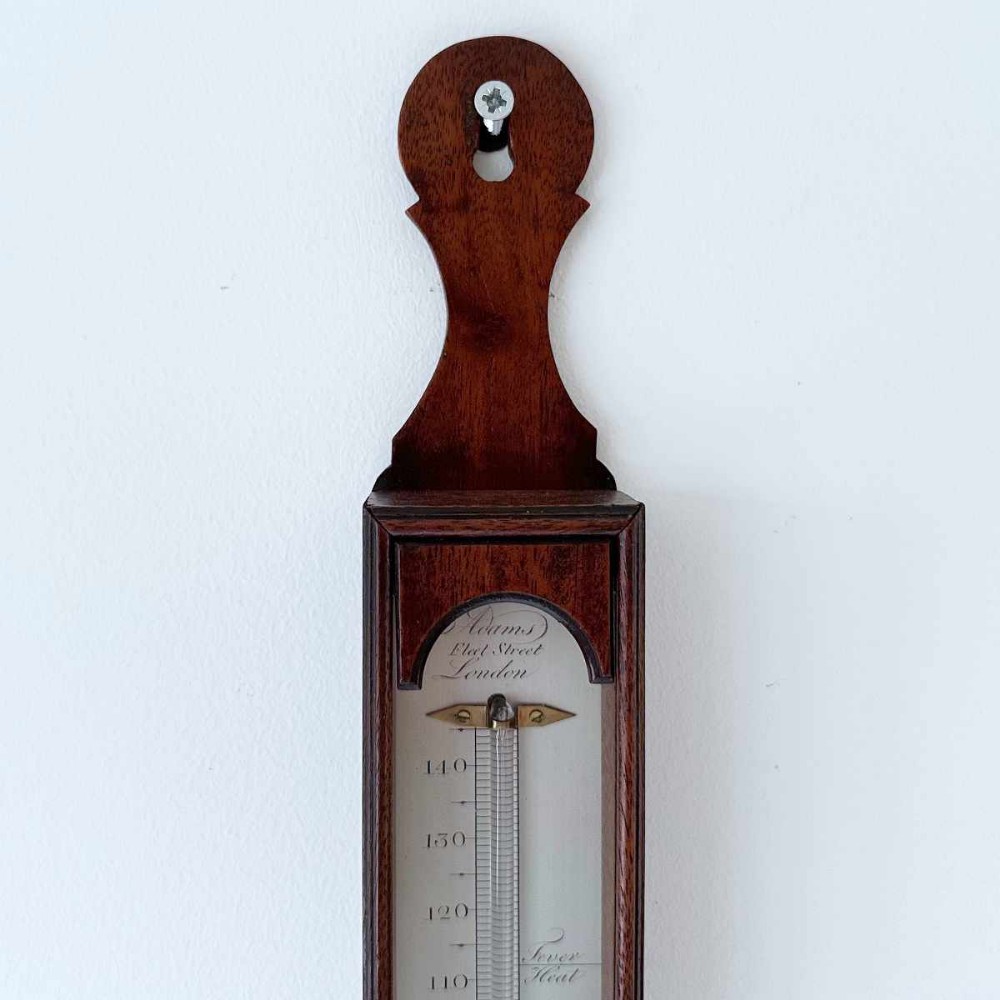
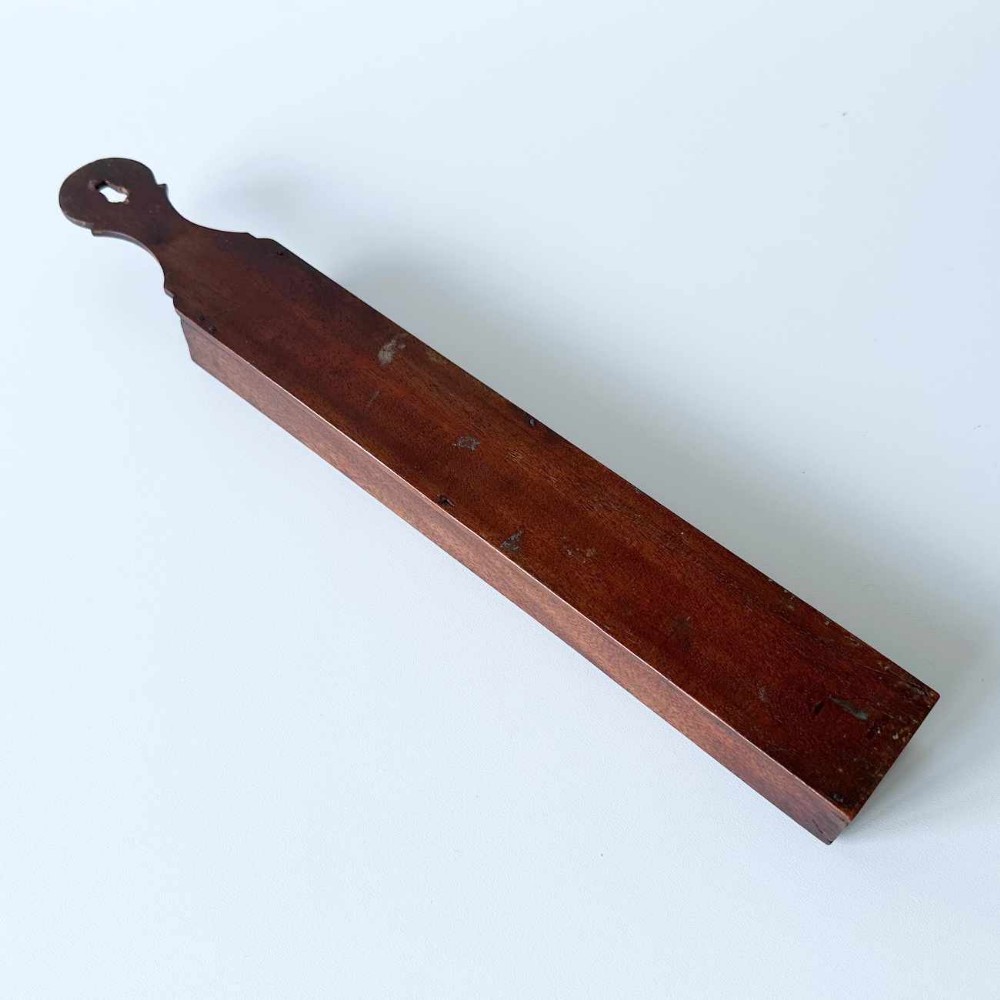
The scale is enclosed within a mahogany case with glazed front and graduated mahogany pagoda style top with back board of the case extending further behind to form an eyelet for wall hanging.
Thermometers of this age are extraordinarily rare, to find one by George Adams is an absolute pleasure.
The Adams dynasty needs little introduction, a family who began their success in the early Eighteenth Century. George Adams Senior was born in Fleet Street, London in 1709 to Morris and Mary Adams. His Father was a freeman of London, belonging to the Loriner’s Company and although he was a liveryman, was actually a cook by trade. At the age of fifteen (1724), George was apprenticed to a James Parker, a mathematical instrument maker of the Grocer’s Company for a premium of £20. His initial two years were not without difficulty as his father Morris died the following year leaving George, his mother Mary and two further children without support and the following year also saw the death of his master. By good fortune, George was turned over to a new master Thomas Heath who had by then been trading on The Strand for just six years but ran a successful and enterprising establishment and his adverts from the period attest to the wide range of instruments that the young Adams would have been tasked to manufacture. On completion of his seven-year tenure, he chose to continue his work for Heath, only being granted his freedom of the Grocer’s Company in 1733 by which point his mother had also passed away. It is likely then that the proceeds of his parent’s estate were the catalyst for George Adams to begin trading in his own right.
The establishment of his business at the sign of Tycho Brahe’s Head on Fleet Street was close to his home in Shoe Lane but he joined a community of already established scientific instrument makers in that area and could guarantee a certain amount of passing trade from the positioning. He also kept up his ties with Thomas Heath which is evidenced from dual advertisements that were taken out by the pair in the mid-1730’s. His prominence as an instrument maker really took off in the 1740’s where he began to undertake work for both The Board of Ordnance and The East India Company. It was also the decade in which the microscope began to ascend in its popularity and Adams, seeing an opportunity, undertook to write the first of his two famous publications. This initial publication, “Micrographia Illustrata” was introduced in 1746 at the same time as his New Universal Microscope and must have been timed to support his instrument’s release to the market but the book was in its majority a compilation of many previously known publications but served to provide his audience with instruction and a full account of the possible uses to which this instrument could be applied.
Tragedy struck Adams again in the same year with his wife Ann’s death, leaving him with two young daughters and records of his duties as churchwarden would suggest that he threw himself into both business and civic duties for the following two years until he finally remarried to Ann Dudley in 1748,
Jason Clarke Antiques has dated this Antique Mahogany Wall Thermometer to the 1750s.

You can view the stock and full dealer information on the Jason Clarke Antiques Profile Page
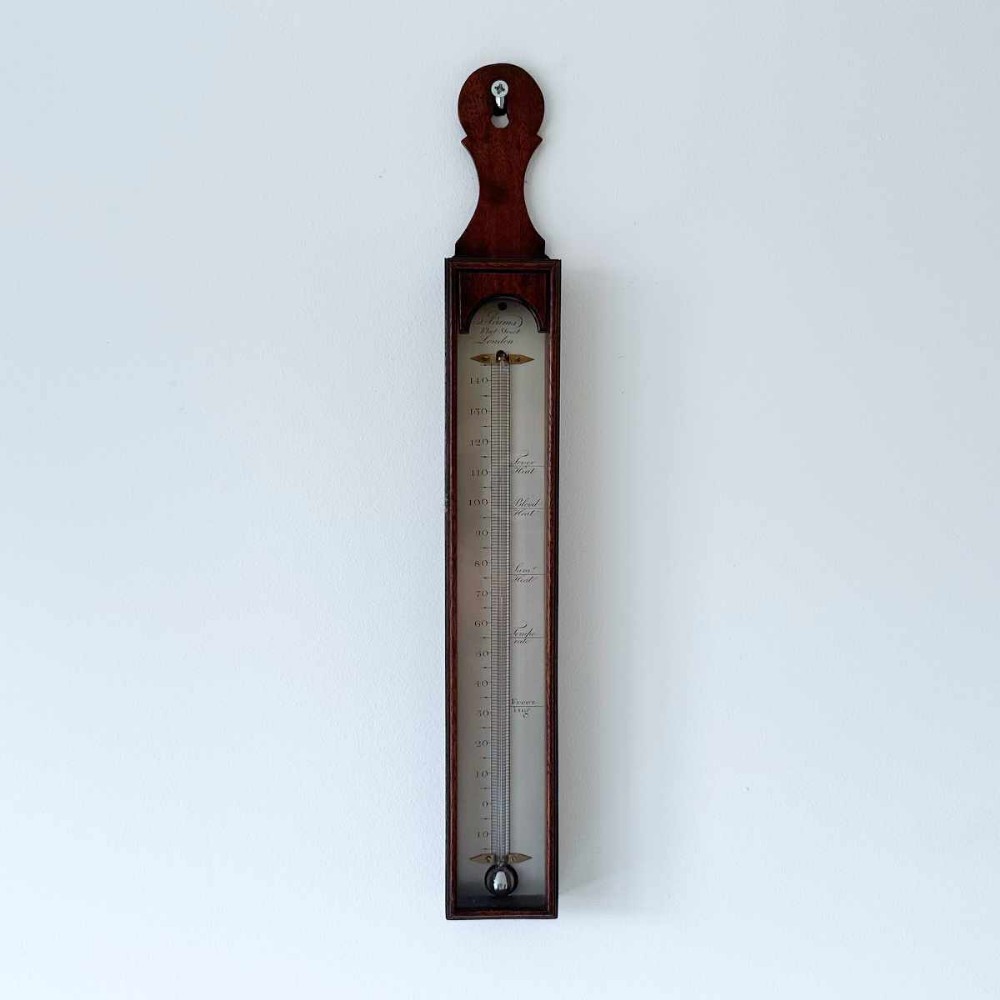
Eighteenth Century Mahogany Cased Wall Thermometer by George Adams of Fleet Street