


Antique Stick Thermometer
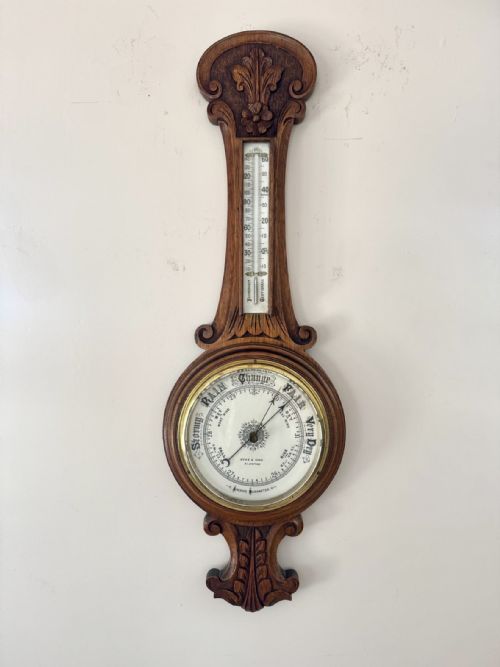
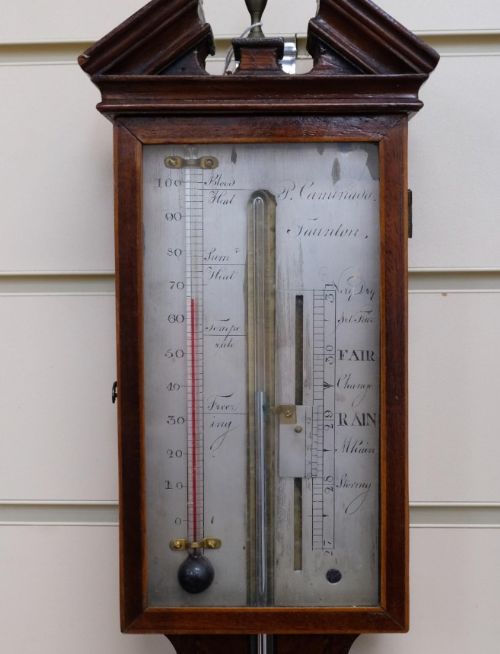
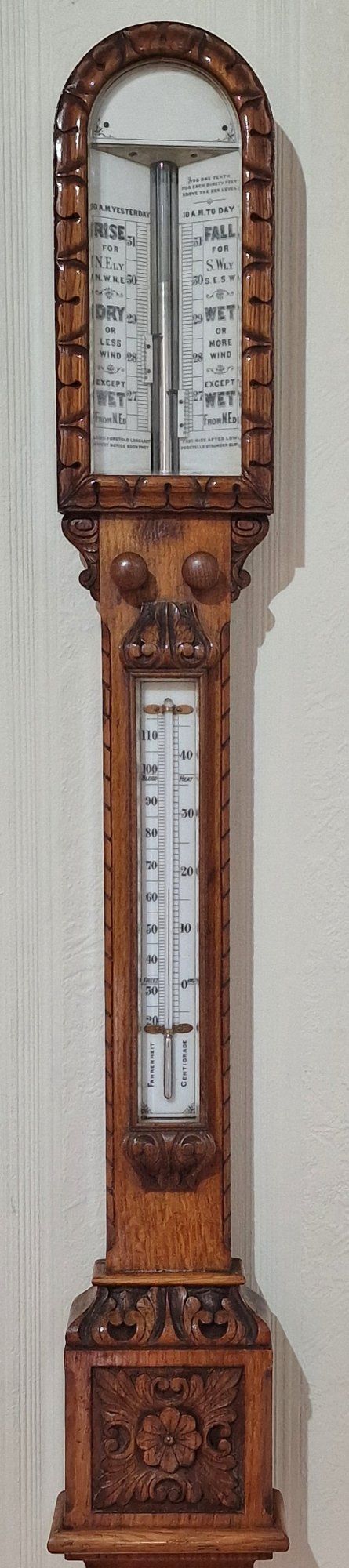
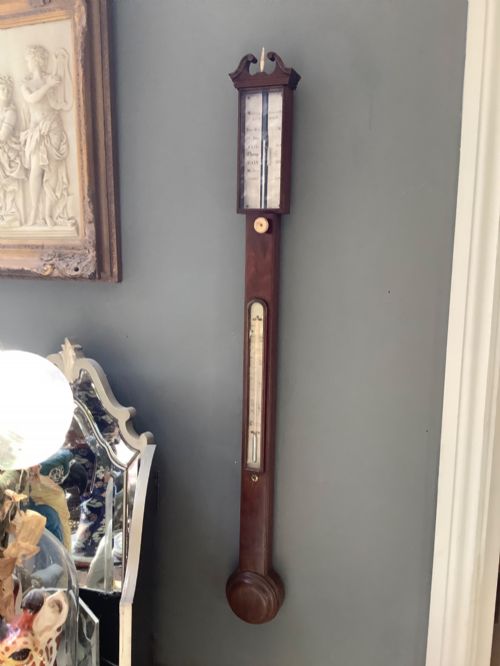
These antique stick thermometer examples are precision weather-glass instruments housed in timber wall cases, prized for their functional elegance and scientific heritage.
Antique Stick Thermometer
An antique stick thermometer or barometer is a tall, slender wall-hanging instrument designed to measure atmospheric pressure or temperature with mercury columns contained within exposed glass tubes. Buyers searching this phrase encounter slender wall pieces primarily in mahogany, oak, and walnut, spanning periods from the eighteenth century through the Victorian era.
The majority of these pieces combine the thermometer function with a stick barometer mechanism, housed in long wooden trunks protected by glass doors orbezels. They originate from makers working across British towns and cities, ranging from London workshops to provincial centres.
How they were made
The makers housed delicate glass barometer and thermometer tubes inside cabinet-grade timber cases fashioned from mahogany, oak, walnut, and rosewood. These wooden trunks frequently feature carved details, silvered brass dials, and bone or ceramic scale plates.
Makers inscribed their signatures and locations directly onto the silvered brass plates or scale boards, often utilising specialised techniques to engrave the weather descriptors alongside the numerical graduations.
Listings feature timber cases in mahogany, oak, walnut, and rosewood, housing glass tubes with silvered brass and ceramic scales.
What varies in quality
Quality rests in the crispness of the engraved silvered brass scale plates and the fidelity of the cabinetwork, where figured veneers and carved oak or walnut distinguish superior workshops from plain utility items. Signed examples by recorded instrument makers command greater interest than unsigned provincial pieces.
The survival of the original glass tubes and the legibility of the mercury column scales govern the integrity of each instrument, reflecting how carefully the piece has been preserved over the centuries.
Hyde & Sons Sleaford·P. Caminada Taunton·George Adams·Prada of High Wycombe·J Hughes London·Cox of Plymouth Dock·Corti of Exeter·Carpenter and Westley
The Antique Stick Thermometer Glossary
- Stick barometer
- A tall, narrow barometer that uses a mercury-filled glass tube to measure atmospheric pressure. These instruments hang vertically on walls and often incorporate thermometer scales alongside the main pressure tube.
- Silvered brass
- A metal alloy treated with a silver compound to produce a bright, matte finish suitable for engraving. Instrument makers used this material for the dial plates and scale boards where the weather readings are displayed.
- Banjo barometer
- A large dial barometer housed in a distinctive curved wooden case shaped roughly like a musical instrument. They frequently incorporate thermometer strips alongside the central circular dial.
- Aneroid barometer
- A barometer that measures pressure without liquid, using a flexible metal box that expands or contracts. This mechanical system replaced traditional mercury tubes in many later designs.
- Dial plate
- The graduated surface displaying the measurements and weather indicators. On these instruments, they are typically engraved on silvered brass or metal.
Antique Stick Thermometer: Frequently Asked Questions
What is an antique stick thermometer?
An antique stick thermometer is a traditional weather-measuring instrument featuring a vertical glass tube mounted on a timber backboard. These pieces were essential domestic scientific tools used to monitor temperature shifts indoors.
They are most commonly found integrated into the long wooden cases of stick barometers dating from the Georgian and Victorian eras.
How do you date an antique barometer?
Dating relies on the style of the wood case, the shape of the cistern cover, and the typography used on the silvered brass scale plates. Georgian examples tend to feature straight mahogany trunks, while Victorian versions often display carved walnut or rosewood.
Maker signatures and recorded working dates found inscribed on the dial plates provide the most exact chronological markers.
Where should you hang a stick thermometer?
These instruments require stable interior wall locations away from direct sunlight, radiators, and draughts to ensure accurate temperature and pressure readings. Hanging them securely on masonry or solid stud walls protects the delicate glass tubes from shock.
Because of their height and slender proportions, they serve well in hallways, studies, or libraries where temperature fluctuations are minimal.
Did makers sign these instruments?
Many instrument makers and retailers engraved their names, towns, and professional titles directly onto the brass scale plates. Signatures ranging from London workshops to provincial makers in Exeter, Taunton, and Plymouth appear across these survivals.
Unsigned examples are also common, representing standard production from regional cabinet makers and opticians.