




Antique Cased Thermometer
These antique cased thermometer instruments combine precision science with fine cabinetmaking, offering both practical utility and period charm.
Antique Cased Thermometer
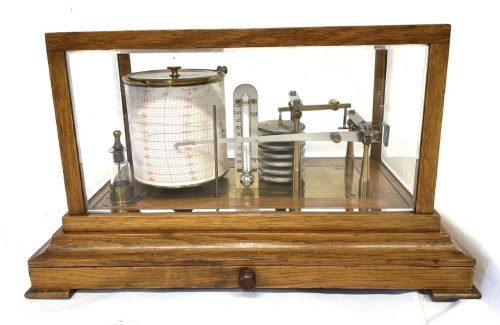
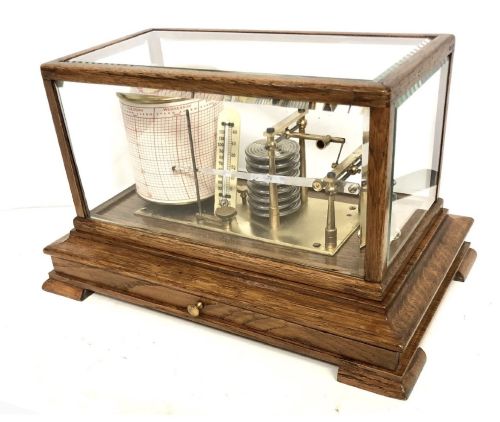
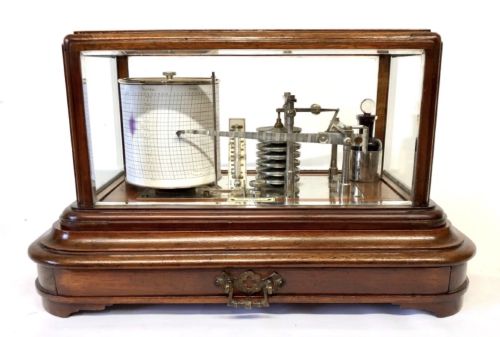
An antique cased thermometer is a scientific instrument housed in a protective housing made from materials such as mahogany, oak, leather, and brass. Buyers searching this phrase encounter a variety of forms, ranging from compact travel pieces to wall-mounted instruments and complex barographs.
The selection on this page spans several eras, featuring Victorian, Georgian, and Edwardian examples alongside pieces from the 1930s and 1940s. Many incorporate additional instruments such as barometers, compasses, and clocks within the same housing.
How they were made
Maker workshops utilised dense hardwoods like mahogany and oak to construct durable outer housings, often featuring bevelled glass panels and fitted interior linings of velvet or leather. Metal components in brass and sterling silver were cast and engraved to mount the temperature scales securely.
Makers integrated delicate glass capillary tubes alongside mechanical recording drums in barographs, balancing functional scientific accuracy with decorative cabinetry.
Combination pieces frequently pair thermometers with barometers, clocks, compasses, and rotating chart drawers inside glazed wooden housings.
What varies in quality
The standard of an antique cased thermometer depends heavily on the execution of the cabinetwork and the legibility of the engraved scale. Finer examples display meticulous dovetailing, choice timber grains, and original protective cases that remain intact.
Signatures from notable makers elevate a piece, as do complex combinations where the thermometer accompanies a barometer, clock, or compass within a harmonious housing.
George Adams of Fleet Street·Cox of Plymouth Dock·J Hughes London·Thomas Harris and Son·W.E. Pain of Cambridge·Jules Richard·Dobbie Son and Hutton
The Antique Cased Thermometer Glossary
- Barograph
- A self-recording aneroid barometer that charts atmospheric pressure over time, frequently incorporating a thermometer. These instruments sit inside glazed wooden cases often equipped with chart drawers.
- Capillary tube
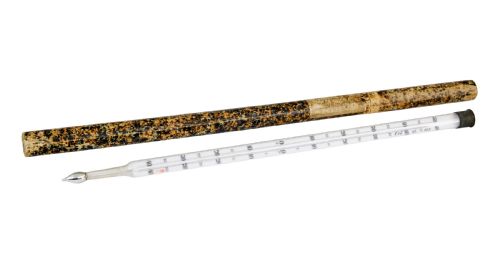
- The fine glass tube containing mercury or spirit that expands and contracts with temperature changes. Its clarity and attachment to the scale are central to the instrument.
- Aneroid
- A type of barometer that measures pressure without liquid using a flexible metal box, often paired alongside thermometers in desk and wall instruments.
- Bevelled glass
- Glass with edges ground at an angle, fitted into the doors and viewing windows of high-quality wooden cases to catch the light.
Antique Cased Thermometer: Frequently Asked Questions
What is an antique cased thermometer?
An antique cased thermometer is a temperature-measuring instrument housed within a protective enclosure of wood, leather, or metal. These pieces range from simple wall-hanging strips to complex scientific instruments combined with barometers and clocks.
Most surviving examples date from the Georgian, Victorian, and early twentieth-century periods. They were built for domestic interiors, scientific observations, and travel.
How do I date an antique thermometer?
Dating relies on the style of the wooden case, the typography on the scale plate, and the materials used in construction. Georgian examples often feature slender mahogany boards, whilst Victorian pieces frequently showcase carved oak or wheel barometer formats.
Signatures or maker names inscribed on the face or backplate provide a direct link to recorded workshops and active dates. Comparing the mechanics and secondary instruments also helps narrow down the period of manufacture.
Where were these thermometers used?
These instruments served multiple environments, from domestic hallways and libraries to ships and scientific offices. Travel versions were built with robust leather cases and secure clasps to withstand movement.
Wall thermometers monitored ambient room or garden temperatures, whilst desk accessories and carriage clocks integrated thermometers for portable luxury. Their placement reflected the Victorian and Georgian desire to measure and understand the natural world.
How do I care for a cased thermometer?
Keep the instrument away from direct sunlight and rapid temperature fluctuations to protect both the wooden case and the internal scale. Dust wooden surfaces gently with a dry cloth and avoid harsh chemical cleaners on brass or glass elements.
If the piece contains a mercury or spirit tube, ensure it remains stable and undisturbed to prevent separation within the capillary. Travel cases and leather exteriors benefit from occasional light conditioning to prevent drying.