


Mahogany Scientific Instrument
A mahogany scientific instrument brings precision engineering into domestic spaces, combining utility with fine cabinetmaking.
Mahogany Scientific Instrument
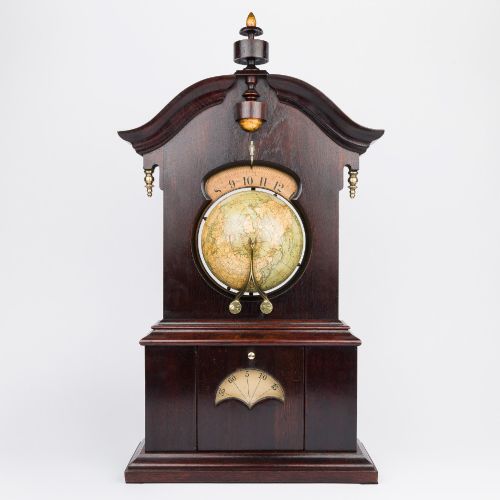
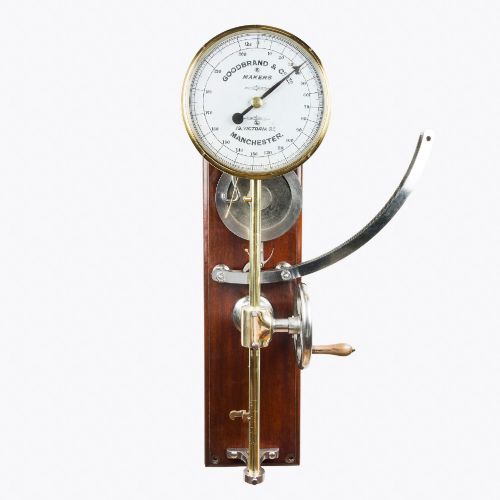
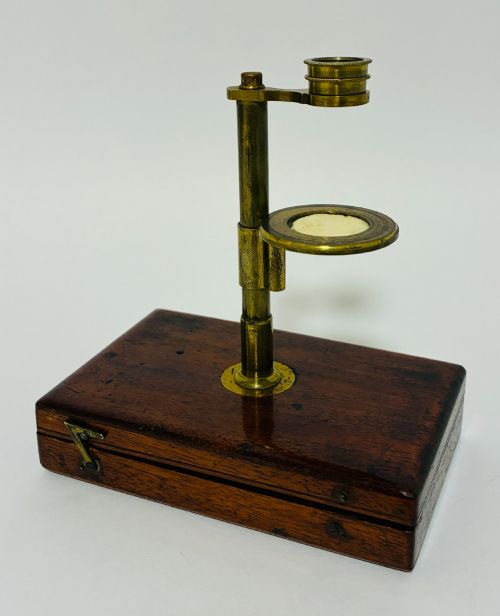
A mahogany scientific instrument represents the intersection of practical utility and decorative woodworking, spanning the Georgian, Victorian, and Edwardian eras. Buyers searching for a mahogany scientific instrument encounter a variety of practical objects, with barometers, microscopes, and telescopes appearing frequently alongside compasses, barographs, and thermometers.
The pieces on this page originate primarily from the eighteenth, nineteenth, and early twentieth centuries, reflecting a period of active scientific observation and measurement. Stick barometers and optical instruments dominate the selection, often housed in fitted wooden cases designed for travel or domestic display.
Makers and retailers placed functional dials, lenses, and scales inside timber housings, ensuring that scientific equipment harmonised with contemporary interiors. The survival of these objects depends heavily on the durability of the primary wood used to enclose delicate brass and glass components.
Evaluating the Range
Quality in a mahogany scientific instrument rests upon the crispness of the engraved scales, the precision of the signed signatures on dials or paper trade labels, and the integration of the woodwork with the mechanical components. Pieces bearing the names of established makers demonstrate superior finishing in both the brass work and the cabinet joints.
The preservation of original paperwork, labels, and fitted wooden cases separates standard examples from exceptional survivals. Superior items retain their original glass, unpolished brass patination, and functional mechanisms that operate smoothly within their timber enclosures.
Listings feature mahogany scientific instruments spanning the eighteenth, nineteenth, and early twentieth centuries, incorporating brass, glass, steel, and paper components.
Nairne & Blunt·De Grave Short & Co.·G. Davis·Gaupp & Co.·Cary·Goodbrands & Co.·G. Adam·P. Caminada·Charles Lincoln·R. & J. Beck·Robert Brettell Bate·George Adams·Thomas Rubergall·Patrick Adie·Day & Millward·Negretti & Zambra·Samuel Porter·W. & T. Gilbert·Clarkson
The Mahogany Scientific Instrument Glossary
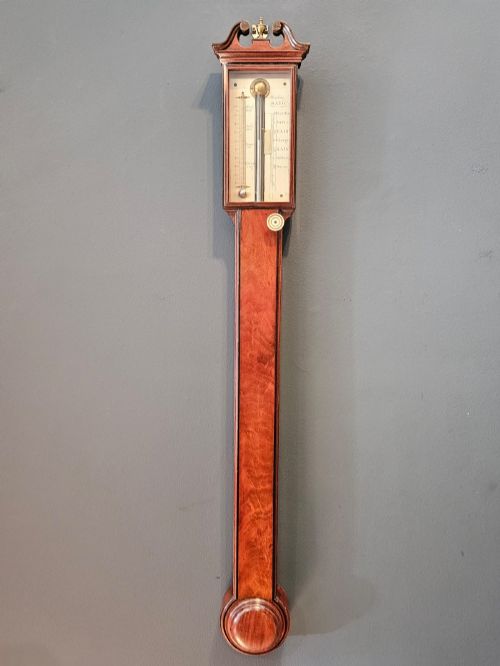
- Stick barometer
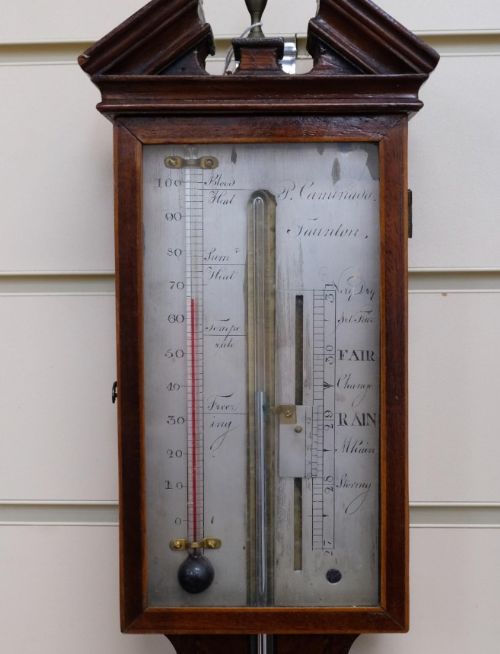
- A tall, wall-mounted instrument measuring atmospheric pressure through a vertical column of mercury visible through a glass tube. These devices are typically set into a narrow mahogany trunk with an exposed scale.
- Barograph
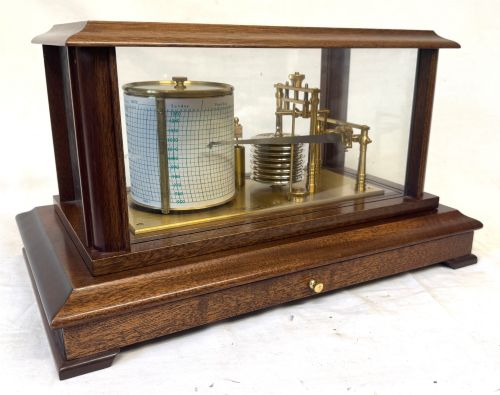
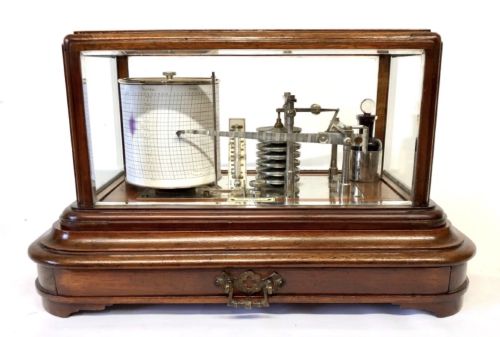
- A self-recording meteorological instrument that plots barometric pressure over time onto a paper chart mounted on a rotating drum. They are frequently housed in glazed mahogany cases with an attached thermometer.
- Culpeper microscope
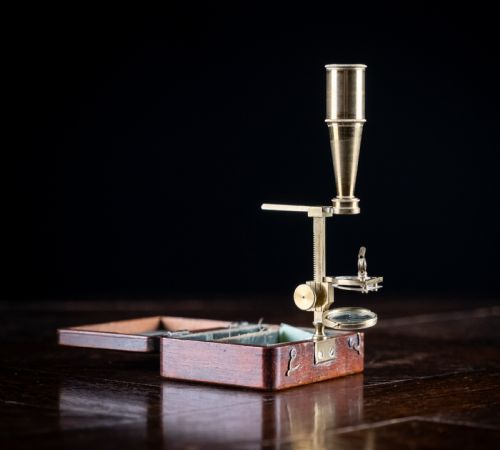
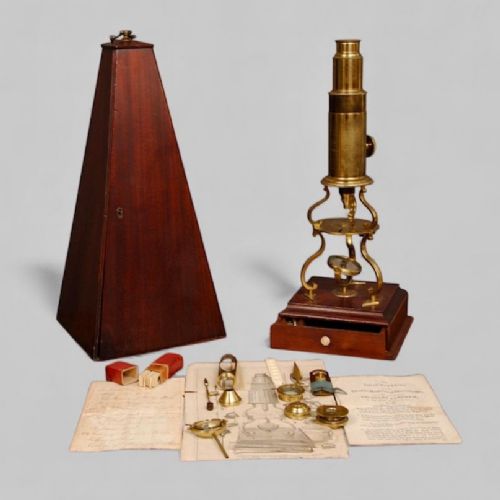
- An early tripod-mounted microscope design utilising a conical wooden body tube supported by three curved brass legs over a mirror base. Examples from the eighteenth century often include original trade papers inside the case.
- Chondrometer
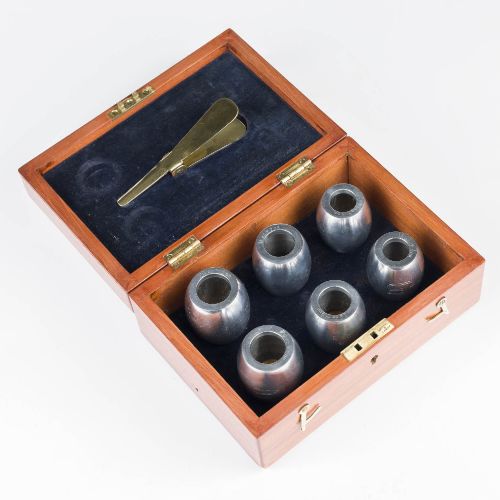
- A specialised weighing device utilised to determine the specific weight or quality of grain per bushel. Portable versions were fitted into compact wooden boxes complete with brass balancing beams and weights.
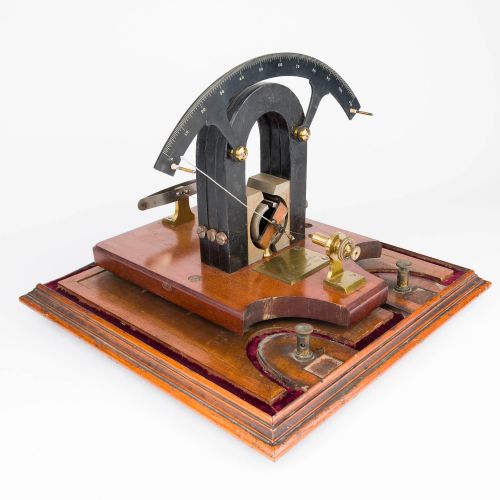
- Galvanometer
- An electromechanical instrument used for detecting and measuring small electric currents. These scientific devices often feature calibrated paper dials and delicate copper coil wiring mounted beneath glass covers.
Mahogany Scientific Instrument: Frequently Asked Questions
How do I read a stick barometer?
A stick barometer displays atmospheric pressure through the height of a mercury column against a graduated scale. Observers read the current pressure by noting the position of the meniscus and comparing it with the vernier scale.
Many Georgian and Victorian stick barometers include vernier adjustments operated by an external key or knob. These allowed users to align the marker precisely with the top of the mercury column for accurate readings.
Were these instruments made for travel?
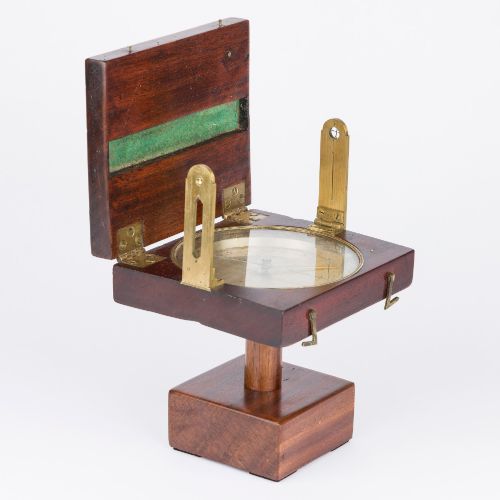
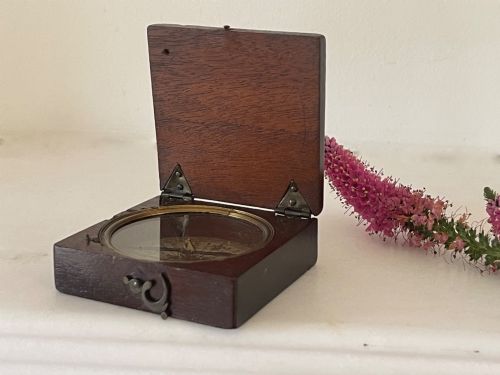
Numerous scientific instruments, including compasses, sundials, and microscopes, were manufactured specifically for field use by surveyors and explorers. These portable versions were secured inside fitted mahogany cases to withstand transport.
Larger barometers and barographs were generally intended for fixed domestic or office placement on walls or tables. Their wooden housings prioritized display alongside protection for the delicate internal mechanisms.
How do I identify the period of an instrument?
The period is often identified through the style of the mahogany cabinetry, the typography on the paper scales, and the signature of the maker or retailer engraved on the brass plate. Georgian instruments tend to feature clean lines and silvered brass plates, while Victorian examples often incorporate heavier mouldings.
Makers frequently signed their work directly onto the dials or optical tubes. Cross-referencing these signatures with known working dates helps narrow the manufacturing window.
How should I care for a mahogany instrument?
Maintenance involves keeping the wooden cabinet away from direct heat sources and sudden humidity changes to prevent timber warping or cracking. The mahogany exterior benefits from occasional light waxing to preserve the finish.
Glass and brass components require gentle dusting with a soft cloth without the use of harsh chemical cleaners. Preserving original paper labels and thermometer scales inside the case is essential for maintaining the historical integrity of the piece.