
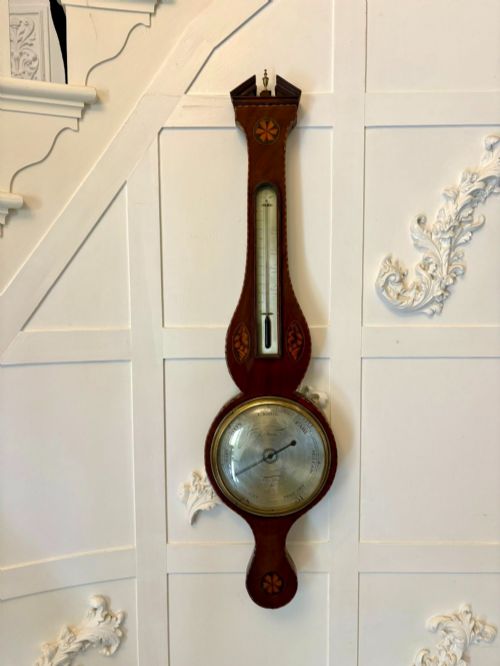
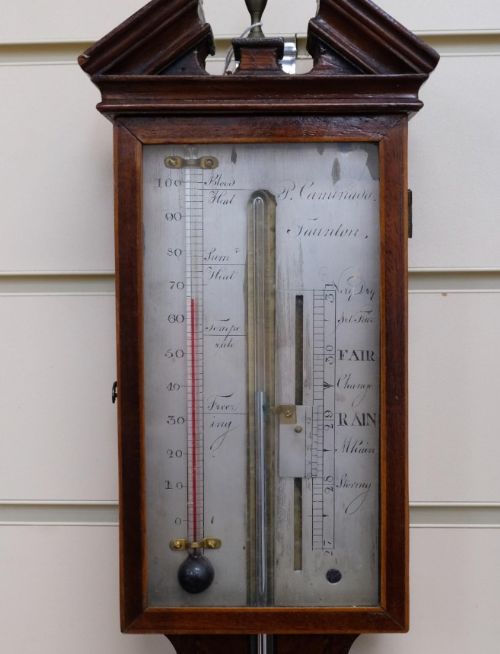
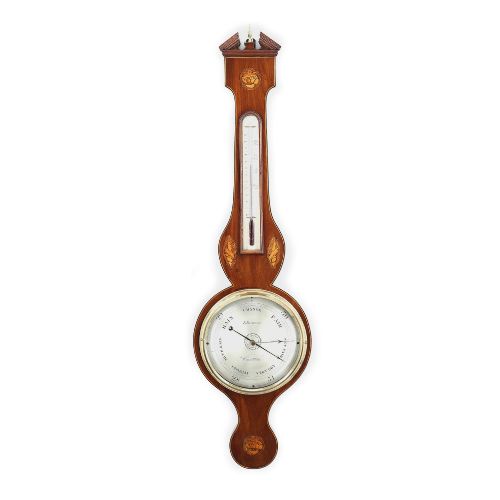
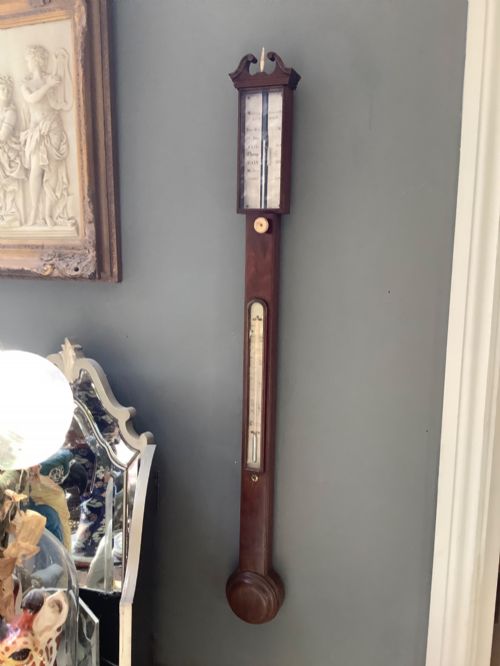

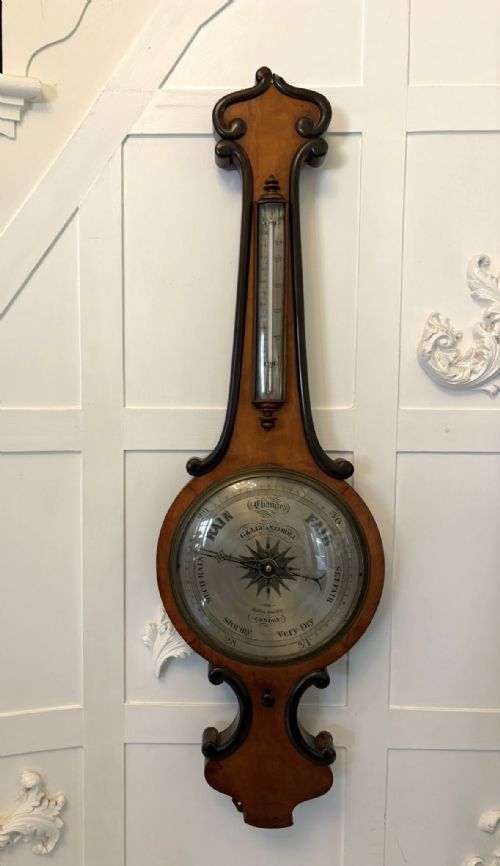


Georgian Wall Thermometer
A georgian wall thermometer measures the temper of a room with the quiet precision of an earlier century.
Georgian Wall Thermometer
A georgian wall thermometer is a domestic instrument designed to record ambient temperature, appearing most frequently in mahogany or rosewood cases.
The pieces on this page span the Georgian, Regency, and Victorian periods, alongside occasional later revivals.
Makers from London and regional towns house these instruments in wooden frames, sometimes pairing them with barometers.
What separates the finest examples
Quality rests in the crispness of the engraved silvered metal scale and the fidelity of the cabinetwork.
Pieces bearing the signature of a known maker on the dial carry greater weight than unsigned examples.
The choice of figured timber and the restraint of the inlay dictate the visual balance of the piece.
Makers signed their dials as if signing a painting, leaving their names in towns from Weymouth to York.
George Adams·P Caminada·B Besozzi·G & L Guanziroli·Prada·Molton·Luisetti·Giana·Jenkins·Cox·Vecchio & Co·J Groce·J C Moretti·Dominic Gatty·Corti·Schiavi·George Dollond·Matthew Berge
The Georgian Wall Thermometer Glossary
- Silvered brass
- A metal dial treated with silver to create a bright, reflective surface that receives fine black engraving easily.
- Banjo barometer
- A domestic instrument housed in a distinctive curved wooden case resembling a banjo, frequently combining a thermometer and dial barometer.
- Stick barometer
- A tall, narrow instrument featuring an exposed tube of mercury alongside a long vertical scale.
- Stringing
- A narrow inlay of contrasting wood used to edge panels and borders on cabinet furniture.
- Neo-Classical
- A style drawing inspiration from the classical art and architecture of ancient Greece and Rome.
Georgian Wall Thermometer: Frequently Asked Questions
Where were they hung?
These instruments hung in principal rooms, halls, and libraries where temperature control mattered to the household.
Their owners placed them away from direct sunlight and fireplaces to secure an accurate reading.
Are they accurate?
Most surviving examples retain their original mercury tubes and retain a surprising degree of working precision.
Temperature shifts still register on the engraved scale, though collectors view them primarily as historic decorative objects.
How do I spot a later copy?
Look closely at the timber grain, the ageing of the brass, and the method of engraving on the dial.
Twentieth-century revivals show machine methods where hand-working belongs.
How should I clean the wood?
Dust the mahogany or rosewood case gently with a dry, soft cloth to preserve the polish.
Avoid modern chemical polishes that strip the warm, aged lustre of the surface.