51,093  PAGES BROWSED TODAY PAGES TODAY 273 ANTIQUES UPLOADED TODAYNEW ARRIVALS
273 ITEMS ADDED TODAY
Sort Order
Items Per Page
Browse Categories
Sort order
Items per page
ID #SA1226161
FOR SALE
£3,500
Email Phone Buy
Save
Very Early Wimshurt Machine According to Wimshurst Designs
For sale by Jason Clarke Antiques
for sale €4,095     $4,445
£3,500
Jason Clarke Antiques

Jason Clarke Antiques

Sellingantiques Verified Since Jul 2015
Browse dealers 78 items
Id #SA1226161
PDF SHARE
SAVE

Very Early Wimshurt Machine According to Wimshurst Designs

19th century
Description

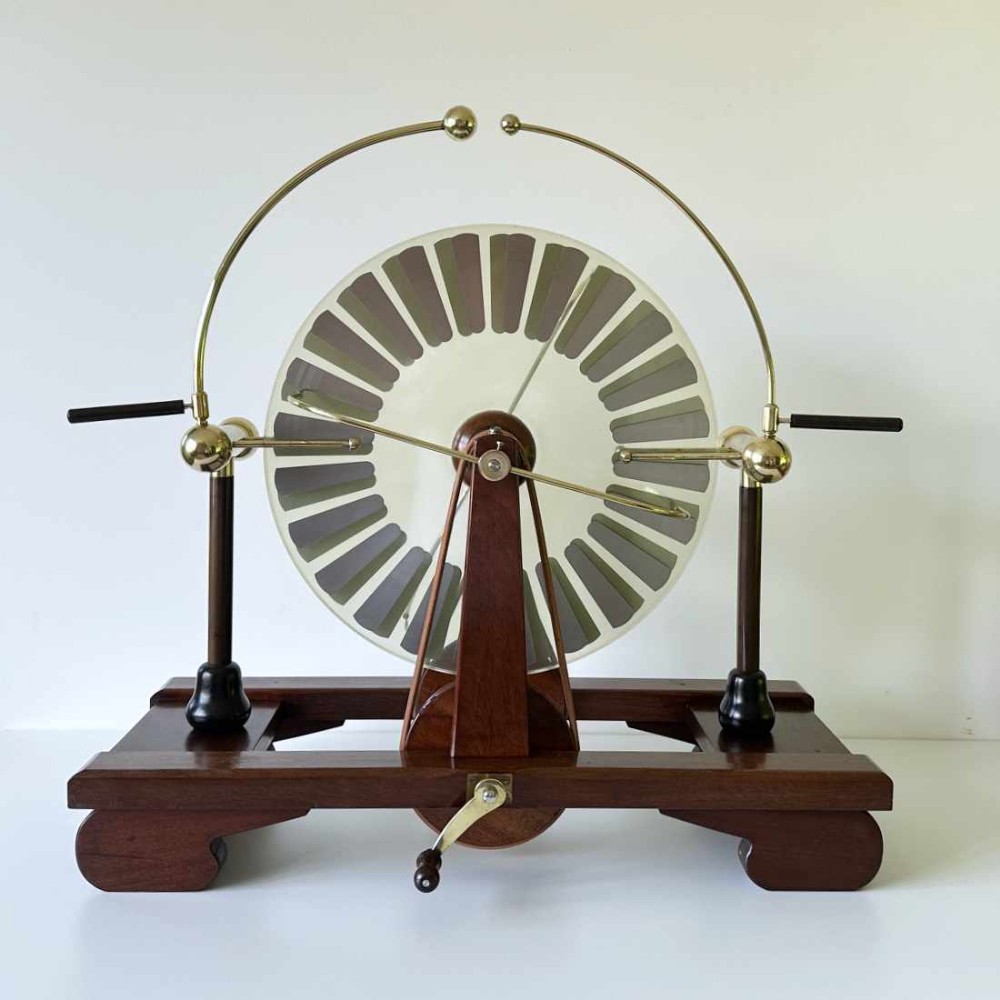
For sale, a very early example of a Wimshurst Machine in accordance with Wimshurst’s original design.

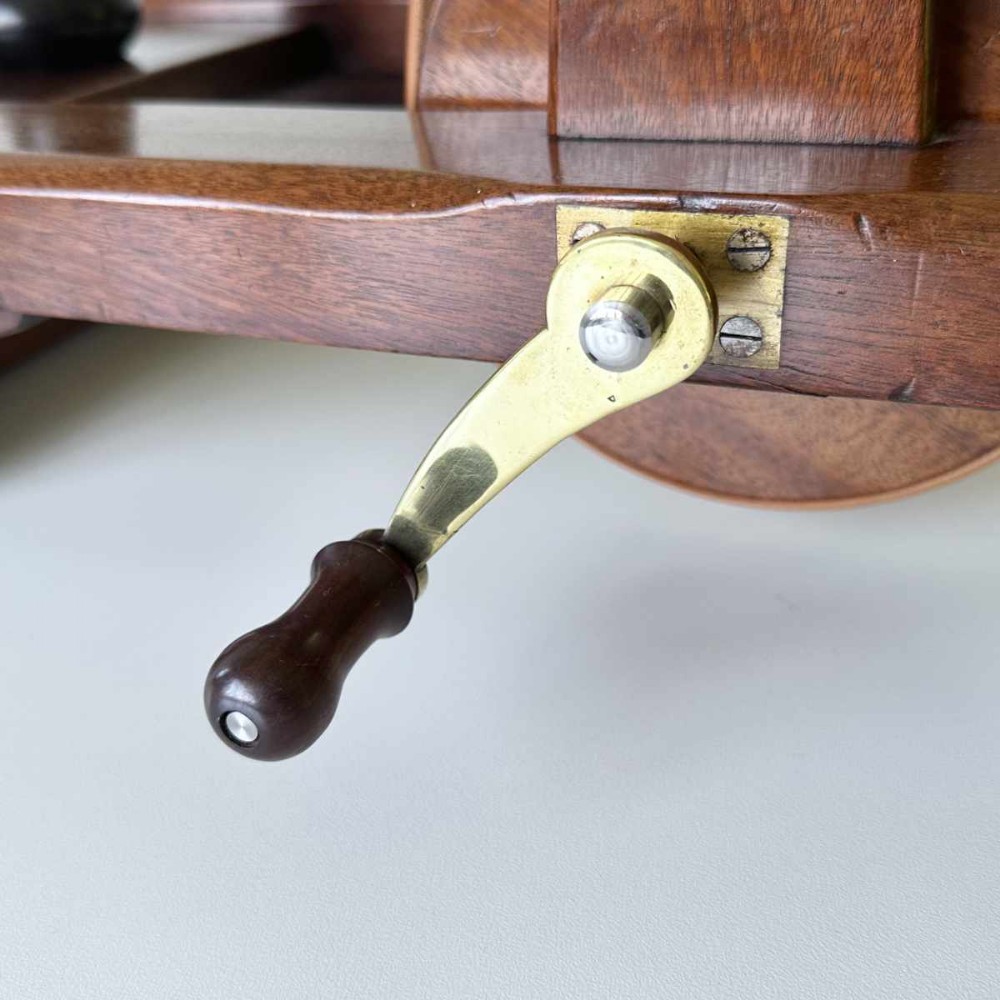
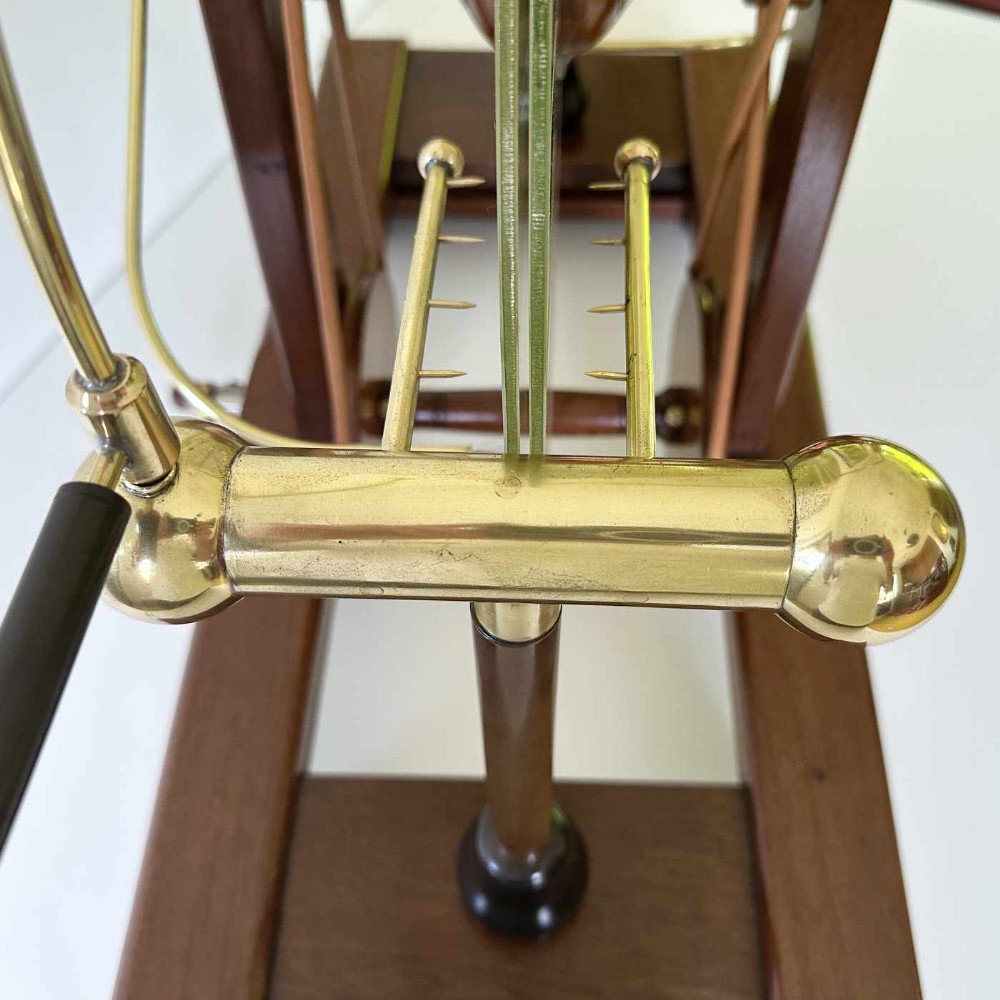
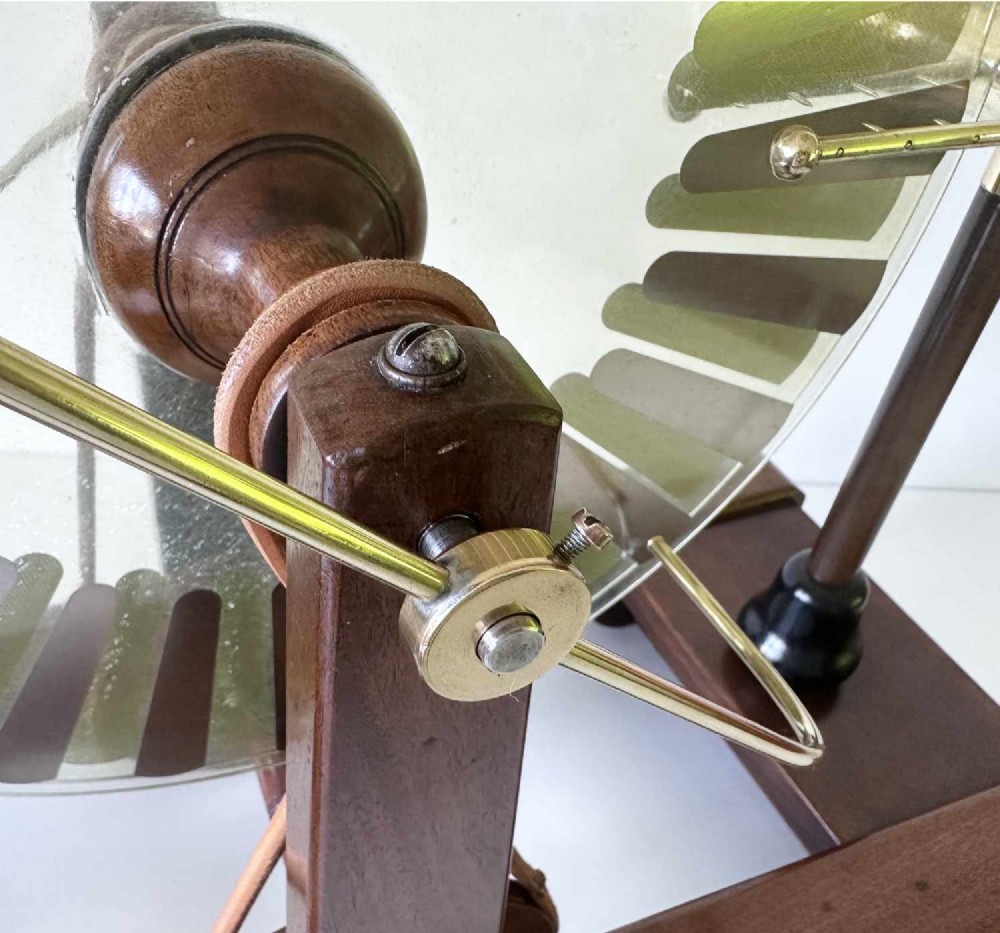
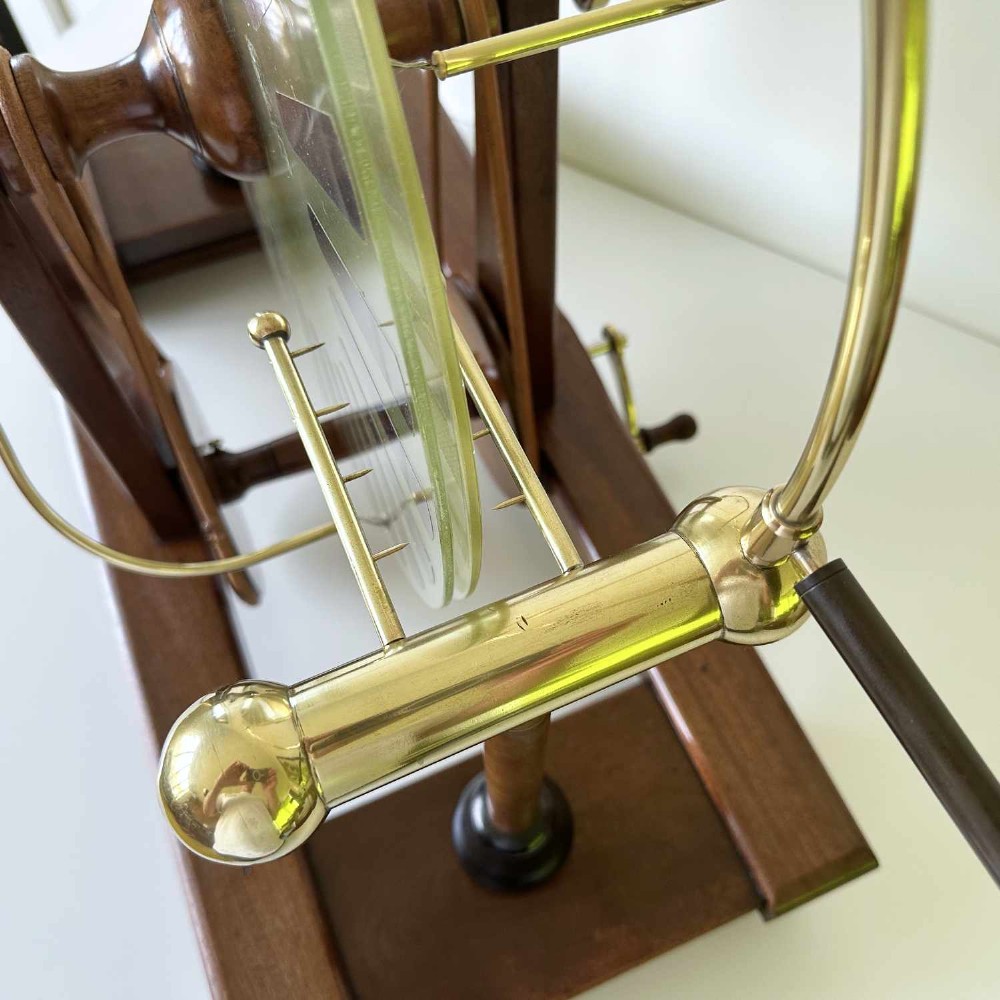
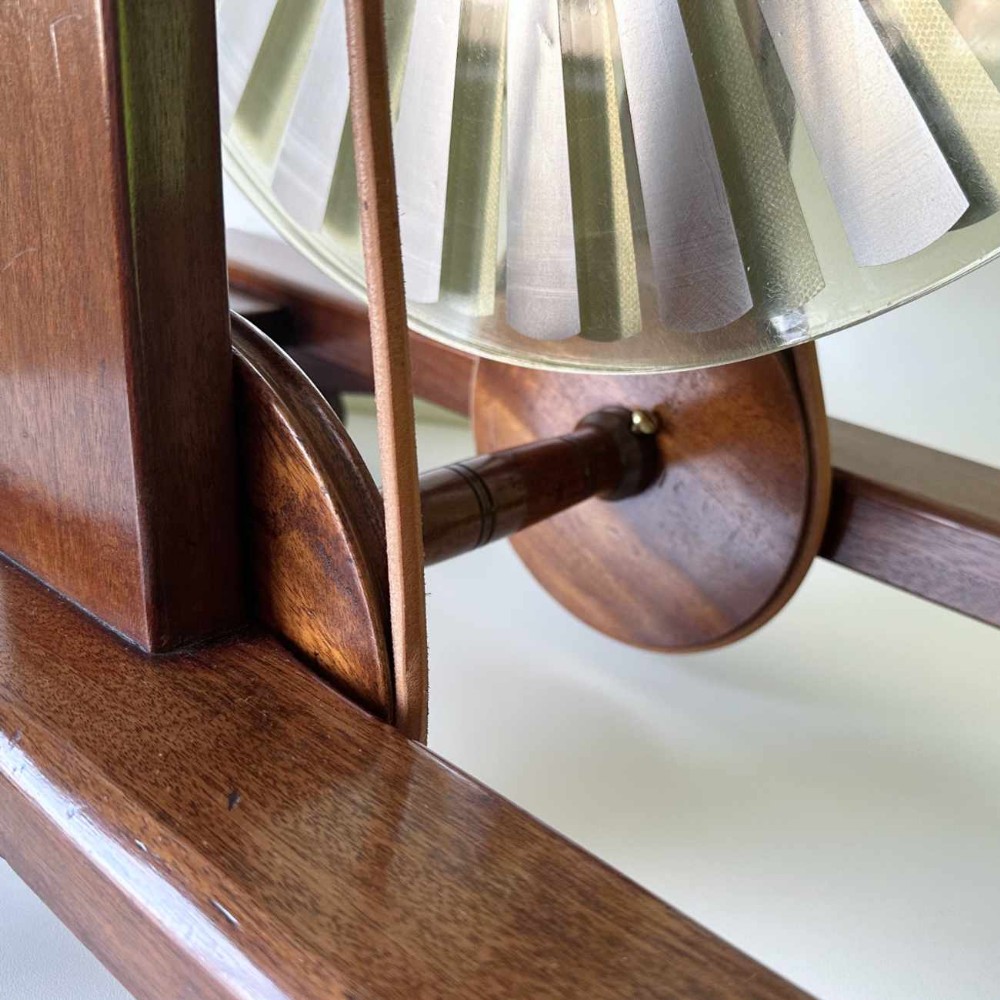
This large example has a mahogany base with scrolled feet and two contra rotating seventeen-inch glass discs. The discs are rotated by means of two turned mahogany wheels with leather bands attached to a spindle on which the discs are attached. By turning the brass and turned mahogany handle, electrostatic charge is collected from the discs via the collecting pins sited at either side and then released between the two brass nodes which are positioned above the machine and are pivoted on two insulated ebonite arms to allow for lengthening or shortening of the spark whilst in demonstration.
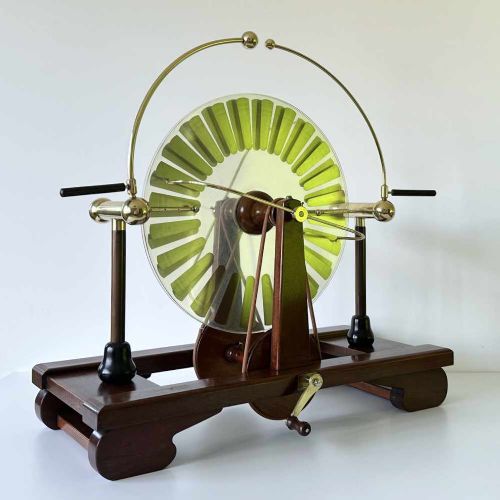
What differentiates this magnificent machine from later examples is the absence of a set of integral Leyden jars which are ordinarily placed behind the discs to store a build-up of charge prior to the spark release. In similarity to James Winshurst’s original design, the machine was built to work alongside an external battery of Leyden jars to be used in conjunction with the instrument. The absence of Leyden jars does not affect the machine’s ability to create a spark gap but it simply provides a smaller and more rapid spark due to the absence of the charge storage facilitated by the jars. It could of course be altered if an external set of Leyden jars was used in conjunction with the apparatus.
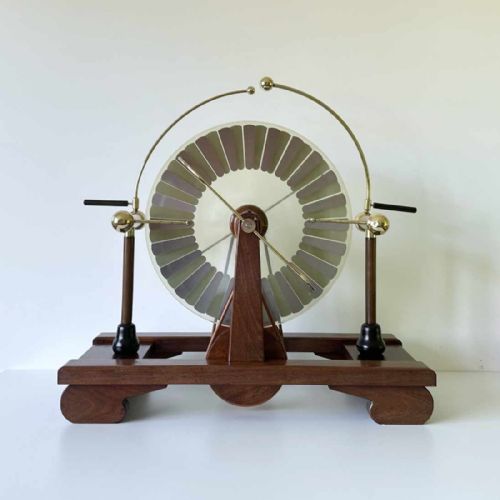
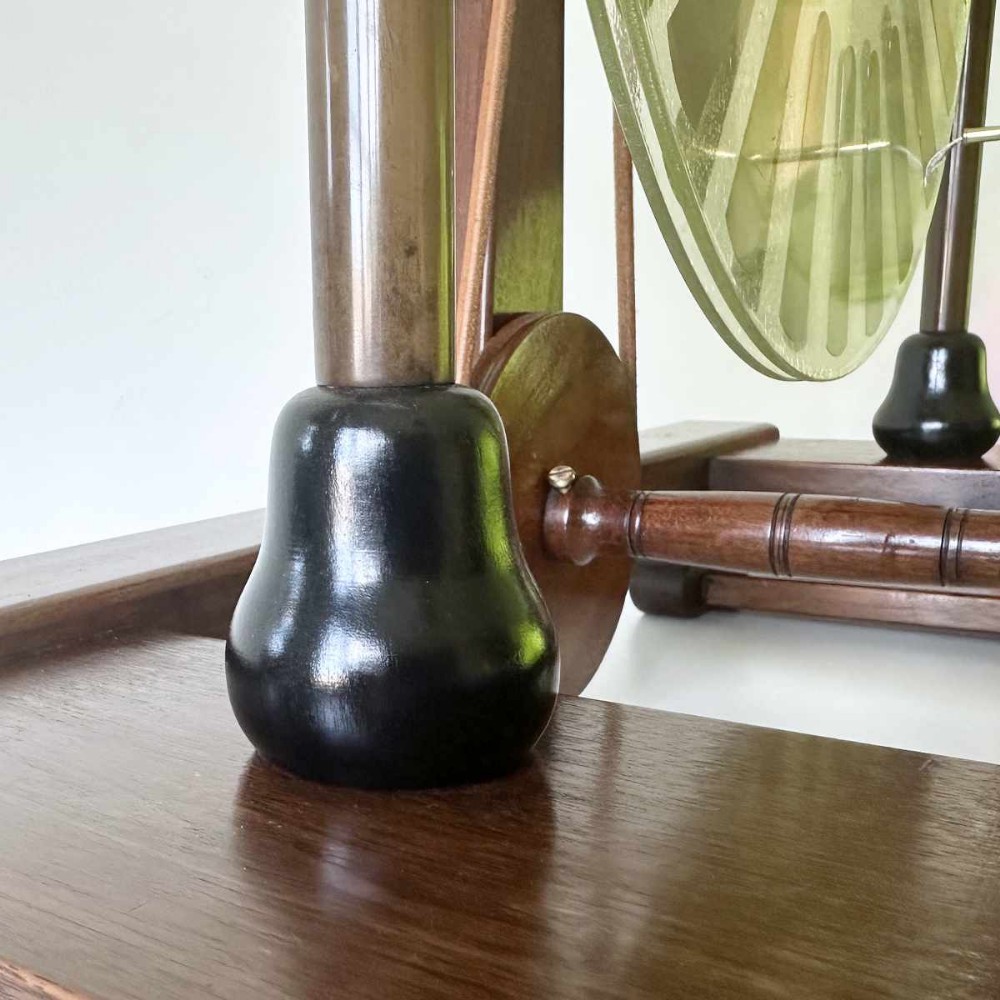
This is perhaps the earliest example I have owned, notable for its spark gap nodes that align to the circumference of the glass discs, the absence of Leyden jars and its general design with Wimshurst’s original which now resides in the Science Museum. Wimshurst originally used rosewood for the columns holding the collectors whereas this example is constructed of ebonite, a material that had been in use since 1851. Its replacement was presumably due to its superior insulating qualities.
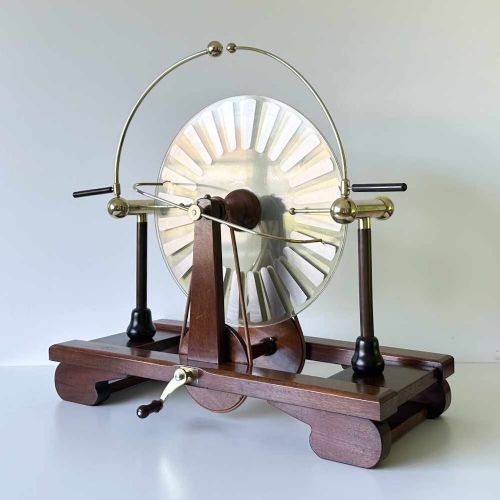
The Wimshurst influence machine or electrostatic generator was developed by the British inventor James Wimshurst between 1880 & 1883.

James Wimshurst was the Chief Shipwright Surveyor for Lloyds of London but dedicated his spare time to scientific experimentation. Widely known for his experiments with electricity, he became a member of the Institute of Electrical Engineers in 1889 and was elected a Fellow of the Royal Society in 1898.

Circa 1885

Physical Dimensions
Height
66cm (25.98")
Width
68cm (26.77")
Depth
32cm (12.60")
Declaration

Jason Clarke Antiques has dated this Antique Wimshurst Electrostatic Machine to the 1880s.

Reference Numbers
Sellingantiques Reference
SA1226161
Description
For sale, a very early example of a Wimshurst Machine in accordance with Wimshurst’s original design.
This large example has a mahogany base with scrolled feet and two contra rotating seventeen-inch glass discs.
Jason Clarke Antiques

The discs are rotated by means of two turned mahogany wheels with leather bands attached to a spindle on which the discs are attached. By turning the brass and turned mahogany handle, electrostatic charge is collected from the discs via the collecting pins sited at either side and then released between the two brass nodes which are positioned above the machine and are pivoted on two insulated ebonite arms to allow for lengthening or shortening of the spark whilst in demonstration.

fig 1. An antique Wimshurst electrostatic machine featuring counter-rotating clear discs with metal sectors, brass electrode spheres, and a hand-cranked dark mahogany base.
fig 1. Very Early Wimshurt Machine According to Wimshurst Designs

What differentiates this magnificent machine from later examples is the absence of a set of integral Leyden jars which are ordinarily placed behind the discs to store a build-up of charge prior to the spark release. In similarity to James Winshurst’s original design, the machine was built to work alongside an external battery of Leyden jars to be used in conjunction with the instrument. The absence of Leyden jars does not affect the machine’s ability to create a spark gap but it simply provides a smaller and more rapid spark due to the absence of the charge storage facilitated by the jars. It could of course be altered if an external set of Leyden jars was used in conjunction with the apparatus.

fig 2. An antique Wimshurst electrostatic machine featuring counter-rotating clear discs with metal sectors, brass electrode spheres, and a hand-cranked dark mahogany base.
fig 2. Very Early Wimshurt Machine According to Wimshurst Designs

This is perhaps the earliest example I have owned, notable for its spark gap nodes that align to the circumference of the glass discs, the absence of Leyden jars and its general design with Wimshurst’s original which now resides in the Science Museum. Wimshurst originally used rosewood for the columns holding the collectors whereas this example is constructed of ebonite, a material that had been in use since 1851. Its replacement was presumably due to its superior insulating qualities.

fig 3. An antique Wimshurst electrostatic machine featuring counter-rotating clear discs with metal sectors, brass electrode spheres, and a hand-cranked dark mahogany base.
fig 3. Very Early Wimshurt Machine According to Wimshurst Designs

The Wimshurst influence machine or electrostatic generator was developed by the British inventor James Wimshurst between 1880 & 1883.

James Wimshurst was the Chief Shipwright Surveyor for Lloyds of London but dedicated his spare time to scientific experimentation. Widely known for his experiments with electricity, he became a member of the Institute of Electrical Engineers in 1889 and was elected a Fellow of the Royal Society in 1898.

Circa 1885

Height
66cm (25.98")
Width
68cm (26.77")
Depth
32cm (12.60")
Date of Manufacture

Jason Clarke Antiques has dated this Antique Wimshurst Electrostatic Machine to the 1880s.

Reference Numbers
Sellingantiques Ref
SA1226161
Jason Clarke Antiques
Sellingantiques verified Since Jul 2015
Dealer Profile

You can view the stock and full dealer information on the Jason Clarke Antiques Profile Page
PDF SHARE
SAVE
An antique Wimshurst electrostatic machine featuring counter-rotating clear discs with metal sectors, brass electrode spheres, and a hand-cranked dark mahogany base.
1 / 10
Archive I An antique Wimshurst electrostatic machine featuring counter-rotating clear discs with metal sectors, brass electrode spheres, and a hand-cranked dark mahogany base.

Very Early Wimshurt Machine According to Wimshurst Designs
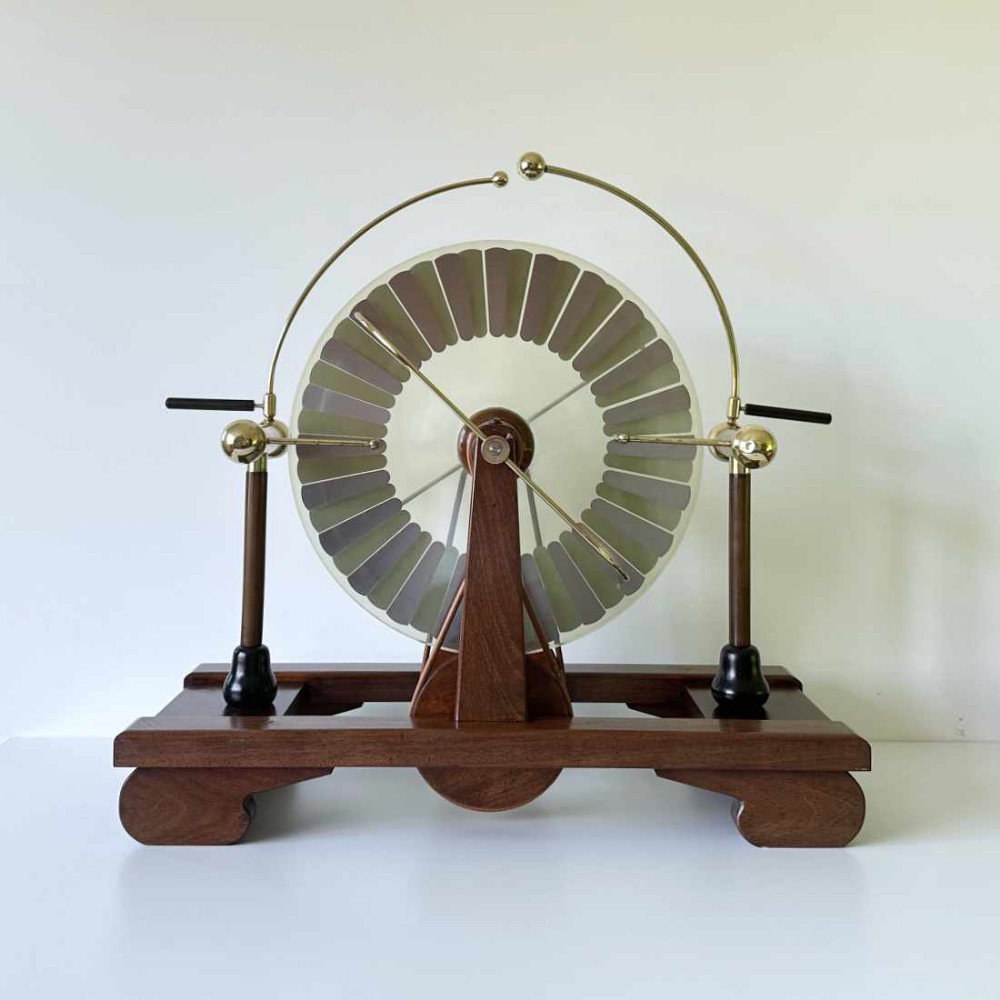
Archive II An antique Wimshurst electrostatic machine featuring counter-rotating clear discs with metal sectors, brass electrode spheres, and a hand-cranked dark mahogany base. View II
Archive III An antique Wimshurst electrostatic machine featuring counter-rotating clear discs with metal sectors, brass electrode spheres, and a hand-cranked dark mahogany base. View III
Archive IV An antique Wimshurst electrostatic machine featuring counter-rotating clear discs with metal sectors, brass electrode spheres, and a hand-cranked dark mahogany base. View IV
Archive V An antique Wimshurst electrostatic machine featuring counter-rotating clear discs with metal sectors, brass electrode spheres, and a hand-cranked dark mahogany base. View V
Archive VI An antique Wimshurst electrostatic machine featuring counter-rotating clear discs with metal sectors, brass electrode spheres, and a hand-cranked dark mahogany base. View VI
Archive VII An antique Wimshurst electrostatic machine featuring counter-rotating clear discs with metal sectors, brass electrode spheres, and a hand-cranked dark mahogany base. View VII
Archive VIII An antique Wimshurst electrostatic machine featuring counter-rotating clear discs with metal sectors, brass electrode spheres, and a hand-cranked dark mahogany base. View VIII
Archive IX An antique Wimshurst electrostatic machine featuring counter-rotating clear discs with metal sectors, brass electrode spheres, and a hand-cranked dark mahogany base. View IX
Archive X An antique Wimshurst electrostatic machine featuring counter-rotating clear discs with metal sectors, brass electrode spheres, and a hand-cranked dark mahogany base. View X
Enlarged Archival View
Telephone 07815 046645
Location
Newbury
Berkshire
United Kingdom
Verified Since Jul 2015
Items For Sale 78
Items Sold 609
Jason Clarke Antiques
Verified Since Jul 2015
View Dealer Info
Location: Newbury, Berkshire, United Kingdom
Verified
Jul 2015
For Sale
78
Sold
609
An antique Wimshurst electrostatic machine featuring counter-rotating clear discs with metal sectors, brass electrode spheres, and a hand-cranked dark mahogany base.
Very Early Wimshurt Machine According to Wimshurst Designs
Ref: SA1226161
An antique Wimshurst electrostatic machine featuring counter-rotating clear discs with metal sectors, brass electrode spheres, and a hand-cranked dark mahogany base.
Detail View 1
Detail View 2
Detail View 3
Detail View 4
Detail View 5
Detail View 6
Detail View 7
Detail View 8
Detail View 9
Archival Detail
Every single antique dealer on our platform is individually approved by our internal team. We verify their professional trade history, ethical standards, and photographic quality to ensure a secure, high-standard buying environment. Upon joining, every dealer agrees to a strict 9-point code of conduct. While issues can occasionally arise, our dealers typically resolve them swiftly and directly with the buyer. In fact, since our founding in 2002, Sellingantiques has only had to step in to help resolve an issue on roughly five occasions—a true testament to the quality of our dealers and their dedication to your happiness.
Our dealers are highly experienced in packing and shipping fragile, high-value antiques. Because you are in direct contact with the dealer, you will be able to easily go through all available shipping and insurance options together to ensure your item arrives safely.
Antiques are the ultimate green purchase. By choosing historical pieces over newly manufactured goods, you completely eliminate the carbon footprint of modern mass production while preserving exceptional, timeless craftsmanship.
Written by Sellingantiques from the dealer’s photographs and listing
  • ObjectScientific Instrument
  • Period19th century
  • StyleVictorian Scientific
  • MaterialMahogany, Brass, Glass
  • ColourDark Brown
  • MotifsCounter-rotating discs, Brass discharge spheres, Hand crank mechanism, Ebonised pillars
  • SizeH 66 cm (26 in) x W 68 cm (27 in) x D 32 cm (13 in)

This Victorian scientific instrument is a very early Wimshurst machine dating from 1880, built according to James Wimshurst's original designs. The piece combines dark brown mahogany, brass, and glass, featuring counter-rotating clear glass discs decorated with metal sectors, brass discharge spheres, a hand crank mechanism, and ebonised pillars. The base incorporates scrolled feet, turned vertical columns, and a central vertical support housing the brass hand crank. The machine measures 66 cm high, 68 cm wide, and 32 cm deep. In a contemporary home, this instrument suits placement on a sturdy bookshelf or a desk within a gentleman's library or study. The electrostatic generator demonstrates historical electrical experimentation through its rotating glass discs, collecting pins, and adjustable brass nodes positioned on insulated ebonite arms above the apparatus. The assembly rests on a horizontal wooden plinth supported by curved brackets, showcasing the practical hardware and mechanical components characteristic of nineteenth-century scientific apparatus.

Invented by British engineer James Wimshurst between 1880 and 1883, the Wimshurst machine is an electrostatic generator that creates high-voltage electrical charges through electrostatic induction using counter-rotating discs.

Traditional construction typically features a solid hardwood base, such as mahogany or oak, supporting glass or shellac discs adorned with thin metal sectors, accompanied by lacquered brass conductors, spark spheres, and ebonised insulating pillars.

Authentic period scientific instruments feature hand-turned timber components, cast brass fittings with original lacquer or natural oxidisation, period-correct thread types, and precise craftsmanship appropriate to historical scientific instrument makers.

These technical instruments function as compelling sculptural objects when placed on an executive office desk, styled within a dark timber bookcase, or integrated into a curiosity cabinet alongside leather-bound books and brass accessories.

Clean gently with a soft, dry microfibre cloth to remove dust, avoiding harsh liquid polished or chemical cleaners that strip historical lacquer or original patina. Keep in a climate-controlled environment to prevent timber movement and glass degradation.
items
Add keywords to the filter
Price
£100
£250000
Era
Movements
Material
Origin
Stock Location
Freshness
Online Payments
Categories