


Vintage Laboratory Equipment
These pieces of vintage laboratory equipment are tangible fragments of scientific history, sought after for their intricate brass and glass engineering.
Vintage Laboratory Equipment
When you search for vintage laboratory equipment, you are looking at scientific instruments, apparatus, and demonstration machines spanning from the eighteenth century to the mid-twentieth century. The pieces you are most likely to meet on this page include mahogany cased brass microscopes, induction coils, and electrostatic generators originating from the Victorian, Edwardian, and mid-century periods.
The selection ranges from early electrical demonstration apparatus to medical instruments and precision optical devices housed in fitted wooden cases. These objects record the methods by which physics, chemistry, and medicine were taught and practised across generations.
How they were made
Maker workshops built these instruments using heavy brass for optical and mechanical components, paired with polished mahogany and other timbers for fitted storage boxes and bases. Glass featured extensively in optical lenses, vacuum tubes, and electrostatic vessels, while steel provided structural strength for internal mechanisms.
Makers integrated delicate paper trade labels, rubber seals, and perspex elements in later pieces, reflecting the evolution of industrial materials. Construction relied on precision metalturning, hand-fitted joinery, and glassblowing to ensure functional accuracy in research and demonstration.
The listings span from the eighteenth century to the mid-twentieth century, recording materials from brass and glass to early perspex.
What varies in quality
Quality in vintage laboratory equipment rests upon the precision of the engineering and the preservation of original components. Pieces retaining their matching fitted mahogany cases, trade papers, and legible maker signatures demonstrate higher integrity than modified or incomplete examples.
The sophistication of the mechanism also marks the grade, distinguishing standard educational apparatus from advanced research instruments produced by established makers. The survival of fragile glass elements, original brass lacquering, and working electrical coils determines the standing of an individual piece.
H Hughes & Son London·Swift & Son·Heinrich Daniel Ruhmkorff·Physica
The Vintage Laboratory Equipment Glossary
- Electrostatic machine
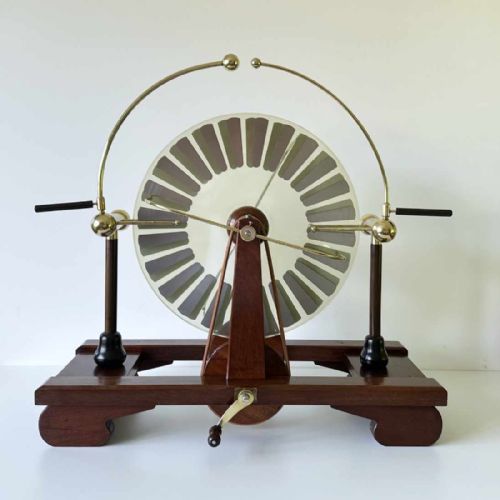
- A device that produces static electricity by friction or induction for scientific demonstration. Large examples utilise rotating glass plates and brass collectors to generate high voltages.
- Induction coil
- An electrical device that produces high-voltage alternating current from a low-voltage direct current source. Early versions often incorporate vibrating contact breakers.
- Microscope
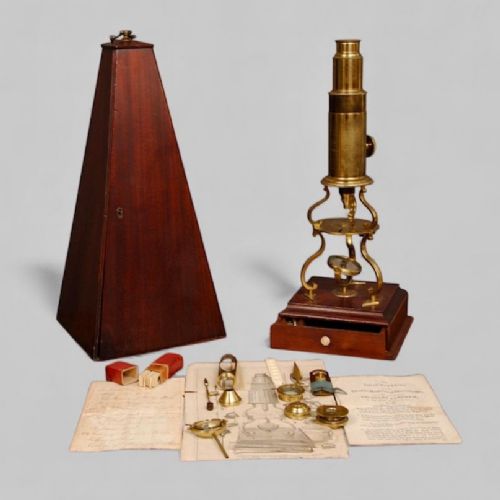
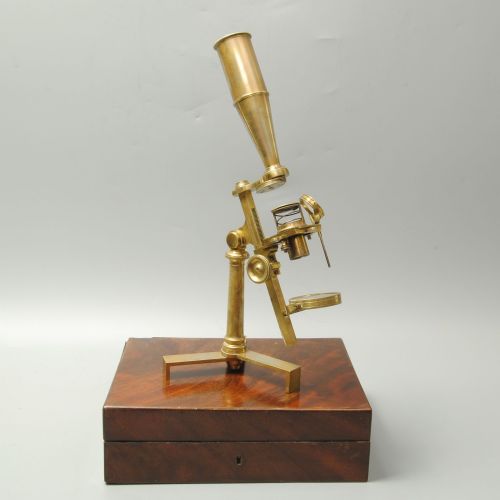
- An optical instrument used for viewing objects too small to be seen by the naked eye. Forms include drum designs, compound models, and Culpepper patterns housed in mahogany cases.
- Geissler tube
- A sealed glass cylinder containing rarefied gas that glows when an electrical discharge passes through it. These tubes demonstrate the principles of electrical conduction through gases.
- Thread tester
- A specialised mechanical apparatus used in the textile industry to test the strength and quality of yarn. Examples dating to the late nineteenth century combine metal frames with calibrated measurement scales.
Vintage Laboratory Equipment: Frequently Asked Questions
What is a Wimshurst machine?
A Wimshurst machine is an electrostatic generator that uses counter-rotating discs to accumulate high-voltage electrical charges. These devices were commonly used in nineteenth-century laboratories and lecture halls to demonstrate electrical phenomena.
They are recognised by their parallel glass or ebonite plates, brass collecting combs, and Leyden jars used for storing the electrical charge.
How do I identify a Victorian microscope?
Victorian microscopes are typically constructed from lacquered brass and mounted on heavy iron or brass bases. Many include fitted mahogany storage boxes containing accessory lenses and preparation slides.
Look for maker signatures engraved on the brass body tube or stage, alongside trade papers pasted inside the accompanying wooden case.
Are these scientific instruments still operational?
Many mechanical and optical instruments remain functional, though electrical apparatus such as induction coils and Van Der Graaff generators require careful assessment before use. Original wiring, insulation, and glass components need inspection to ensure stability.
Most buyers acquire these pieces for display and historical study rather than active laboratory work.
What is a Ruhmkorff coil?
A Ruhmkorff coil is a type of electrical induction coil developed in the mid-nineteenth century to produce high-voltage sparks. It served as an early power source for vacuum tube experiments and telegraphy.
These apparatuses feature wound copper wire coils, a primary interrupter mechanism, and glass insulation pillars mounted on polished wooden bases.