



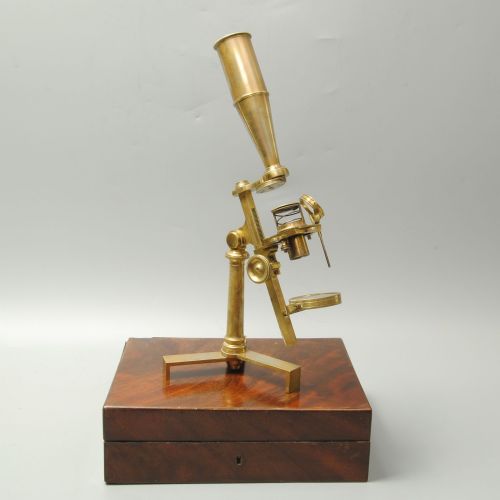


Antique Brass Microscope
An antique brass microscope is a scientific instrument of polished metal and glass, prized by collectors for its optical clarity and historical utility.
Antique Brass Microscope
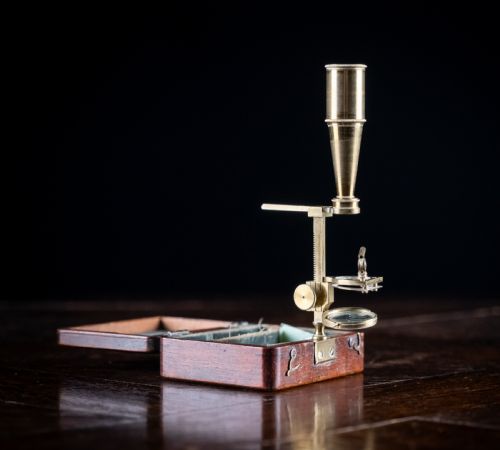
An antique brass microscope represents the pinnacle of historical scientific craft, combining heavy metal construction with precise mechanical movement. When searching for an antique brass microscope, buyers encounter forms ranging from simple field models to complex laboratory apparatus.
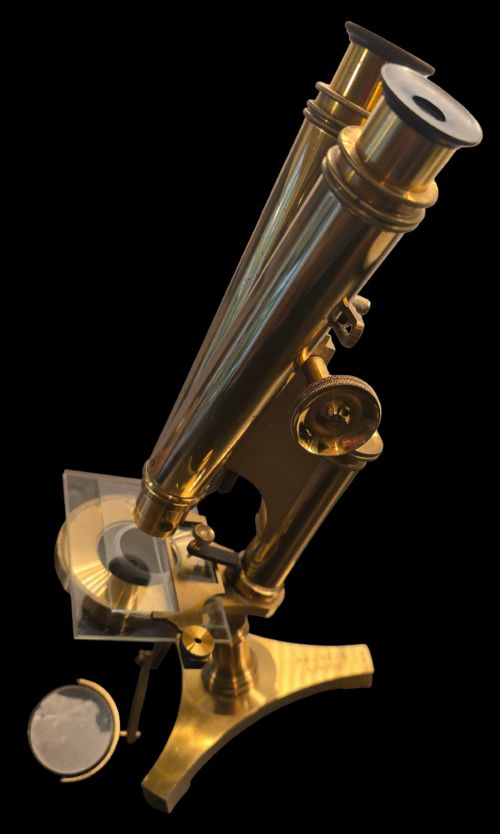
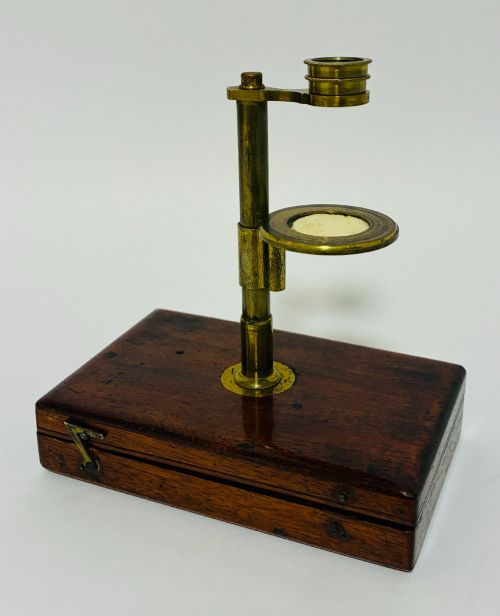
The Victorian period and the nineteenth century yield the largest number of surviving examples on this page. These scientific instruments include drum microscopes, bar limb models, and binocular configurations housed in fitted wooden boxes.
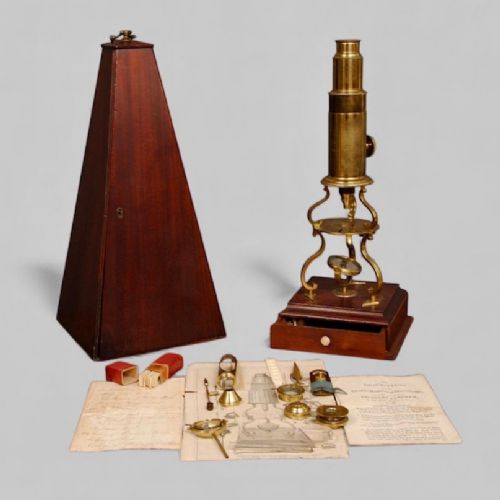
Earlier eighteenth century pieces, such as the Culpepper microscope, demonstrate foundational optical designs accompanied by early trade papers. Later pieces from around nineteen hundred retain the traditional brass construction while incorporating improved mechanical stages and focus controls.
Materials and construction
Makers constructed each antique brass microscope using turned and polished brass components, frequently combined with heavy cast iron bases for stability. Glass optics provide the magnification, while delicate paper scales and trade labels often line the interior of the storage cases.
Housed in fitted mahogany boxes, these scientific instruments rely on precise dovetail joints and brass hook latches to protect the delicate lenses and mechanical stages during transport. The metalwork displays hand-filed finishes and threaded adjustments executed by skilled instrument makers.
Antique Brass Microscope Retail Price Guide 2026
Typical asking prices for brass microscope among the pieces listed under this phrase on Sellingantiques today, from the lower quarter to the upper quarter. They describe what is for sale here now, not the wider market.
The listings span the eighteenth, nineteenth, and early twentieth centuries, featuring materials such as brass, mahogany, glass, and paper.
Distinctions in quality
The distinction between standard student instruments and top-tier laboratory apparatus lies in the complexity of the optical system and the smoothness of the rack and pinion focusing. Finer examples incorporate signed lenses by notable makers and multiple objective objectives housed within mahogany cases.
Completeness dictates the standing of an antique brass microscope, with original fitted boxes, trade papers, and matching accessories elevating the piece. The depth of the brass polish and the rigidity of the bar limb construction further separate utilitarian field models from university-grade laboratory instruments.
R. and J. Beck·Charles Baker·Leitz Wetzlar
The Antique Brass Microscope Glossary
- Bar limb
- A heavy brass upright pillar supporting the optical tube and stage, providing structural rigidity to the microscope body.
- Drum microscope
- A compact design where the main optical tube slides within a cylindrical brass base, common in nineteenth century instruments.
- Binocular microscope
- An optical arrangement utilising two eyepieces connected to a single objective system via prisms, allowing comfortable viewing with both eyes.
- Trade paper
- An original printed label or instruction sheet pasted inside the instrument case, identifying the maker or retailer.
- Substage condenser
- An optical lens assembly positioned beneath the microscope stage to focus light onto the specimen slide.
Antique Brass Microscope: Frequently Asked Questions
How do I date an antique brass microscope?
Dating relies upon examining the mechanical form, signature engraving, and the style of the mahogany case. Drum models and simple field apparatus often point towards the earlier nineteenth century.
More complex bar limb designs and signed rack and pinion stages typically indicate late Victorian manufacture or the turn of the twentieth century.
Are these microscopes still usable for viewing?
Most antique brass instruments retain their glass optics and function adequately for basic slide observation. Collectors frequently use them for viewing historical slides much as nineteenth century scholars did.
Care must be taken with vintage lenses, and cleaning should be approached cautiously to preserve original surface patina.
Why do some microscopes have wooden cases?
Fitted mahogany cases protected delicate glass lenses, mirrors, and brass adjustments during transport in the field or laboratory. These boxes often include specific slots for spare eyepieces, slides, and accessory condensers.
The presence of the original case significantly enhances the historical context and preservation of the instrument.