



Antique Laboratory Equipment
These antique laboratory equipment pieces are functional scientific apparatus built for discovery, offering tactile history and commanding presence in any room.
Antique Laboratory Equipment
When you search for antique laboratory equipment, you encounter historical scientific apparatus spanning from the eighteenth century through to the mid-twentieth century. The selection on this page includes instruments designed for physical demonstration, optical study, and electrical experimentation.
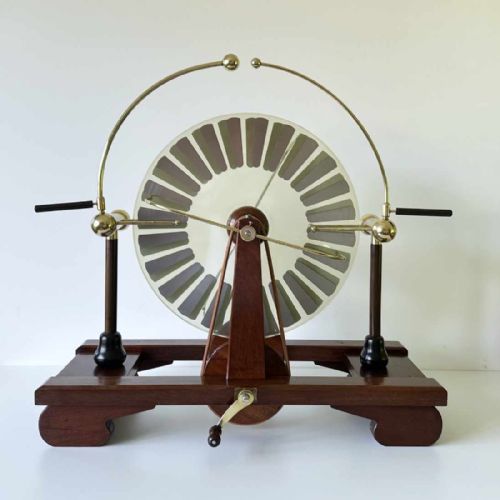
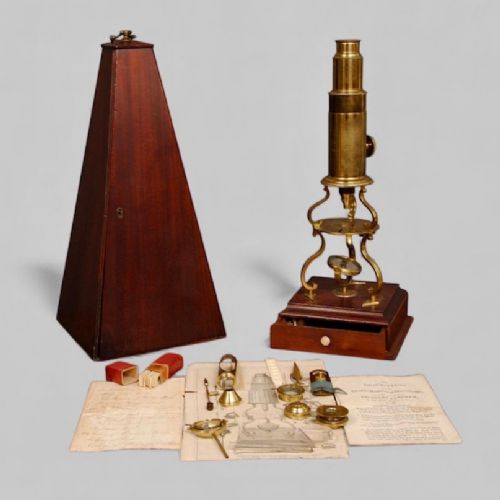
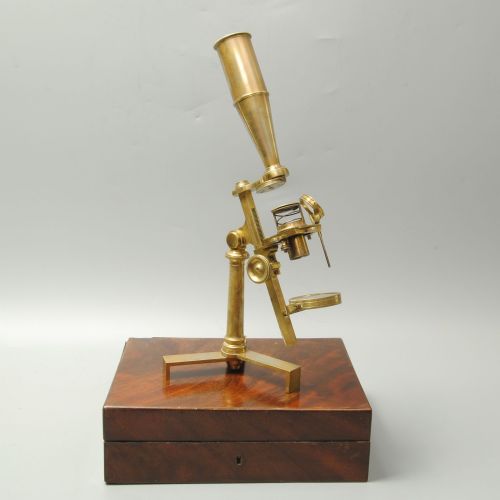
You are most likely to meet Victorian and Edwardian examples on this page, reflecting periods of intense scientific curiosity and precision manufacturing. These pieces range from complex electrostatic machines to compound microscopes housed in fitted wooden cases.
The forms encompass specialised apparatus such as thread testers, induction coils, and vacuum tubes alongside standard laboratory instruments. Each object represents the empirical methods and educational practices of its respective era.
Materials and construction
Brass and mahogany form the primary physical substance of these instruments, combining structural stability with polished aesthetic appeal. Makers utilised seasoned wood for protective cases and precision brass for moving mechanical parts, optical tubes, and electrical terminals.
Glass and steel appear alongside rubber and paper components in electrical and vacuum apparatus such as Geissler tubes and induction coils. These varied materials were chosen for their specific insulating, conductive, or optical properties necessary for scientific utility.
Antique Laboratory Equipment Retail Price Guide 2026
Typical asking prices for laboratory equipment among the pieces listed under this phrase on Sellingantiques today, from the lower quarter to the upper quarter. They describe what is for sale here now, not the wider market.
Thread testers quietly remind us that someone once needed to count every single microscopic twist in a Victorian textile.
Assessing quality and execution
Quality in these instruments rests upon the precision of the metalwork, the clarity of the glass optics, and the integrity of the original fitted housing. Superior pieces demonstrate crisp graduation marks, smooth mechanical movement, and substantial brass castings without excessive wear.
The presence of original maker signatures, trade papers, and complete cased sets elevates an object significantly above standard utility apparatus. Finer examples retain their delicate glass components and functional wiring or plates largely undisturbed from their period of active use.
Charles Lincoln·H Hughes & Son·Swift & Son·Heinrich Daniel Ruhmkorff·Physica
The Antique Laboratory Equipment Glossary
- Culpepper microscope
- An early form of compound microscope characterised by a tripod base supporting a body tube and stage. This design represents a significant milestone in eighteenth-century optical instrumentation.
- Induction coil
- An electrical device used to produce high-voltage alternating pulses from a low-voltage direct current. Heinrich Daniel Ruhmkorff famously developed and refined this apparatus.
- Geissler tube
- An early sealed glass discharge tube used to demonstrate electrical conduction through gases. These tubes reveal glowing discharges when subjected to high voltages.
- Pneumothorax instrument
- A specialised medical apparatus utilised for clinical procedures involving the introduction of gas into the pleural cavity. Such instruments highlight the crossover between laboratory science and medical practice.
Antique Laboratory Equipment: Frequently Asked Questions
What is antique laboratory equipment used for today?
These historical instruments serve primarily as striking display pieces, cabinet curiosities, and tangible artefacts of scientific heritage. Collectors appreciate them for their intricate brass mechanisms and the intellectual history they embody.
While some mechanical pieces retain their functional capacity, most are preserved for study and exhibition rather than active laboratory use. They anchor a room with distinct Victorian or Edwardian industrial character.
How do I date a scientific instrument?
Dating relies heavily on engraved maker signatures, patent dates, material choices, and the evolutionary style of the brasswork or optical housing. Eighteenth and nineteenth-century pieces often exhibit hand-engraved inscriptions and solid mahogany cases.
Later Victorian and Edwardian instruments frequently incorporate standardised manufacturing marks and trade papers. Comparing the design of the stage, mirror mounts, or electrical coils against known chronological benchmarks helps narrow the period of production.
How should I clean brass scientific apparatus?
Preservation dictates minimal intervention, leaving the natural aged patina intact rather than aggressively polishing the metal surfaces. Dusting with a soft brush and wiping wooden cases with appropriate conservation wax protects the materials.
Harsh chemical cleaners strip away the historical oxidation that collectors value on antique brass. Gentle maintenance ensures the physical integrity of paper trade labels and fragile glass components remains undisturbed.
Are these instruments safe to operate?
Many electrical pieces, such as electrostatic generators and induction coils, were designed to produce significant high-voltage charges. Operating them requires expert knowledge and extreme caution regarding historical wiring and insulation degradation.
Most owners choose to exhibit these items passively as static sculptures rather than risking damage to delicate glass tubes or enduring potential electrical hazards. Professional assessment is recommended if activation is attempted.