7,468  PAGES BROWSED TODAY PAGES TODAY 0 ANTIQUES UPLOADED TODAYNEW ARRIVALS
LATEST STOCK
Sort Order
Items Per Page
Browse Categories
Sort order
Relevant Links
Items per page
ID #SA958969
FOR SALE
£4,500
Email Buy
Save
Very Large Victorian Winters Pattern Electrostatic Machine
Jason Clarke Antiques
for sale €5,265     $5,715
£4,500
Jason Clarke Antiques

Jason Clarke Antiques

Sellingantiques Verified Since Jul 2015
View Dealers Stock Page
Id #SA958969
PDF SHARE
SAVE

Very Large Victorian Winters Pattern Electrostatic Machine

19th century
Description

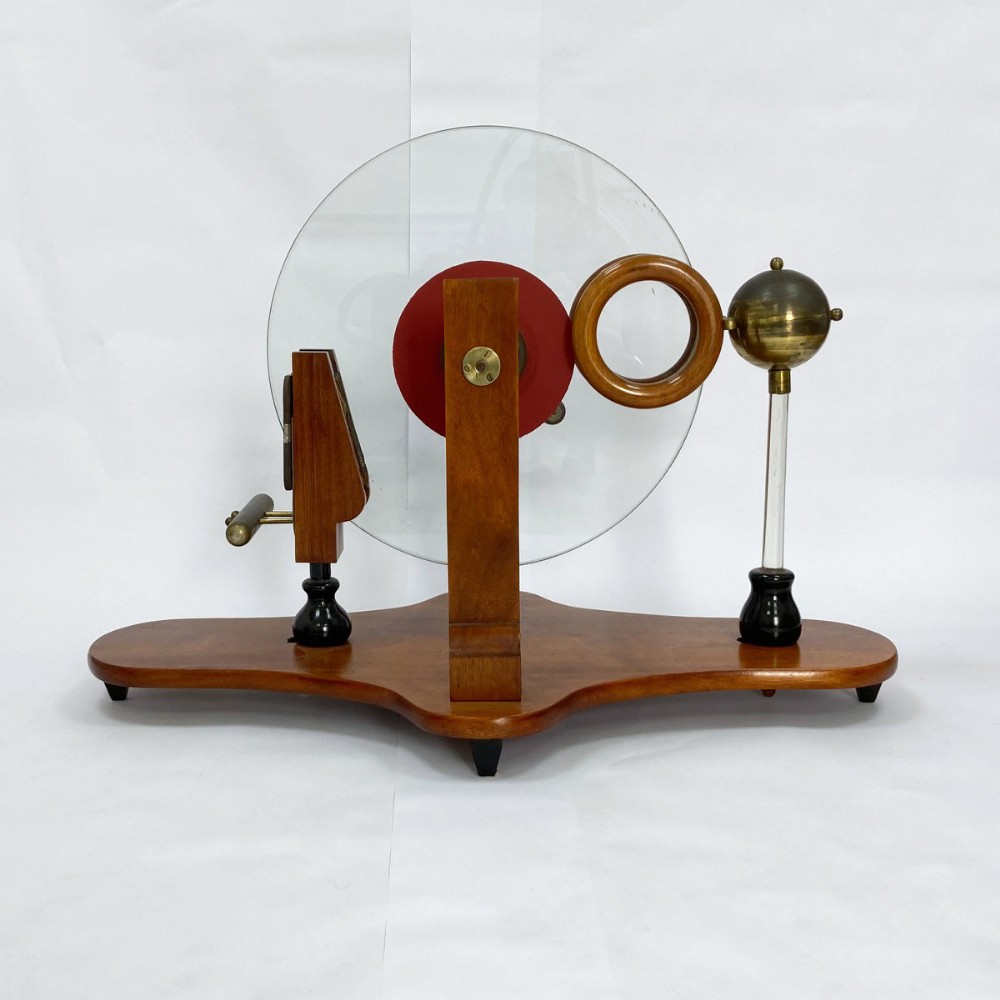
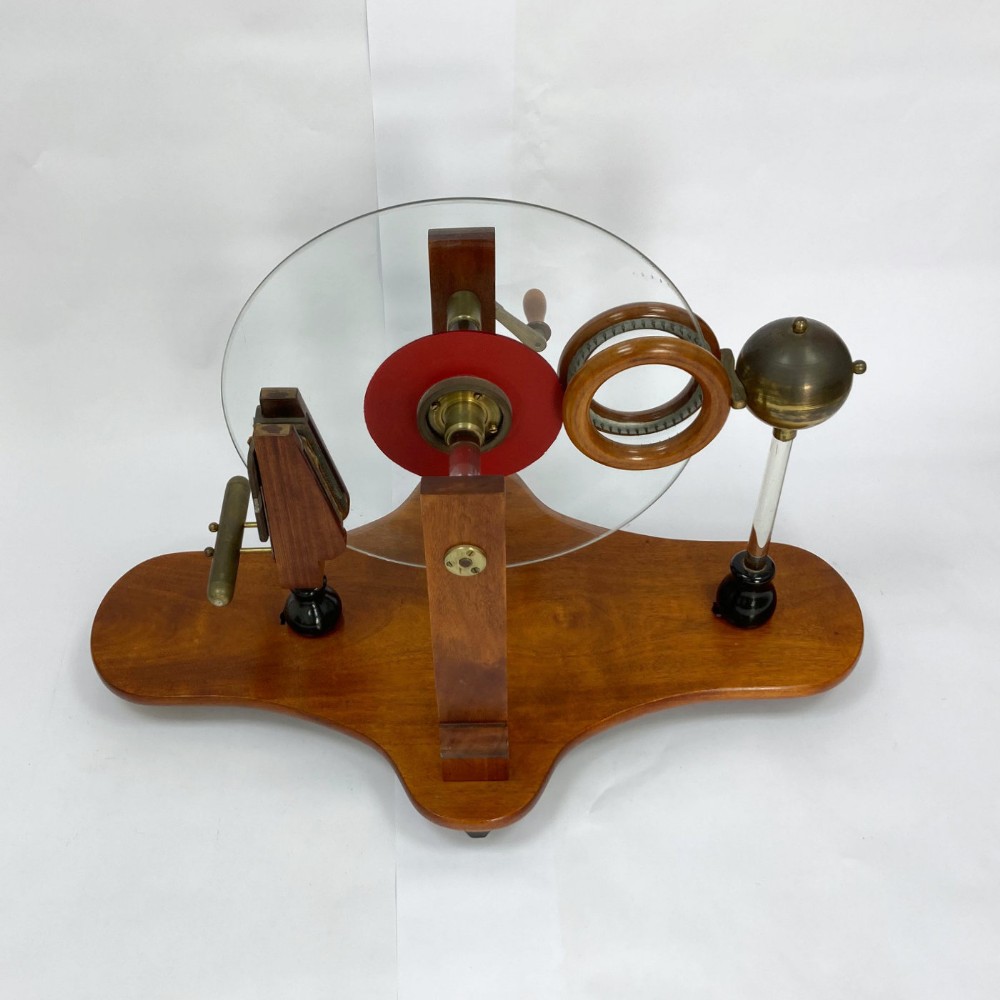
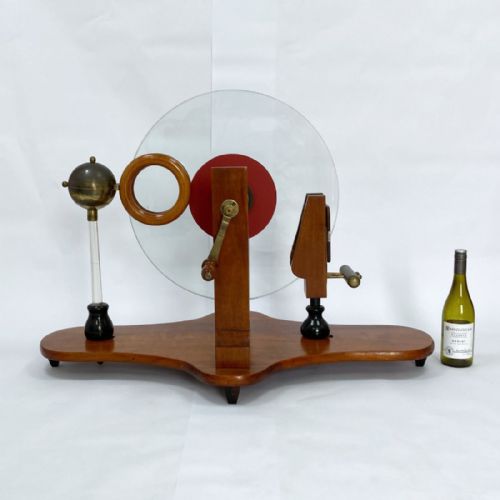
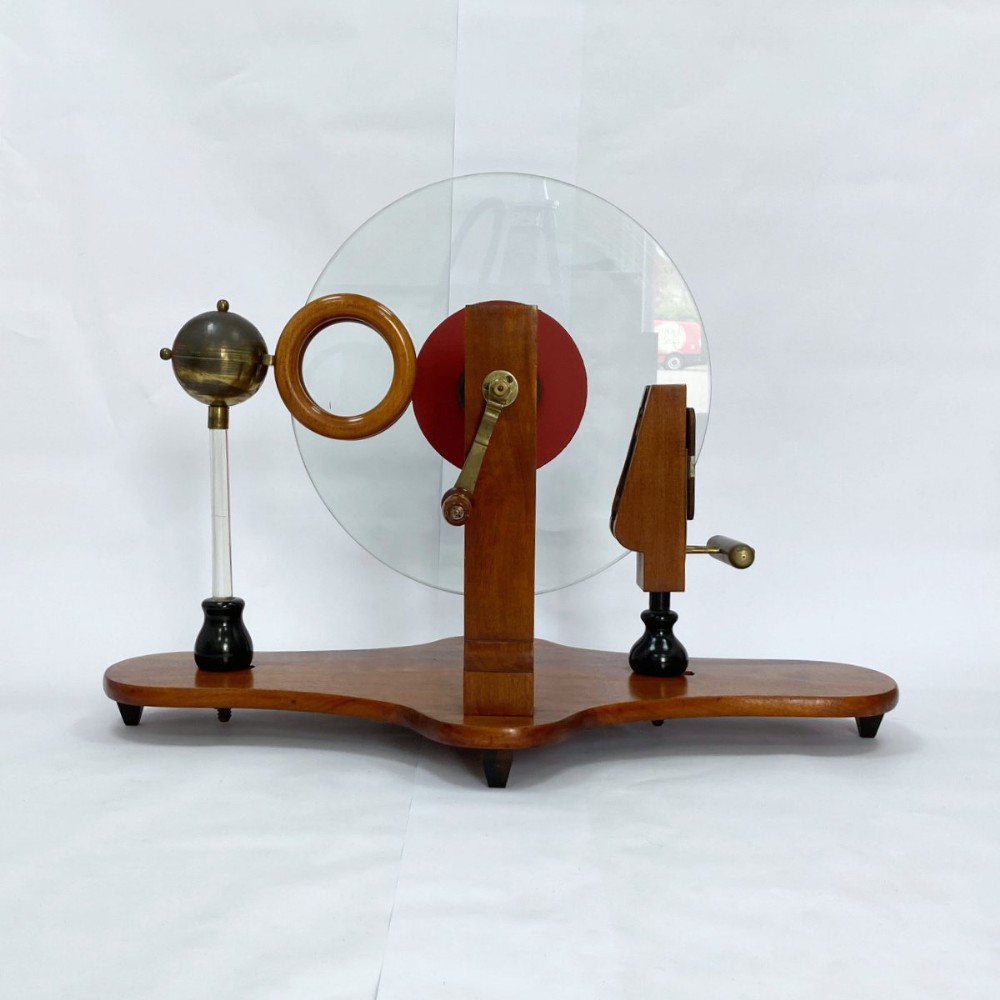
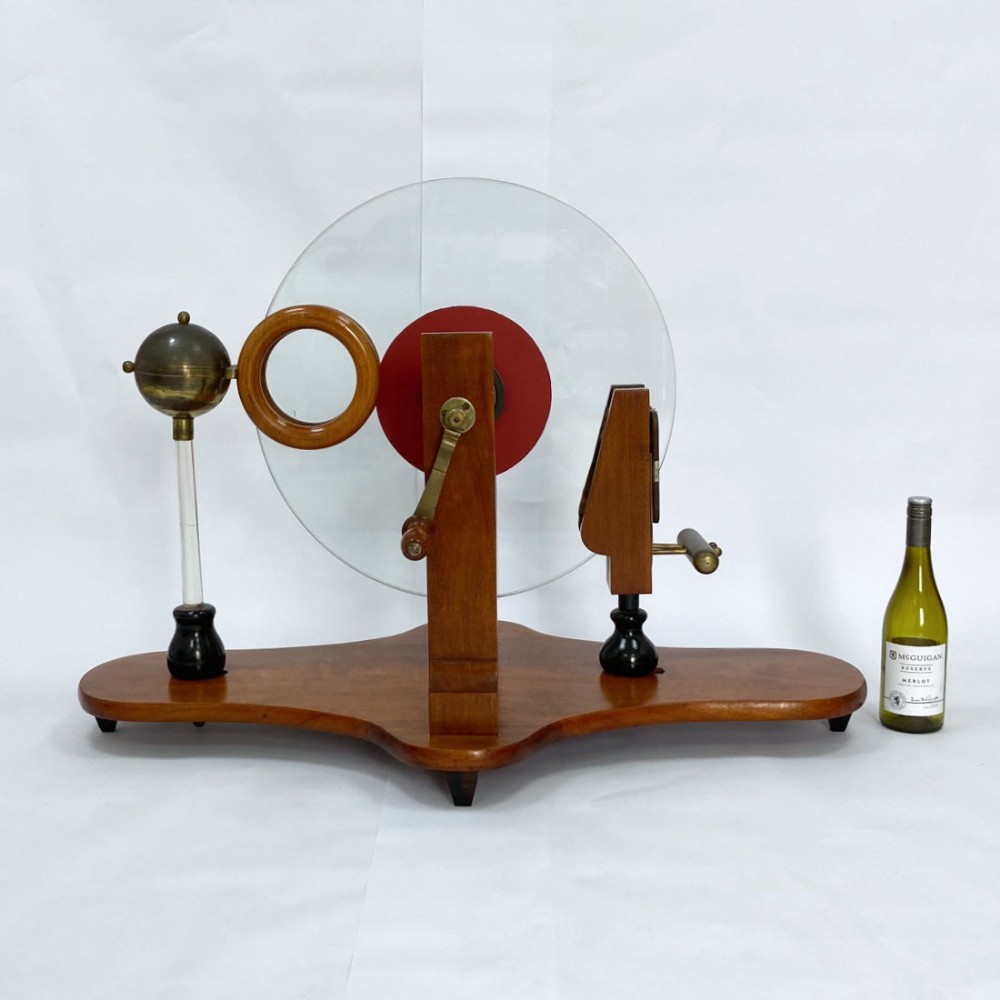
For sale, an enormous Late Victorian Winters pattern electrostatic machine.

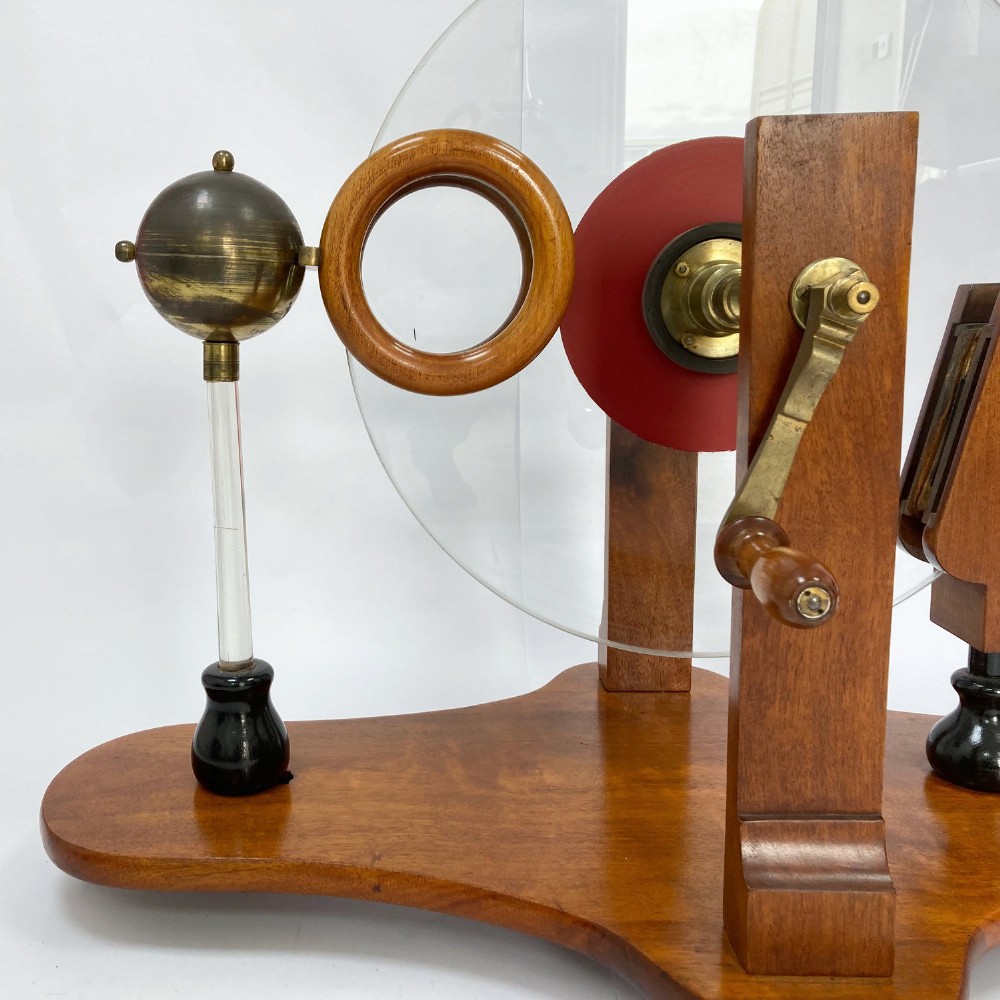
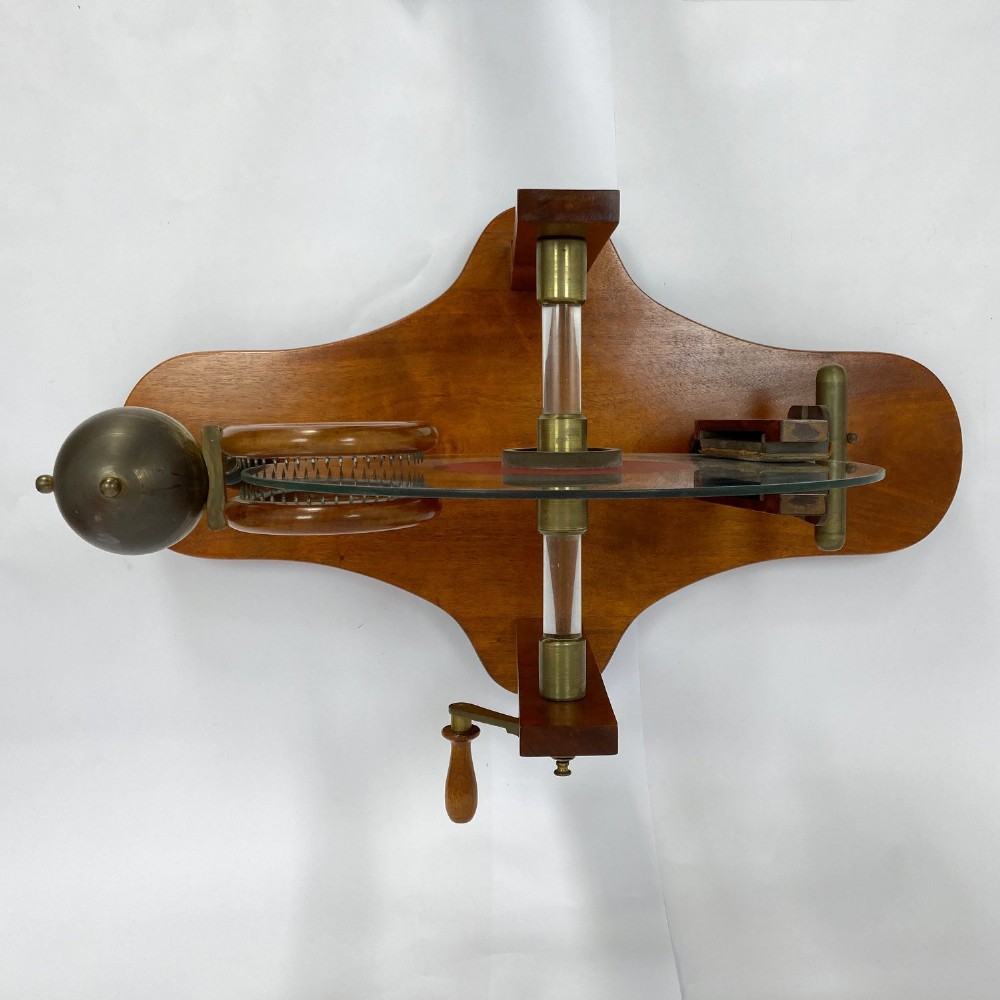
The machine is comprised of a single twenty-one inch diameter glass plate supported by upright struts on a cherry wood base, with a thick glass spindle and brass and wood handle for manual rotation.

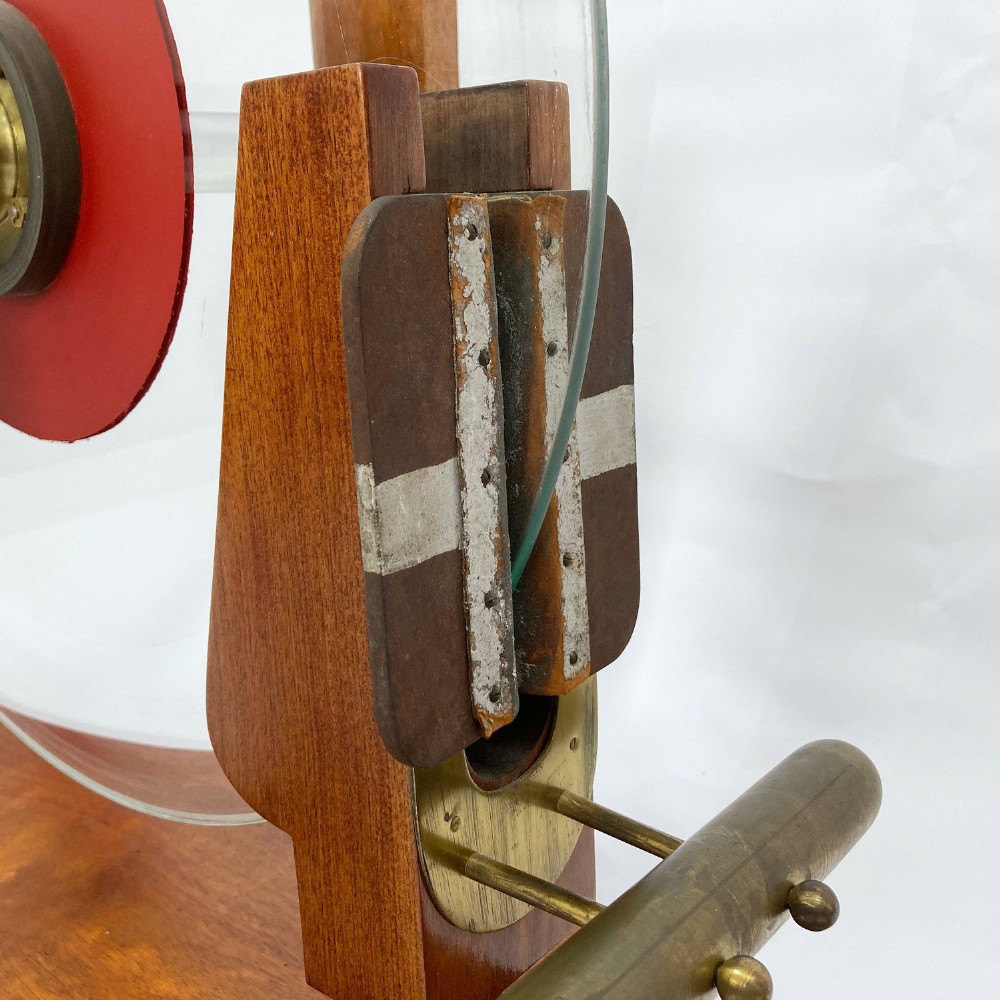
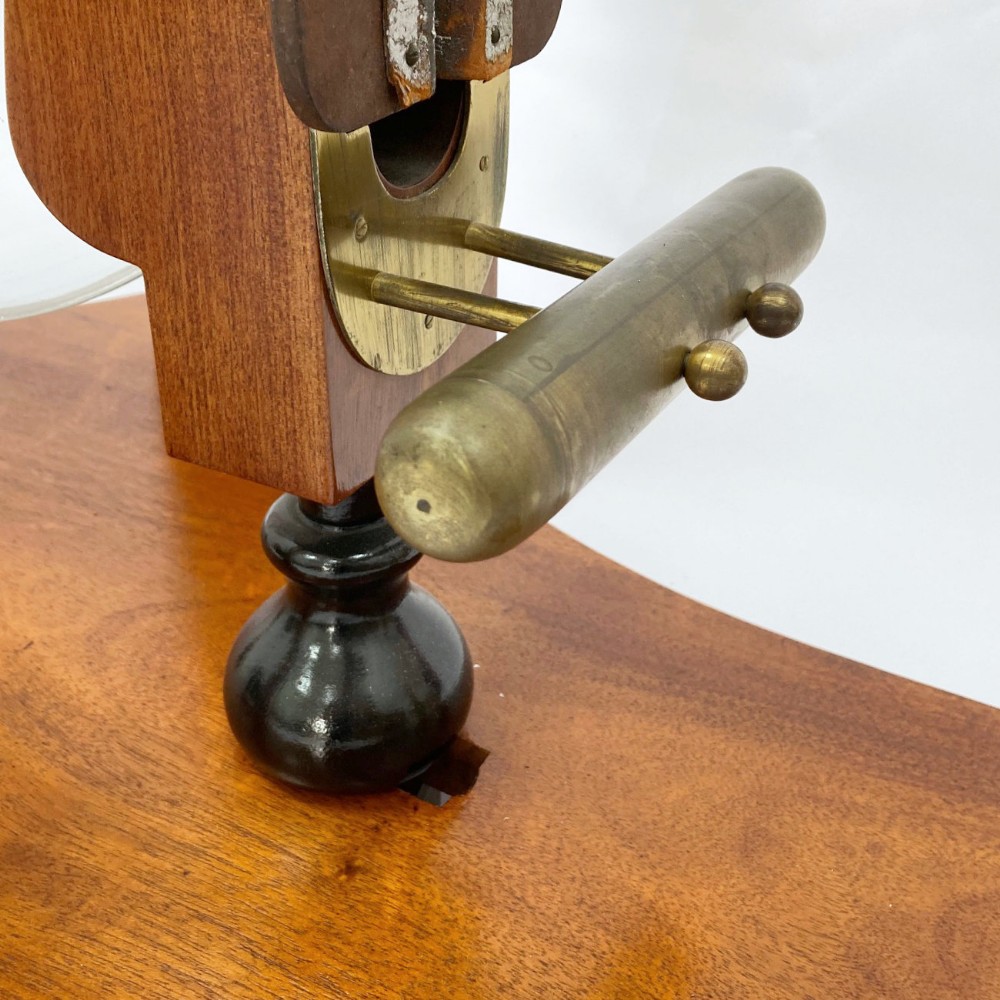
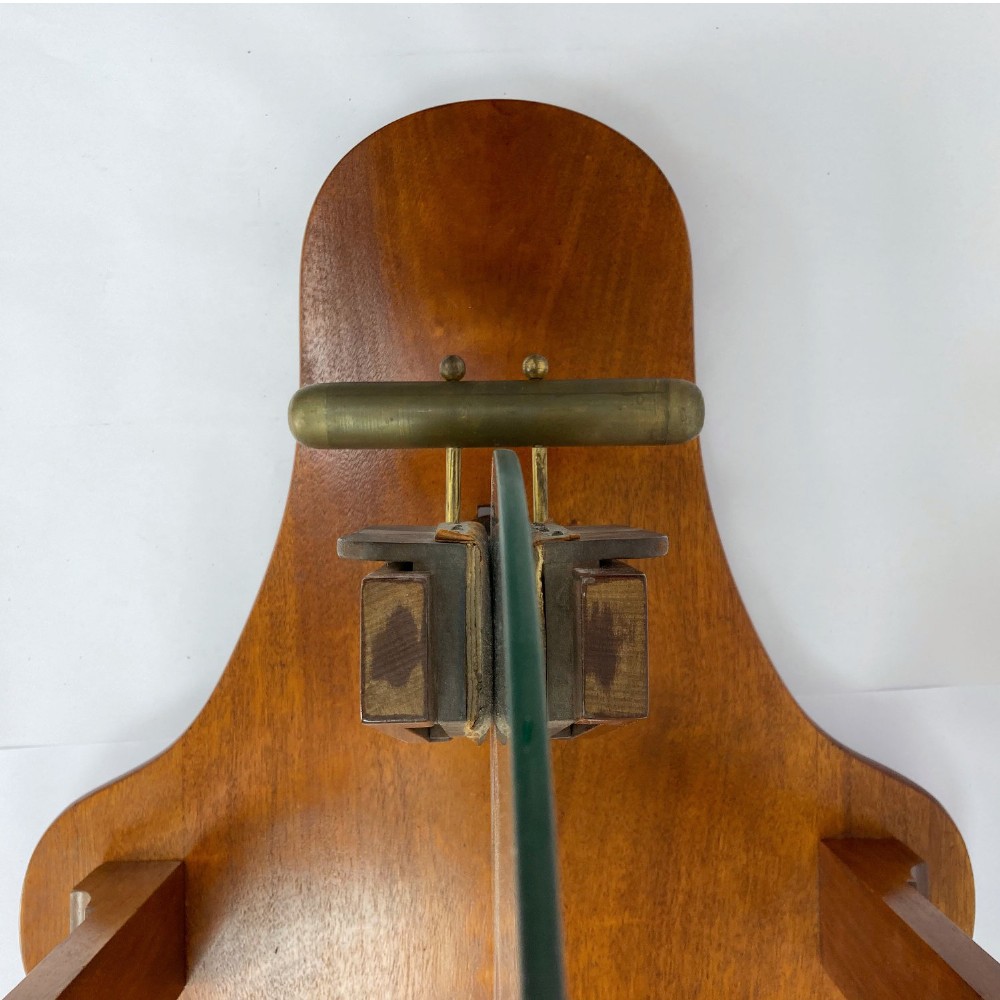
To one side is a smaller wooden strut which supports two removable leather padded shoes which are sprung at the back to create a small amount of tension to the plate when it is put in motion. This strut can be adjusted at the base, forwards and back and it has a brass cylinder shaped negative conductor attached to the rear.

An extract from Ferguson’s Electricity of 1870 relates that. "The two rubbers, one of which is shewn on the outside are triangular pieces of wood, covered with a padding of one or two layers of flannel, enclosed in leather, and they present a flat hard surface to the glass, so that friction between it and them takes place in every part. They are placed in a wooden frame on each side of the plate, and the pressure is regulated by metal springs, fixed to the outside, between them and the frame. Before use, they are covered with an amalgam of mercury, zinc, and tin, which is made to adhere with the aid of a little grease, and which increases immensely the production of electricity."

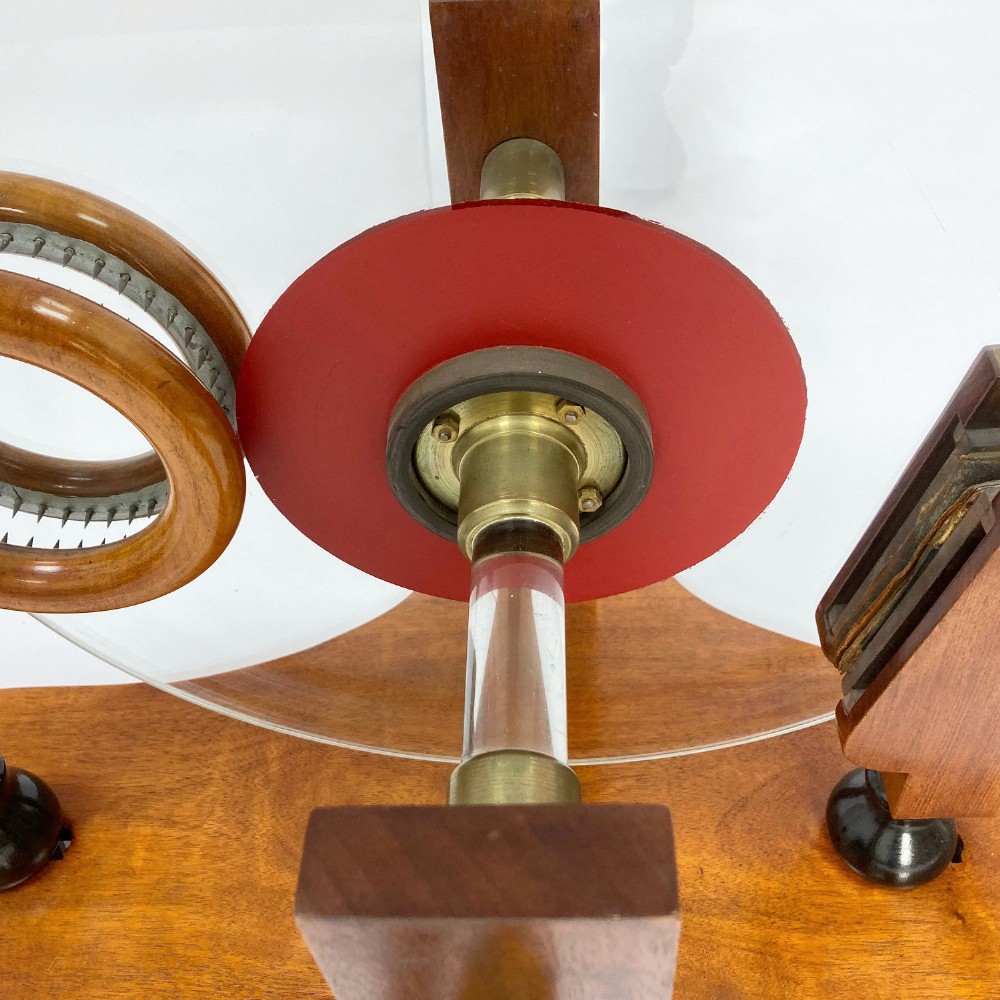
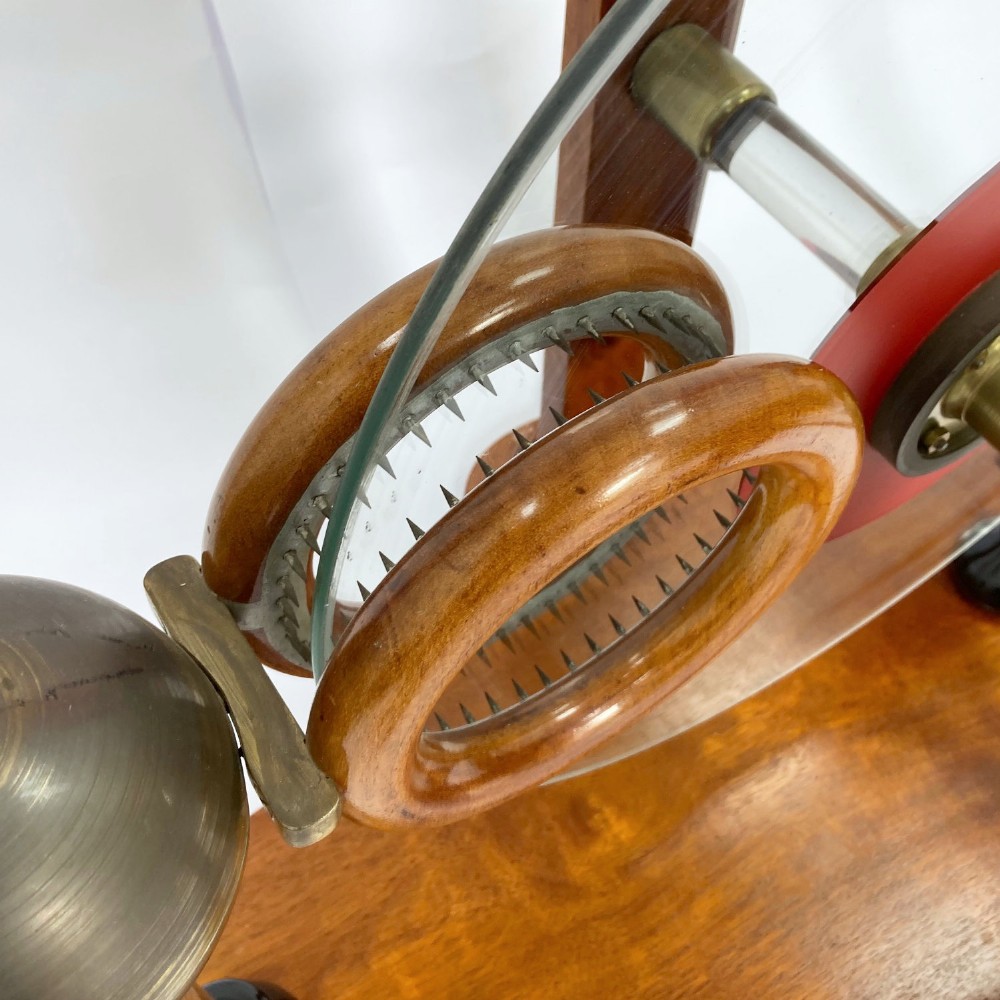
The opposing side has a glass rod fixed to the base on a wooden mount and a hemispherical brass conductor fixed to the top. To one side of the conductor are attached two wooden rings which are positioned either side of the glass plate each having a row of metal collector pins running around the inner circumference. Other points on the brass conductor have dome type brass mounts on which brass chains can be hung to transmit the electrostatic charge to a Leyden jar or other experimental apparatus.

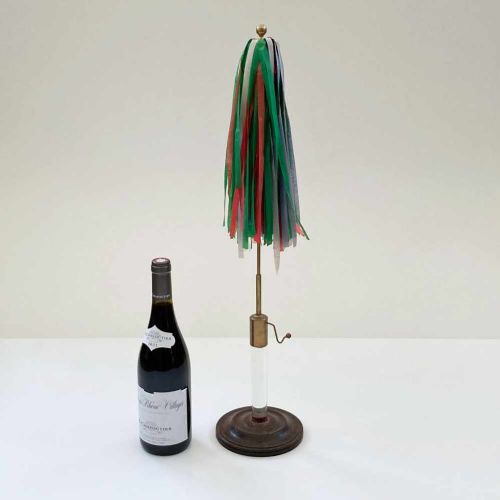
Included is one example of later manufacture which is comprised of a wooden base and glass insulated rod, onto which numerous strands of crepe paper are affixed. When attached to the machine in operation, it is possible to see the paper strands lifting in the air as a result of the charge being transmitted across.

Invented in around 1800 by the Austrian Georg K Winter, the machine was considered a development on a single plate long sparking machine originally invented by the French physicist Jean Baptiste Le Roy in 1772. It was noted for its ability to develop long and dense sparks rather than the accumulation of high charges.

Although this example does not have an associated maker’s mark, it is almost certainly of European manufacture owing to the use of cherry wood for the base structure of the machine. This wonderful and imposing example is the largest of these rare machines that I have yet come across. A magnificent piece.

Circa 1890

Physical Dimensions
Height
70cm (27.56")
Width
102cm (40.16")
Depth
58cm (22.83")
Declaration

Jason Clarke Antiques has dated this Victorian Electrostatic Machine to the 1890s.
Reference Numbers
Sellingantiques Reference
SA958969
Description
For sale, an enormous Late Victorian Winters pattern electrostatic machine.
The machine is comprised of a single twenty-one inch diameter glass plate supported by upright struts on a cherry wood base, with a thick glass spindle and brass and wood handle for manual rotation.
Jason Clarke Antiques
fig 1. A Victorian Winter pattern electrostatic machine featuring a large circular glass plate supported by a mahogany frame with brass discharge spheres.
fig 1. Very Large Victorian Winters Pattern Electrostatic Machine

To one side is a smaller wooden strut which supports two removable leather padded shoes which are sprung at the back to create a small amount of tension to the plate when it is put in motion. This strut can be adjusted at the base, forwards and back and it has a brass cylinder shaped negative conductor attached to the rear.
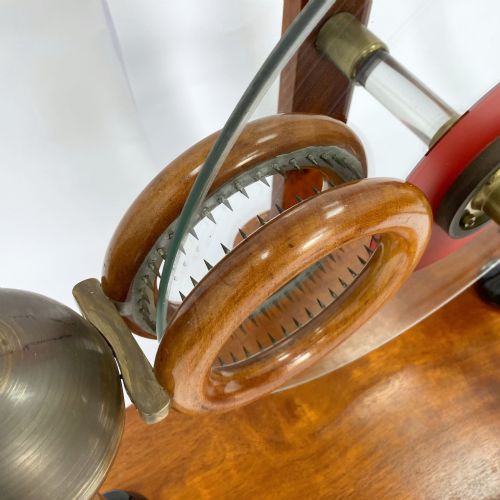
fig 2. A Victorian Winter pattern electrostatic machine featuring a large circular glass plate supported by a mahogany frame with brass discharge spheres.
fig 2. Very Large Victorian Winters Pattern Electrostatic Machine

An extract from Ferguson’s Electricity of 1870 relates that. "The two rubbers, one of which is shewn on the outside are triangular pieces of wood, covered with a padding of one or two layers of flannel, enclosed in leather, and they present a flat hard surface to the glass, so that friction between it and them takes place in every part. They are placed in a wooden frame on each side of the plate, and the pressure is regulated by metal springs, fixed to the outside, between them and the frame. Before use, they are covered with an amalgam of mercury, zinc, and tin, which is made to adhere with the aid of a little grease, and which increases immensely the production of electricity."
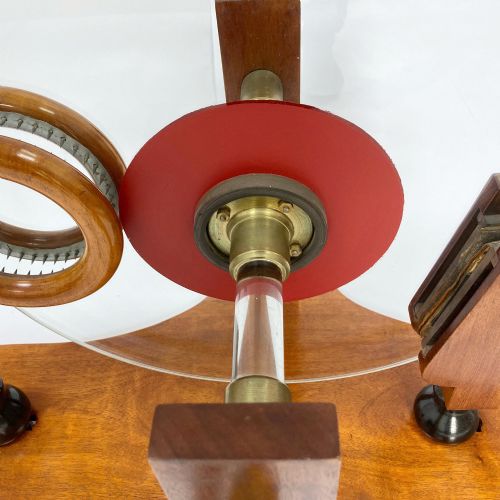
fig 3. A Victorian Winter pattern electrostatic machine featuring a large circular glass plate supported by a mahogany frame with brass discharge spheres.
fig 3. Very Large Victorian Winters Pattern Electrostatic Machine

The opposing side has a glass rod fixed to the base on a wooden mount and a hemispherical brass conductor fixed to the top. To one side of the conductor are attached two wooden rings which are positioned either side of the glass plate each having a row of metal collector pins running around the inner circumference. Other points on the brass conductor have dome type brass mounts on which brass chains can be hung to transmit the electrostatic charge to a Leyden jar or other experimental apparatus.
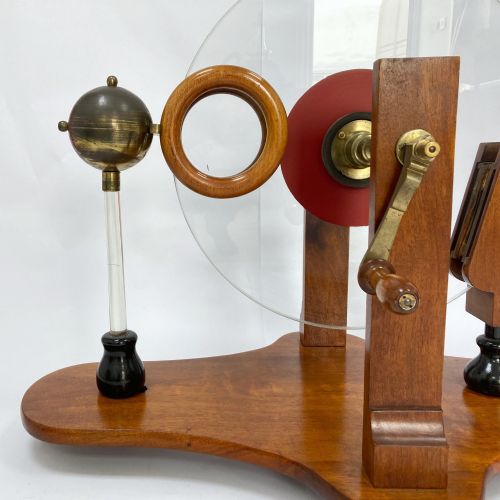
fig 4. A Victorian Winter pattern electrostatic machine featuring a large circular glass plate supported by a mahogany frame with brass discharge spheres.
fig 4. Very Large Victorian Winters Pattern Electrostatic Machine

Included is one example of later manufacture which is comprised of a wooden base and glass insulated rod, onto which numerous strands of crepe paper are affixed. When attached to the machine in operation, it is possible to see the paper strands lifting in the air as a result of the charge being transmitted across.
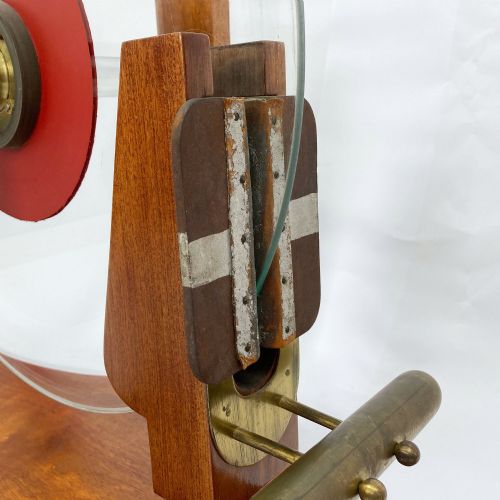
fig 5. A Victorian Winter pattern electrostatic machine featuring a large circular glass plate supported by a mahogany frame with brass discharge spheres.
fig 5. Very Large Victorian Winters Pattern Electrostatic Machine

Invented in around 1800 by the Austrian Georg K Winter, the machine was considered a development on a single plate long sparking machine originally invented by the French physicist Jean Baptiste Le Roy in 1772. It was noted for its ability to develop long and dense sparks rather than the accumulation of high charges.
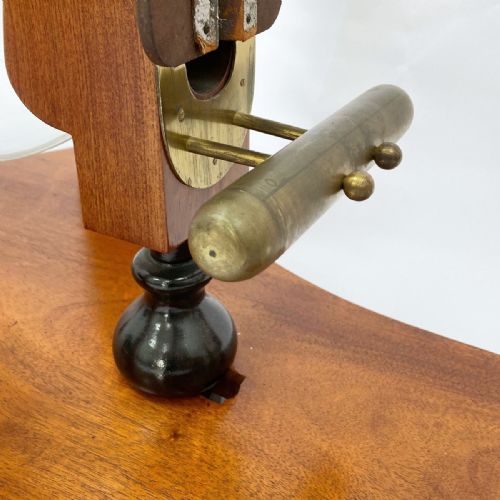
fig 6. A Victorian Winter pattern electrostatic machine featuring a large circular glass plate supported by a mahogany frame with brass discharge spheres.
fig 6. Very Large Victorian Winters Pattern Electrostatic Machine

Although this example does not have an associated maker’s mark, it is almost certainly of European manufacture owing to the use of cherry wood for the base structure of the machine. This wonderful and imposing example is the largest of these rare machines that I have yet come across. A magnificent piece.

Circa 1890

Height
70cm (27.56")
Width
102cm (40.16")
Depth
58cm (22.83")
Date of Manufacture

Jason Clarke Antiques has dated this Victorian Electrostatic Machine to the 1890s.

Reference Numbers
Sellingantiques Ref
SA958969
Jason Clarke Antiques
Sellingantiques verified Since Jul 2015
Dealer Profile

You can view the stock and full dealer information on the Jason Clarke Antiques Profile Page
PDF SHARE
SAVE
A Victorian Winter pattern electrostatic machine featuring a large circular glass plate supported by a mahogany frame with brass discharge spheres.
1 / 12
Archive I A Victorian Winter pattern electrostatic machine featuring a large circular glass plate supported by a mahogany frame with brass discharge spheres.

Very Large Victorian Winters Pattern Electrostatic Machine
Archive II A Victorian Winter pattern electrostatic machine featuring a large circular glass plate supported by a mahogany frame with brass discharge spheres. View II
Archive III A Victorian Winter pattern electrostatic machine featuring a large circular glass plate supported by a mahogany frame with brass discharge spheres. View III
Archive IV A Victorian Winter pattern electrostatic machine featuring a large circular glass plate supported by a mahogany frame with brass discharge spheres. View IV
Archive V A Victorian Winter pattern electrostatic machine featuring a large circular glass plate supported by a mahogany frame with brass discharge spheres. View V
Archive VI A Victorian Winter pattern electrostatic machine featuring a large circular glass plate supported by a mahogany frame with brass discharge spheres. View VI
Archive VII A Victorian Winter pattern electrostatic machine featuring a large circular glass plate supported by a mahogany frame with brass discharge spheres. View VII
Archive VIII A Victorian Winter pattern electrostatic machine featuring a large circular glass plate supported by a mahogany frame with brass discharge spheres. View VIII
Archive IX A Victorian Winter pattern electrostatic machine featuring a large circular glass plate supported by a mahogany frame with brass discharge spheres. View IX
Archive X A Victorian Winter pattern electrostatic machine featuring a large circular glass plate supported by a mahogany frame with brass discharge spheres. View X
Archive XI A Victorian Winter pattern electrostatic machine featuring a large circular glass plate supported by a mahogany frame with brass discharge spheres. View XI
Archive XII A Victorian Winter pattern electrostatic machine featuring a large circular glass plate supported by a mahogany frame with brass discharge spheres. View XII
Enlarged Archival View
Telephone 07815 046645
Location
Newbury
Berkshire
United Kingdom
Verified Since Jul 2015
Items For Sale 79
Items Sold 608
Jason Clarke Antiques
Verified Since Jul 2015
View Dealer Info
Location: Newbury, Berkshire, United Kingdom
Verified
Jul 2015
For Sale
79
Sold
608
A Victorian Winter pattern electrostatic machine featuring a large circular glass plate supported by a mahogany frame with brass discharge spheres.
Very Large Victorian Winters Pattern Electrostatic Machine
Ref: SA958969
A Victorian Winter pattern electrostatic machine featuring a large circular glass plate supported by a mahogany frame with brass discharge spheres.
Detail View 1
Detail View 2
Detail View 3
Detail View 4
Detail View 5
Detail View 6
Detail View 7
Detail View 8
Detail View 9
Detail View 10
Detail View 11
Archival Detail
Every single antique dealer on our platform is individually approved by our internal team. We verify their professional trade history, ethical standards, and photographic quality to ensure a secure, high-standard buying environment. Upon joining, every dealer agrees to a strict 9-point code of conduct. While issues can occasionally arise, our dealers typically resolve them swiftly and directly with the buyer. In fact, since our founding in 2002, Sellingantiques has only had to step in to help resolve an issue on roughly five occasions—a true testament to the quality of our dealers and their dedication to your happiness.
Our dealers are highly experienced in packing and shipping fragile, high-value antiques. Because you are in direct contact with the dealer, you will be able to easily go through all available shipping and insurance options together to ensure your item arrives safely.
Antiques are the ultimate green purchase. By choosing historical pieces over newly manufactured goods, you completely eliminate the carbon footprint of modern mass production while preserving exceptional, timeless craftsmanship.

Developed in the mid-19th century by Carl Winter, this type of electrostatic machine generates high-voltage static electricity through friction applied to a rotating glass disc. It improved upon earlier friction machines by incorporating a large wooden ring conductor to reduce charge dissipation into the surrounding air.

These instruments were typically constructed using polished hardwoods such as mahogany or walnut for the stable base, a circular glass plate, cast brass charge collectors and conductors, and ebonite or glass insulating pillars.

Authentic 19th-century examples display period construction techniques, including hand-turned wooden components, heavy cast brass fittings with natural oxidisation, hand-cut glass plates, and mounting points secured with period shellac or brass screws.

Position the apparatus as a focal object on a dark wood library desk, a tailored bookshelf, or a minimalist console table to contrast historical precision engineering with contemporary design elements.

Keep the instrument in a climate-controlled environment away from high humidity, gently dust the wooden and glass elements with a soft dry cloth, and avoid harsh polishes that remove historic brass patina.
items
Add keywords to the filter
Price
£100
£250000
Era
Movements
Material
Origin
Stock Location
Freshness
Online Payments
Categories