15,383  PAGES BROWSED TODAY PAGES TODAY 50  ANTIQUES UPLOADED TODAY NEW ARRIVALS
ID #SA678915
FOR SALE
£1,750
Email
Save
Early Demonstration Van Der Graff Generator by Physica
Jason Clarke Antiques
for sale €2,048     $2,223
£1,750
Jason Clarke Antiques

Jason Clarke Antiques

Sellingantiques Verified Since Jul 2015
View Dealers Stock Page
Id #SA678915
PDF SHARE
SAVE

Early Demonstration Van Der Graff Generator by Physica

1940 - 1960
Description

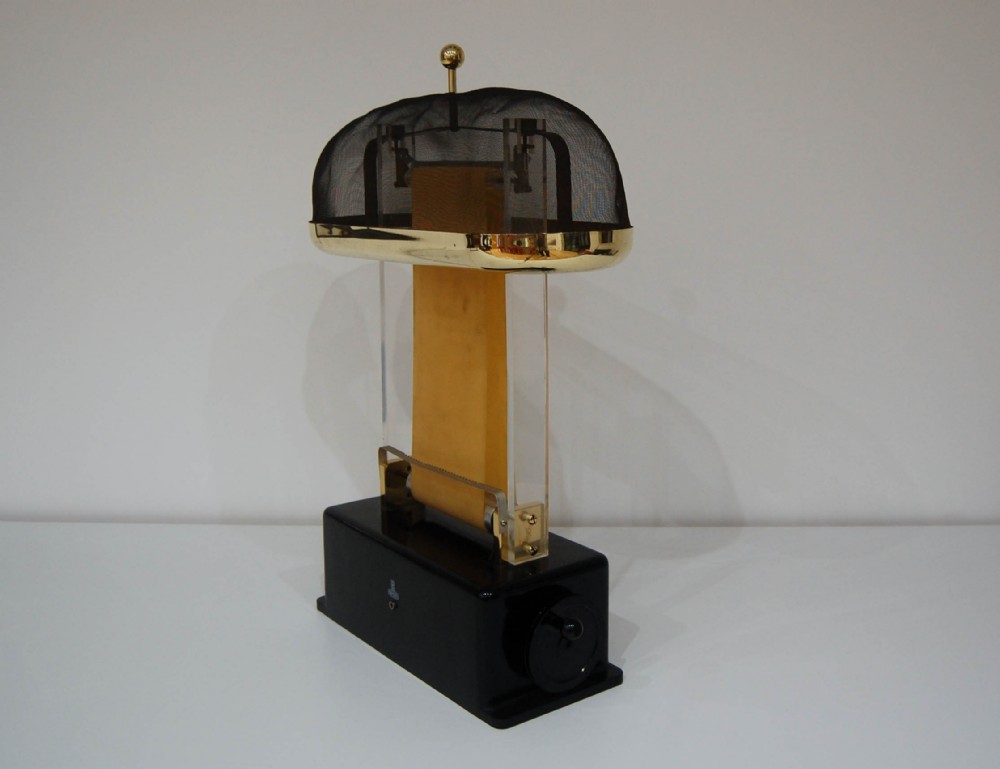
For sale, a rare mid-twentieth century Van Der Graaff Generator by Physica

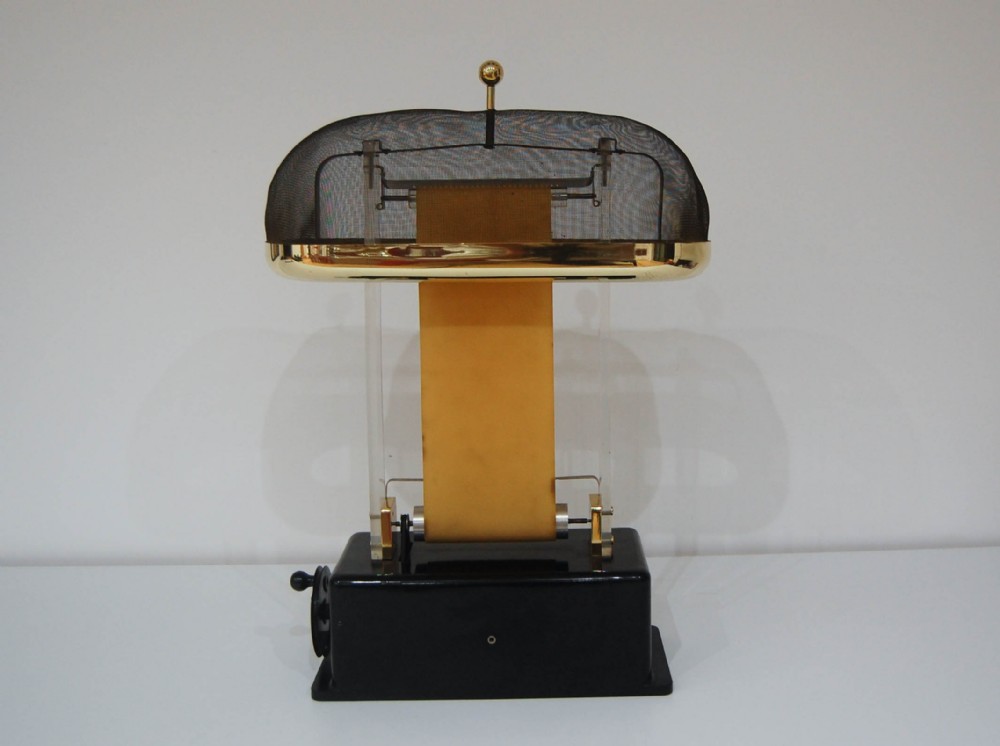
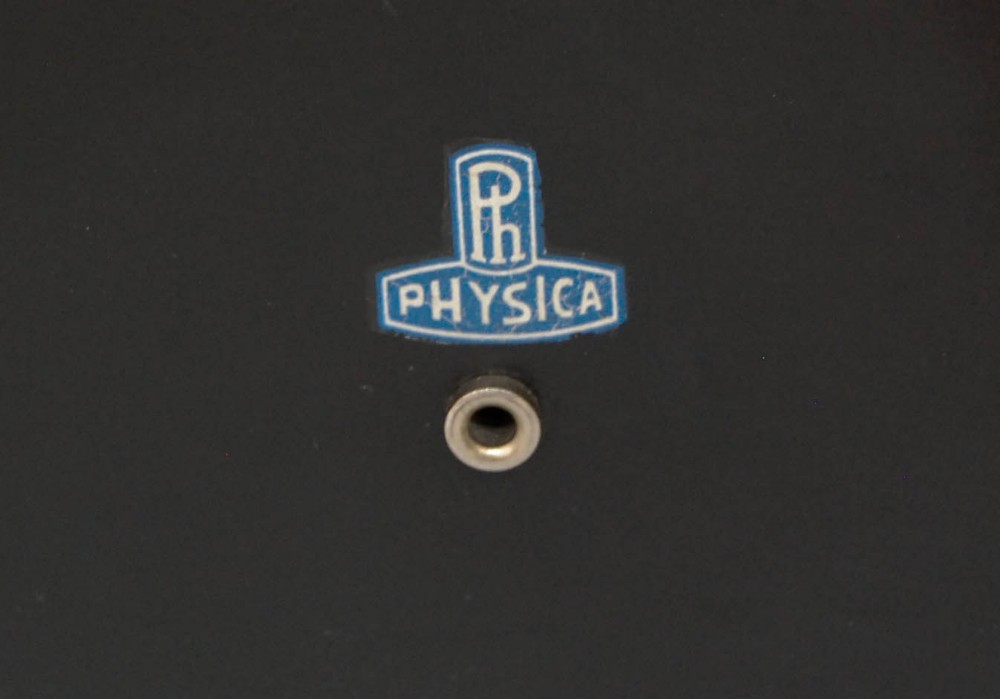
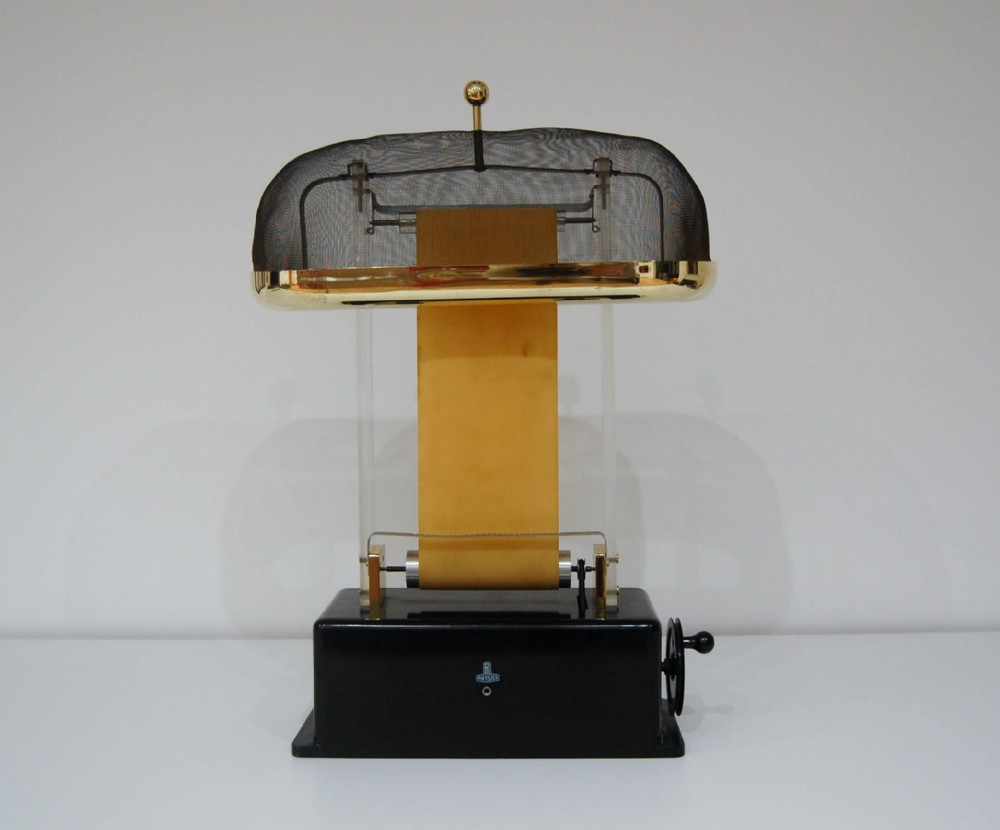
This rare and early example is comprised of a Bakelite rectangular base with input to the front for an additional discharge wand and the manufacturer transfer to the front stating “Physica”. It has a circular handle incorporated to the side with a groove cut out in order to attach the generator to an external motor.
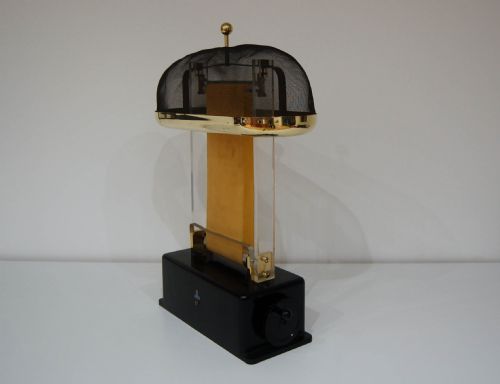
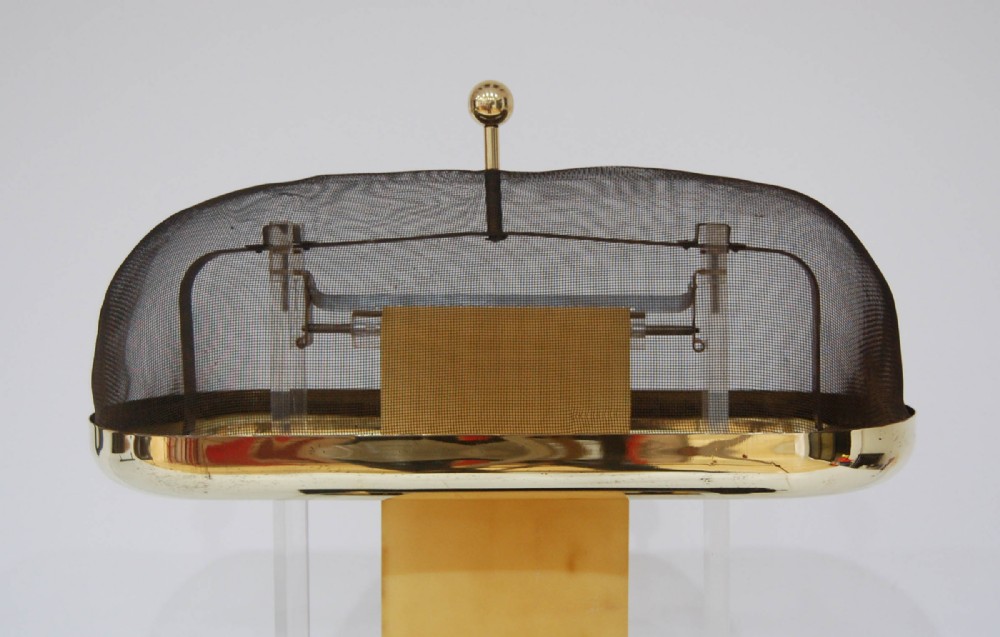
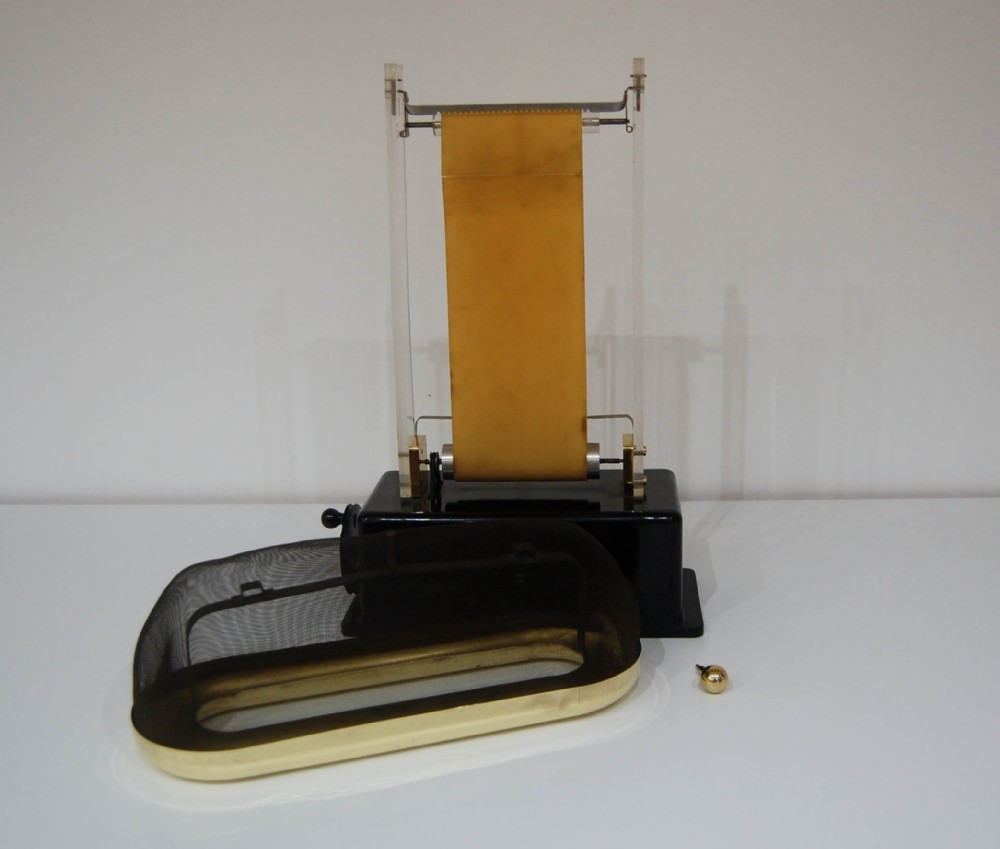
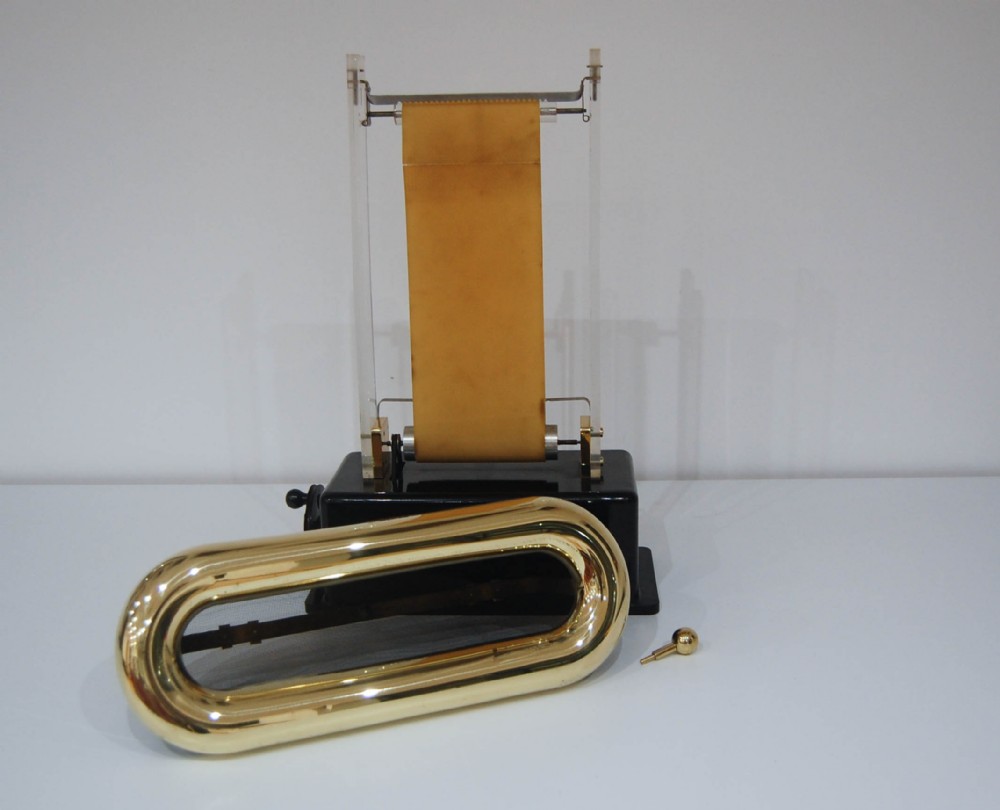
Two lucite struts support the upper and lower rollers which hold the natural rubber belt and a set of combs is attached at the top above the upper roller and another at the side of the base roller. The unusual and early type domed hood is formed from a brass tray with a metal gauze material.
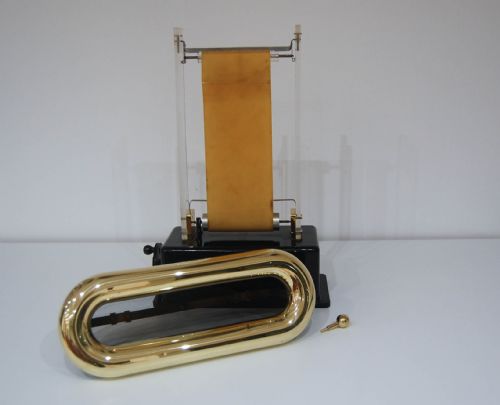
The Van Der Graaff generator works by means of the rubber belt moving over two rollers comprised of differing materials each with a comb, the top one connected to the hood and the bottom one connected to earth. Owing to the different materials of the rollers, the movement of the belt causes the transfer of electrons. The bottom roller will be negatively charged and the top positively charged. The excess positive charge is subsequently accumulated on the outer surface of the dome and builds up very large amounts of charge. If a wand was attached to the instrument at this point and offered up to the dome, then the electrons drawn up from the ground would be attracted to the positive charge in the dome and spark would be generated.
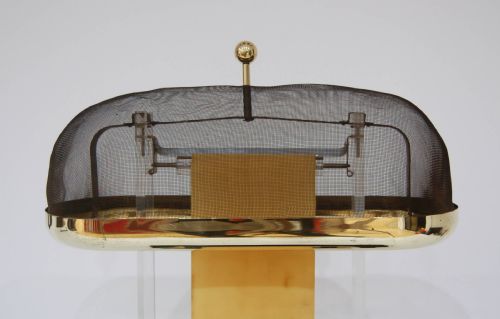
The original machine was invented by physicist Robert J. Van de Graaff at Princeton University and marked the beginning of nuclear research for the civilian applications. It is however, best known for its use as a scientific demonstration tool where the static is used for making people’s hair stand on end or for creating sparks in a similar vein to its earlier counterpart the Wimshurst machine.

This example owing to its style of manufacture is an early demonstration model and is probably of Italian origin. I have found none that are outside of museum or University collections.

Circa 1950.

Physical Dimensions
Height
55cm (21.65")
Width
35cm (13.78")
Depth
15cm (5.91")
Declaration

Jason Clarke Antiques has dated this Vintage Van De Graaff Generator to the 1950s.

Reference Numbers
Sellingantiques Reference
SA678915
Description
For sale, a rare mid-twentieth century Van Der Graaff Generator by Physica
This rare and early example is comprised of a Bakelite rectangular base with input to the front for an additional discharge wand and the manufacturer transfer to the front stating “Physica”.
Jason Clarke Antiques

It has a circular handle incorporated to the side with a groove cut out in order to attach the generator to an external motor.

fig 1. A hand-cranked Van de Graaff electrostatic generator featuring a black metal base, transparent acrylic supports, an upright rubber belt, and a wire mesh upper dome trimmed in brass.
fig 1. Early Demonstration Van Der Graff Generator by Physica

Two lucite struts support the upper and lower rollers which hold the natural rubber belt and a set of combs is attached at the top above the upper roller and another at the side of the base roller. The unusual and early type domed hood is formed from a brass tray with a metal gauze material.

fig 2. A hand-cranked Van de Graaff electrostatic generator featuring a black metal base, transparent acrylic supports, an upright rubber belt, and a wire mesh upper dome trimmed in brass.
fig 2. Early Demonstration Van Der Graff Generator by Physica

The Van Der Graaff generator works by means of the rubber belt moving over two rollers comprised of differing materials each with a comb, the top one connected to the hood and the bottom one connected to earth. Owing to the different materials of the rollers, the movement of the belt causes the transfer of electrons. The bottom roller will be negatively charged and the top positively charged. The excess positive charge is subsequently accumulated on the outer surface of the dome and builds up very large amounts of charge. If a wand was attached to the instrument at this point and offered up to the dome, then the electrons drawn up from the ground would be attracted to the positive charge in the dome and spark would be generated.

fig 3. A hand-cranked Van de Graaff electrostatic generator featuring a black metal base, transparent acrylic supports, an upright rubber belt, and a wire mesh upper dome trimmed in brass.
fig 3. Early Demonstration Van Der Graff Generator by Physica

The original machine was invented by physicist Robert J. Van de Graaff at Princeton University and marked the beginning of nuclear research for the civilian applications. It is however, best known for its use as a scientific demonstration tool where the static is used for making people’s hair stand on end or for creating sparks in a similar vein to its earlier counterpart the Wimshurst machine.

This example owing to its style of manufacture is an early demonstration model and is probably of Italian origin. I have found none that are outside of museum or University collections.

Circa 1950.

Height
55cm (21.65")
Width
35cm (13.78")
Depth
15cm (5.91")
Date of Manufacture

Jason Clarke Antiques has dated this Vintage Van De Graaff Generator to the 1950s.

Reference Numbers
Sellingantiques Ref
SA678915
Jason Clarke Antiques
Sellingantiques verified Since Jul 2015
Dealer Profile

You can view the stock and full dealer information on the Jason Clarke Antiques Profile Page
PDF SHARE
SAVE
A hand-cranked Van de Graaff electrostatic generator featuring a black metal base, transparent acrylic supports, an upright rubber belt, and a wire mesh upper dome trimmed in brass.
1 / 7
Archive I A hand-cranked Van de Graaff electrostatic generator featuring a black metal base, transparent acrylic supports, an upright rubber belt, and a wire mesh upper dome trimmed in brass.

Early Demonstration Van Der Graff Generator by Physica
Archive II A hand-cranked Van de Graaff electrostatic generator featuring a black metal base, transparent acrylic supports, an upright rubber belt, and a wire mesh upper dome trimmed in brass. View II
Archive III A hand-cranked Van de Graaff electrostatic generator featuring a black metal base, transparent acrylic supports, an upright rubber belt, and a wire mesh upper dome trimmed in brass. View III
Archive IV A hand-cranked Van de Graaff electrostatic generator featuring a black metal base, transparent acrylic supports, an upright rubber belt, and a wire mesh upper dome trimmed in brass. View IV
Archive V A hand-cranked Van de Graaff electrostatic generator featuring a black metal base, transparent acrylic supports, an upright rubber belt, and a wire mesh upper dome trimmed in brass. View V
Archive VI A hand-cranked Van de Graaff electrostatic generator featuring a black metal base, transparent acrylic supports, an upright rubber belt, and a wire mesh upper dome trimmed in brass. View VI
Archive VII A hand-cranked Van de Graaff electrostatic generator featuring a black metal base, transparent acrylic supports, an upright rubber belt, and a wire mesh upper dome trimmed in brass. View VII
Enlarged Archival View
Telephone 07815 046645
Location
Newbury
Berkshire
United Kingdom
Verified Since Jul 2015
Items For Sale 82
Items Sold 605
Jason Clarke Antiques
Verified Since Jul 2015
View Dealer Info
Location: Newbury, Berkshire, United Kingdom
Verified
Jul 2015
For Sale
82
Sold
605
A hand-cranked Van de Graaff electrostatic generator featuring a black metal base, transparent acrylic supports, an upright rubber belt, and a wire mesh upper dome trimmed in brass.
Early Demonstration Van Der Graff Generator by Physica
Ref: SA678915
A hand-cranked Van de Graaff electrostatic generator featuring a black metal base, transparent acrylic supports, an upright rubber belt, and a wire mesh upper dome trimmed in brass.
Detail View 1
Detail View 2
Detail View 3
Detail View 4
Detail View 5
Detail View 6
Archival Detail
Every single antique dealer on our platform is individually approved by our internal team. We verify their professional trade history, ethical standards, and photographic quality to ensure a secure, high-standard buying environment. Upon joining, every dealer agrees to a strict 9-point code of conduct. While issues can occasionally arise, our dealers typically resolve them swiftly and directly with the buyer. In fact, since our founding in 2002, Sellingantiques has only had to step in to help resolve an issue on roughly five occasions—a true testament to the quality of our dealers and their dedication to your happiness.
Our dealers are highly experienced in packing and shipping fragile, high-value antiques. Because you are in direct contact with the dealer, you will be able to easily go through all available shipping and insurance options together to ensure your item arrives safely.
Antiques are the ultimate green purchase. By choosing historical pieces over newly manufactured goods, you completely eliminate the carbon footprint of modern mass production while preserving exceptional, timeless craftsmanship.

A Van de Graaff generator is an electrostatic machine invented by Robert J. Van de Graaff in 1929 that uses a moving belt to accumulate electric charge on a hollow metal terminal. In educational settings, demonstration models were widely used in school laboratories to illustrate principles of static electricity and high-voltage physics.

These apparatuses traditionally feature a cast-metal base housing the drive mechanism, acrylic or glass insulating columns, a continuous rubber or synthetic charging belt, and polished brass or copper collector domes.

Authentic vintage models often feature manufacturer metal makers badges, hand-cranked drive wheels or heavy early electric motors, hand-assembled brass components, and period-correct insulating materials such as early perspex or heavy glass.

Scientific instruments function as technical display pieces when placed on a gentlemans library bookshelf, an industrial console table, or within a cabinet of curiosities alongside technical drawings and brass instruments.

Dust components gently using a soft, dry microfibre cloth, avoid harsh chemical solvents on acrylic or polished metal parts, and store the item in a dry environment to prevent degradation of the rubber belt.
items
Add keywords to the filter
Price
£100
£250000
Era
Movements
Material
Origin
Stock Location
Freshness
Online Payments
Categories