





Antique Optics Instrument
An antique optics instrument brings precision engineering into the home, offering a tangible connection to historical science, exploration, and observation.
Antique Optics Instrument
When you search for an antique optics instrument, you encounter a specialised category of scientific and utilitarian equipment spanning multiple centuries. These pieces encompass portable pocket devices, substantial desk accessories, and military apparatus designed for observation and measurement.
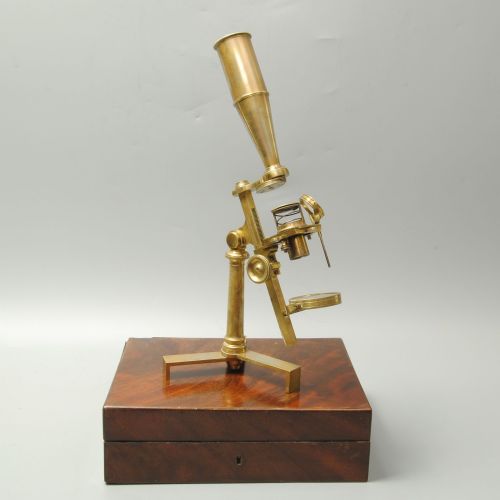
The selections available on this page are predominantly represented by nineteenth century items alongside pieces from the eighteenth and early twentieth centuries. Telescopes, microscopes, and magnifying glasses form the core of what you will find here.
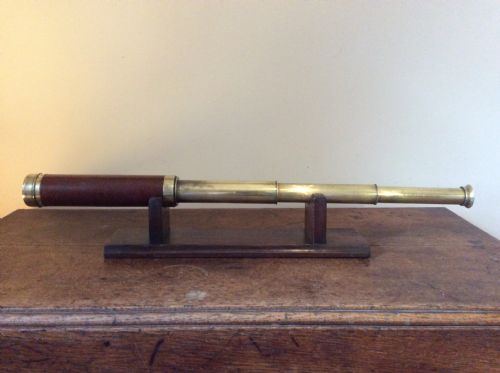
You will regularly encounter objects originating from distinct periods such as the Georgian, Regency, and Victorian eras. These range from library telescopes on stands to compact compound microscopes housed in their original fitted cases.
Materials and construction methods
The construction of an antique optics instrument relies heavily on turned brass and polished glass lenses, often housed within turned wood or leather-covered bodies. Materials such as mahogany, velvet, fabric, and sterling silver appear frequently in the framing and fitted cases of these precision objects.
Makers utilised skilled metalworking and optical grinding techniques to achieve clarity and mechanical adjustment. Pivoting stands, sliding brass tubes, and folding mechanisms demonstrate the intricate assembly required to make these instruments both portable and functional.
Listings feature instruments constructed from brass, glass, mahogany, and sterling silver across the Georgian, Victorian, and Edwardian periods.
Evaluating craftsmanship and condition
Quality in an antique optics instrument is defined by the precision of its optical components and the integrity of its mechanical adjustments. Pieces that retain their original signed brass barrels and unaltered glass lenses represent the upper tier of the range.
The presence of original fitted wooden cases and complete subsidiary components elevates an object significantly. Finer examples display crisp maker inscriptions and smooth, unblemished focusing actions that reflect superior workshop standards.
R & J Beck Ltd·Cary London·M Pillischer of London·Matthew Berge London·John Gilbert·WF Stanley
The Antique Optics Instrument Glossary
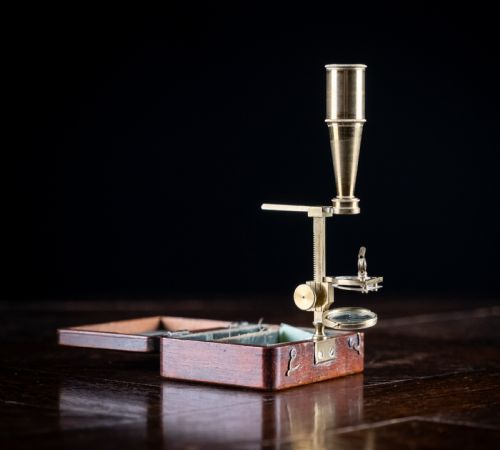
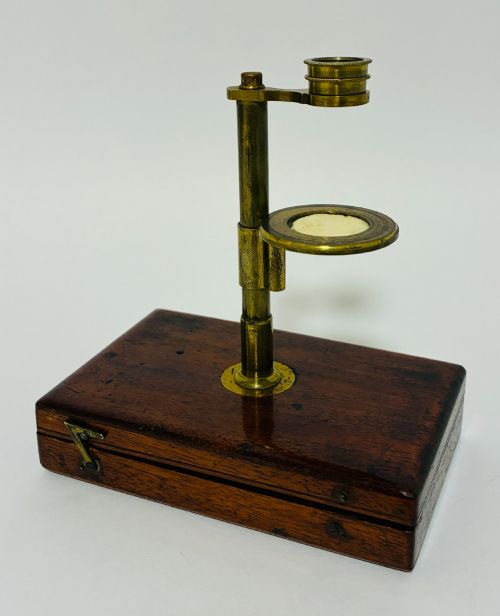
- Compound microscope
- A microscope utilising more than one lens to achieve higher magnification of specimens. These instruments often feature brass bodies and dedicated fitted wooden cases.
- Gregorian telescope
- A reflecting telescope design invented by James Gregory, utilising a concave primary mirror and a secondary mirror to bounce light back through an aperture in the main mirror.
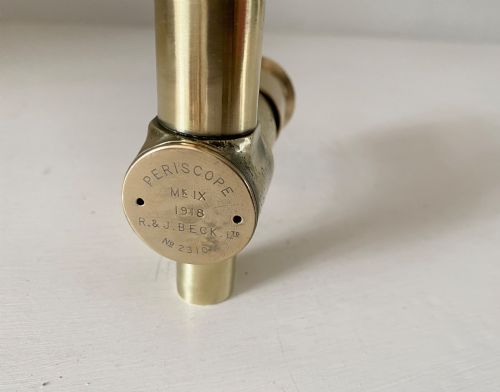
- Periscope
- An optical instrument used for viewing objects above the level of the direct line of sight, often associated with military applications.
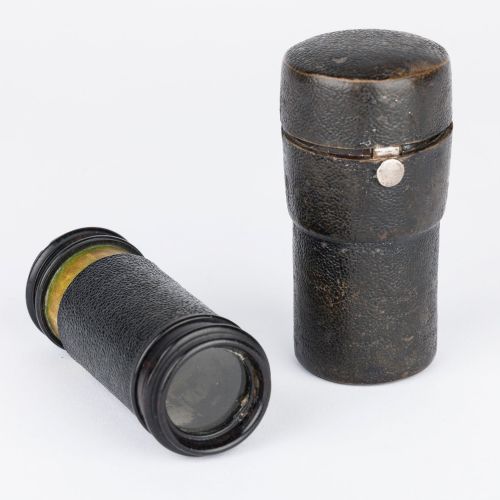
- Spyglass
- A small, handheld refracting telescope typically constructed with multiple sliding brass draws enclosed in leather or mahogany.
- Achieving focus
- The mechanical adjustment of lens distance relative to the object or viewer to produce a sharp image. In historical instruments, this is typically managed via smooth push-pull tubes or helical threads.
Antique Optics Instrument: Frequently Asked Questions
What is an antique optics instrument?
An antique optics instrument is a historical device designed to manipulate light for magnification, measurement, or observation. These functional objects include telescopes, microscopes, periscopes, and magnifying glasses.
They reflect the scientific advancements and craftsmanship of periods ranging from the eighteenth century to the early twentieth century. Collectors value them for their combination of decorative appeal and historical engineering.
How were pocket spyglasses used?
Pocket spyglasses served as portable viewing devices for travellers, mariners, and gentlemen navigating urban or rural environments. Their collapsible brass draws allowed them to be easily stored in a coat pocket.
Owners deployed them to inspect distant landscapes, architecture, or theatrical performances before the widespread use of dedicated opera glasses.
How do I identify a Georgian telescope?
Georgian telescopes typically feature hand-turned brass bodies, sometimes wrapped in mahogany or stitched leather. Maker signatures are frequently engraved directly onto the terminal brass draw tube near the eyepiece.
Stylistic cues of the period include specific draw configurations and non-achromatic lens arrangements found in mid-eighteenth-century examples. Examining the engraved script provides a reliable indicator of the maker and workshop era.
Where should I display these instruments?
These instruments suit studies, libraries, and desktop display areas where their brass and wood finishes complement traditional interiors. Placing them on stable surfaces away from direct sunlight protects delicate materials like leather and velvet.
Many pieces mounted on stands, such as library telescopes or pivoting magnifying glasses, function as striking standalone decorative objects.