27,868  PAGES BROWSED TODAY PAGES TODAY • 105 ANTIQUES UPLOADED TODAYNEW ARRIVALS
GIFTS
105 ITEMS ADDED TODAY
Sort Order
Items Per Page
Antiques dealer?
Join as a Seller
Browse Categories
Sort order
Relevant Links
Items per page
sold SA1130708
Sorry, but this item has been sold.
Regent Antiques

Regent Antiques

Sellingantiques Verified Since Sep 2016
Browse dealers 639 items
  • About Us
    We specialise in english and continental furniture, silver, porcelain and decorative items.
  • Trade Associations
    Regent Antiques is a registered member of LAPADA  CINOA
Id #SA1130708
SHARE
SAVE

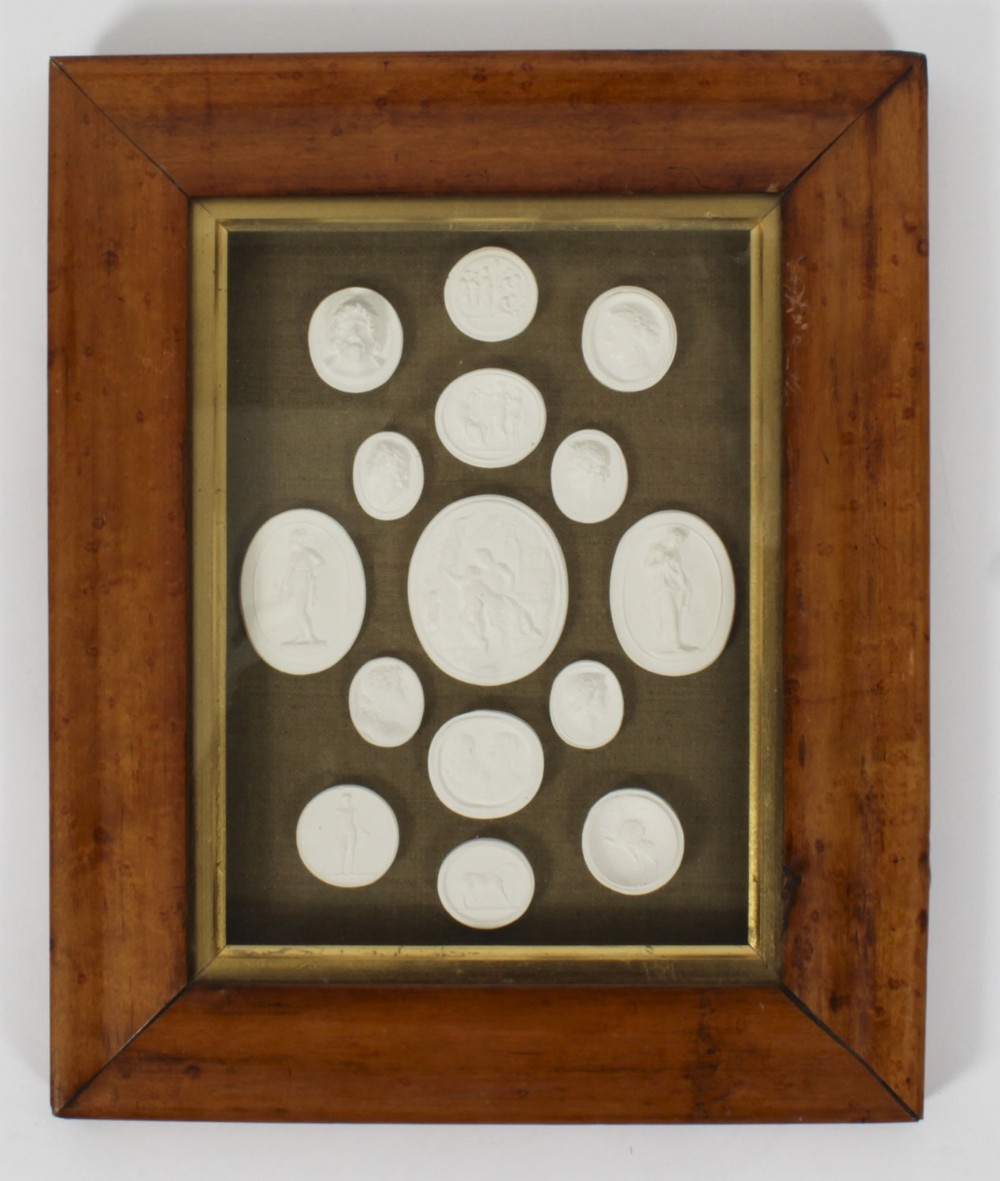
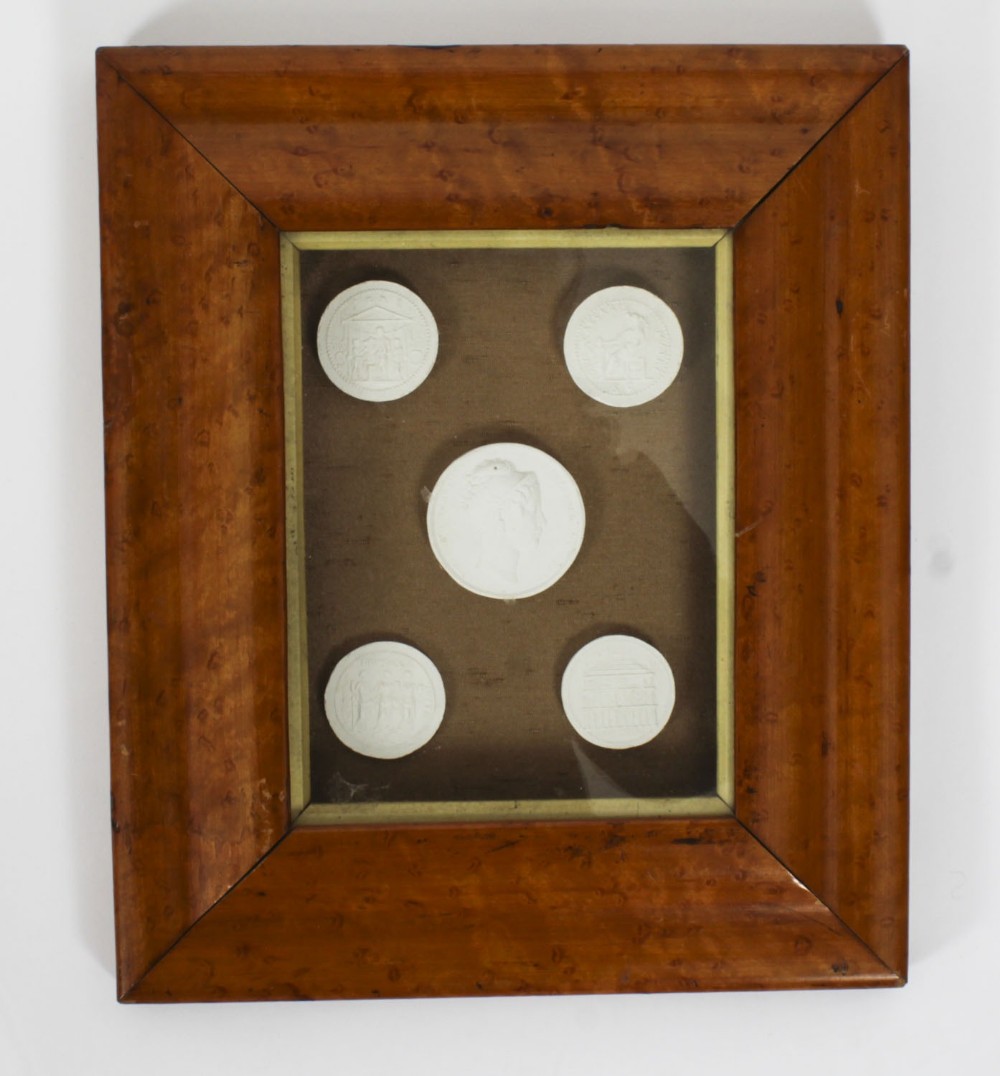
Antique Set of Three Box Framed Grand Tour Intaglios 19th C

19th century
Sold 15 August 2025 · Regent Antiques
This “Antique Set of Three Box Framed Grand Tour Intaglios 19th C” found a buyer.

It was listed by Regent Antiques. Sold pieces stay on Sellingantiques as a record of what has passed through, and the next one is rarely far away.

Description

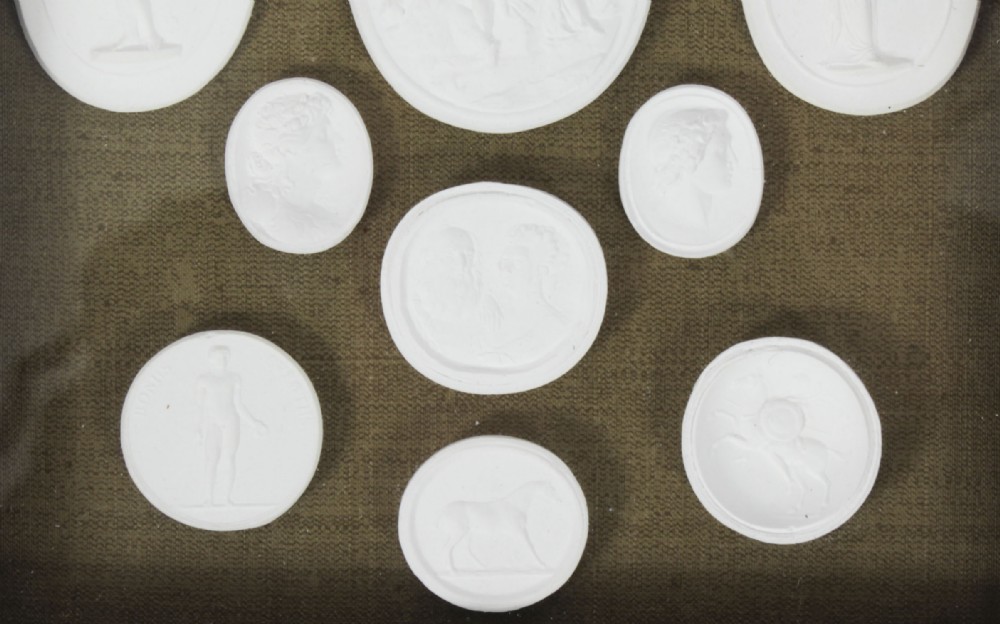
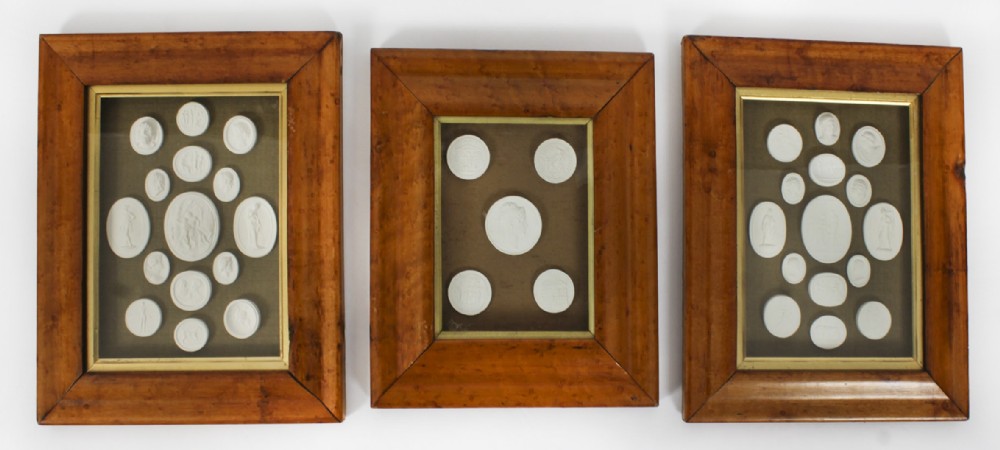
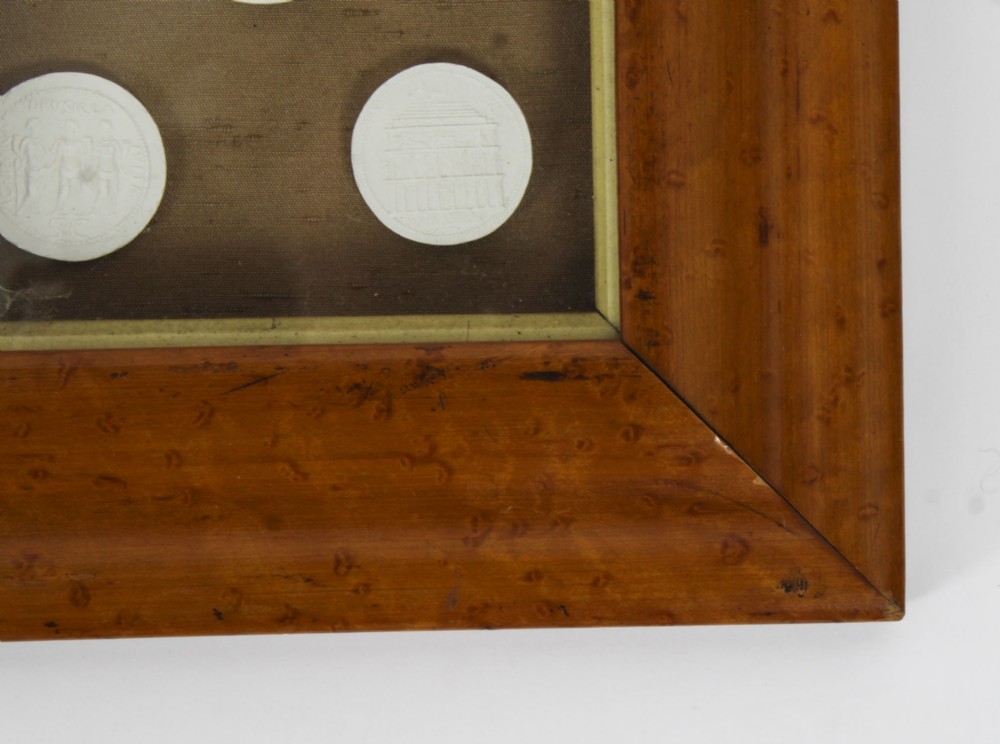
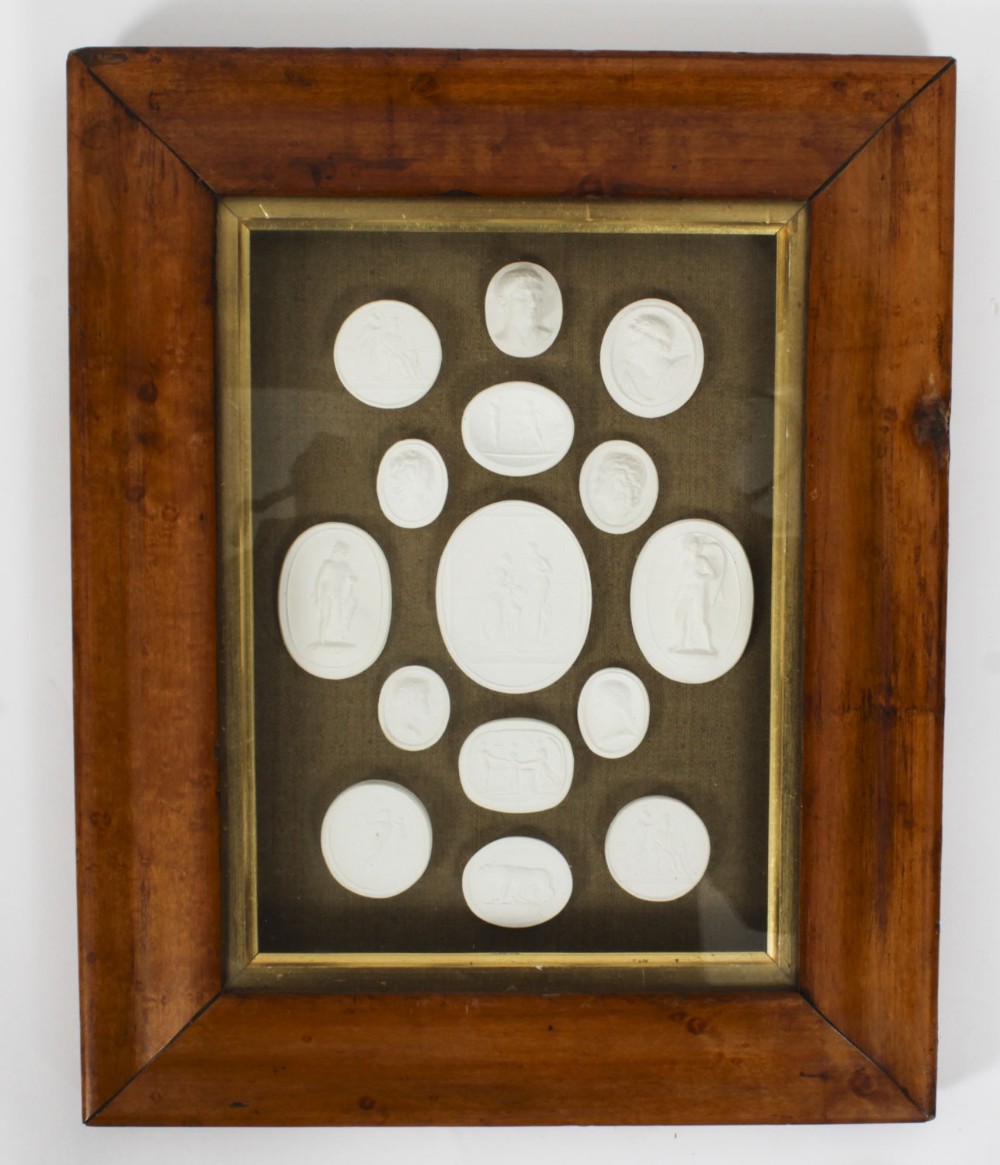
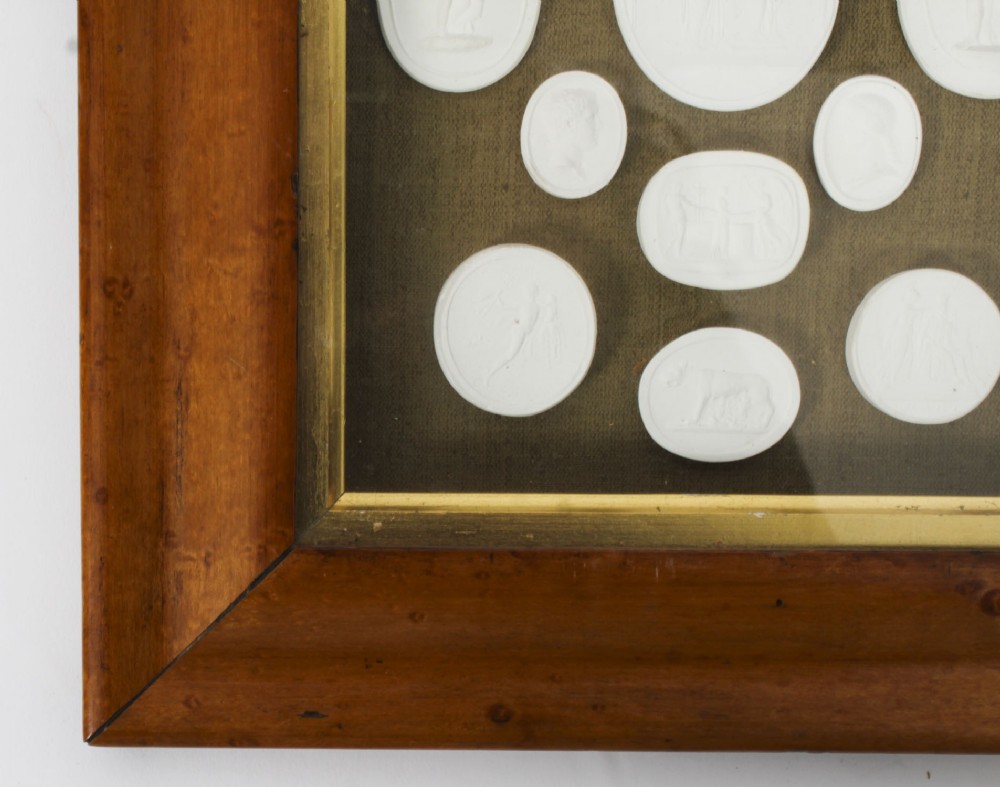
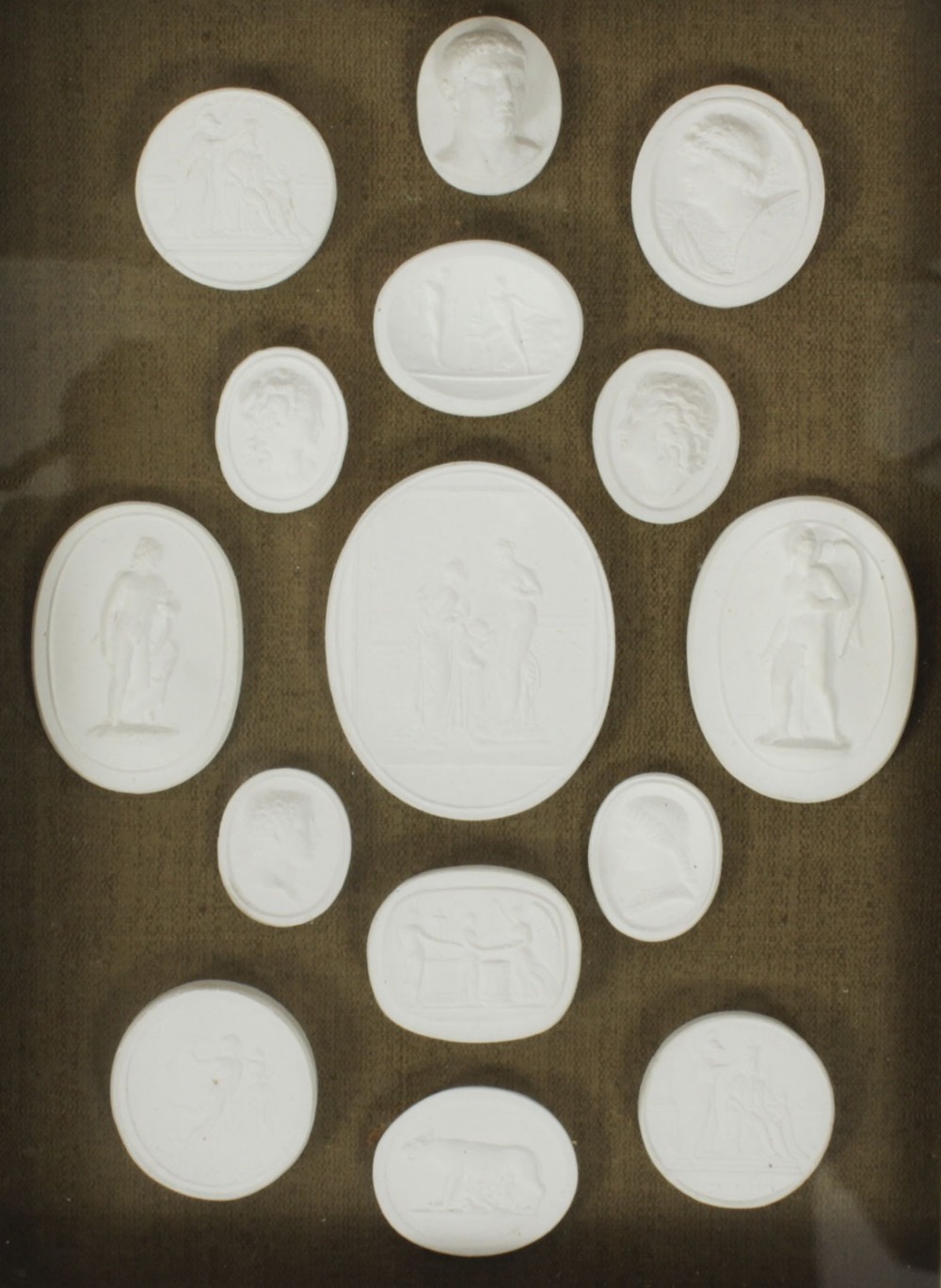
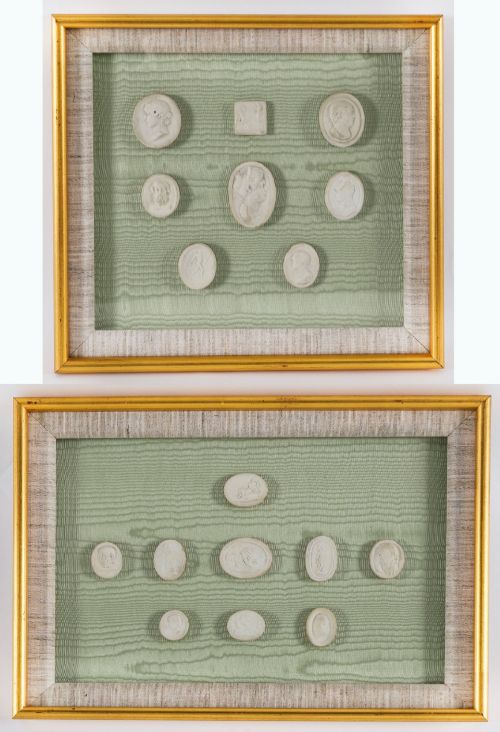
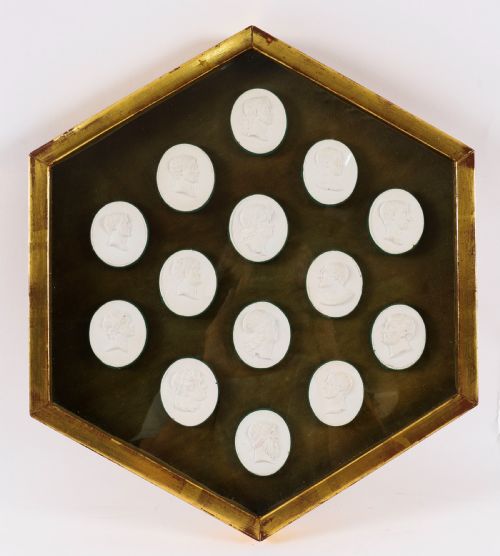
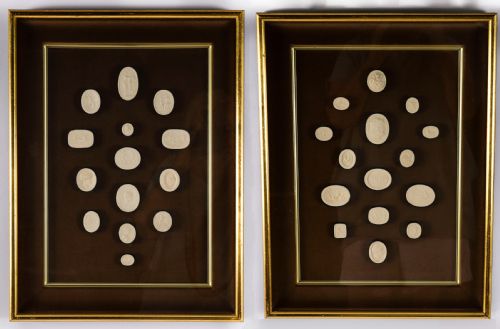
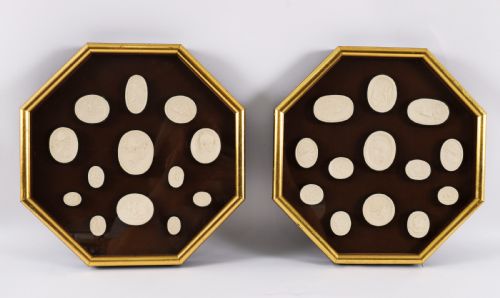
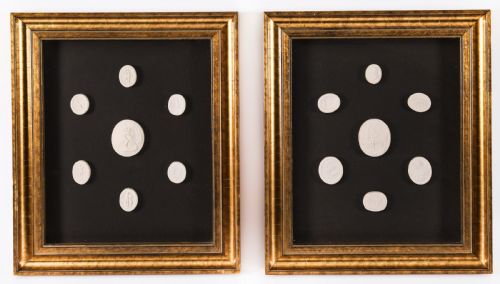
An elegant set of three birdseye maple frames enclosing a set of thirty five plaster Grand Tour intaglios dating from the early 19th Century.

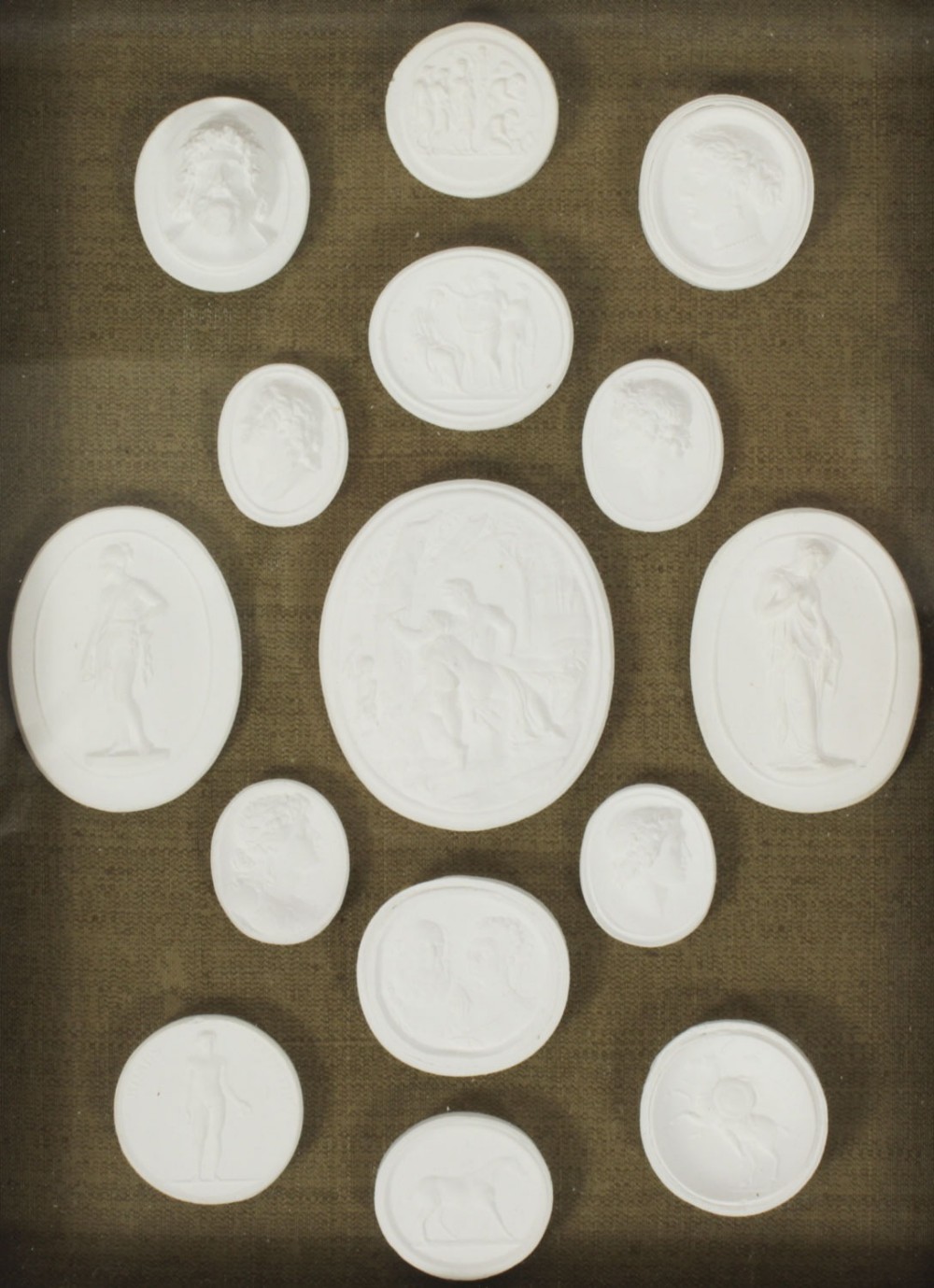
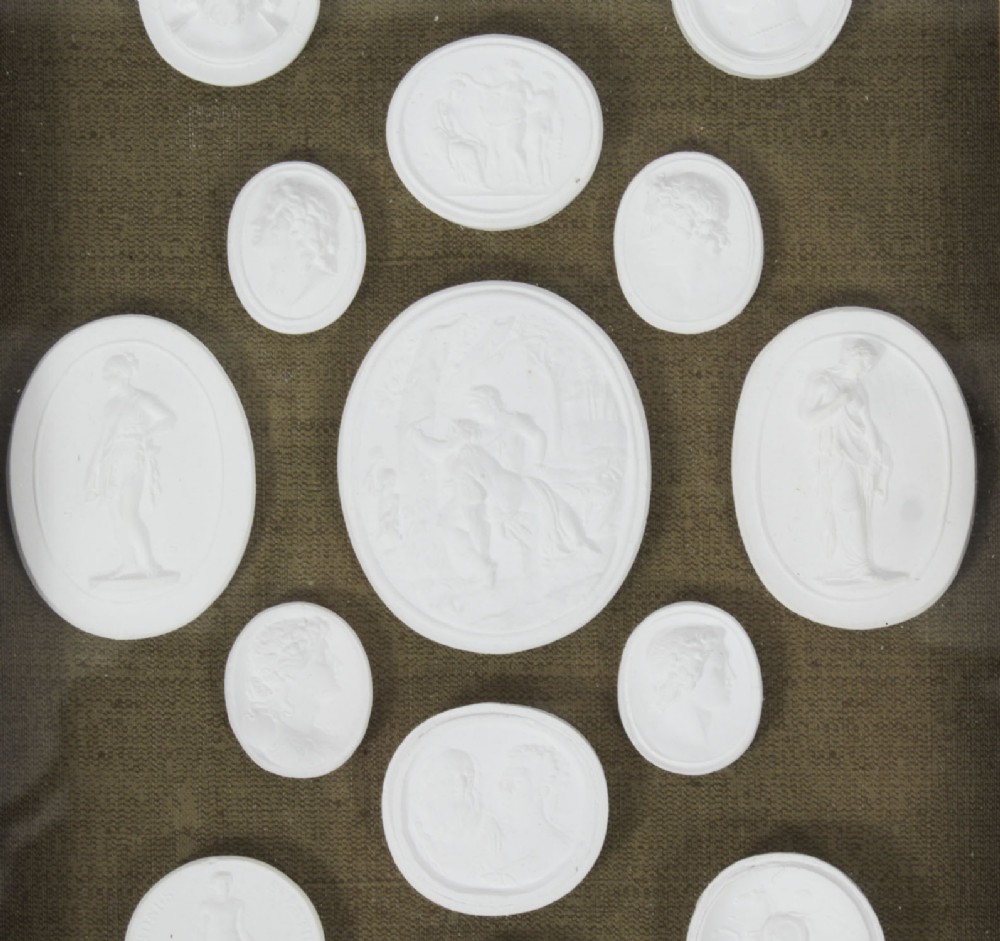
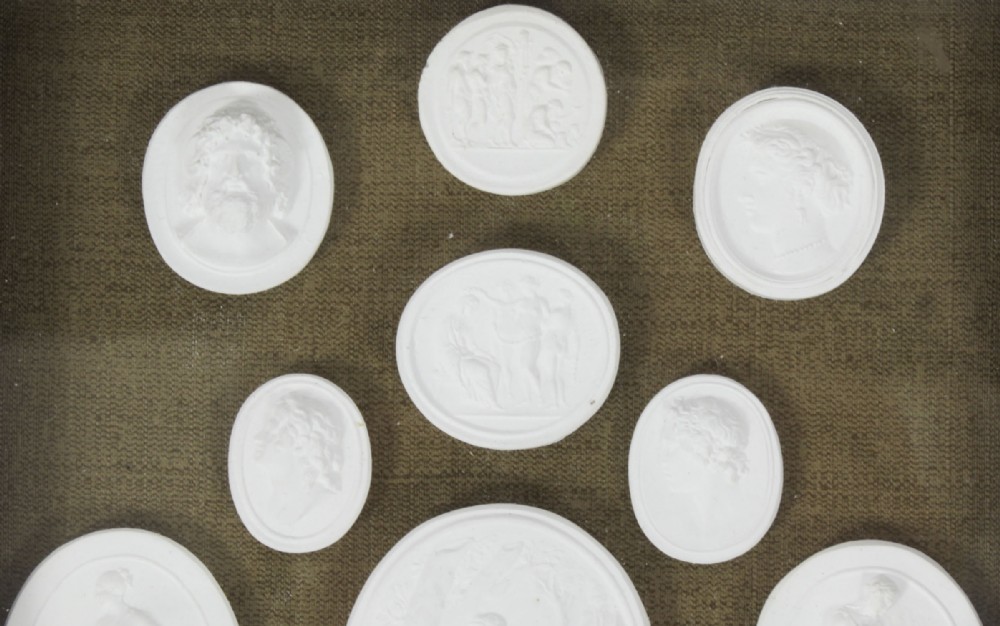
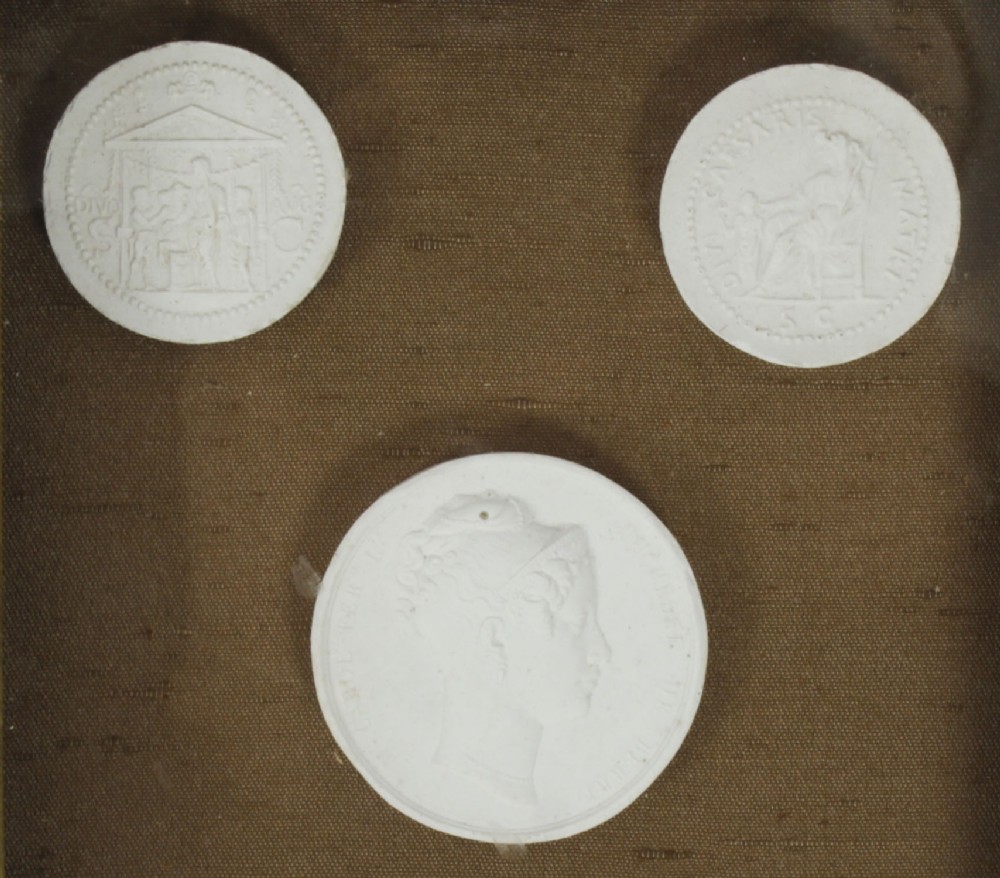
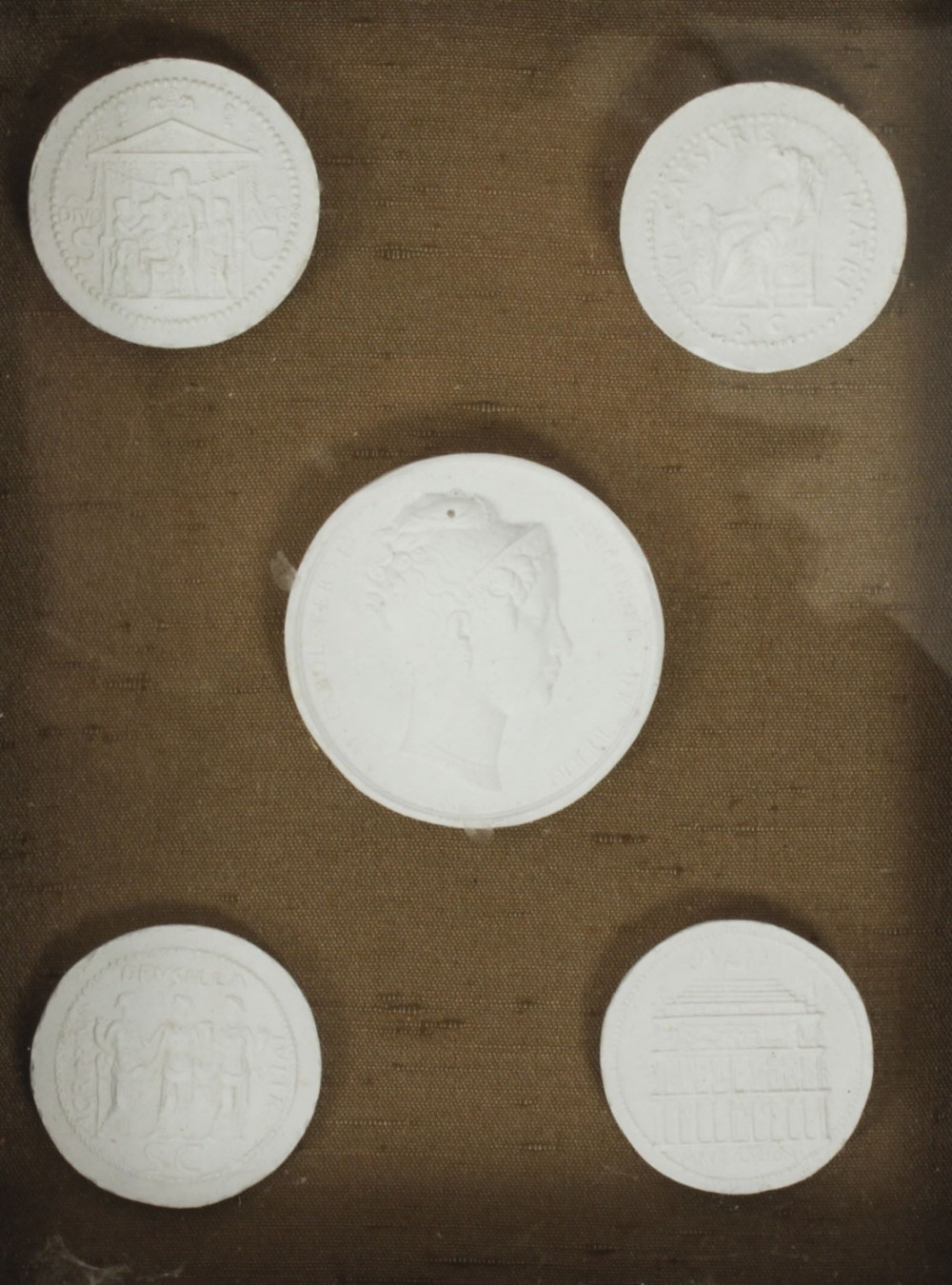
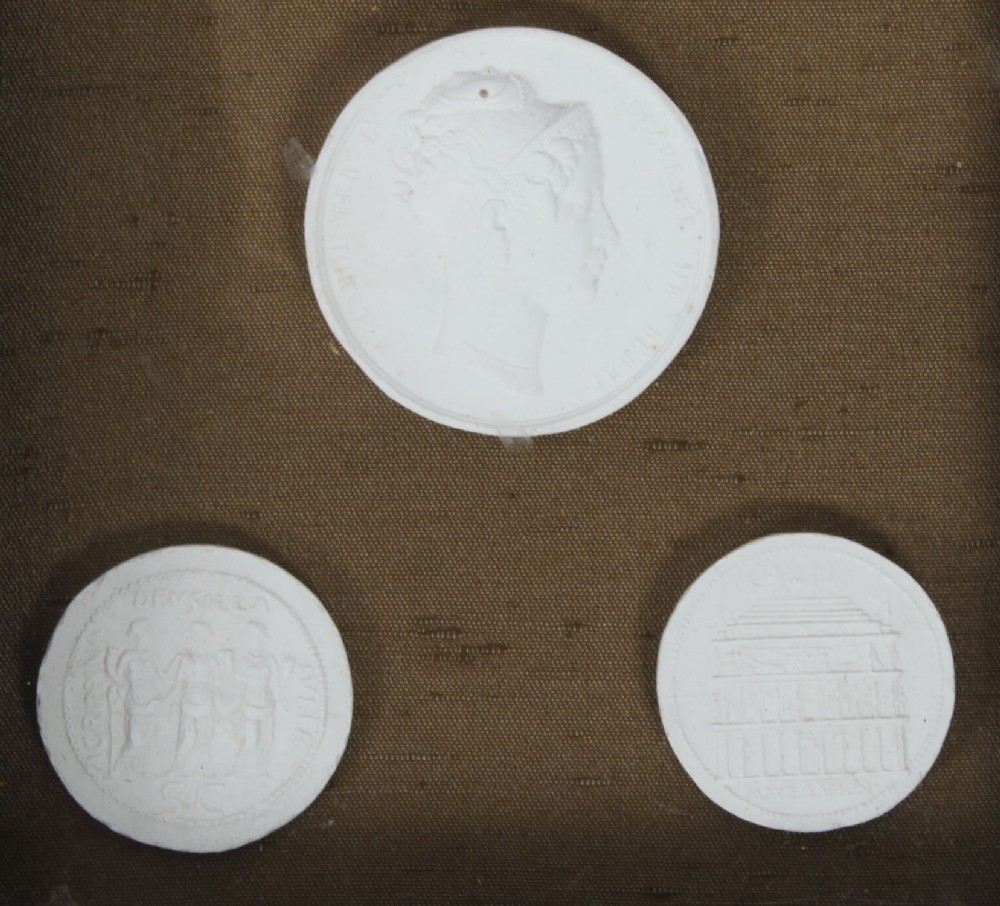
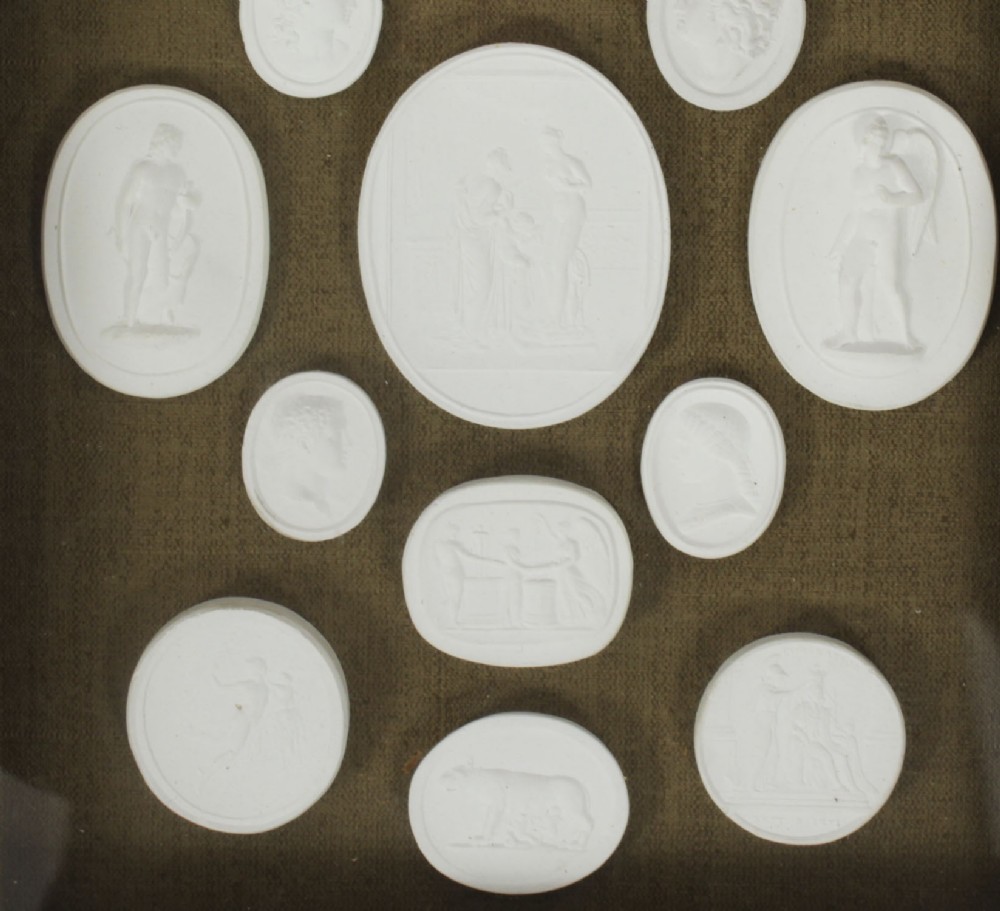
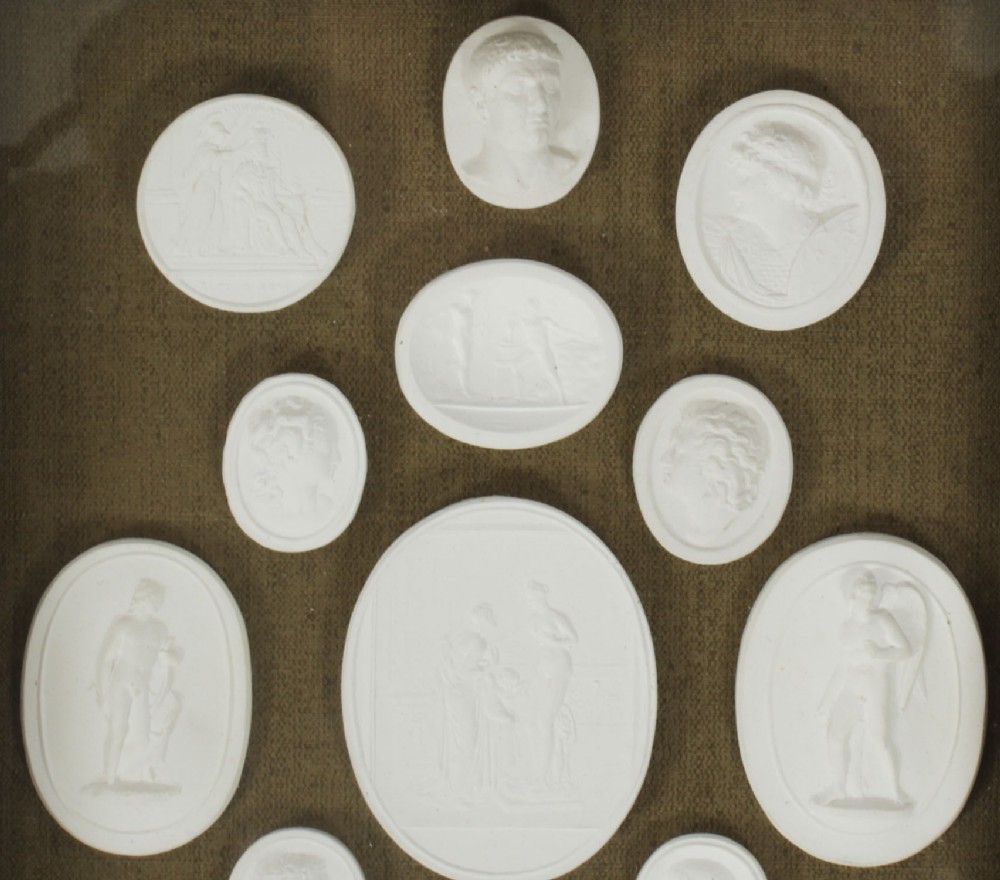
The various large oval and round plaster intaglios feature subjects predominantly from Classical Antiquity and include the 1831 coronation, Romulus and Remus, Apollo, a bust of the Duchess of Berry, Pan, various busts animals and others.

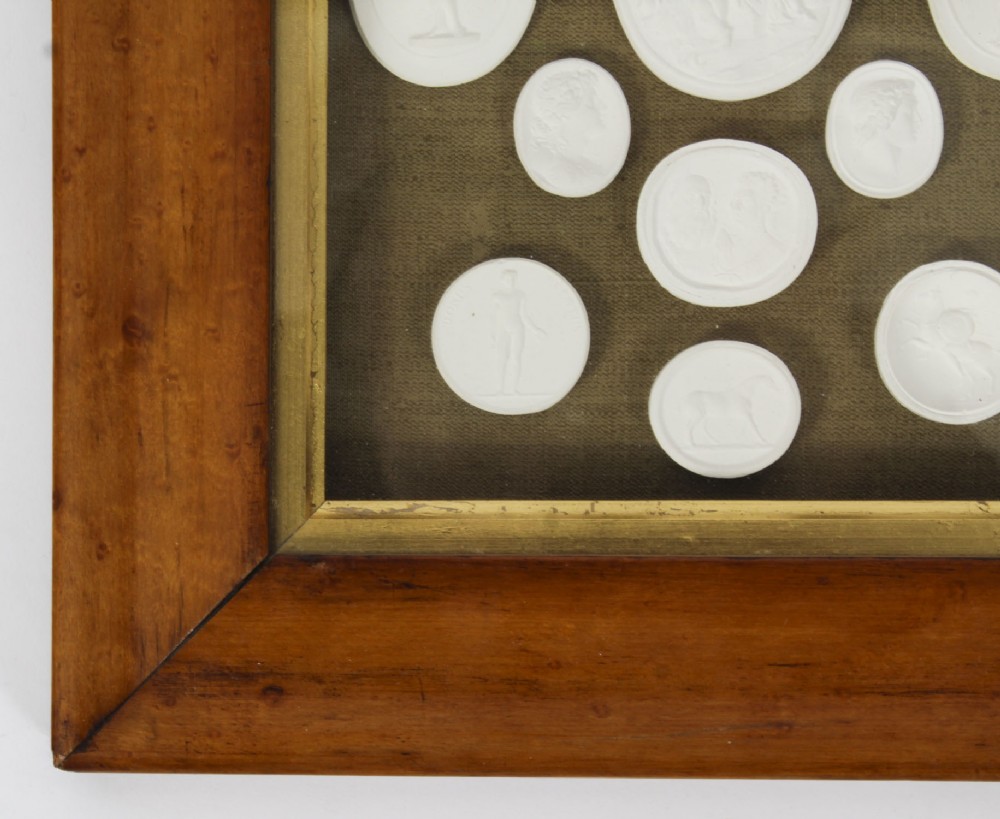
The intaglios are beautifully mounted on plush brown frabric in rectangular glazed box frames.

Add a beautiful classical element to your home with this delightful framed collection.

Condition:

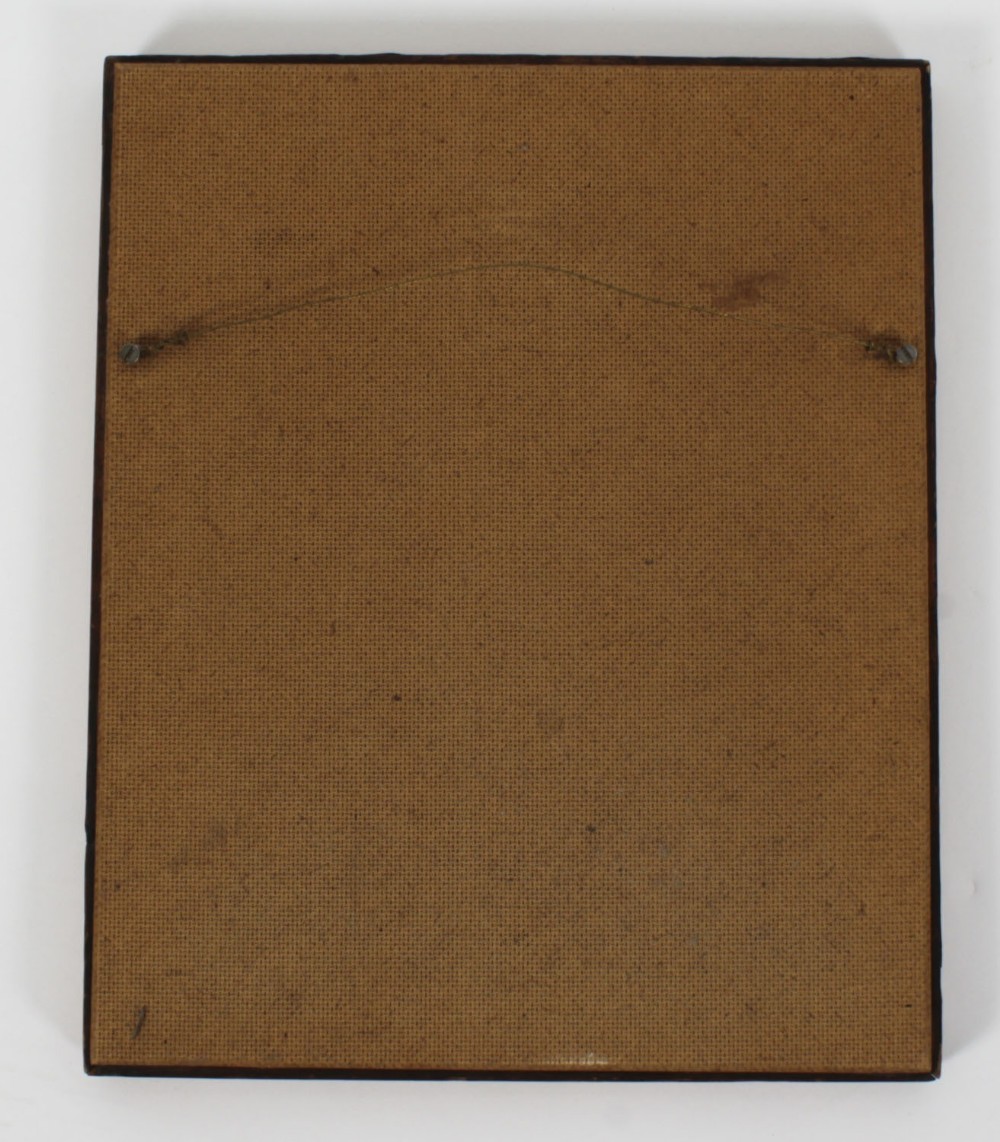
In excellent condition, please see photos for confirmation.

Dimensions in cm:

Height 34 cm x Width 28 cm x Depth 3 cm

Height 31 cm x Width 26 cm x Depth 3 cm

Dimensions in inches:

Height 1 foot, 1 inch x Width 11 inches x Depth 1 inch

Height 1 foot x Width 10 inches x Depth 1 inch

The Grand Tour was the traditional trip of Europe undertaken by mainly upper-class European young men of means. The custom flourished from about 1660 until the advent of large-scale rail transit in the 1840s, and was associated with a standard itinerary.

It served as an educational rite of passage. Though primarily associated with the British nobility and wealthy landed gentry, similar trips were made by wealthy young men of Protestant Northern European nations on the Continent, and from the second half of the 18th century some South American, U.S., and other overseas youth joined in. The tradition was extended to include more of the middle class after rail and steamship travel made the journey less of a burden.

The primary value of the Grand Tour, it was believed, lay in the exposure both to the cultural legacy of classical antiquity and the Renaissance, and to the aristocratic and fashionably polite society of the European continent. In addition, it provided the only opportunity to view specific works of art, and possibly the only chance to hear certain music. A grand tour could last from several months to several years. It was commonly undertaken in the company of a knowledgeable guide or tutor.

The Grand Tour not only provided a liberal education but allowed those who could afford it the opportunity to buy things otherwise unavailable at home, and it thus increased participants' prestige and standing. Grand Tourists would return with crates of art, books, pictures, sculpture, and items of culture, which would be displayed in libraries, cabinets, gardens, and drawing rooms, as well as the galleries built purposely for their display; The Grand Tour became a symbol of wealth and freedom.

Birdseye Maple

occurs primarily in Sugar Maple and is a very hard wood with divergent grain structure caused by the presence of the Birdseyes.

In the days when all furniture was made essentially by hand, Birdseye Maple was used by only the most capable cabinetmakers. These artisans had developed the tools and skills to work and finish Birdseye Maple successfully. Antique furniture made out of Birdseye Maple is rare and beautiful.

The divergent grain that makes Birdseye Maple beautiful also makes it difficult to work. Early woodworking machines ran at low rpms and had only 2 knives per cutterhead. This often produced Birdseye surfaces that were chipped and torn. It took many hours of hand planing and scraping to get these surfaces to a high sheen.

This limited the use of Birdseye maple to projects whose value could justify the extra labour cost. Examples of this are fine furniture and musical instruments.

Our reference: A4428

Date of Manufacture

Regent Antiques has dated this Framed Grand Tour Intaglios to the 19th Century.

Physical Dimensions
Height
34cm (13.39")
Width
28cm (11.02")
Depth
3cm (1.18")
Reference Numbers
Sellingantiques Reference
SA1130708
Dealers Internal Reference
A4428
A collection of white plaster intaglios arranged systematically inside a deep wooden box frame.Detail view 1Detail view 2Detail view 3Detail view 4Detail view 5Detail view 6Detail view 7Detail view 8Detail view 9Detail view 10Detail view 11Detail view 12Detail view 13Detail view 14Detail view 15Detail view 16Detail view 17
SOLD6+ MONTHS AGO
1 / 18
19th Century · SA1130708
Antique Set of Three Box Framed Grand Tour Intaglios 19th C
Sorry, but this item has been sold.
Description
An elegant set of three birdseye maple frames enclosing a set of thirty five plaster Grand Tour intaglios dating from the early 19th Century.

The various large oval and round plaster intaglios feature subjects predominantly from Classical Antiquity and include the 1831 coronation, Romulus and Remus, Apollo, a bust of the Duchess of Berry, Pan, various busts animals and others.

The intaglios are beautifully mounted on plush brown frabric in rectangular glazed box frames.

Add a beautiful classical element to your home with this delightful framed collection.

Condition:

In excellent condition, please see photos for confirmation.

Dimensions in cm:

Height 34 cm x Width 28 cm x Depth 3 cm

Height 31 cm x Width 26 cm x Depth 3 cm

Dimensions in inches:

Height 1 foot, 1 inch x Width 11 inches x Depth 1 inch

Height 1 foot x Width 10 inches x Depth 1 inch

The Grand Tour was the traditional trip of Europe undertaken by mainly upper-class European young men of means. The custom flourished from about 1660 until the advent of large-scale rail transit in the 1840s, and was associated with a standard itinerary.

It served as an educational rite of passage. Though primarily associated with the British nobility and wealthy landed gentry, similar trips were made by wealthy young men of Protestant Northern European nations on the Continent, and from the second half of the 18th century some South American, U.S., and other overseas youth joined in. The tradition was extended to include more of the middle class after rail and steamship travel made the journey less of a burden.

The primary value of the Grand Tour, it was believed, lay in the exposure both to the cultural legacy of classical antiquity and the Renaissance, and to the aristocratic and fashionably polite society of the European continent. In addition, it provided the only opportunity to view specific works of art, and possibly the only chance to hear certain music. A grand tour could last from several months to several years. It was commonly undertaken in the company of a knowledgeable guide or tutor.

The Grand Tour not only provided a liberal education but allowed those who could afford it the opportunity to buy things otherwise unavailable at home, and it thus increased participants' prestige and standing. Grand Tourists would return with crates of art, books, pictures, sculpture, and items of culture, which would be displayed in libraries, cabinets, gardens, and drawing rooms, as well as the galleries built purposely for their display; The Grand Tour became a symbol of wealth and freedom.

Birdseye Maple

occurs primarily in Sugar Maple and is a very hard wood with divergent grain structure caused by the presence of the Birdseyes.

In the days when all furniture was made essentially by hand, Birdseye Maple was used by only the most capable cabinetmakers. These artisans had developed the tools and skills to work and finish Birdseye Maple successfully. Antique furniture made out of Birdseye Maple is rare and beautiful.

The divergent grain that makes Birdseye Maple beautiful also makes it difficult to work. Early woodworking machines ran at low rpms and had only 2 knives per cutterhead. This often produced Birdseye surfaces that were chipped and torn. It took many hours of hand planing and scraping to get these surfaces to a high sheen.

This limited the use of Birdseye maple to projects whose value could justify the extra labour cost. Examples of this are fine furniture and musical instruments.

Our reference: A4428
Date19th Century
Height34cm (13.39")
Width28cm (11.02")
Depth3cm (1.18")
ReferenceSA1130708
Dealer's referenceA4428
Regent Antiques
Regent AntiquesSellingantiques verified since Sep 2016

We specialise in english and continental furniture, silver, porcelain and decorative items.

Member of LAPADA CINOA

SHARE
SAVE
Archive I A collection of white plaster intaglios arranged systematically inside a deep wooden box frame. SOLD6+ MONTHS AGO

Antique Set of Three Box Framed Grand Tour Intaglios 19th C

Archive II A collection of white plaster intaglios arranged systematically inside a deep wooden box frame. View II
Archive III A collection of white plaster intaglios arranged systematically inside a deep wooden box frame. View III
Archive IV A collection of white plaster intaglios arranged systematically inside a deep wooden box frame. View IV
Archive V A collection of white plaster intaglios arranged systematically inside a deep wooden box frame. View V
Archive VI A collection of white plaster intaglios arranged systematically inside a deep wooden box frame. View VI
Archive VII A collection of white plaster intaglios arranged systematically inside a deep wooden box frame. View VII
Archive VIII A collection of white plaster intaglios arranged systematically inside a deep wooden box frame. View VIII
Archive IX A collection of white plaster intaglios arranged systematically inside a deep wooden box frame. View IX
Archive X A collection of white plaster intaglios arranged systematically inside a deep wooden box frame. View X
Archive XI A collection of white plaster intaglios arranged systematically inside a deep wooden box frame. View XI
Archive XII A collection of white plaster intaglios arranged systematically inside a deep wooden box frame. View XII
Archive XIII A collection of white plaster intaglios arranged systematically inside a deep wooden box frame. View XIII
Archive XIV A collection of white plaster intaglios arranged systematically inside a deep wooden box frame. View XIV
Archive XV A collection of white plaster intaglios arranged systematically inside a deep wooden box frame. View XV
Archive XVI A collection of white plaster intaglios arranged systematically inside a deep wooden box frame. View XVI
Archive XVII A collection of white plaster intaglios arranged systematically inside a deep wooden box frame. View XVII
Archive XVIII A collection of white plaster intaglios arranged systematically inside a deep wooden box frame. View XVIII
FURTHER BROWSING

Visitors also looked at these ⇣

Enlarged Archival View
Location
Manor Warehouse
318 Green Lanes
London
N4 1BX
United Kingdom
Verified Since Sep 2016
Items For Sale 639
Items Sold 2,756
Regent Antiques
Regent Antiques
Verified Since Sep 2016
View Dealer Info
Location: Manor Warehouse, 318 Green Lanes, London, N4 1BX, United Kingdom
Verified
Sep 2016
For Sale
639
Sold
2,756
A collection of white plaster intaglios arranged systematically inside a deep wooden box frame.
Antique Set of Three Box Framed Grand Tour Intaglios 19th C
Ref: SA1130708
A collection of white plaster intaglios arranged systematically inside a deep wooden box frame.
Detail View 1
Detail View 2
Detail View 3
Detail View 4
Detail View 5
Detail View 6
Detail View 7
Detail View 8
Detail View 9
Detail View 10
Detail View 11
Detail View 12
Detail View 13
Detail View 14
Detail View 15
Detail View 16
Detail View 17
Archival Detail
Every single antique dealer on our platform is individually approved by our internal team. We verify their professional trade history, ethical standards, and photographic quality to ensure a secure, high-standard buying environment. Upon joining, every dealer agrees to a strict 9-point code of conduct. While issues can occasionally arise, our dealers typically resolve them swiftly and directly with the buyer. In fact, since our founding in 2002, Sellingantiques has only had to step in to help resolve an issue on roughly five occasions—a true testament to the quality of our dealers and their dedication to your happiness.
Our dealers are highly experienced in packing and shipping fragile, high-value antiques. Because you are in direct contact with the dealer, you will be able to easily go through all available shipping and insurance options together to ensure your item arrives safely.
Antiques are the ultimate green purchase. By choosing historical pieces over newly manufactured goods, you completely eliminate the carbon footprint of modern mass production while preserving exceptional, timeless craftsmanship.
Written by Sellingantiques from the dealer’s photographs and listing
  • ObjectWall Art
  • Period19th century
  • StyleNeoclassical
  • MaterialPlaster, Wood, Glass
  • ColourWarm Brown
  • MotifsClassical figures, Mythological profiles, Symmetrical arrangement
  • SizeH 34 cm (13 in) x W 28 cm (11 in) x D 3 cm (1 in)

Plaster casts must be kept away from direct sunlight, moisture, and high humidity to prevent discolouration and degradation. Dusting should be performed gently with a soft, dry brush, avoiding any liquids or chemical cleaning agents.

These pieces integrate effectively into curated gallery walls, study rooms, or traditional libraries, where their classical motifs and neutral colour palettes complement both dark wood tones and minimalist architectural backgrounds.

Authentic pieces typically exhibit age-appropriate patination on the wooden frame, hand-cut glass, subtle yellowing or micro-abrasions on the plaster casts, and historical mounting techniques on the reverse rather than modern mass-produced fixings.

The intaglios are typically cast from plaster of Paris or a similar fine gypsum compound, while the supporting display frames are generally constructed from timber such as mahogany, rosewood, or burl wood, often featuring glass panels and velvet or paper backing.

Grand Tour intaglios are historical plaster or sulphur casts of classical carved gems and ancient artifacts, collected by wealthy travellers touring Europe during the 18th and 19th centuries as educational and cultural souvenirs.
items
Add keywords to the filter
Price
£100
£250000
Era
Period
Style
Material
Origin
Stock Location
Recently Added
Online Payments
Categories