



Antique Plaster Cameos
These antique plaster cameos offer the classical refinement of the Grand Tour, perfect for adding sculptural depth to any study or gallery wall.
Antique Plaster Cameos
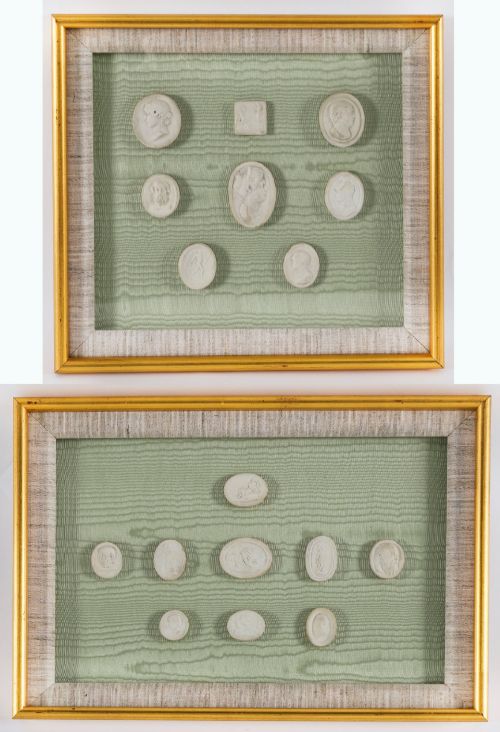
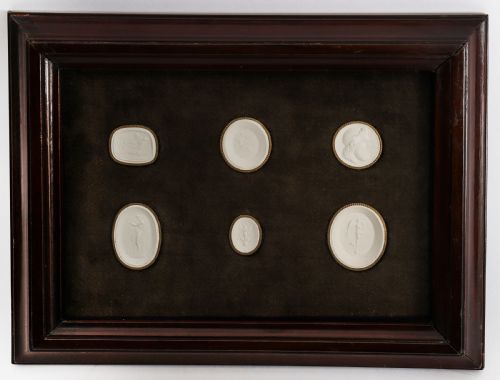
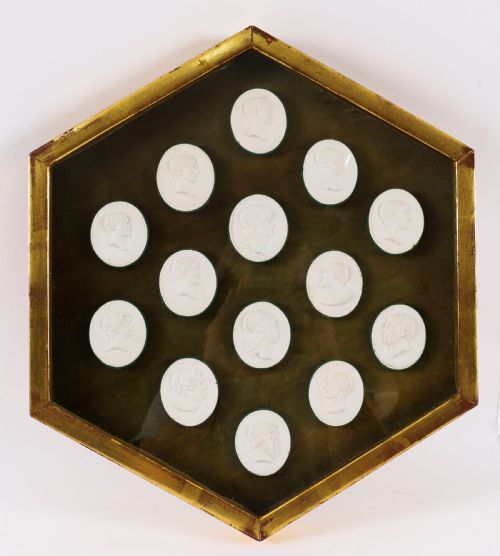
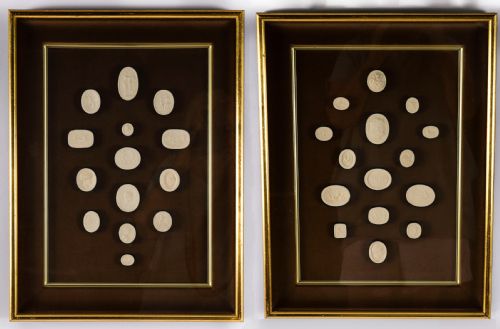
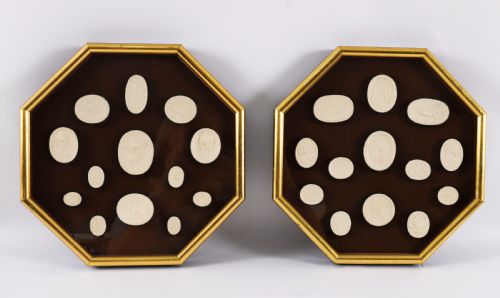
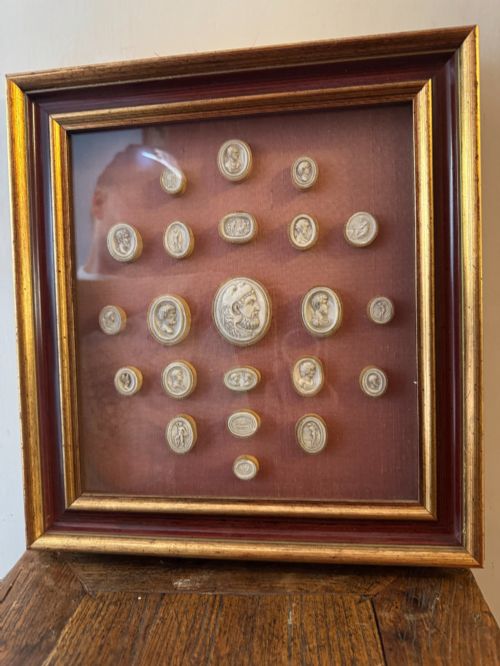
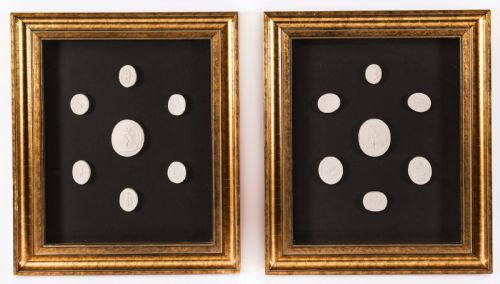
When you search for antique plaster cameos, you encounter miniature relief carvings collected by travellers during the Grand Tour. Most examples on this page date from the nineteenth century, including pieces associated with the Edwardian period and the turn of the nineteenth century. These works frequently appear as framed wall art, decorative objects, and collections arranged within velvet-lined or giltwood frames.
The subjects draw heavily on classical antiquity, presenting mythological figures, historic portraits, and classical intaglios. Individual pieces range from single framed wall plaques to large collections containing dozens of individual medallions. You will find octagonal frames, box frames, and portrait miniatures representing this Neoclassical taste.
How they were made
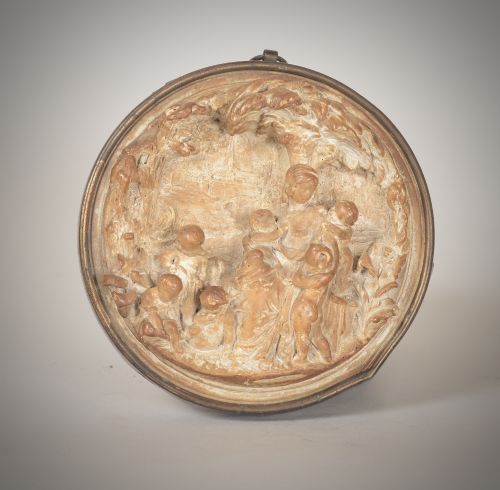
The makers formed these reliefs primarily from plaster and gypsum, often pouring the material into moulds taken from ancient gems and carved stones. Some pieces utilise pressed white glass paste to imitate carved stone, following methods similar to those used by James Tassie. Others employ bronzed plaster finishes to achieve the appearance of patinated metal.
Makers housed these fragile reliefs within wooden, fabric, and giltwood frames, frequently backing them in velvet. Gilt leaf highlights the moulded details of the frames, setting off the crisp white or tinted plaster within.
Travellers brought home hundreds of tiny plaster gods in velvet boxes, proving that ancient souvenir shopping differs very little from our own.
What varies in quality
The presentation within the frame also dictates the tier of the piece. Skilfully arranged sets in giltwood or custom box frames with original velvet backing command greater attention than simple modern housings containing loose casts.
Giovanni Liberotti·Pietro Bracci
The Antique Plaster Cameos Glossary
- Cameo
- A method of carving where a design is raised above the background. In this context, it refers to miniature relief casts replicating such carvings.
- Intaglio
- A design incised into a material so that it can impress a seal, though the term also describes plaster casts taken from these sunken seals.
- Grand Tour
- An eighteenth and nineteenth-century educational trip across Europe undertaken by young gentry to collect art and antiquities.
- Gypsum
- A soft sulphate mineral used to create the fine plaster casts found in these framed collections.
- Glass paste
- A vitreous material melted and pressed into moulds to simulate carved gems or cameos.
Antique Plaster Cameos: Frequently Asked Questions
What are antique plaster cameos?
These pieces are small relief plaster casts replicating classical carved gems, produced mainly during the nineteenth century as souvenirs for travellers on the Grand Tour.
They capture mythological scenes and historical portraits in miniature form, preserved behind glass within decorative frames.
How were they used originally?
Travellers collected these plaster casts during their European tours to demonstrate their classical education and refined taste upon returning home. They served as portable museums and conversation pieces for wealthy drawing rooms.
Collectors arranged them in specialised cabinets or mounted them in custom frames to display upon library and study walls.
How should I hang framed cameos?
Select a spot away from direct sunlight and excessive moisture to protect the delicate plaster reliefs and fabric backings. Because many sets are heavy and feature giltwood or box frames, ensure you use secure wall fixings suited to the weight.
Group smaller framed intaglios together to recreate the traditional aesthetic of a nineteenth-century study wall.
How do I identify a Grand Tour piece?
Look for nineteenth-century framing styles, such as octagonal wooden borders, giltwood mouldings, and deep box frames lined with velvet. The subjects typically draw directly from classical sculpture, mythology, and Roman history.
Signatures or labels on the reverse sometimes point towards specific makers or workshops active in Rome during the period.