



19th Century Intaglios
These 19th century intaglios are classic Grand Tour souvenirs, offering miniature classical portraiture and mythology mounted for display.
What 19th century intaglios are
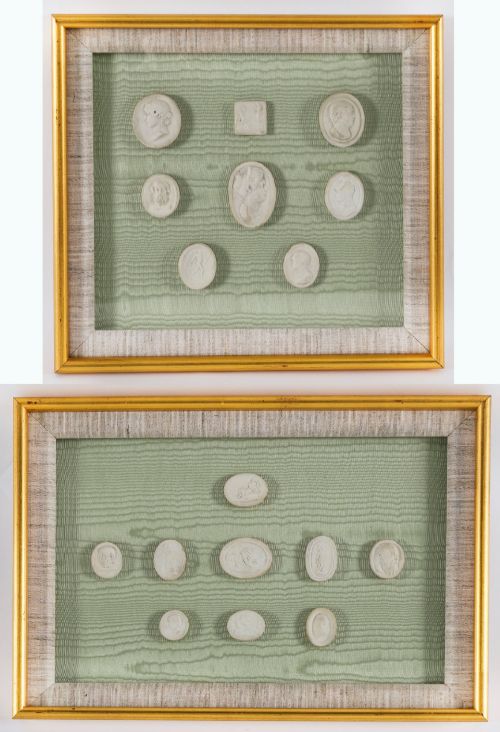
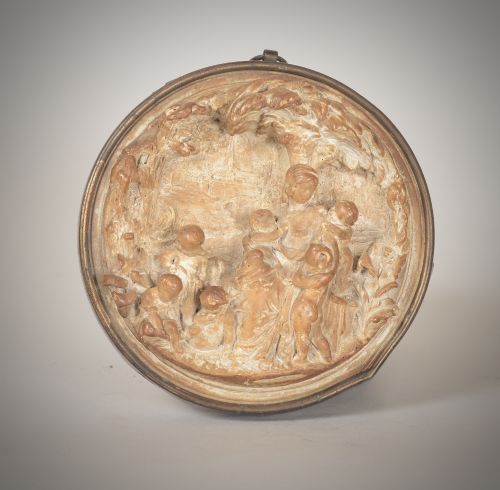
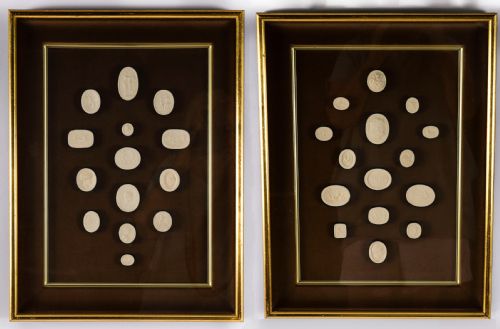
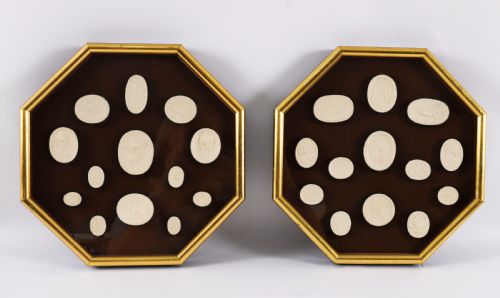
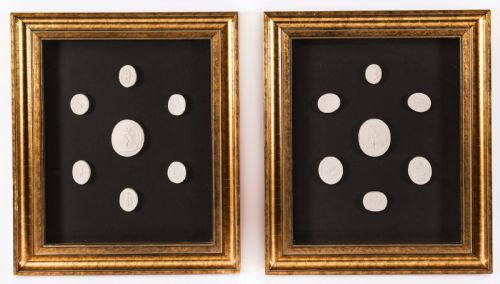
These pieces are 19th century intaglios created as souvenirs of the Grand Tour, capturing classical antiquity in miniature form. They take the shape of framed wall art, presenting individual impressions or extensive collections mounted together.
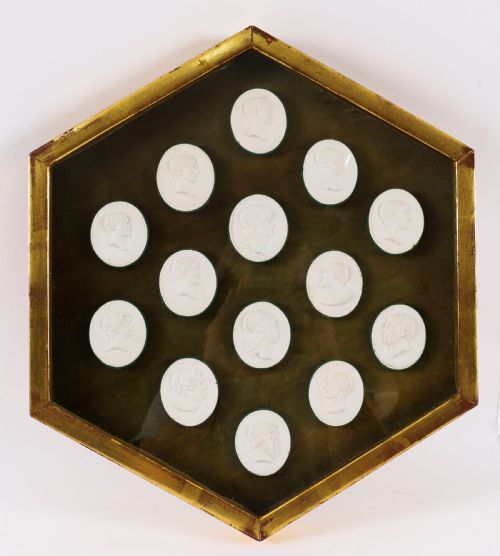
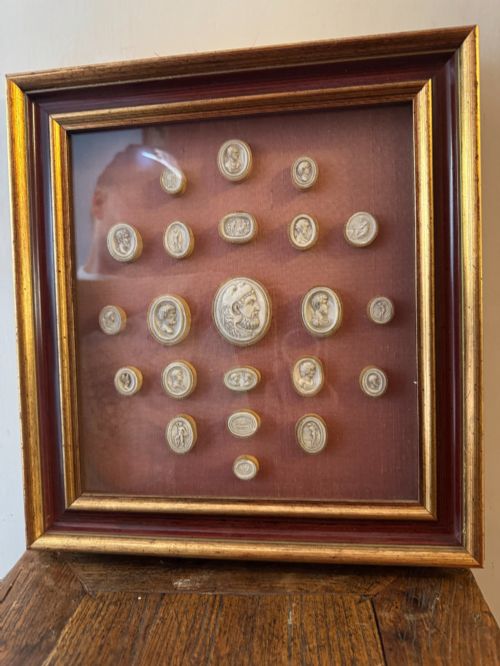
You will most frequently meet pairs and framed sets originating from Italy. They include gypsum and plaster impressions of portrait busts, kings, and classical figures arranged behind glass.
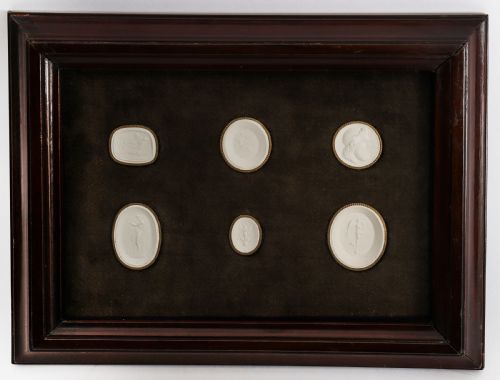
The format ranges from simple wooden frames to elaborate giltwood and box frames. Some incorporate velvet backgrounds to highlight the crisp white relief of the casts.
How they were made
The makers utilised plaster, gypsum, and glass to cast these detailed intaglio impressions from original carved gems. These casts are secured against textile backings, often rich velvet, which creates a striking visual contrast.
Frames are constructed from wood, finished with gold leaf or carved as giltwood, and occasionally housed in deep box frames. The presentation reflects the craftsmanship of Italian workshops catering to travelling collectors.
Retail Price Guide 2026
Typical UK retail prices for 19th century intaglios, calculated from the Sellingantiques database of over a million retail prices indexed since 2003. This retail price guide relies exclusively on Sellingantiques data; no external sources or auction records are used, so the figures do not describe the wider market.
Materials recorded across these listings include plaster, gypsum, glass, gold leaf, and velvet.
What varies in quality
Quality rests in the precision of the casting and the scale of the collection within the frame. Sets containing numerous portrait busts or kings demonstrate greater ambition than simple pairs.
The framing material elevates the piece, distinguishing standard wooden surrounds from deeply moulded giltwood frames. The depth of the box frame and the quality of the textile backing further determine the distinction of the work.
Giovanni Liberotti
The 19th Century Intaglios Glossary
- Intaglio
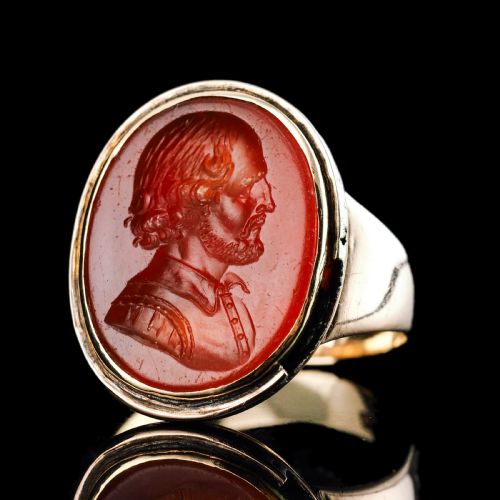
- A design carved into a material or cast in relief to mimic carved gems. These are predominantly plaster or gypsum impressions.
- Grand Tour
- The traditional travel of Europe undertaken by upper-class European young men of the 19th century. It resulted in the acquisition of art and antiquities.
- Giltwood
- Wood carved and then treated with gold leaf or gold paint. This technique frames many of the finest Italian plaster casts.
- Gypsum
- A soft sulphate mineral used to create crisp white plaster casts. It forms the primary material for the portrait intaglios.
Frequently Asked Questions
What are 19th century intaglios?
These pieces are plaster or glass impressions of classical gems and portrait busts, gathered by travellers on the Grand Tour.
They were mounted in frames as wall art to display classical knowledge and taste in a home.
How were they displayed originally?
Travellers housed them in custom wooden frames, often using giltwood or box frames to protect the delicate plaster casts.
Set against velvet backgrounds, these collections were hung in libraries and studies as conversation pieces.
How do I care for framed intaglios?
Keep them away from direct sunlight and moisture to protect the plaster casts and textile backgrounds.
Leave the glass sealed to prevent dust from settling on the delicate gypsum surfaces.
Are these pieces Italian in origin?
The majority originate from Italian workshops that produced souvenirs specifically for foreign travellers on the Grand Tour.
Local artisans cast these portrait busts of kings and classical figures to satisfy collector demand.