



Gilt Framed Intaglios
Gilt framed intaglios bring classical sculpture into domestic rooms inside bright wooden borders.
Gilt Framed Intaglios
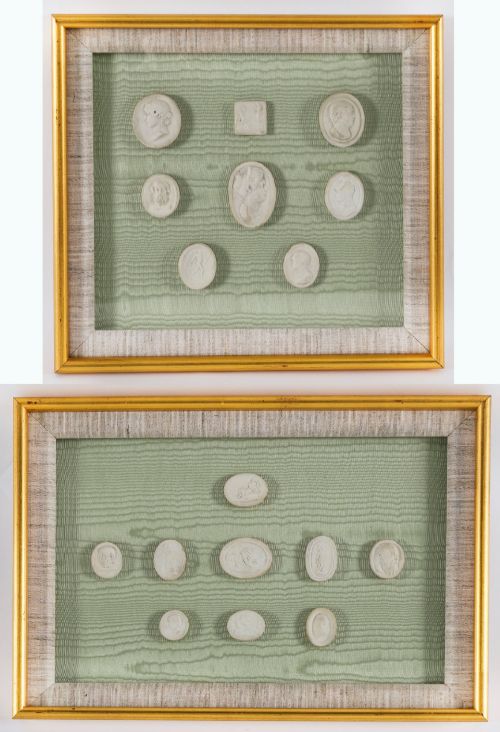
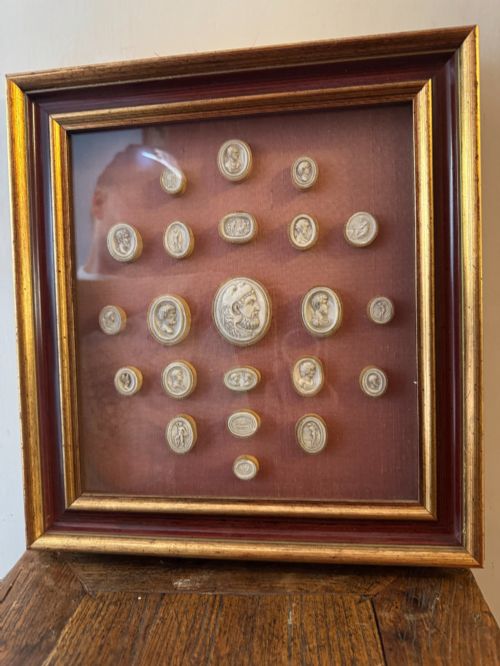
Gilt framed intaglios are decorative panels displaying collections of miniature casts modelled on ancient classical sculptures. Travellers on the Grand Tour gathered these souvenir medallions in Italy before mounting them for display back home.
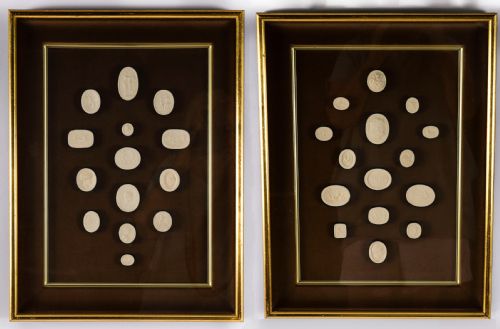
Buyers on this page encounter pieces originating principally from the nineteenth century, including Edwardian arrangements and items dated around eighteen hundred. These works appear as single panels or pairs, alongside larger sets containing numerous individual cameos.
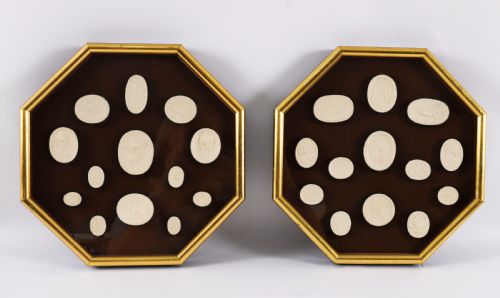
The objects combine classical subjects with period framing, usually taking the form of wall art designed to catch the light. Their presentation ranges from octagonal frames to box frames lined with velvet or fabric.
How they were made
The miniature medallions themselves are formed from plaster, gypsum, or glass, cast carefully from ancient originals. Makers poured these materials into moulds to capture fine details of classical profiles and mythological scenes.
Supports and mounts utilise wood finished with gold leaf, creating giltwood frames that contrast with the pale medallions. Interiors are frequently lined with velvet or fabric to cushion the casts and provide a dark background that highlights the plaster.
Workshops arranged the casts symmetrically inside the frames, securing multiple intaglios within a single glazed box. These assemblies required steady hands to align dozens of tiny medallions without damaging the soft plaster surfaces.
Gilt Framed Intaglios Retail Price Guide 2026
Typical asking prices for gilt framed intaglios among the pieces listed under this phrase on Sellingantiques today, from the lower quarter to the upper quarter. They describe what is for sale here now, not the wider market.
Listings feature plaster and glass intaglios set within giltwood and fabric-lined box frames from the nineteenth century.
What varies in quality
Frame construction also dictates the overall standard, separating simple mouldings from deep giltwood box frames finished in genuine gold leaf. The quality of the interior fabric lining and the orderly arrangement of large collections further influence the visual weight of the piece.
Giovanni Liberotti·Pietro Bracci
The Gilt Framed Intaglios Glossary
- Intaglio
- A design carved into a material or cast in relief to resemble a carved gem. These miniature casts imitate ancient engraved stones collected during the classical revival.
- Grand Tour
- An educational journey through Europe undertaken by young gentlemen during the eighteenth and nineteenth centuries. Travellers collected antiquities and plaster casts to prove their cultural refinement upon returning home.
- Giltwood
- Wood that has been coated with a thin layer of gold leaf or gilt paint. This technique brightens frames and protects the timber beneath.
- Gypsum
- A soft sulphate mineral used to create plaster casts. It sets into a fine-grained surface capable of capturing minute sculptural details.
- Cameo
- A method of carving where a relief image stands out distinctly from a contrasting background. In these collections, the technique is translated into cast medallions.
Gilt Framed Intaglios: Frequently Asked Questions
What are gilt framed intaglios?
These pieces consist of miniature plaster or glass casts modelled on classical sculptures and arranged inside decorative wooden frames. They were originally collected by travellers touring European antiquities.
Today they function as wall art, bringing neoclassical design and miniature sculptural detail into residential interiors.
How were they used historically?
Grand Tour travellers purchased these collections in Italy as portable cabinets of curiosity to display their classical learning. The framed panels hung in libraries and drawing rooms for guests to inspect.
They served as conversational pieces that demonstrated the owner's familiarity with ancient art and mythology.
How do I hang them safely?
Most pieces feature standard wall mounting hardware attached to wooden frames containing glazed plaster collections. Ensure the wall fixings match the weight of the timber and glass assembly.
Keep the panels away from direct sunlight and damp environments to protect the plaster casts and delicate velvet linings.
How do I date these pieces?
Dating relies upon the style of the giltwood frame, the type of fabric lining, and the construction methods visible on the reverse. Nineteenth-century examples often use specific moulding profiles and handwritten labels.
Comparing the arrangement style with known studio outputs helps narrow down the period of manufacture.