



Framed Plaster Medallions
Framed plaster medallions bring classical antiquity into domestic rooms through crisp white casts housed behind glass.
Framed Plaster Medallions
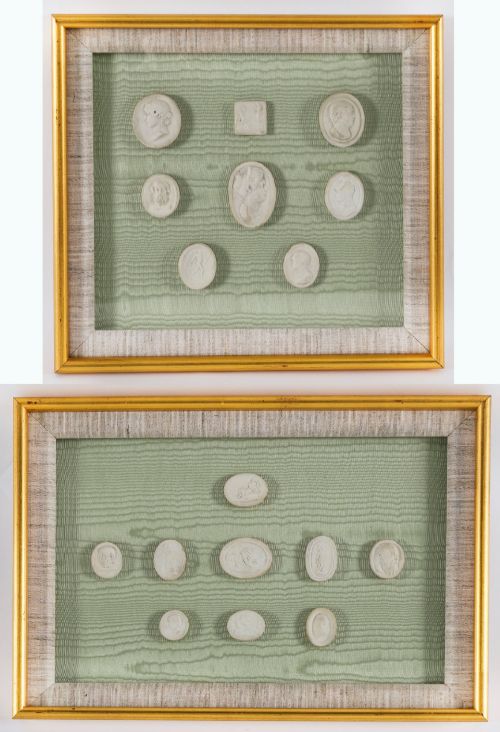
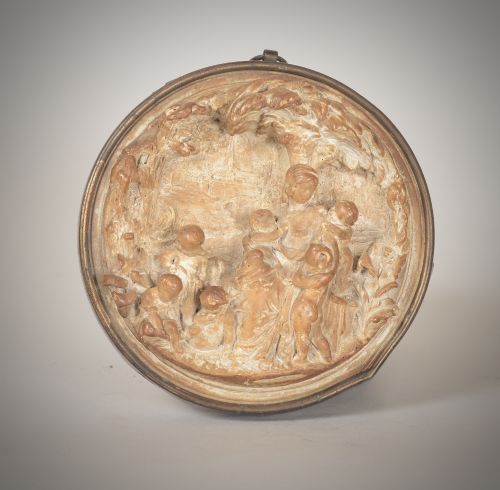
When you search for framed plaster medallions, you encounter wall art created as souvenirs of the Grand Tour. These pieces take the form of wall plaques, framed art, and portrait miniatures depicting classical subjects.
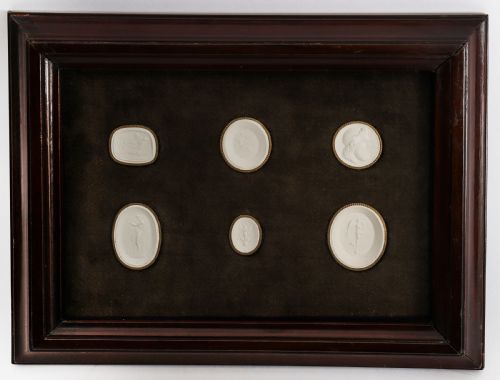
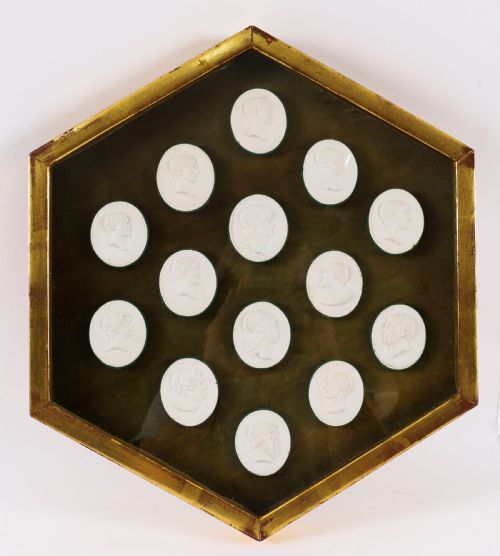
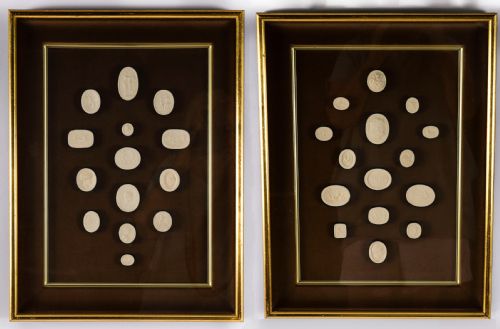
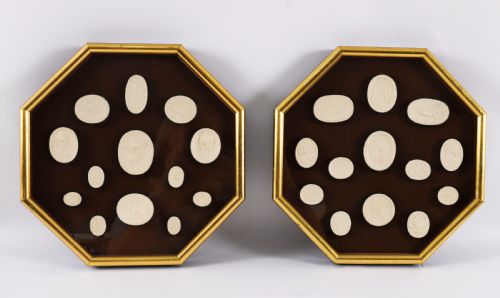
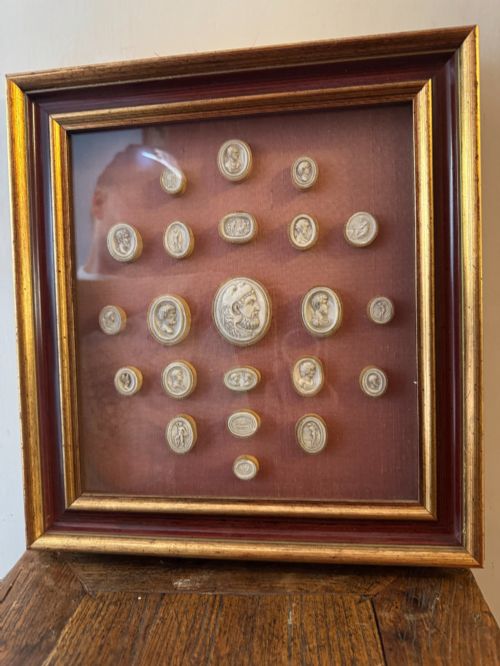
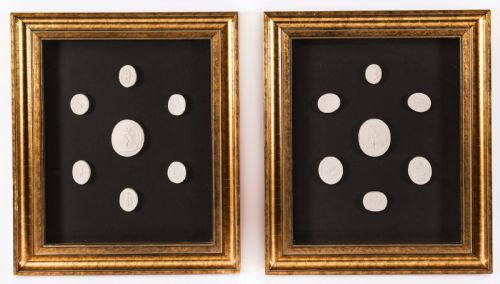
The examples on this page are predominantly nineteenth century productions, alongside items from the year 1800 and the Edwardian period. They frequently appear as pairs or larger collections arranged within gilt wood, velvet, and fabric lined frames.
How they were made
Makers formed the medallions using plaster and gypsum, capturing the fine detail of ancient cameos and intaglios. Pressed white glass paste also appears among these objects for similar relief work.
Craftsmen housed these delicate casts behind glass within wooden frames, often finished with gold leaf and giltwood. Backings of velvet and fabric provided a contrasting background to highlight the brilliant white plaster.
Listings feature items from the 19th Century, 1800, and the Edwardian period, utilising plaster, glass, and gilt wood.
What varies in quality
The standard of the casts determines the visual impact of the piece, with sharper impressions showing greater depth and clarity of the classical motifs. Superior examples maintain crisp edges on every individual plaster relief.
Framing also distinguishes the tier of an object, where proper giltwood and fitted velvet backings elevate the presentation. The arrangement of multi-item collections requires precise symmetry and secure mounting to succeed.
Giovanni Liberotti·Pietro Bracci
The Framed Plaster Medallions Glossary
- Grand Tour
- A traditional journey through continental Europe undertaken by upper-class young men to study art and antiquities. Souvenirs from these travels included plaster casts of famous sculptures and gems.
- Intaglio
- A gem or medallion carved in incuse so that the design dips below the surface. Plaster medallions often replicated these sunken carvings in positive relief.
- Cameo
- A method of carving an object such as a gemstone or medallion with a raised relief image. The technique creates a distinct contrast between the subject and the background.
- Giltwood
- Wood that has been treated with gold leaf or gold paint to give a metallic sheen. Frames utilising this finish were common for displaying classical plaster casts.
Framed Plaster Medallions: Frequently Asked Questions
What are framed plaster medallions?
These pieces are decorative wall art containing white plaster casts of classical cameos and intaglios. They were collected during European travels and brought home to decorate domestic interiors.
The selections on this page span the nineteenth century and the Edwardian era, usually presented behind glass within tailored wooden frames.
How were they used historically?
Grand tourists used these collections to demonstrate their classical education and cultured tastes to visitors at home. Displayed on walls, the arrangements served as miniature galleries of ancient sculpture.
Makers grouped multiple casts together in symmetrical panels or box frames to create dense, scholarly displays.
How should I live with them?
Hang these framed artworks away from direct sunlight to protect the interior fabrics and delicate plaster from discolouration. Because the casts sit behind glass, they remain well protected from household dust.
Pair them with traditional or neoclassical interiors where their monochrome palette and gilt frames can complement period furnishings.
How do I tell periods apart?
Nineteenth century pieces often feature elaborate giltwood framing and large collections of uniform plaster casts. Edwardian examples tend to show refined, decorative arrangements with precise modern backing materials.
Pieces originating around 1800 display the earlier Neoclassical taste, focusing on individual portrait miniatures or smaller groupings.