



Neoclassical Plaster Cameos
Neoclassical plaster cameos bring the classical sculpture of the Grand Tour straight to your walls in miniature relief.
Neoclassical Plaster Cameos
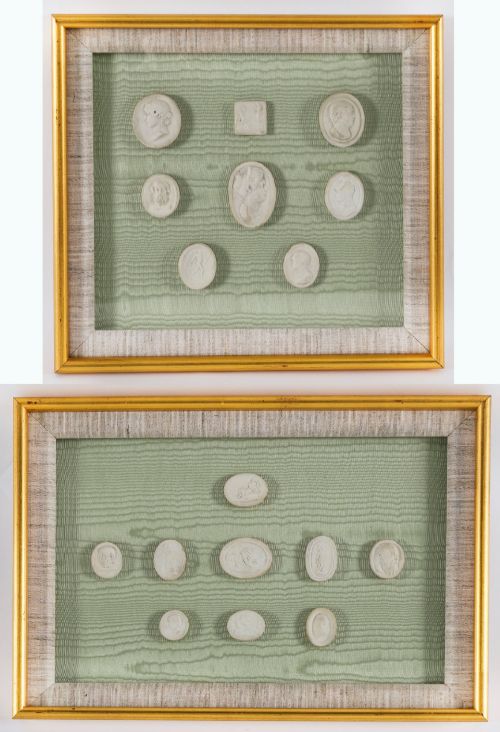
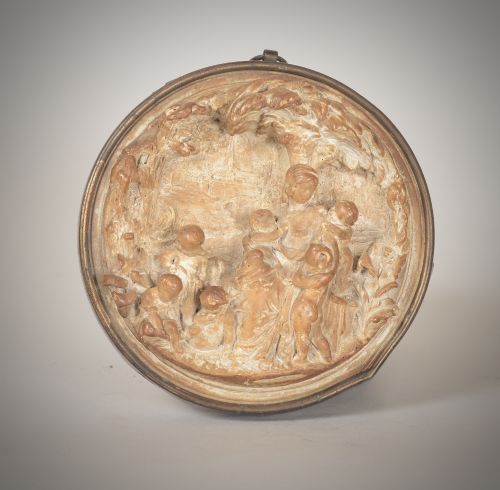
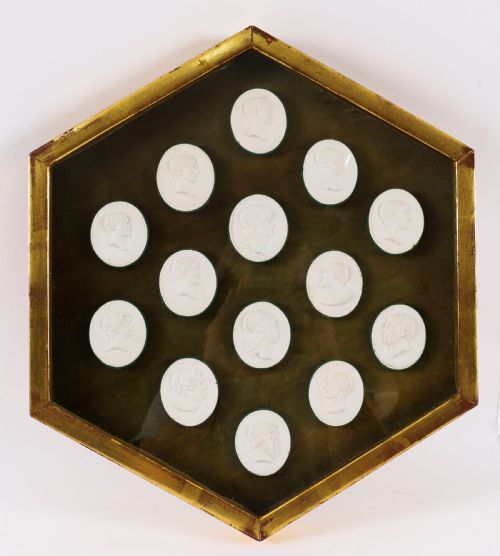
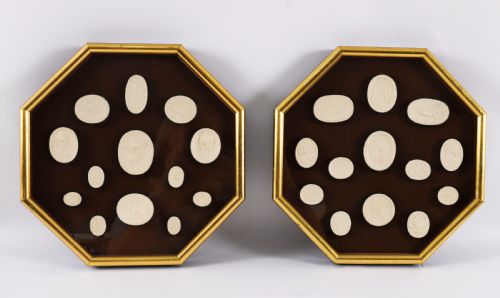
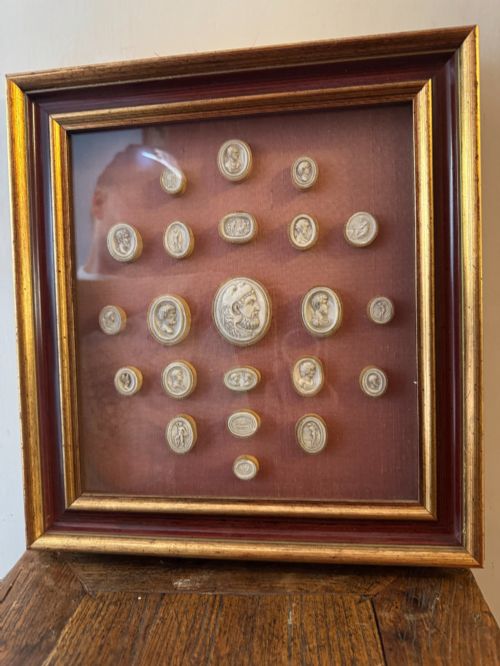
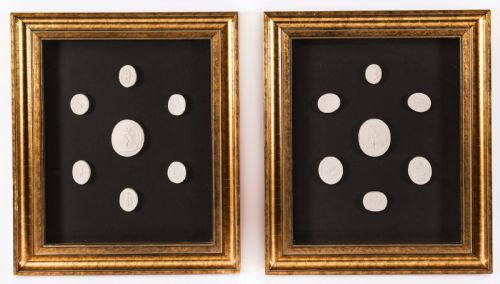
Neoclassical plaster cameos are miniature sculptural reliefs modeled after classical antiquities, designed to capture the elegance of ancient sculpture for domestic display. When you search for neoclassical plaster cameos, you encounter framed collections, single wall plaques, and paired panels that preserve classical profiles and mythological scenes.
The pieces on this page stem primarily from the nineteenth century, including Grand Tour collections and Edwardian arrangements. You find framed sets containing numerous individual casts alongside single framed artworks and portrait miniatures.
Makers such as Giovanni Liberotti and Pietro Bracci appear in the evidence, creating sets that range from small pairs to extensive collections of thirty-five intaglios. These objects reflect the nineteenth-century passion for classical antiquity and the travels of the Grand Tour.
Materials and construction
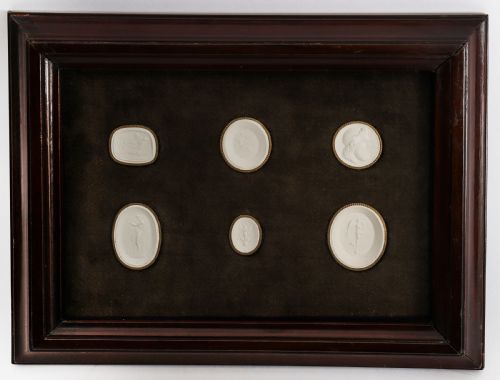
These works utilise plaster, gypsum, and pressed white glass paste to render crisp details of classical subjects. The casts are set against backgrounds of velvet or fabric within frames of gilt wood, giltwood, and plain wood.
Makers mount the individual intaglios and cameos into bespoke frames, sometimes utilising gold leaf to finish the giltwood mouldings. The arrangement relies on careful composition, pinning or gluing each plaster cast onto a fabric backing to form a cohesive wall panel.
Listings feature nineteenth-century plaster and glass casts set in giltwood frames, including works by Giovanni Liberotti.
Quality and execution
The mounting and framing elevate the presentation significantly. Fine sets feature harmonious groupings within gilded wood frames and well-preserved velvet or fabric backings, while simpler pieces lack the same precision in arrangement.
Giovanni Liberotti·Pietro Bracci
The Neoclassical Plaster Cameos Glossary
- Cameo
- A method of carving or casting a figure in relief so that it projects from a background. In these listings, the technique renders classical profiles in white plaster.
- Intaglio
- A design engraved or cast into a material so that the impression sinks below the surface. Grand Tour examples translate ancient gems into plaster casts.
- Grand Tour
- The eighteenth and nineteenth-century custom of a traditional trip through Europe undertaken by upper-class young European men. It resulted in travellers collecting plaster casts and intaglios as souvenirs.
- Plaster cast
- A copy of a sculpture or relief made by pouring plaster into a mould. These form the primary medium for the neoclassical panels seen here.
- Portrait miniature
- A small painted, carved, or cast likeness of a person. The evidence includes pressed white glass paste examples in this intimate format.
Neoclassical Plaster Cameos: Frequently Asked Questions
How were these pieces used?
Travellers on the Grand Tour collected these plaster casts as portable reminders of classical sculpture and ancient history seen abroad. Upon returning home, owners arranged them in bespoke frames to hang on library or drawing room walls.
They served as conversational pieces that demonstrated classical learning and refined artistic taste.
How do I date these framed collections?
Dating relies on the style of the framing, the materials used for the backing such as velvet or fabric, and any inscribed attribution to makers like Giovanni Liberotti or Pietro Bracci. Most pieces on this page date from the nineteenth century and the Edwardian period.
Examining the wear on the giltwood frames and the paper labels on the reverse also helps establish the era of assembly.
How should I hang plaster cameos?
These framed artworks require stable interior walls away from direct sunlight and damp conditions to protect the delicate plaster casts and fabric backgrounds. Secure picture hooks appropriate for the weight of gilt wood frames ensure safe suspension.
Grouping pairs or larger sets together recreates the traditional nineteenth-century wall display style.