



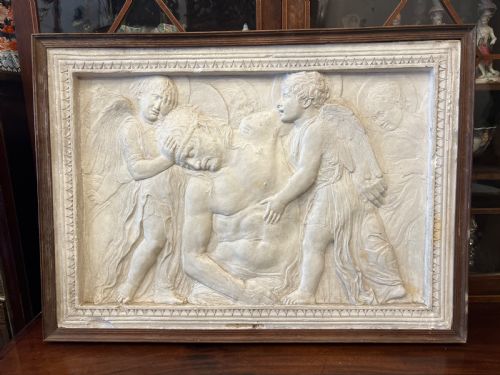
Framed Plaster Casts
Framed plaster casts bring classical sculpture and relief carving into domestic interiors with crisp detail and miniature scale.
Framed Plaster Casts
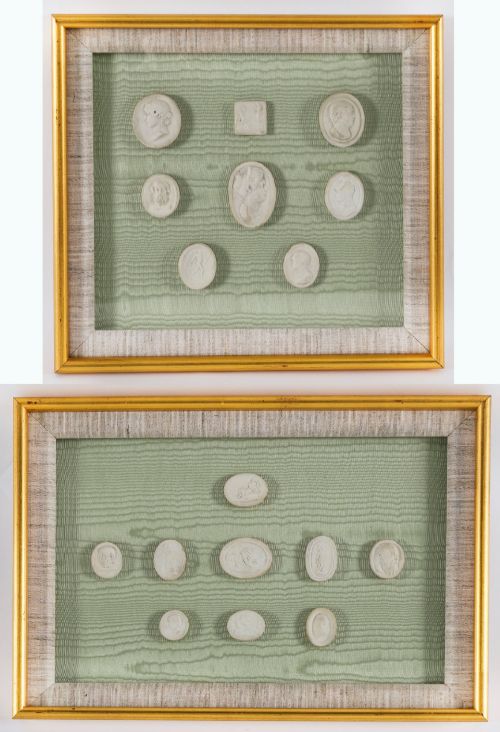
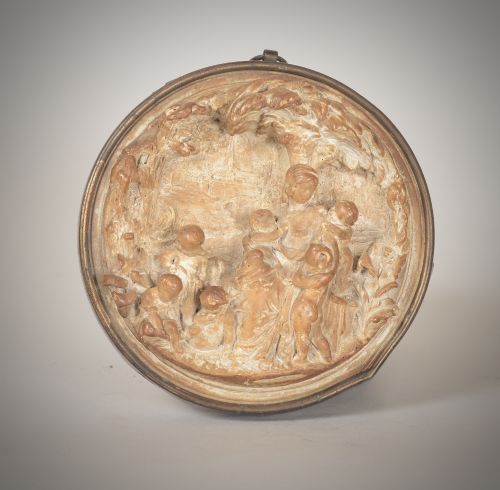
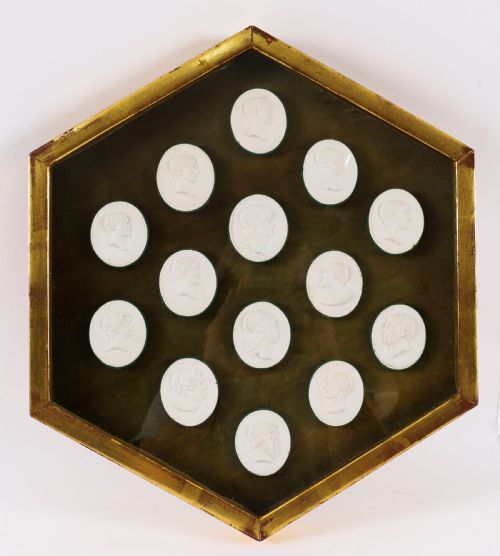
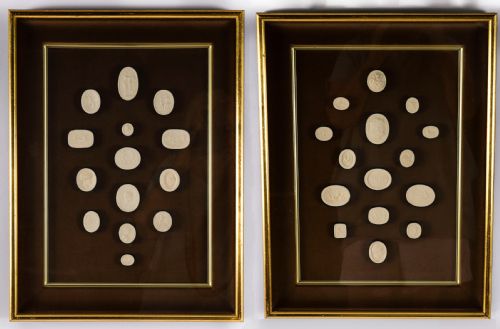
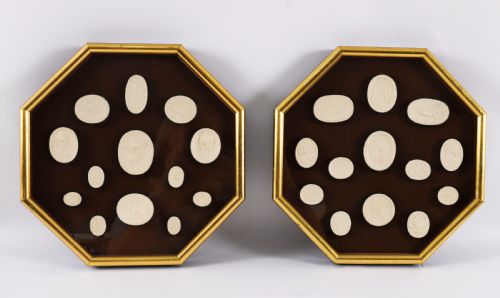
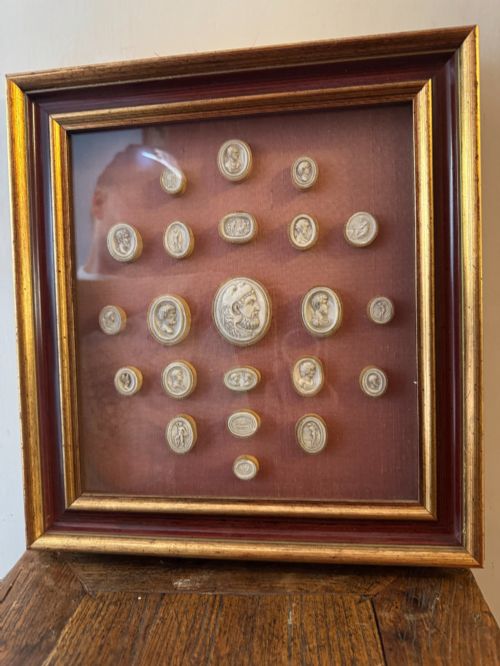
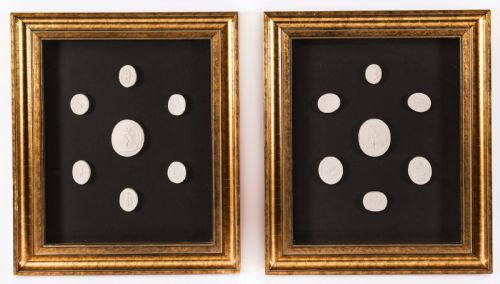
These framed plaster casts encompass classical cameo intaglios, relief panels, and medallions created during the nineteenth century and the Edwardian period. Collectors encounter single wall plaques alongside large collections arranged together in box frames.
Grand Tour subjects dominate the selection, referencing ancient Greek and Roman sculpture as well as Renaissance masterpieces such as Donatello. Italian origins and Neoclassical or Renaissance Revival styles appear frequently across the wall art and decorative objects.
The objects function primarily as wall art, capturing the appearance of carved stone and shell in crisp white or tinted plaster. They serve as tactile records of continental travel and classical scholarship from earlier centuries.
How they were made
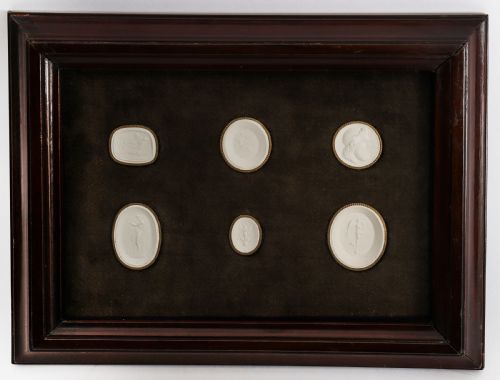
Makers cast gypsum plaster into moulds taken from antique carved gems, intaglios, and larger reliefs. The resulting white casts are set against backgrounds of velvet, fabric, or wood to provide contrast.
Presentation relies heavily on gilt wood, giltwood, and gold leaf frames, sometimes glazed with glass to protect the fragile plaster surface. Box frames create deep recesses that accommodate multi-item collections and individual medallions alike.
Framed Plaster Casts Retail Price Guide 2026
Typical asking prices for framed plaster casts among the pieces listed under this phrase on Sellingantiques today, from the lower quarter to the upper quarter. They describe what is for sale here now, not the wider market.
Early collectors needed thirty-five separate casts just to prove they had seen all the best bits of Rome without getting dust on their waistcoats.
What varies in quality
The setting contributes significantly to the overall standard, distinguishing simple timber surrounds from elaborate giltwood frames and carefully arranged velvet-backed display boxes.
Giovanni Liberotti·Pietro Bracci
The Framed Plaster Casts Glossary
- Intaglio
- A design carved into a material so that the impression sits below the surface. Plaster casts of intaglios reverse this process to show a raised relief.
- Cameo
- A method of carving where the subject is raised in relief against a contrasting background. Plaster versions imitate carved hardstones and shells.
- Grand Tour
- A traditional trip through Europe undertaken by upper-class young men in the eighteenth and nineteenth centuries to study art and antiquity. Travellers collected miniature plaster casts as portable souvenirs of famous sculptures.
- Gypsum
- A soft sulphate mineral used to create plaster of Paris. It sets hard when mixed with water and captures fine details from moulds.
Framed Plaster Casts: Frequently Asked Questions
What are framed plaster casts?
Framed plaster casts are nineteenth-century and Edwardian reproductions of classical intaglios, cameos, and reliefs, mounted behind glass for display.
They originated largely as Grand Tour souvenirs, allowing travellers to bring miniature copies of ancient sculpture and Renaissance art back home.
How should I hang them?
Hang these framed works on interior walls away from direct sunlight and damp conditions to protect the delicate plaster and fabric backgrounds.
Because many pieces feature heavy giltwood frames or deep box settings, use secure wall fixings suited to the weight of the specific item.
How do I date a piece?
Dating relies on examining the framing materials, backing fabrics, and the style of the handwritten or printed labels often found on the reverse.
Nineteenth-century examples frequently show specific Grand Tour mounting styles, whilst Edwardian interpretations employ slightly different paper linings and frame construction.
Why are some sets arranged in boxes?
Box framing protects multiple small intaglios or medallions within a single glazed case while keeping them visible as a unified collection.
This method mirrors the way nineteenth-century collectors stored loose cabinet gems, adapting them for vertical display on walls.