



Framed Portrait Medallions
Framed portrait medallions bring historical likenesses into domestic rooms, offering miniature likenesses in glass, wax, plaster, and bronze.
Framed Portrait Medallions
Framed portrait medallions capture historical and personal likenesses in wall plaques, reliefs, and miniature formats. When searching for framed portrait medallions, buyers encounter pieces spanning from the seventeenth century through the nineteenth century, reflecting periods such as the Regency and Victorian eras.
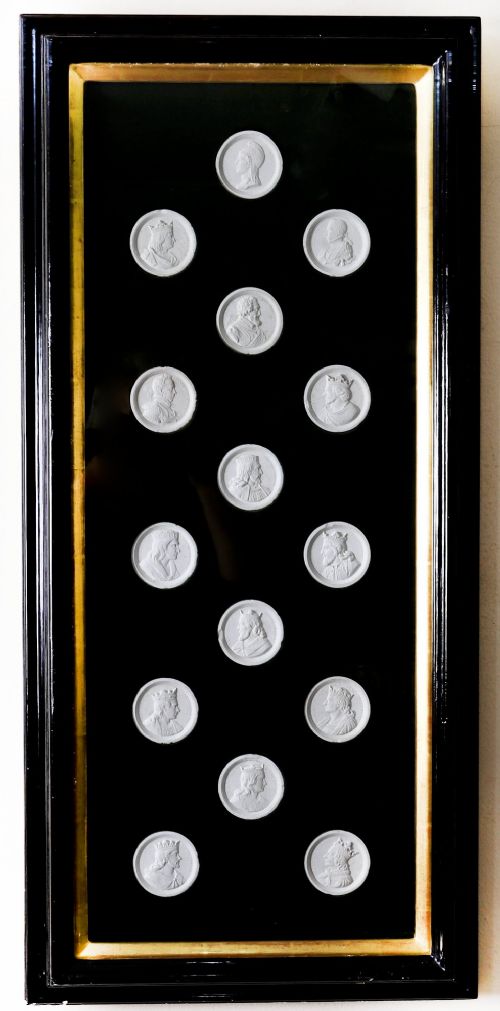
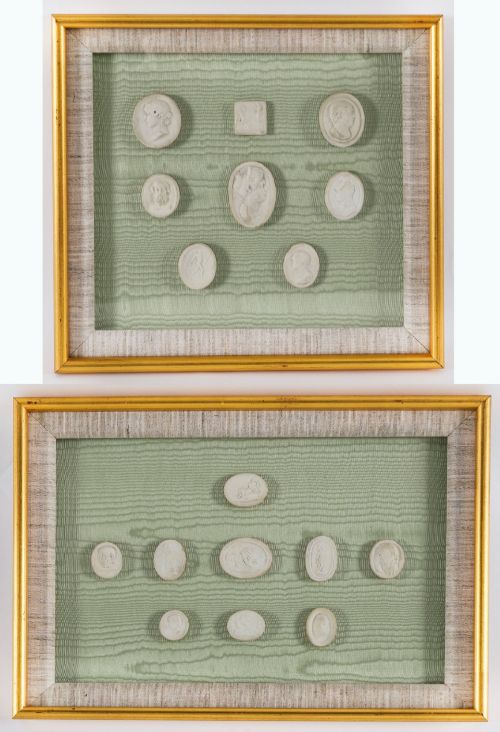
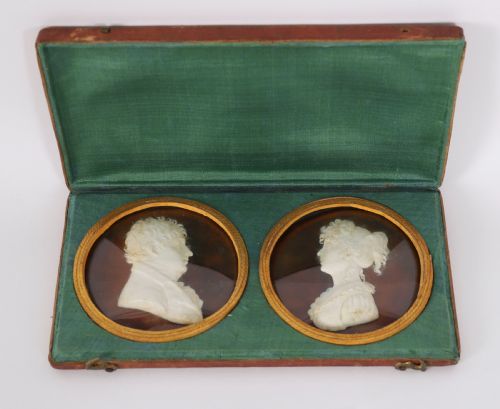
The objects take several forms, including Grand Tour plaster intaglios, carved marble cameos, pressed white glass paste cameos, and wax portrait reliefs. Many examples are housed within original wood, brass, or ormolu frames suited for wall display.
Origins vary across Britain, France, Italy, and Germany, encompassing styles from Neoclassical and Georgian to French Historicism. Buyers are most likely to meet nineteenth-century interpretations alongside eighteenth-century souvenirs and plaques.
How they were made
Materials span delicate mediums such as wax, glass, plaster, enamel, and porcelain, alongside heavier metals including bronze, brass, gold, and lead. These components are shaped into relief plaques, painted panels, and stained glass.
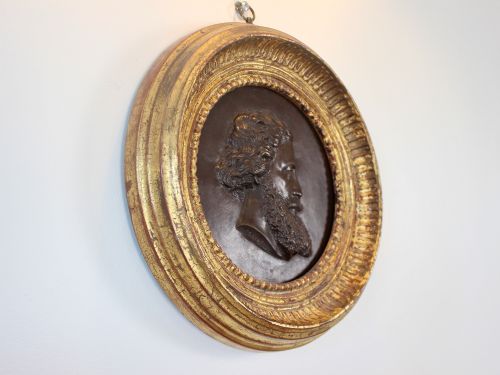
Frames utilise wood, mahogany, brass, and ormolu to house the portraits securely. Techniques range from cast bronzing and hand-painting on agate to detailed carving in marble and wax.
Framed Portrait Medallions Retail Price Guide 2026
Typical asking prices for framed portrait medallions among the pieces listed under this phrase on Sellingantiques today, from the lower quarter to the upper quarter. They describe what is for sale here now, not the wider market.
A Captain Richard Hamilton rubs shoulders with Charles Dickens and Napoleon, proving history is merely a very crowded mantelpiece.
What varies in quality
The selection of framing materials significantly impacts the overall character, with original turned mahogany, ormolu, and matched brass mounts elevating the piece. The distinction between mass-produced souvenirs and masterwork portrait miniatures lies in the precision of the hand execution.
MAINFROY·Wedgwood·Henry Pierce Bone
The Framed Portrait Medallions Glossary
- Intaglio
- A design carved into a material so that the impression sits below the surface, commonly seen in plaster and glass paste. These were often collected during the Grand Tour.
- Cameo
- A method of carving where the subject is raised in relief against a contrasting background. Examples include carved marble and pressed glass paste.
- Grand Tour
- A traditional trip through Europe undertaken by upper-class young men in the eighteenth and nineteenth centuries. Souvenirs included plaster intaglios and marble relief portraits.
- Jasperware
- A type of pottery developed by Wedgwood featuring a fine-grained stoneware body. It frequently appears as neo-classical cameos set within frames.
Framed Portrait Medallions: Frequently Asked Questions
What periods do these medallions cover?
The available pieces span from the seventeenth century through the eighteenth and nineteenth centuries, including Regency and Victorian eras.
Styles range from seventeenth-century Baroque and Georgian Neoclassical to French Historicism and nineteenth-century classical designs.
What materials were used for the portraits?
Portraits are fashioned from a diverse range of materials including glass, wood, brass, enamel, plaster, textile, wax, and bronze. Some feature painted agate panels or porcelain.
Frames incorporate materials such as turned mahogany, brass, and ormolu to complement the central portrait relief.
How were these pieces originally displayed?
These items function primarily as wall art, wall plaques, and wall decor, designed to be hung directly in domestic interiors. Many originated as souvenirs from European travels or commemorative sets.
Pairs and matched sets, such as collections of Grand Tour busts or royal portraits, were often arranged together on drawing room walls.
How do I identify Grand Tour pieces?
Grand Tour medallions typically feature classical subjects, Roman emperors, or mythological figures rendered in carved marble, wax relief, or plaster intaglios. They date predominantly from the eighteenth and nineteenth centuries.
These souvenirs reflect the classical education and travel habits of the period, often retaining their original period frames.