



Plaster Intaglio Medallions
Plaster intaglio medallions offer miniature neoclassical classical relief sculpture, prized by collectors for bringing Grand Tour sculpture history directly to interior walls.
Plaster Intaglio Medallions
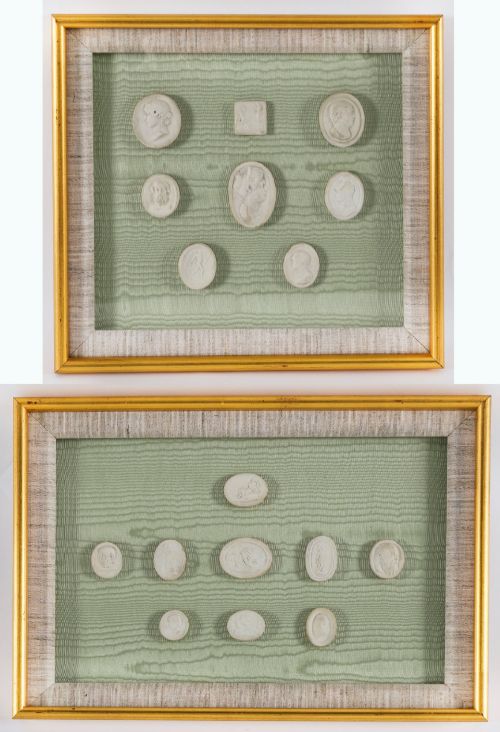
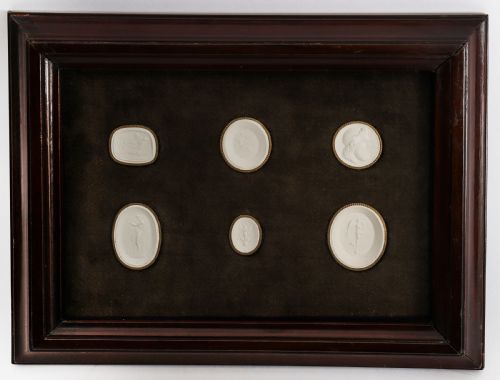
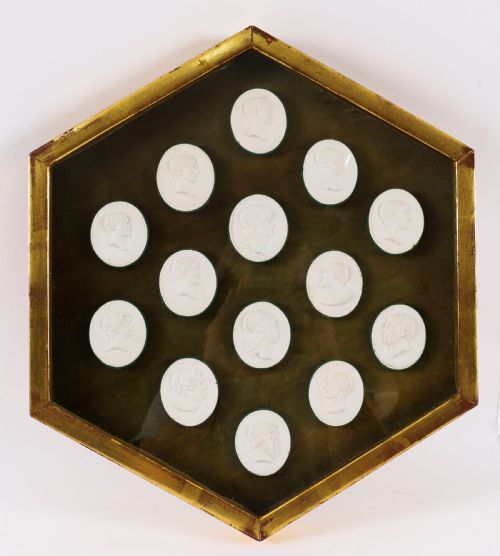
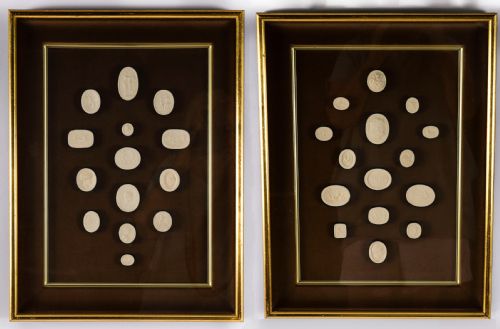
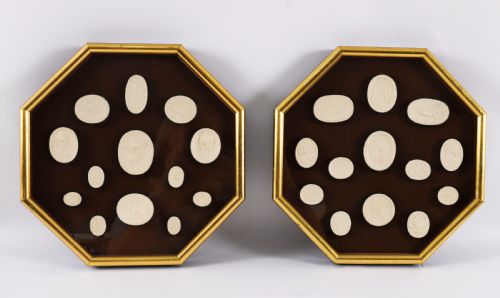
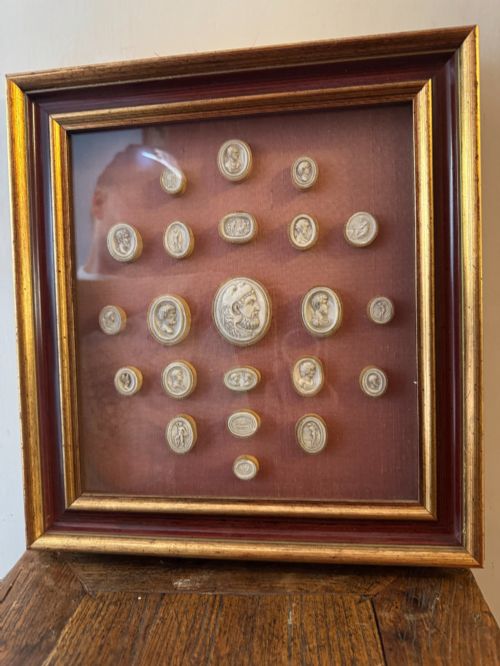
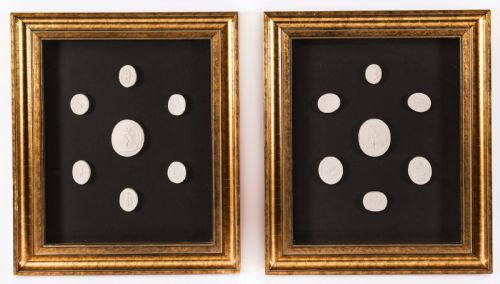
Plaster intaglio medallions represent miniature classical sculpture arranged within frames, capturing the aesthetic spirit of the Grand Tour during the nineteenth century and around eighteen hundred. Collectors search for plaster intaglio medallions to acquire framed collections of relief portraits and mythological scenes originally gathered by travellers in Italy. These pieces frequently appear as pairs or larger sets housed behind glass within gilt wood, giltwood, or velvet-lined boxes.
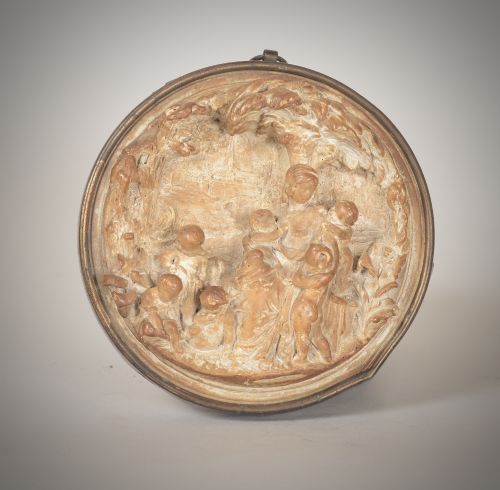
The objects on this page span the nineteenth century, Edwardian era, and the year eighteen hundred, reflecting Georgian neoclassical tastes. Forms range from single framed wall plaques and portrait miniatures to extensive sets numbering up to thirty-five distinct casts. Buyers most commonly meet nineteenth-century Italian octagonal or box-framed arrangements featuring classical subjects.
Materials and construction
Plaster intaglio medallions are cast primarily from gypsum or fine plaster to achieve sharp relief details that mimic ancient carved gems. Makers set these white plaster casts against dark velvet or fabric backgrounds inside wooden frames, sometimes accented with gold leaf or giltwood. Certain pieces utilise pressed white glass paste rather than plaster, reflecting alternative casting techniques of the period.
Presentation mounts often involve specialised box framing that protects the delicate relief surfaces while displaying the collection as cohesive wall art. The combination of bright white plaster against deep fabric backdrops creates high visual contrast suited for small-scale classical portraits.
Travellers packed thirty-five miniature plaster gods into portable boxes just to prove they visited Italy.
Factors of quality
Quality in plaster intaglio medallions rests on the crispness of the cast and the precision of the arrangement within the frame. Sets signed or attributed to known makers such as Giovanni Liberotti or Pietro Bracci command greater attention due to their documented provenance and superior finishing. The harmony of the composition, particularly in large sets of multiple intaglios, distinguishes standard decorative plaques from finer cabinet pieces.
The enclosing frame also dictates the overall standard, with original giltwood, octagonal moulding, and well-preserved velvet linings elevating the piece. Uniformity in the plaster casts and the absence of surface degradation across the entire collection indicate careful historical preservation.
Giovanni Liberotti·Pietro Bracci
The Plaster Intaglio Medallions Glossary
- Intaglio
- A design carved into a material so that the impression sits below the surface, though in these collections the term describes positive relief casts taken from such moulds. These miniature reliefs depict classical figures and historical profiles.
- Grand Tour
- An extended journey through Europe, particularly Italy, undertaken by wealthy young men during the eighteenth and nineteenth centuries to study classical art. Travellers collected plaster casts and intaglios as portable souvenirs.
- Neo-classical
- A style spanning the late eighteenth and nineteenth centuries that revived the aesthetic forms of ancient Greece and Rome. This movement heavily influenced the subject matter of these framed medallions.
- Glass paste
- A vitreous material melted and pressed into moulds to imitate carved gemstones or cameos. This technique produced crisp white portrait profiles found in Georgian framed artwork.
- Giltwood
- Wood carved and coated with a thin layer of gold leaf or gold paint. Frames utilising this finish house many of the classical medallion collections.
Plaster Intaglio Medallions: Frequently Asked Questions
What are plaster intaglio medallions?
Plaster intaglio medallions are miniature relief casts depicting classical subjects, typically mounted on velvet and displayed in glazed wooden frames.
Created during the eighteenth and nineteenth centuries, these groupings served as portable galleries for collectors influenced by classical antiquity and the Grand Tour.
How were these medallions displayed originally?
Travellers and collectors originally housed these plaster casts in custom wooden boxes, pocket cases, or wall frames lined with fabric.
Arranging multiple casts together allowed owners to study and exhibit entire sequences of classical sculpture and portraiture in domestic interiors.
How do I care for framed plaster art?
Framed plaster pieces require stable indoor humidity and protection from direct sunlight to preserve the delicate plaster surfaces and fabric backings.
Because the casts are sealed behind glass in frames, cleaning is limited to dusting the exterior woodwork rather than touching the plaster directly.
How can I tell nineteenth century pieces apart?
Nineteenth-century pieces are identified through frame construction styles, mounting fabrics, and specific casting techniques characteristic of the period. Signed works attributed to makers like Giovanni Liberotti provide clear chronological markers.