



Antique Cameo Medallion
These antique cameo medallion pieces bring classical mythology and history straight to your wall, offering miniature sculptural relief collected across Europe.
Antique Cameo Medallion
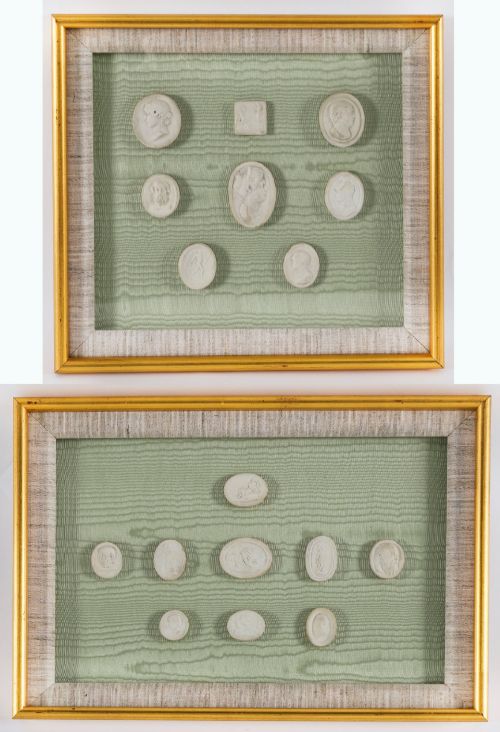
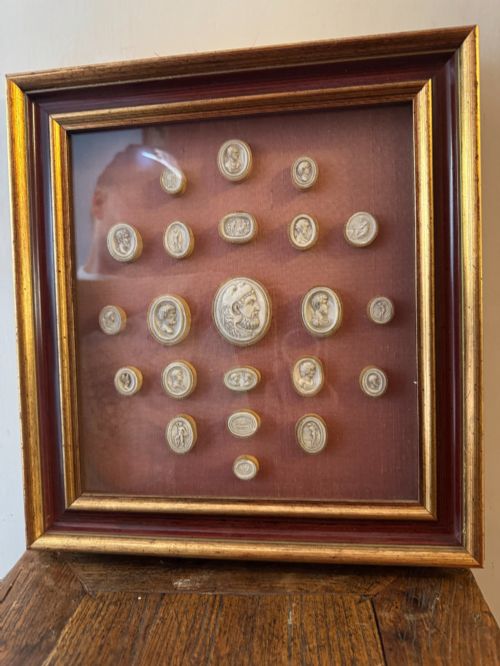
When you search for an antique cameo medallion, you encounter framed groupings and single panels of classical relief work. These objects stem largely from the eighteenth and nineteenth centuries, often gathered as souvenirs of the Grand Tour.
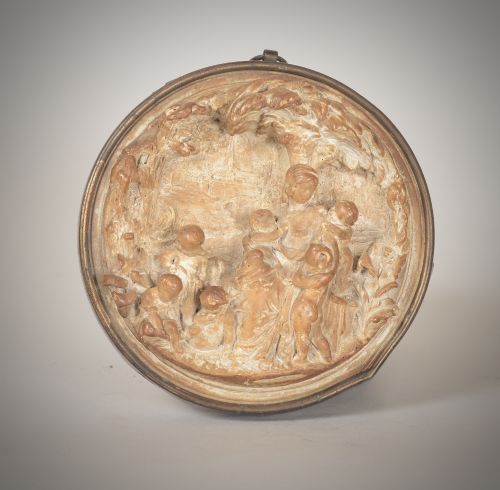
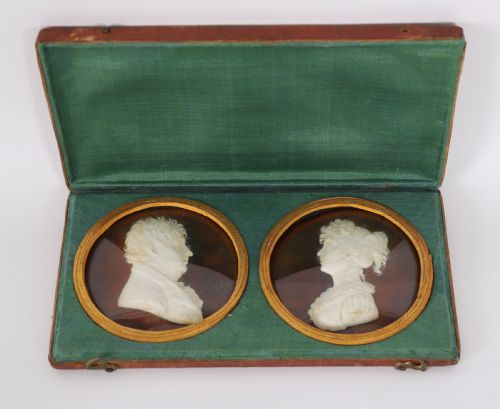
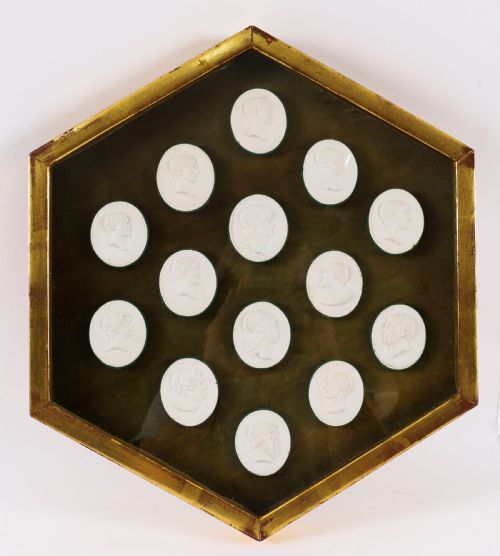
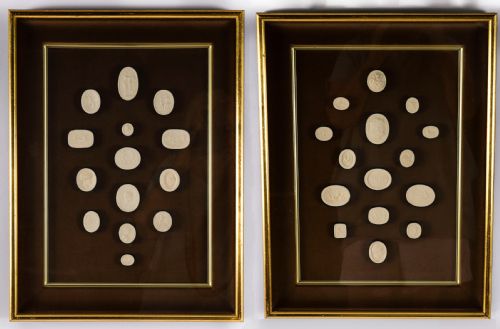
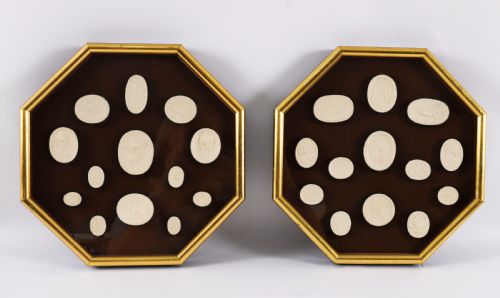
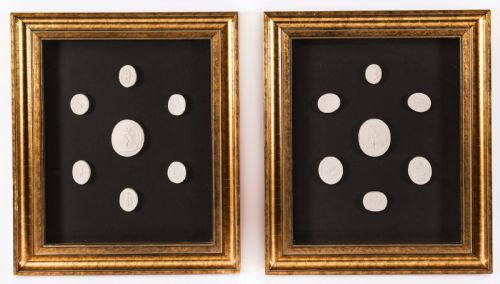
The pieces on this page appear predominantly as framed collections, pairs of plaster casts, and individual carved plaques. You will find gypsum, plaster, glass paste, and marble panels set behind glass in wooden or giltwood frames.
Originating as portable studies of antique sculpture, these framed arrangements serve primarily as decorative wall art today. They bring classical proportion and quiet monochrome detail to an interior.
How they were made
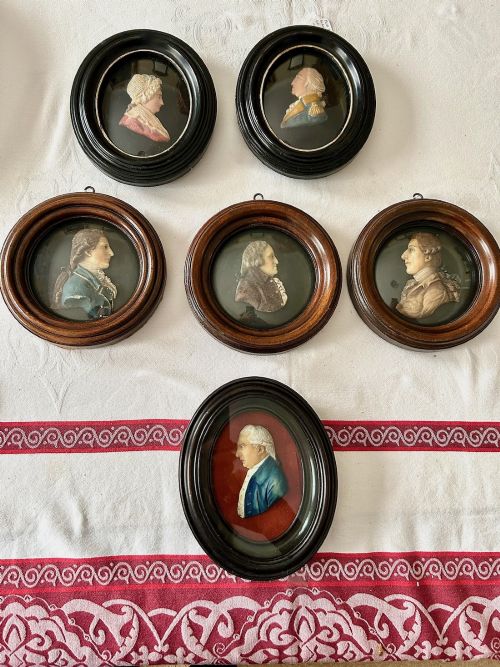
Plaster, gypsum, and wax form the substance of the multi-piece collections, cast from ancient and Renaissance gems. Makers poured these mediums into moulds to capture fine profile details of Roman emperors and mythological figures.
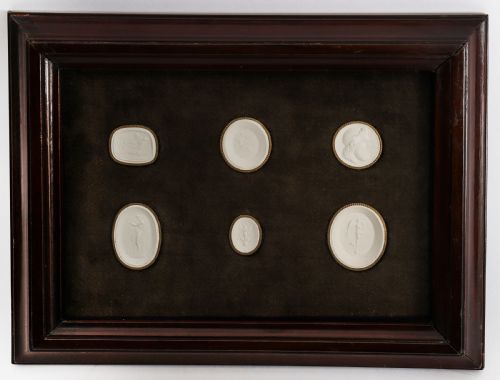
Carved marble, pressed glass paste, and enamel provide the materials for singular plaques and pendants. Artisans worked stone and heated paste with precision, mounting the pale reliefs against contrasting velvet or fabric backdrops inside wood and giltwood frames.
Listings feature plaster, glass, velvet, wood, and gilt wood across nineteenth-century and eighteenth-century objects.
What varies in quality
The clarity of the cast or carving dictates the visual strength of each medallion. Sharp contours on profile noses and drapery separate superior studio work from softer, worn secondary castings.
Presentation matters entirely in these pieces, particularly the harmony between the relief, the velvet backing, and the giltwood frame. Original mounting and uniform patination across a set elevate the piece above mismatched or later assemblies.
Giovanni Liberotti·Pietro Bracci·Thorvalsen Workshop·Wedgwood·Mintons
The Antique Cameo Medallion Glossary
- Intaglio
- A design carved into a material so that the impression rises as a negative relief, though the term often groups with cameo work in grand tour collections. These served as seals or miniature sculptural studies.
- Gypsum
- A soft sulphate mineral used widely for casting plaster reliefs during the nineteenth century. It takes fine detail from moulds before hardening.
- Grand Tour
- A traditional trip through Europe undertaken by upper-class young men in the eighteenth and nineteenth centuries. Travellers collected plaster casts and carved gems as proof of their classical education.
- Pate sur Pate
- A ceramic technique where wet white slip is painted onto a coloured clay body in successive layers to build a low relief. This method creates translucent cameo effects on tondos and plaques.
- Jasperware
- A fine-grained unglazed stoneware developed with a contrasting white relief applied to a solid coloured background. It mimics carved cameo work through precise industrial moulding.
Antique Cameo Medallion: Frequently Asked Questions
What are grand tour medallions?
Grand tour medallions are miniature plaster, wax, or glass casts of antique sculptures and gems collected by travellers in Europe during the eighteenth and nineteenth centuries. They record classical statues, coins, and mythic profiles for study at home.
Craftsmen arranged these small reliefs inside custom wooden and giltwood frames, often lined with velvet or fabric. They functioned as portable art collections and intellectual decoration for gentlemanly libraries and drawing rooms.
How should I hang framed plaster reliefs?
Framed plaster reliefs require stable interior walls away from direct sunlight and damp conditions. Plaster and wax are sensitive to moisture and extreme temperature shifts, which can warp backing fabrics or weaken the cast material.
Keep the original glass sealed where possible to protect the fragile matte surfaces from dust and atmospheric grime. Hang them securely using appropriate fixings, as multi-piece framed collections carry substantial weight.
How do I date a cameo medallion?
Dating relies on the framing style, the mounting materials, and the medium of the relief itself. Regency and nineteenth-century examples often feature deep box frames with dark velvet or silk backgrounds holding rows of white plaster casts.
Signed pieces or those associated with specific makers like Giovanni Liberotti or Pietro Bracci point to specific active decades. Eighteenth-century iterations tend towards carved marble or fine wax portraits, while later nineteenth-century pieces lean towards massed cabinet collections.