



Neoclassical Plaster Medallions
Neoclassical plaster medallions capture the refined aesthetic of the Grand Tour, offering miniature classical sculpture framed for the wall.
Neoclassical Plaster Medallions
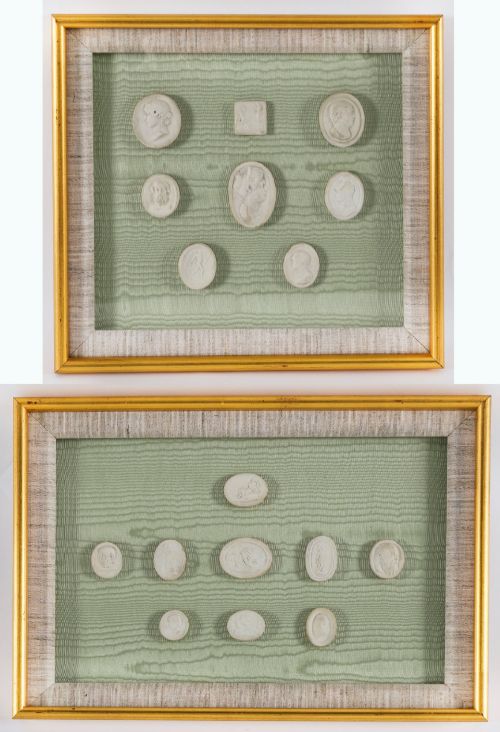
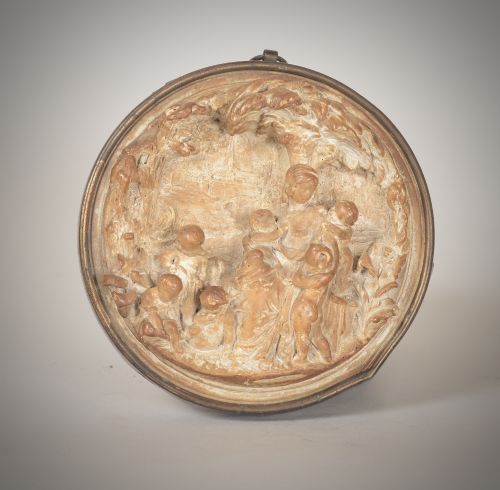
Neoclassical plaster medallions take the form of framed wall art, wall plaques, and portrait miniatures depicting classical subjects. These pieces mostly date from the nineteenth century and the period around eighteen hundred, capturing the spirit of the Grand Tour.
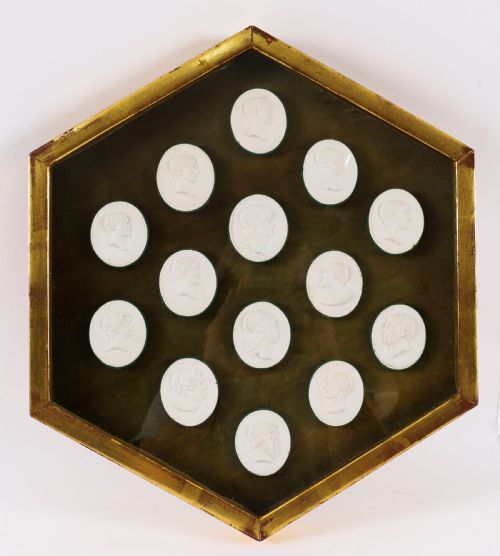
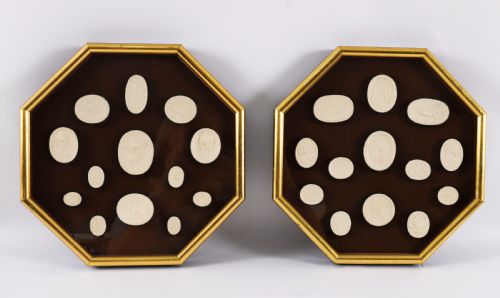
Collectors encounter single framed reliefs alongside extensive collections arranged in panels or octagonal frames. The subjects draw directly from antique cameos and intaglios, preserving classical mythology and portraiture in miniature relief.
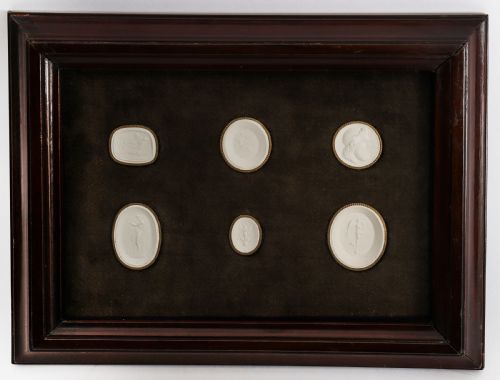
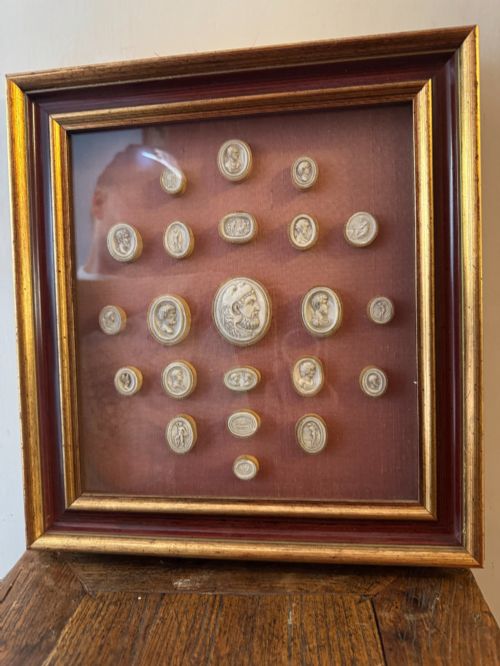
The objects combine plaster, gypsum, and glass paste within protective frames of gilt wood, fabric, and velvet. The layout ranges from solitary cameos to large organised sets containing dozens of individual casts.
How they were made
Craftsmen cast these detailed reliefs using fine plaster and gypsum, capturing the crisp lines of ancient carved gems. Pressed white glass paste also appears, imitating the translucent quality of carved hardstone and cameo glass.
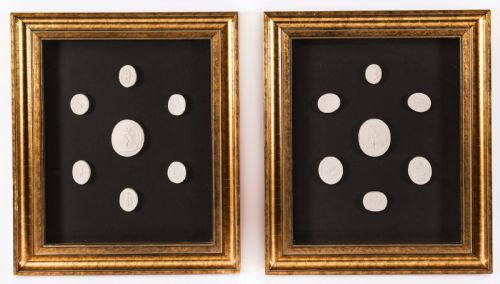
Makers set the finished reliefs against dark backgrounds of velvet or fabric to accentuate the brilliant white of the plaster. Giltwood and wood frames enclose the compositions, often incorporating gold leaf for a decorative finish.
Object forms span framed wall art, portrait miniatures, and decorative collections containing up to thirty-five individual casts.
What varies in quality
The presentation dictates distinction, separating simple individual plaques from large, harmonious collections arranged by skilled hands. Original frames matching the period of the casts elevate the integrity of the piece.
Giovanni Liberotti·Pietro Bracci·James Tassie Type
The Neoclassical Plaster Medallions Glossary
- Intaglio
- A gem or medallion carved into the surface so the design sinks below the plane. These plaster casts reproduce such carved stones in relief.
- Cameo
- A method of carving where the subject is raised in relief against a contrasting background. These nineteenth-century plaster versions mimic hardstone originals.
- Grand Tour
- The eighteenth and nineteenth-century journey through Europe undertaken by young gentlemen to study classical art. Travellers acquired these framed plaster sets as souvenirs of their travels.
- Gypsum
- A soft sulfate mineral used to create fine plaster casts. It allows for the minute detail seen in these classical medallions.
- Glass paste
- A vitreous material melted and pressed into moulds to imitate carved gems. These white paste pieces resemble ancient cameos.
Neoclassical Plaster Medallions: Frequently Asked Questions
What are neoclassical plaster medallions?
These pieces are nineteenth-century plaster and glass paste casts reproducing classical carved gems and intaglios. Makers arranged them as framed wall art to evoke ancient sculpture.
Collectors find them housed in wood and giltwood frames, often set against dark velvet or fabric backgrounds to highlight the crisp white relief.
How were these medallions used?
Tourists collected these framed groupings during the Grand Tour as tangible records of classical art seen abroad. They functioned as intellectual decoration for libraries and drawing rooms.
Framed as wall plaques or art collections, they allowed owners to display a refined knowledge of antiquity within their homes.
How do I live with them?
Hang these framed pieces away from direct sunlight to protect the delicate plaster casts and fabric backgrounds. Their neutral tones suit both traditional and modern interiors.
Grouping smaller pairs or individual plaques creates a striking focal point on a gallery wall among larger artworks.
How do I date these pieces?
Examine the framing materials, backing fabrics, and the style of the mounting to determine the period. Nineteenth-century examples often feature giltwood frames and handwritten collector labels.
Sets associated with specific makers like Giovanni Liberotti or Pietro Bracci point to the early decades of the nineteenth century and the height of the Grand Tour.