



19th Century Plaster Cameos
These 19th century plaster cameos are neoclassical miniature reliefs collected on the Grand Tour, offering a tangible link to classical antiquity for any interior.
19th Century Plaster Cameos
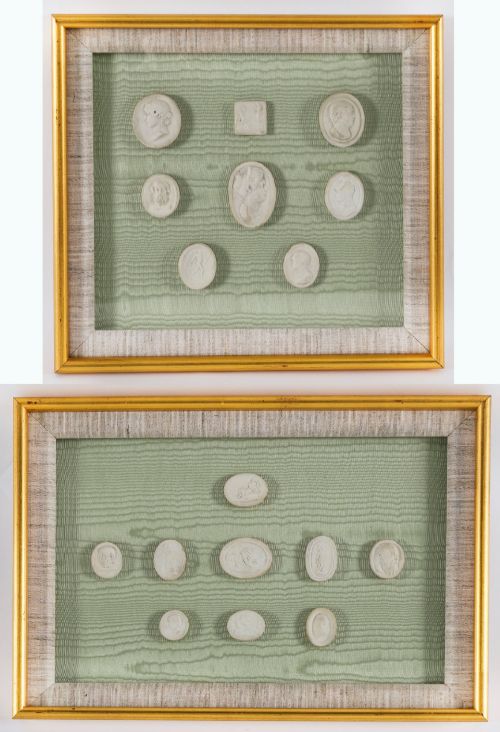
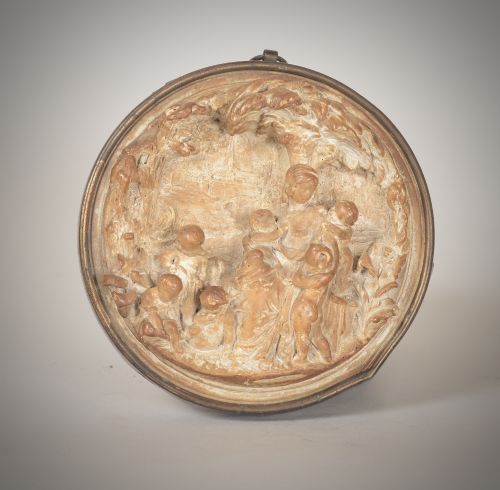
19th century plaster cameos and intaglios are miniature sculptural reliefs that affluent travellers collected during their travels across Italy. These pieces serve as classical portraits and mythological scenes mounted behind glass for display.
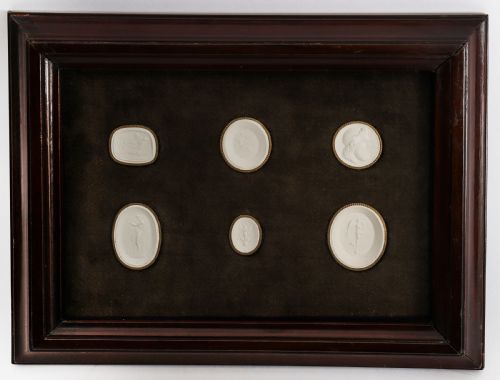
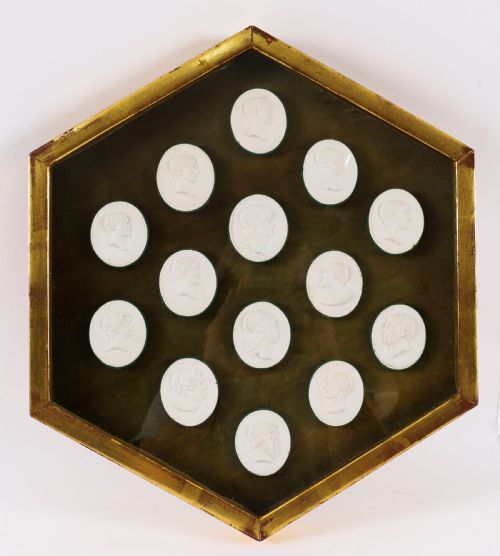
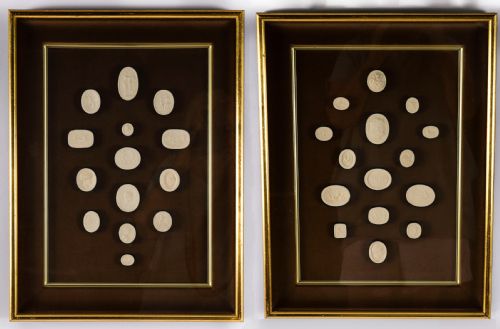
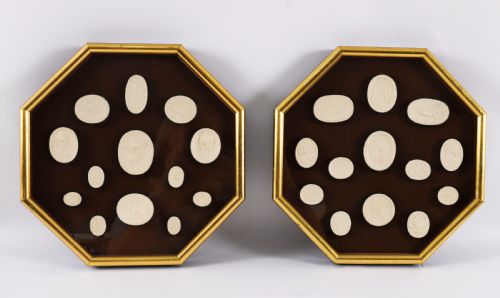
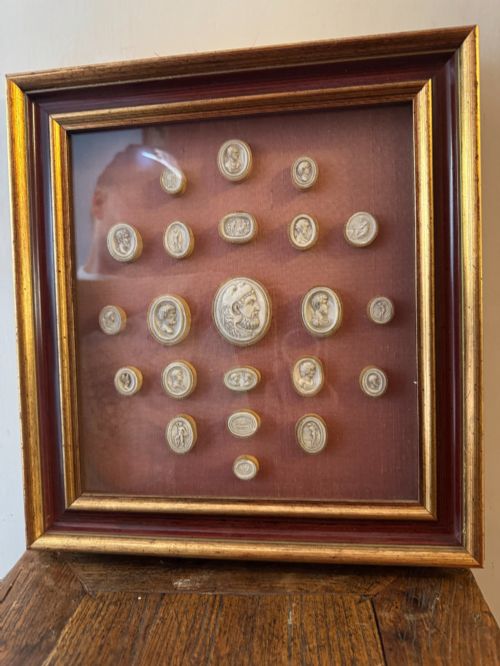
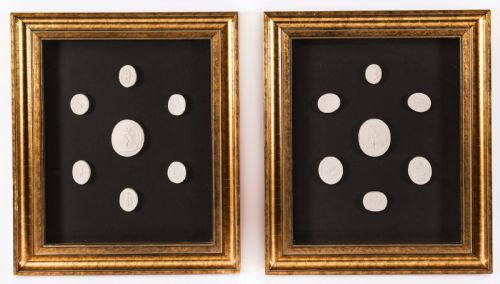
The objects on this page appear as single wall plaques, pairs, and extensive framed collections containing multiple intaglios. Makers arranged these white plaster profiles against velvet or fabric backgrounds within gilt wood and giltwood frames.
Originating in the neoclassical taste of the period, these artworks draw directly from ancient Greek and Roman gems. They represent a specific form of educational souvenir brought back by Grand Tour travellers.
How they were made
Craftsmen cast these fine reliefs using plaster or gypsum poured into moulds taken from ancient engraved gems. The resulting white impressions capture microscopic detail from the original artefacts.
Finished plasters were mounted on fabric or velvet linings inside wood frames enhanced with gold leaf and giltwood. Workshops such as those of Giovanni Liberotti and Pietro Bracci organised these collections systematically.
Listings feature 19th century plaster cameos set against velvet and fabric within giltwood and gilt wood frames.
What varies in quality
The framing and mounting elevate the presentation, particularly where original gilt wood frames and preserved fabric backings survive intact. Scale also matters, ranging from individual plaques to large framed assemblies of dozens of intaglios.
Giovanni Liberotti·Pietro Bracci
The 19th Century Plaster Cameos Glossary
- Cameo
- A method of carving where a relief image stands out distinctly from a contrasting background. In this context, it refers to raised plaster profiles.
- Intaglio
- A design incised or sunken below the surface, though the term is frequently applied to these relief casts. They imitate ancient carved signet rings.
- Grand Tour
- A traditional trip through Europe, primarily Italy, undertaken by upper-class young men in the 18th and 19th centuries. It formed an essential part of classical education.
- Giltwood
- Wood carved and then covered with a thin layer of gold leaf. It frames many of these classical plaster collections.
- Gypsum
- A soft sulphate mineral used to create plaster of Paris. It provides the smooth, bright white material for these reliefs.
19th Century Plaster Cameos: Frequently Asked Questions
What are 19th century plaster cameos?
These pieces are neoclassical plaster and gypsum casts taken from ancient carved gems and intaglios. Travellers collected them as portable art during their educational journeys across Europe.
They capture classical mythology and historical portraits in miniature white relief. Workshops mounted them on fabric backgrounds inside decorative frames for wall display.
How were grand tour intaglios displayed?
Makers arranged these plaster profiles in custom wooden frames, often using velvet or fabric backings to contrast with the white plaster. Collectors hung them in studies and libraries as evidence of classical learning.
Some configurations present a single central plaque, while others group dozens of numbered intaglios in a grid. Giltwood surrounds were common to catch the light in domestic interiors.
Who made these plaster cameos?
Skilled Italian workshops and modellers produced these casts for the tourist market. Notable makers whose names appear on these pieces include Giovanni Liberotti and Pietro Bracci.
These artisans operated studios that specialised in reproducing antique glyptic art. Their finished sets catered to collectors seeking to emulate museum cabinets of antiquities.