

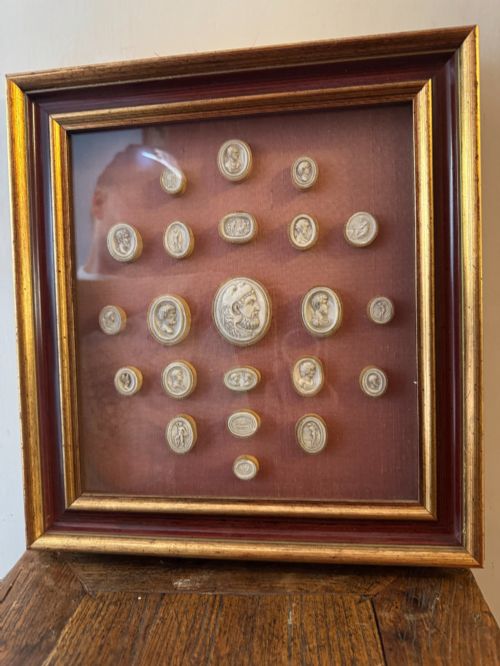


Antique Cameo Wall Art
Antique cameo wall art brings classical profile reliefs and intaglios into domestic interiors, offering tactile displays of mythological and historical figures.
Antique Cameo Wall Art
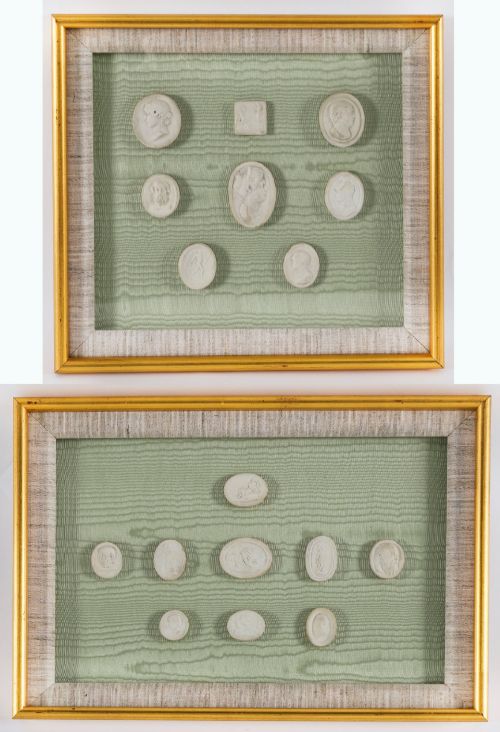
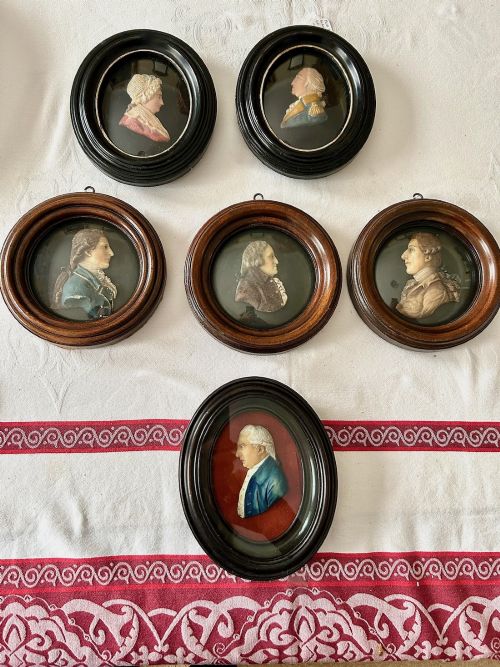
Antique cameo wall art encompasses framed plaster, gypsum, wax, and marble reliefs that trace their origins to Grand Tour travels and classical revival taste. These works appear most frequently as framed sets or collections of intaglios and portrait medallions.
The objects span periods from the Regency era through the nineteenth century and into the early twentieth century. Buyers encounter single profile plaques alongside extensive framed arrangements containing numerous individual casts.
Makers such as Giovanni Liberotti and Minton are represented among the selections, alongside Italian marble carvings and French or British plaster collections. The forms range from simple box frames to elaborate giltwood settings.
Materials and construction methods
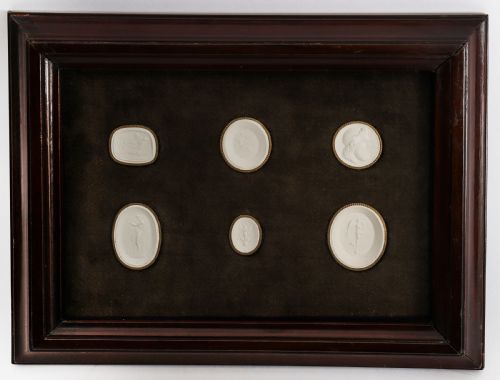
Plaster, gypsum, and wax form the primary casting materials for the intaglios and medallions, often set against backgrounds of velvet or fabric. These soft materials capture intricate details from original carved gems and stones.
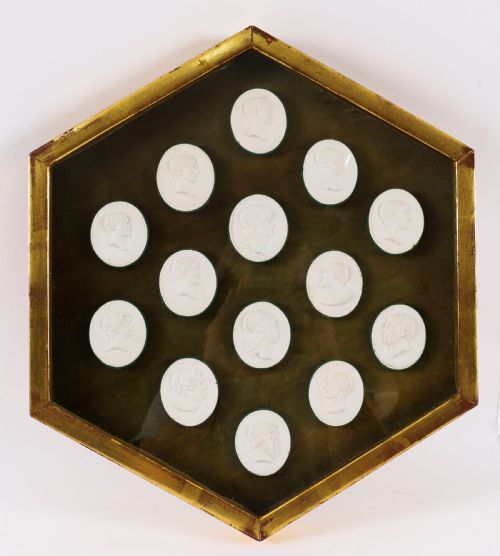
Frames utilise wood, gilt wood, and giltleaf, occasionally housing marble profile plaques or carved mahogany panels. The mountings range from simple timber surrounds to deep box frames designed to protect the raised reliefs.
Object types span framed wall art, intaglio collections, portrait miniatures, and carved mahogany profile panels.
Distinctions in quality
The composition of the framed arrangement and the quality of the backing fabric influence the visual impact of multi-piece collections. Uniformity in the tone of the plaster and the integrity of the original framing contribute to the overall standard.
Giovanni Liberotti·Minton
The Antique Cameo Wall Art Glossary
- Intaglio
- A gem or medallion carved into the material so that the design sinks below the surface. These pieces were frequently collected during European travels and later framed for display.
- Gypsum
- A soft sulphate mineral used widely for casting detailed sculptural reliefs. Plaster and gypsum mixtures allowed makers to replicate ancient carved stones with high precision.
- Grand Tour
- A traditional trip through Europe undertaken by upper-class young men in the eighteenth and nineteenth centuries. Travellers gathered plaster casts, intaglios, and profile plaques as mementos of classical antiquity.
- Pate-sur-pate
- A ceramic decoration technique where liquid clay is applied layer by layer to a background to create a low relief cameo effect. Minton utilised this method for portrait plaques.
- Profile plaque
- A flat panel featuring a head viewed from the side, carved in marble or cast in plaster. These pieces draw directly on Roman coin designs and classical sculpture.
Antique Cameo Wall Art: Frequently Asked Questions
What is antique cameo wall art?
Antique cameo wall art consists of framed classical reliefs, intaglios, and portrait medallions created from materials like plaster, wax, and marble. These pieces originated largely from nineteenth-century collections and Grand Tour travels.
They are mounted behind glass in wood or giltwood frames, often arranged in sets against velvet or fabric backgrounds to display historical and mythological profiles.
How were these wall plaques displayed?
These pieces were typically arranged in custom timber frames or box frames to protect the delicate plaster and wax casts. Collectors grouped multiple intaglios together to create miniature galleries of classical art.
Today, they function as wall hangings in studies, libraries, and hallways, bringing a scholarly nineteenth-century aesthetic to interior spaces.
How do I date an antique plaster intaglio?
Dating relies on the style of the framing, the materials used in the backing fabrics, and the specific period of the nineteenth century associated with the piece. Regency and early nineteenth-century examples often feature distinct mounting styles compared to later Victorian iterations.
Makers' signatures, handwritten labels on the reverse, and the specific composition of the plaster or wax also help establish the chronology.
How should I care for framed plaster art?
Framed plaster and wax works require stable indoor environments away from direct sunlight and excessive moisture to protect the delicate casting materials. The sealed frames prevent dust from accumulating on the fragile surfaces.
Cleaning should be limited to dusting the exterior of the glass and frames without disturbing the historical mounts within.