



Framed Plaster Intaglios
Framed plaster intaglios are miniature classical reliefs set behind glass, brought home by travellers from the Grand Tour.
Framed Plaster Intaglios
Framed plaster intaglios capture classical sculpture, mythology and portrait busts in miniature relief, designed for wall display. These pieces mostly date to the nineteenth century, reflecting the enthusiasm for classical antiquity during the Grand Tour.
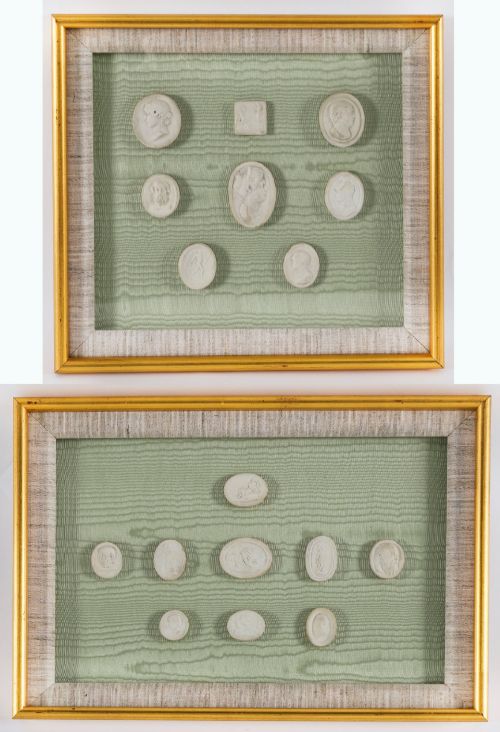
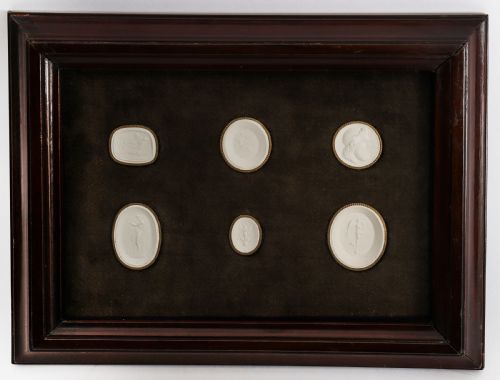
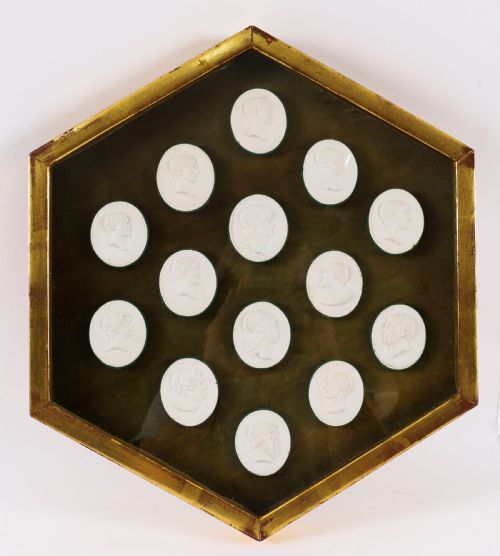
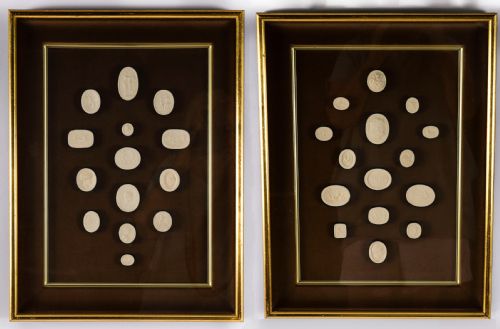
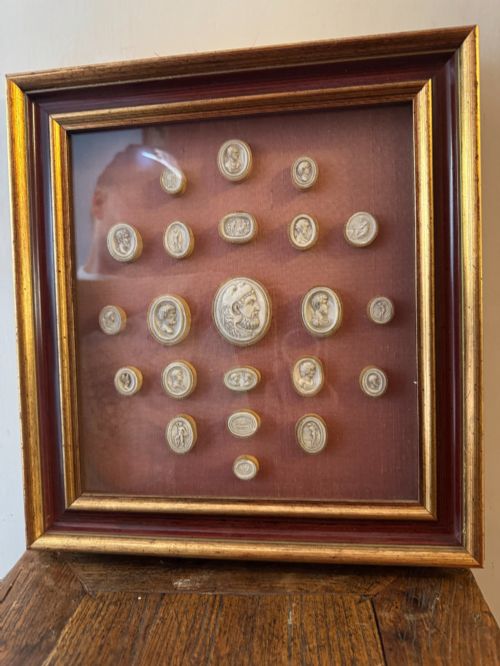
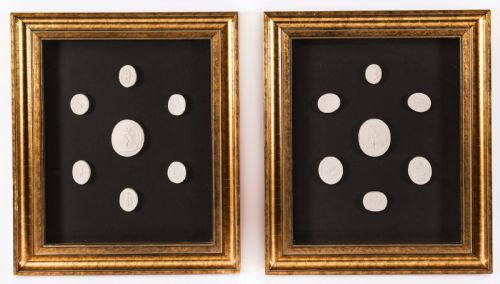
You will encounter single plaques, matched pairs and large collections numbering dozens of individual casts arranged together. Many examples present Roman and Greek gods, goddesses and historical rulers against coloured velvet or fabric backgrounds.
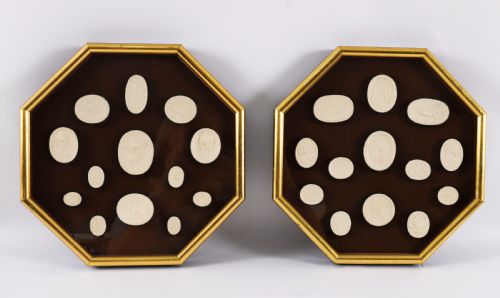
The framing varies from simple octagonal surrounds to gilt wood and box frames that protect the delicate plaster casts. Some sets are arranged like books or housed in elaborate giltwood frames with gold paper accents.
Materials and construction
Plaster and gypsum form the crisp white medallions, capturing the fine details of antique carved gems and cameos. These casts are set against backgrounds of velvet, fabric or gold paper within frames of wood and giltwood, protected by glass.
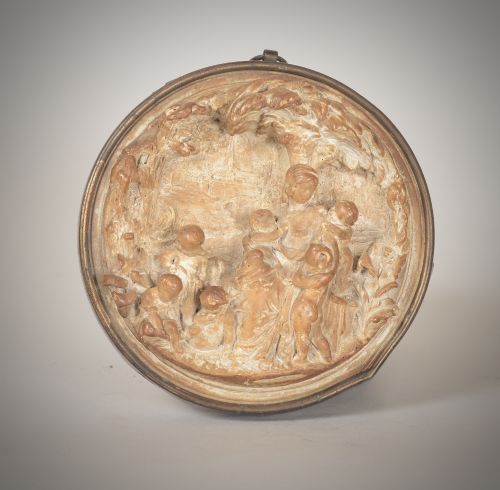
Makers poured fine plaster into moulds taken from classical originals, finishing the casts by hand before mounting them meticulously in custom frames. Some pieces incorporate pressed white glass paste reminiscent of James Tassie work rather than pure plaster.
Sets range from single wall plaques to thirty-five miniature portrait busts of kings.
Quality and execution
The harmony of the arrangement and the quality of the surrounding gilt wood frame, velvet backing and glass housing elevate the overall presentation. Signed works by known makers such as Giovanni Liberotti or Pietro Bracci command particular attention for their precision.
Giovanni Liberotti·Pietro Bracci
The Framed Plaster Intaglios Glossary
- Intaglio
- A design engraved into a material so that the impression rises from a depressed background. In these pieces, the plaster casts mimic carved gemstones.
- Grand Tour
- An extended journey through Europe undertaken by upper-class young men in the eighteenth and nineteenth centuries to study classical art. Travellers collected plaster casts and intaglios as portable mementoes.
- Gypsum
- A soft sulphate mineral used to create fine plaster casts. It provides the bright white surface seen on nineteenth-century medallions.
- Cameo
- A method of carving an object such as a gemstone or plaster piece so that a raised relief image stands out from a contrasting background. These collections frequently feature miniature portrait busts and mythological figures.
- Giltwood
- Wood carved and covered with a thin layer of gold leaf or gold paint. Frames in this finish are typical for displaying classical intaglios.
Framed Plaster Intaglios: Frequently Asked Questions
What are framed plaster intaglios?
Framed plaster intaglios are collections of small white plaster medallions cast from classical cameos and intaglios. They record ancient sculpture, mythology and historical portrait busts in miniature detail.
Travellers on the Grand Tour purchased these mounted sets in Italy during the eighteenth and nineteenth centuries. They were brought back to Britain as sophisticated decorations for libraries and studies.
How were they displayed originally?
These pieces were typically hung on the walls of drawing rooms and studies as conversation pieces. The arrangements showcased the owner's classical knowledge and refined taste.
Some collections were housed in specialised box frames or book-style bindings designed to be opened and examined closely. The glass protection kept the delicate plaster surfaces free from dust.
How can I tell nineteenth century pieces apart?
Nineteenth-century examples often feature extensive collections of Roman and Greek deities or historical rulers arranged in uniform grids. The framing styles shift from simple wood profiles to elaborate giltwood and shadow box constructions.
Signatures or stamps on the backing or mounts occasionally point to specific Roman workshops and modellers. The backing materials, such as early velvet or hand-coloured paper, also help establish the period.