



Antique Plaster Medallions
Antique plaster medallions bring the sculpture galleries of the Grand Tour straight into a room.
Antique Plaster Medallions
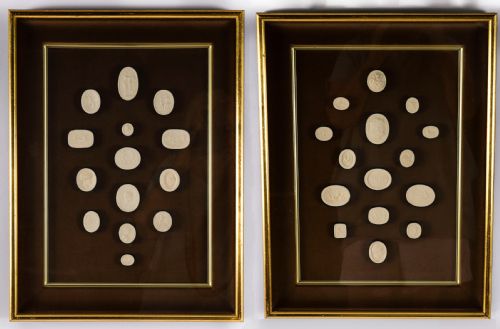
When you search for antique plaster medallions, you are looking at framed collections of classical casts and reliefs made to capture ancient sculpture. These pieces span the late eighteenth century, the nineteenth century, and the Edwardian era, reflecting the classical taste of collectors travelling through Italy.
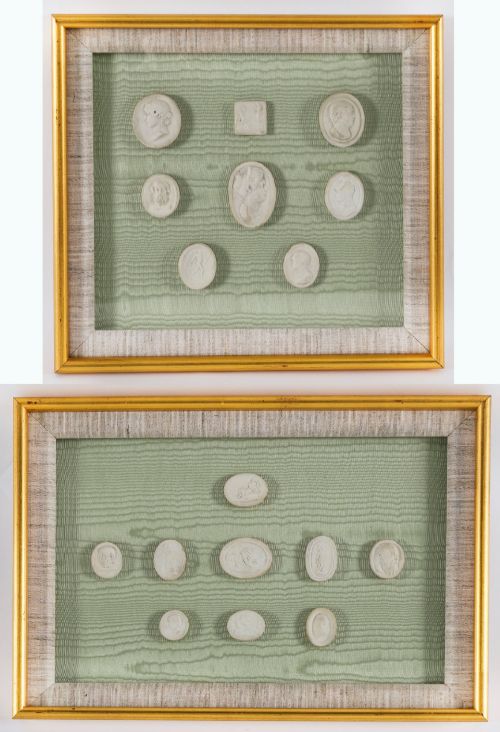
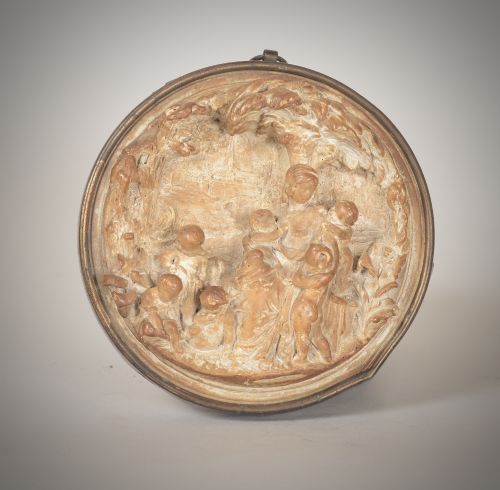
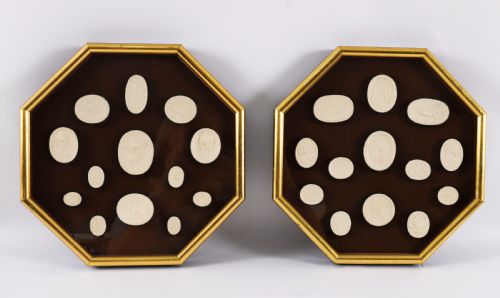
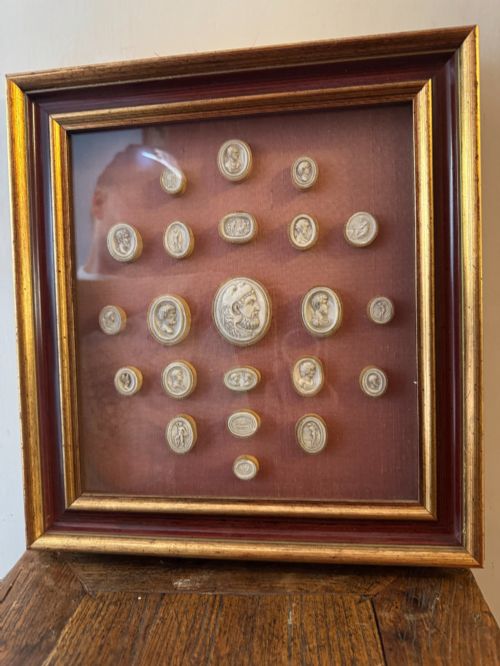
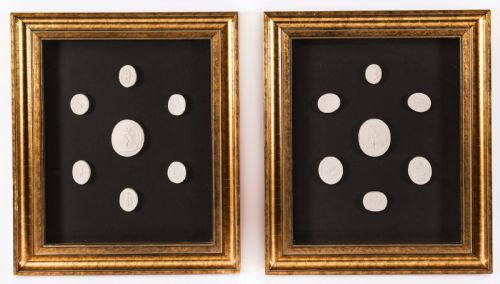
You are most likely to meet framed wall art and wall plaques featuring sets of intaglios or cameo panels arranged behind glass. These decorative objects take the form of single relief panels or large framed collections containing dozens of individual casts.
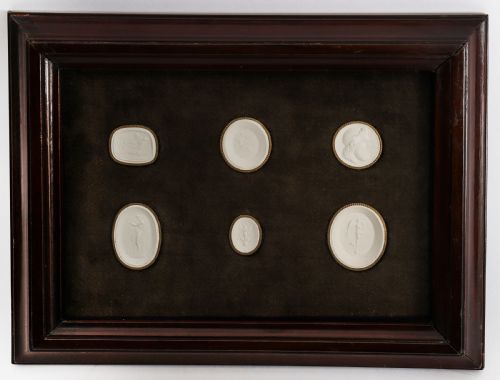
The style is predominantly neoclassical and Georgian neoclassical, often retaining the original gilt wood, velvet, and fabric backing used to display the white plaster against a dark ground. Such pieces served as portable museums for scholars and gentlemen abroad.
How they were made
The makers formed these relief casts using fine plaster and gypsum, capturing the sharp details of ancient gems and carved stones. Some items incorporate pressed white glass paste to imitate carved stone cameos.
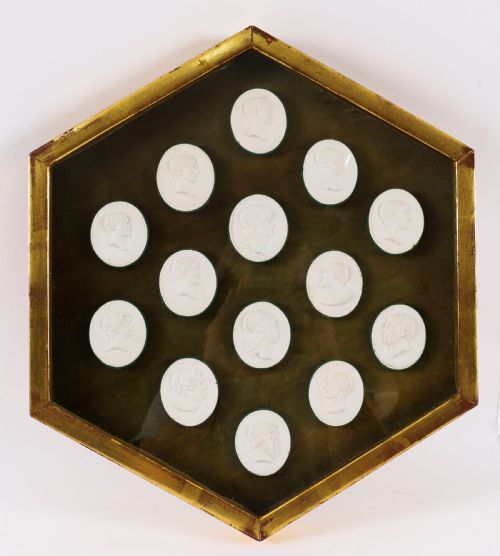
Workshops housed the finished plaster casts inside wood frames, mounting them upon velvet or fabric backgrounds to create contrast. Many of these frames received gold leaf or giltwood finishes to suit domestic display.
Some sets contain thirty-five miniature classical casts, offering an entire sculpture gallery within a single wall panel.
What varies in quality
The quality of the mounting materials, such as the depth of the giltwood frame and the richness of the velvet backing, elevates certain sets above simpler framed walls. Signature work from recorded makers adds distinction to the composition.
Giovanni Liberotti·Pietro Bracci·James Tassie
The Antique Plaster Medallions Glossary
- Intaglio
- A gem or medallion carved in intaglio has a design depressed beneath the surface so that an impression can be made in wax. In these collections, the plaster casts reproduce those sunken designs in relief.
- Cameo
- A method of carving where the design is raised in relief against a contrasting background. Plaster versions imitate stone carvings.
- Grand Tour
- A traditional trip of Europe undertaken by upper-class European young men of sufficient means. These tours resulted in the acquisition of art, antiquities, and plaster casts.
- Gypsum
- A soft sulphate mineral used extensively for making plaster of Paris casts. It allows fine detail to be captured from classical intaglios.
- Glass Paste
- A vitreous material melted and pressed into moulds to imitate carved gemstones. These white paste pieces appear alongside plaster casts in framed sets.
Antique Plaster Medallions: Frequently Asked Questions
What are antique plaster medallions?
They are small relief casts of classical sculptures and intaglios created during the eighteenth and nineteenth centuries. Collectors gathered them as souvenirs of European travel and displayed them in framed wall panels.
Today they survive as decorative wall art, preserving the neoclassical taste of their original owners within wooden frames and velvet backings.
How were these medallions displayed?
Maker workshops arranged the plaster casts inside wooden frames, often securing them against dark velvet or fabric backgrounds. This mounting style created high contrast to highlight the white relief work.
Many sets feature multiple casts organised in precise geometric patterns behind protective glass.
How do I date a set?
Dating relies on the framing technique, the materials used in the backing, and the style of the mounting. Eighteenth and nineteenth-century pieces typically feature hand-carved giltwood frames and original fabrics.
Later Edwardian examples continue the neoclassical tradition using similar plaster casting methods but distinct framing assembly.
Where were they made?
The majority of these pieces originated in Italy during the Grand Tour period, where local craftsmen produced plaster and gypsum casts for foreign travellers. Workshops in Rome and Florence supplied collectors with portable representations of classical antiquities.
Some related pieces, such as glass paste cameos, emerged from British workshops following similar classical precedents.