



Neoclassical Plaster Intaglios
Neoclassical plaster intaglios are miniature white reliefs cast after antique gems, brought home by travellers as records of the Grand Tour.
Neoclassical Plaster Intaglios
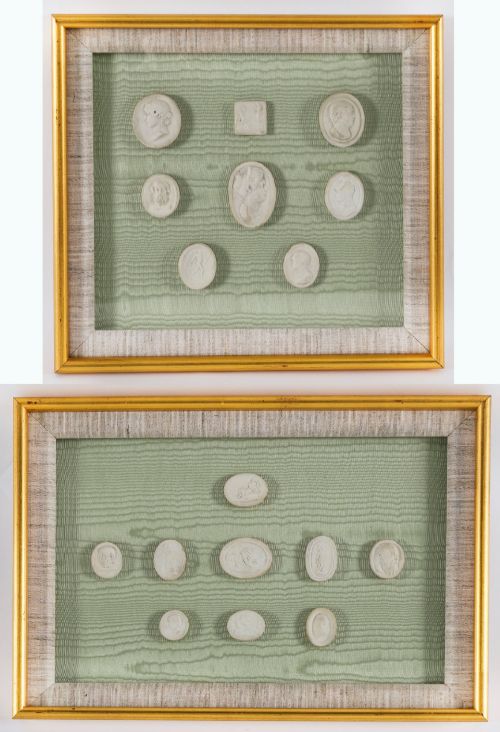
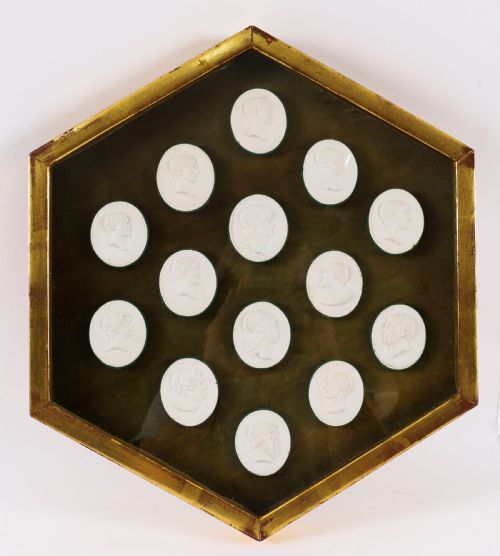
When you search for neoclassical plaster intaglios, you are looking at framed collections of small white medallions cast from classical carved stones and gems. These pieces record the sculpture and mythology encountered by travellers on the Grand Tour across Europe during the eighteenth and nineteenth centuries.
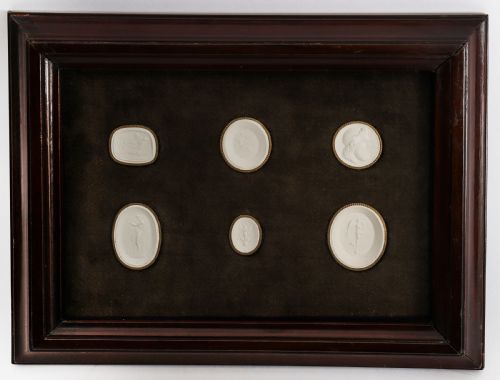
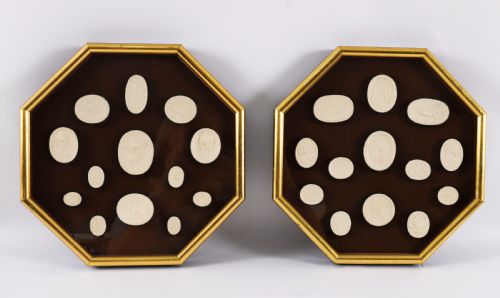
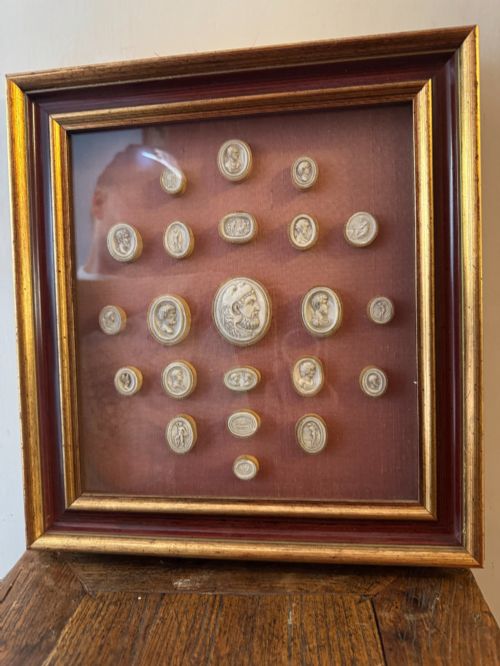
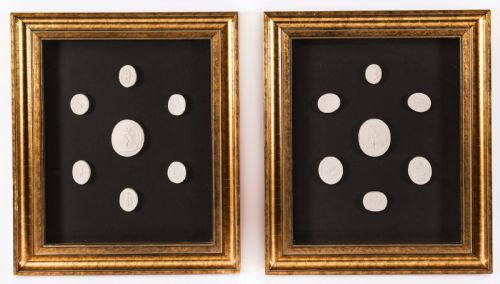
You will most commonly meet these works arranged in sets or pairs inside velvet-lined gilt wood frames, wall plaques, or glass-fronted boxes. The subjects draw directly from antique mythology, portraiture, and classical sculpture familiar to scholars of the period.
The objects span the late eighteenth century into the Edwardian era, reflecting changing tastes in domestic display. Italian workshops produced many of these framed panels for foreign visitors seeking tangible mementos of classical antiquity.
Materials and construction
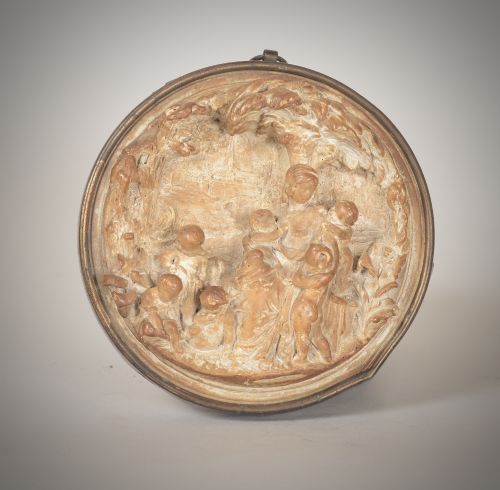
The reliefs themselves utilise fine white plaster or gypsum poured into moulds taken from ancient engraved gems, cameos, and intaglios. Certain related pieces employ pressed white glass paste to imitate carved stone.
Listings feature periods from the late eighteenth century through the Edwardian era, framed in gilt wood and velvet.
Assessing quality
The setting contributes substantially to the overall standard of the piece, with well-preserved giltwood frames and original velvet backings elevating the presentation. Cohesive arrangements by recorded modellers demonstrate greater care in design than ad-hoc groupings of mismatched casts.
Giovanni Liberotti·Pietro Bracci·James Tassie
The Neoclassical Plaster Intaglios Glossary
- Intaglio
- A design engraved into a gem or stone so that it sits below the surface, creating a raised impression when cast in plaster. These are the primary subjects mounted in the framed panels.
- Cameo
- A method of carving where the subject is raised in relief against a contrasting background. In this context, the term often describes white plaster profiles mounted alongside intaglios.
- Grand Tour
- A traditional journey of Europe undertaken by upper-class European young men of means during the eighteenth and nineteenth centuries. Travellers collected plaster casts and antiquities as physical evidence of their education.
- Gypsum
- A soft sulphate mineral used to create fine plaster for casting miniature reliefs. It provides the smooth, matte white finish characteristic of these neoclassical medallions.
- Paste
- A heavy, brilliant glass used to imitate gemstones and cameos in Georgian decorative arts. White paste examples replicate the appearance of carved stone in miniature frames.
Neoclassical Plaster Intaglios: Frequently Asked Questions
What are neoclassical plaster intaglios?
These pieces are small white relief casts taken from ancient carved gems and arranged in framed collections. Travellers brought them back as souvenirs from European journeys during the eighteenth and nineteenth centuries.
They served as portable art collections for domestic display, allowing owners to demonstrate classical learning and taste in their drawing rooms.
How were these intaglios originally displayed?
Collectors mounted the plaster casts on velvet or fabric backgrounds inside custom wooden frames. Many were designed as wall plaques or housed in glass-fronted display boxes.
Larger sets were sometimes bound in book-form cases to be kept on libraries and tables for close study by guests.
How do I date a framed set?
Dating relies on the style of the giltwood frame, the type of backing fabric, and the characteristics of the paper labels or inscriptions on the reverse. Eighteenth-century and early nineteenth-century examples often feature distinct Italian framing styles.
Later nineteenth-century and Edwardian interpretations tend to use machine-cut mouldings and different velvet tones, distinguishing them from earlier Grand Tour souvenirs.