



Plaster Grand Tour Intaglios
Plaster grand tour intaglios are miniature neoclassical reliefs collected as souvenirs by travellers, prized for their delicate detail and classical subjects.
Plaster Grand Tour Intaglios
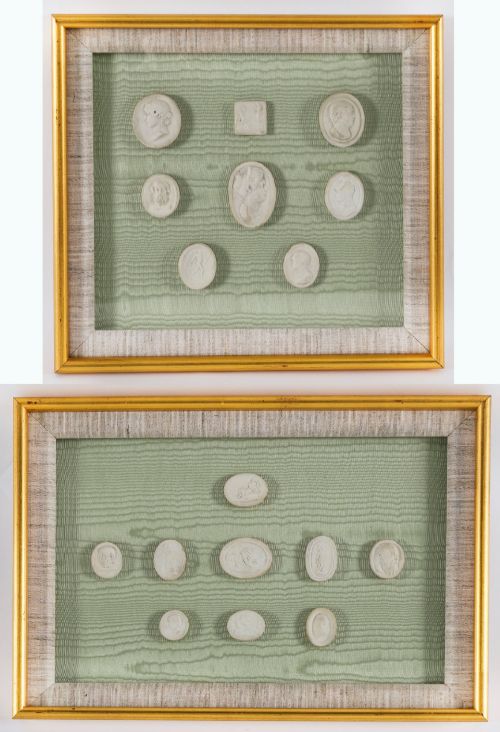
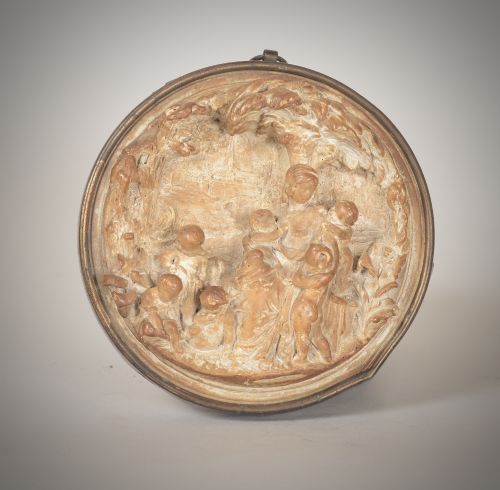
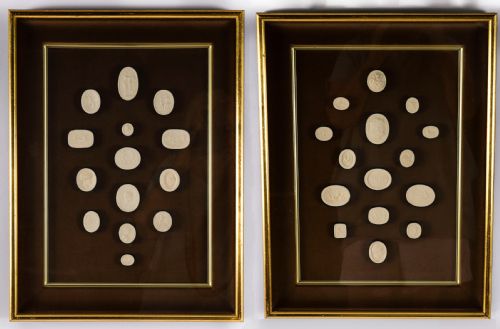
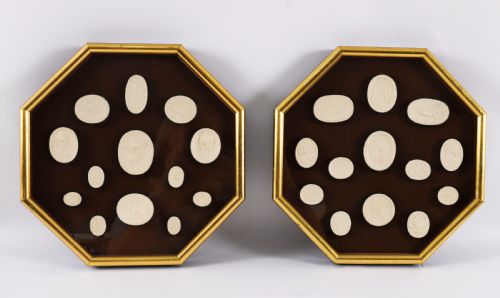
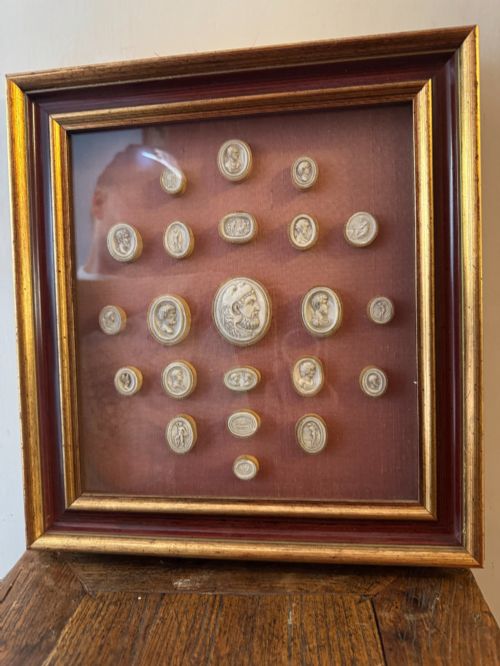
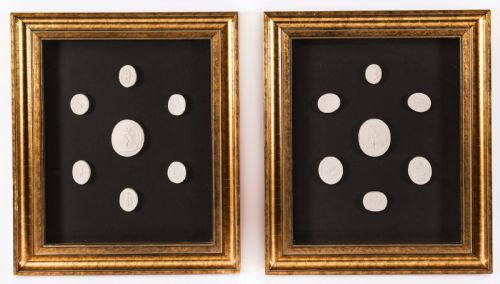
Plaster grand tour intaglios are small relief casts reproducing ancient gems, coins and sculptures encountered during European travels in the eighteenth and nineteenth centuries. You will most frequently encounter them as framed wall art or arranged within faux book bindings, often housing sets ranging from a single pair to dozens of individual medallions.
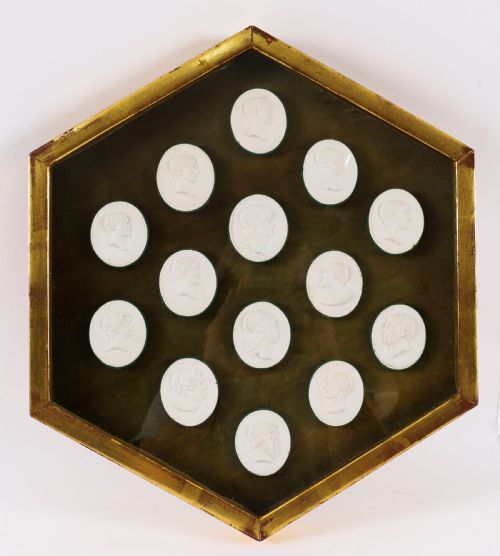
The subjects draw heavily on classical antiquity, depicting Roman emperors, mythological figures and erotic scenes intended to display the collector's erudition. These portable cabinets of curiosity reflect the educational journeys undertaken by wealthy elites across Italy.
How they were made
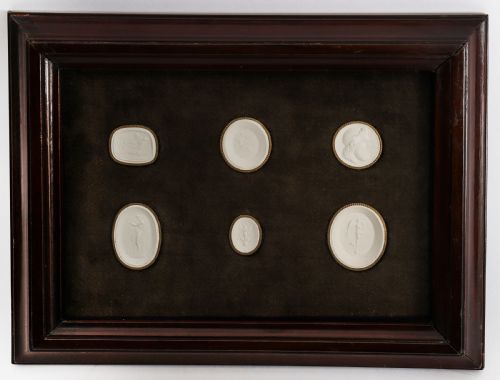
The medallions are formed primarily from plaster or gypsum, poured into moulds taken from original ancient artefacts or modern carved gems. Makers then mounted these crisp white casts against contrasting backdrops of velvet or fabric inside wooden frames, which frequently feature giltwood, gold leaf or glass protection.
More elaborate souvenirs took the form of double-sided faux book bindings, constructed to resemble leather-bound volumes that open to reveal fitted trays of miniature reliefs. Each cast required careful handling to preserve the sharp profile of the neoclassical carving.
Travellers kept their secret collections of erotic Roman plaster casts hidden inside harmless-looking faux library books.
What varies in quality
Presentation elevates the piece significantly, distinguishing mass souvenirs from bespoke commissions by notable workshops. Complete sets housed in untouched velvet-lined frames or sophisticated faux book volumes command greater interest than scattered, loose medallions.
Giovanni Liberotti·Pietro Bracci·Paoletti·Bertel Thorvaldsen
The Plaster Grand Tour Intaglios Glossary
- Intaglio
- A design engraved into a material so that the impression sinks below the surface, though the term is commonly applied here to the raised plaster casts taken from such moulds.
- Gypsum
- A soft sulphate mineral used to create the fine plaster paste necessary for capturing the minute details of classical cameos.
- Giltwood
- Wood carved and covered with a thin layer of gold leaf or gold paint, frequently used for framing grand tour wall panels.
- Neoclassical
- The prevailing style of the eighteenth and nineteenth centuries that revived the aesthetic and subject matter of ancient Greece and Rome.
Plaster Grand Tour Intaglios: Frequently Asked Questions
What are plaster grand tour intaglios?
They are miniature nineteenth-century plaster casts reproducing classical gems and sculptures, collected as souvenirs by travellers on the grand tour.
These pieces served as portable museums, allowing scholars and collectors to study ancient art forms at home.
How were they originally displayed?
Intaglios were typically mounted on velvet backgrounds within framed wall panels or arranged neatly inside custom faux book bindings.
Book-form collections allowed owners to store dozens of portraits safely on a library shelf while remaining accessible for study.
How do I care for framed intaglios?
Keep them away from direct sunlight and excessive moisture to protect the delicate plaster casts and fragile velvet backings.
Glazed frames help shield the soft gypsum surfaces from dust and accidental physical damage over time.
What subjects do the casts depict?
The reliefs commonly feature Roman emperors, classical deities, mythological narratives and erotic scenes derived from antique art.
These varied subjects reflect the broad cultural interests and classical education of nineteenth-century collectors.