


Antique Relief Medallions
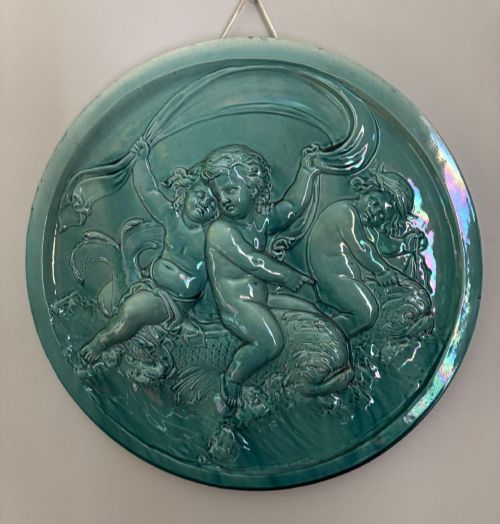
These antique relief medallions span plaster intaglios, cast bronze profiles and carved wooden panels, prized for cabinet display or wall mounting.
Antique Relief Medallions
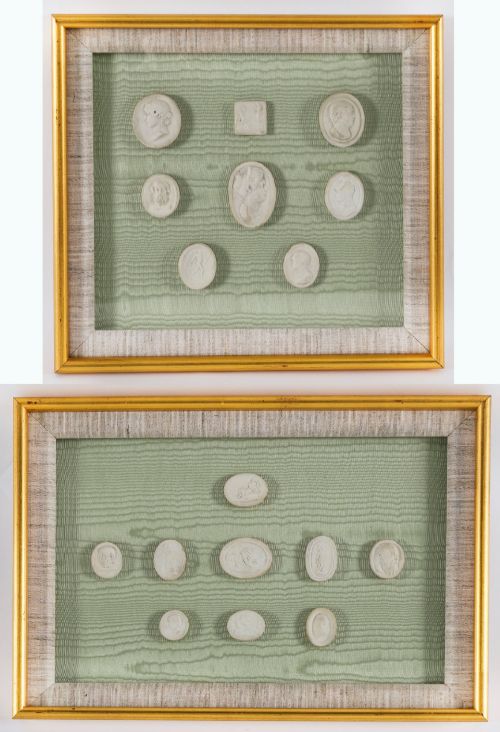
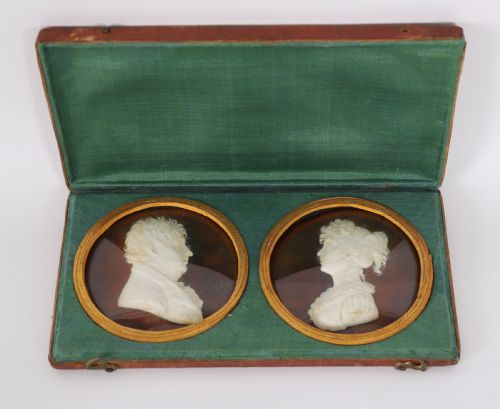
When you search for antique relief medallions, you meet items formed as wall plaques, framed intaglios, and portrait pendants. The pieces recorded here lean heavily toward framed Grand Tour plaster casts and bronze portrait plaques.
Makers and workshops across the eighteenth, nineteenth, and early twentieth centuries produced these items in materials such as plaster, bronze, glass, and wood. You encounter them housed in giltwood frames, velvet mounts, or held in brass and copper settings.
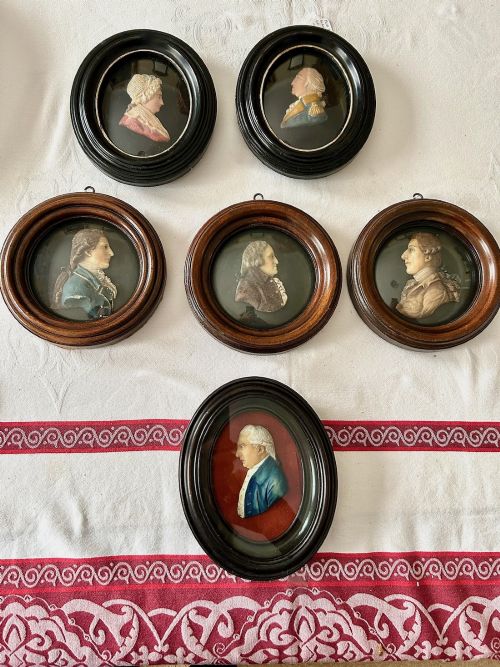
The styles range from Neoclassical and Regency to Gothic Revival, Victorian, and French Art Nouveau. These objects capture classical profiles, historical dignitaries, and religious iconography intended for intimate study or wall decoration.
How they were made
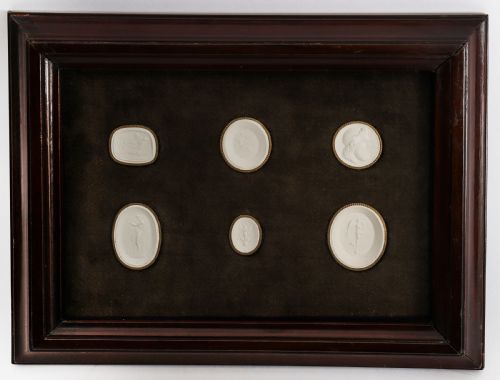
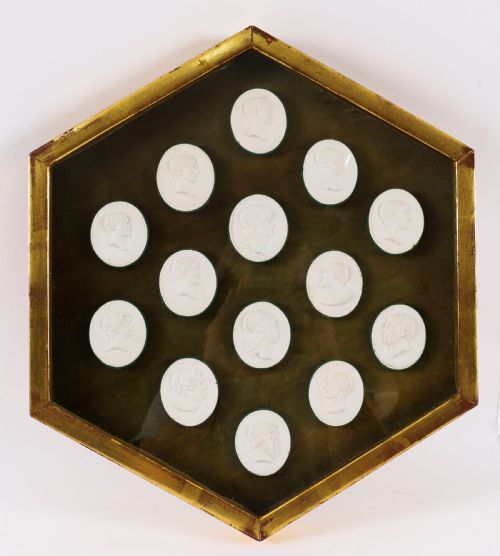
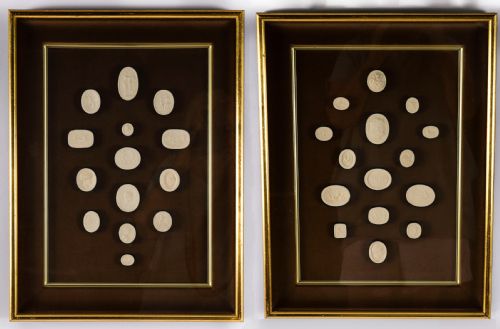
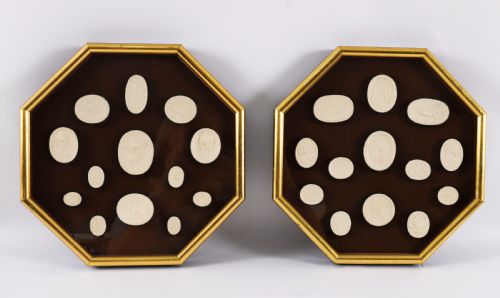
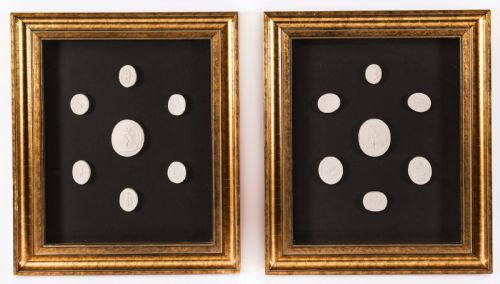
Plaster casts and intaglios were formed from moulds taken of classical gems and sculptures, often arranged in sets within velvet-lined frames. Artisans poured fine plaster or wax into matrices to capture minute sculptural detail.
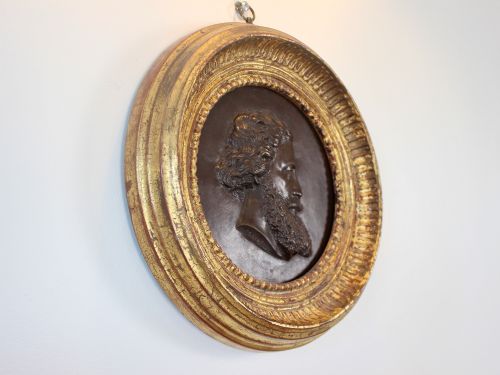
Metal plaques involved casting bronze, brass, or iron into moulds, followed by chasing and patination to define the profiles. Certain examples feature gold work or sterling silver struck and engraved for pendants and medals.
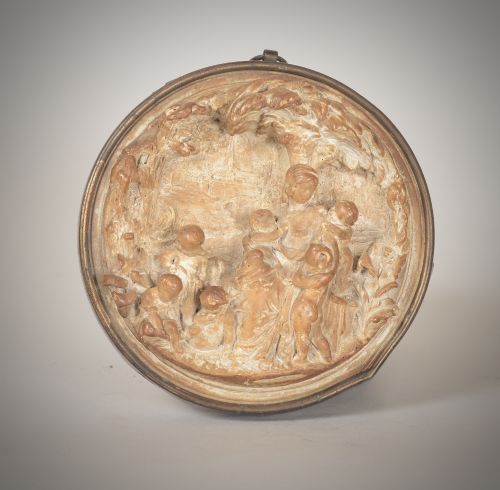
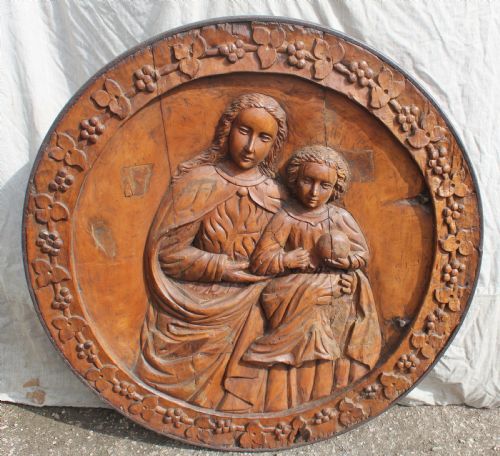
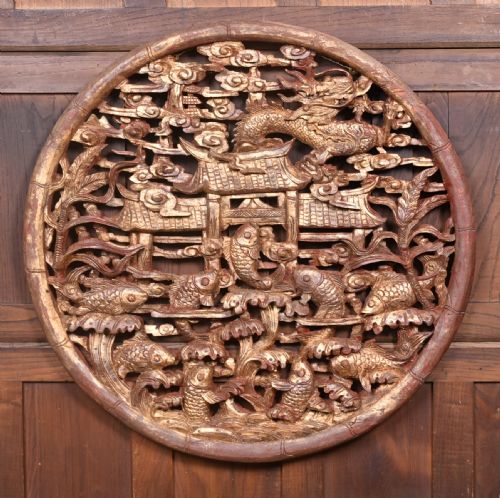
Carved pieces utilised wood, marble, and giltwood, shaped with chisels and gouges. Relief figures stood proud of recessed grounds or were mounted directly onto contrasting wooden panels.
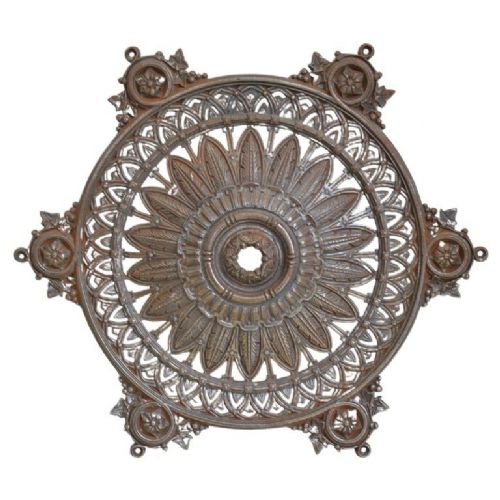
A Victorian ceiling rose includes feathered ivy decoration, proving that even structural ironwork demanded botanical flair.
What varies in quality
The clarity of the casting separates standard pieces from superior examples. Sharp definition in plaster intaglios and crisp edges on bronze profiles reflect the precision of the original mould and the skill of the artisan.
Presentation dictates the standing of a set. Cohesive groupings housed in original giltwood frames or fitted velvet boxes carry greater finish than isolated, later-mounted items.
The reputation of the maker or workshop influences the work. Pieces bearing signatures from established modellers or documented Grand Tour studios demonstrate higher execution.
Giovanni Liberotti·Clement Messier·Smith Beck and Beck·Pietro Bracci·Emile Monier·Gustav Grohe·Thorvalsen Workshop·Coalbrookdale·Mintons
The Antique Relief Medallions Glossary
- Intaglio
- A gem or medallion carved in incuse so that the design sinks below the surface. This technique allows impressions to be stamped into wax or plaster.
- Grand Tour
- A cultural journey undertaken by wealthy young Europeans in the eighteenth and nineteenth centuries. Travellers collected plaster medallions and intaglios as mementos of classical sites.
- Pate-sur-pate
- A ceramic decoration method where wet white slip is painted layer upon layer onto a coloured body. This builds a low relief design before firing.
- Cast iron
- An iron-carbon alloy poured into sand moulds to create heavy plaques. Manufacturers utilised this metal for robust architectural and commemorative wall pieces.
- Giltwood
- Wood that has been coated with a thin layer of gold leaf or gesso and gold paint. It provides ornate framing for cabinet and wall plaques.
Antique Relief Medallions: Frequently Asked Questions
What are Grand Tour medallions?
Grand Tour medallions are small-scale plaster, wax, or glass casts of ancient sculptures and carved gems. Travellers gathered these pieces in sets to document classical art encountered during European journeys.
Craftsmen arranged the casts within fitted wooden boxes or framed velvet panels for display upon return home.
How were bronze portrait plaques displayed?
Bronze portrait plaques were cast to commemorate historical figures, military leaders, and literary icons. They appeared mounted on walls within domestic interiors or integrated into architectural settings.
Heavier metal panels often utilised brass or wooden frames to secure the weight of the plaque.
How do I identify nineteenth-century pieces?
Nineteenth-century pieces often display Neoclassical or Victorian styling, utilising materials like plaster, cast iron, and bronze. Makers occasionally signed the metal edges or noted workshop origins on the reverse.
Framing methods, such as box frames lined with velvet, point toward nineteenth-century mounting traditions.