

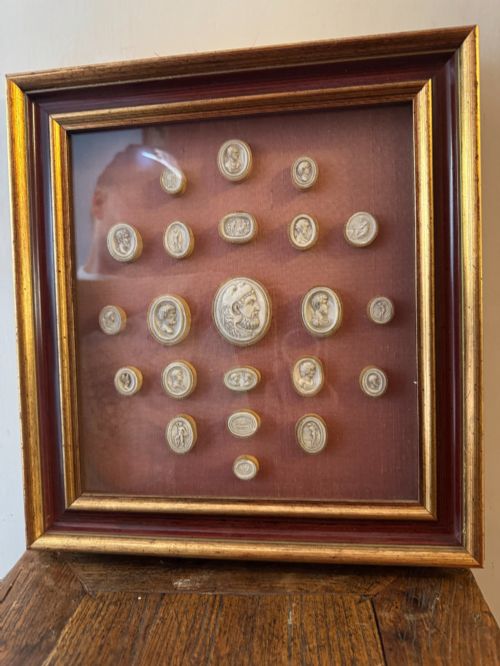


Framed Cameo Wall Art
Framed cameo wall art brings classical portraiture and myth into domestic interiors through miniature reliefs set behind glass in timber frames.
Framed Cameo Wall Art
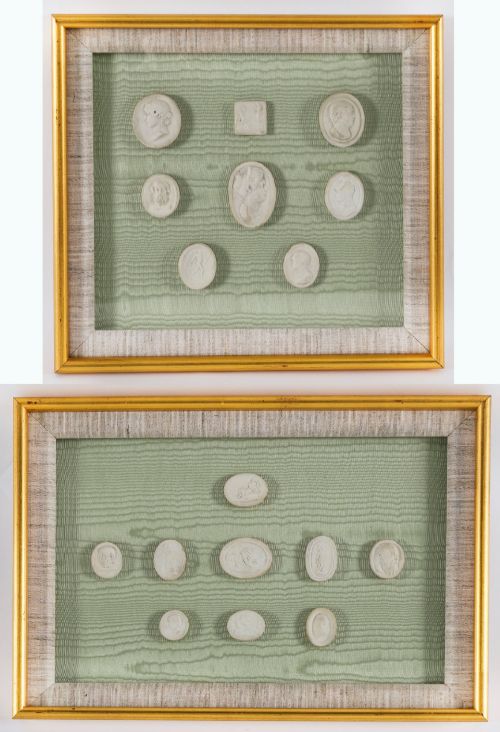
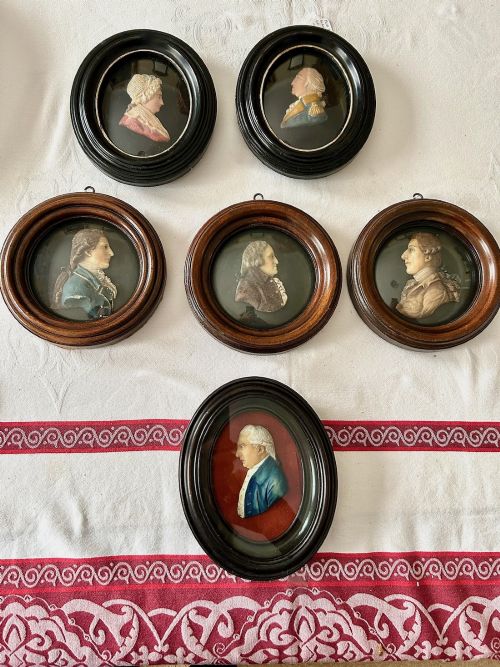
When you search for framed cameo wall art, you are looking at collections of classical intaglios, plaster casts, and wax portraits arranged in timber frames for display on walls. These pieces originate primarily from the nineteenth century, reflecting the tastes of the Grand Tour and the neoclassical revival across periods such as the Regency and Edwardian eras.
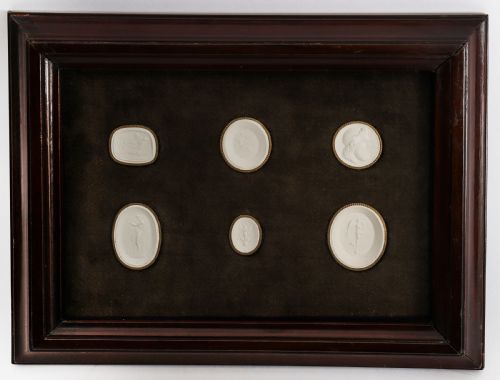
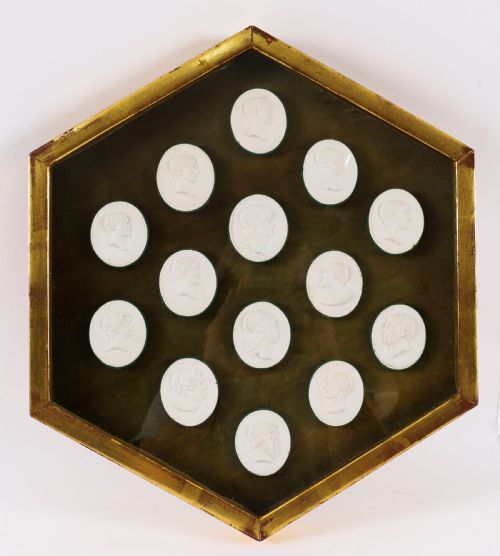
You are most likely to meet multi-piece sets and boxed collections of Italian plaster or gypsum intaglios, alongside wax portraits and pate-sur-pate plaques. They appear in formats ranging from small pairs to large framed panels containing numerous individual classical medallions.
The aesthetic draws directly on antique sculpture and mythology, translating grand architectural motifs into intimate wall decorations. Makers of these framed arrangements mounted casts and reliefs against velvet or fabric backgrounds, often within giltwood or plain wood frames to highlight the crisp detail of the white plaster against dark mounts.
Materials and construction
The manufacturing process relies on plaster, gypsum, or wax poured or pressed into moulds taken from antique carved gems and intaglios. These white relief figures are then mounted carefully upon fabric backings, frequently velvet, to create contrast against the background.
Frames utilise wood, gilt wood, and gold leaf, enclosing the compositions beneath protective glass. Boxed frames provide depth for larger collections of medallions, while flat frames suit single portrait reliefs and pate-sur-pate plaques.
Some nineteenth-century travellers bought thirty-five identical plaster profiles just to ensure their wall display had enough Romans.
Distinctions in quality
The arrangement and symmetry of multi-piece sets dictate the visual success of the wall art. Thoughtful composition, balanced spacing, and high-grade mounting fabrics separate standard decorative groupings from masterworks of nineteenth-century display.
Giovanni Liberotti·Minton
The Framed Cameo Wall Art Glossary
- Intaglio
- A gem or gemstone carved in intaglio has its design incised into the surface so that the impression can be pressed into wax or plaster. These framed collections often display plaster casts taken directly from such carved originals.
- Grand Tour
- A traditional trip of Europe undertaken by upper-class young European men of means for the purpose of education and enjoyment. Souvenirs collected on these journeys formed the basis of many framed plaster cast collections.
- Gypsum
- A soft sulfate mineral used extensively for making plaster casts and fine sculptural reliefs. Plaster and gypsum casts capture minute details from classical antiquities.
- Pate-sur-pate
- A ceramic decorating technique where liquid clay is applied in successive layers to a contrasting background body to build up a low relief. Minton produced notable examples of plaques utilising this method.
- Regency
- An English architectural and decorative style spanning the early nineteenth century. Pieces from this period exhibit strong neoclassical influences and refined classical proportions.
Framed Cameo Wall Art: Frequently Asked Questions
What is framed cameo wall art?
Framed cameo wall art comprises collections of plaster, gypsum, or wax intaglios, portrait reliefs, and ceramic plaques mounted behind glass in timber frames. These pieces were assembled primarily during the nineteenth century as decorative wall displays inspired by classical antiquity.
Collectors prize them for their miniature detail and historical connection to the Grand Tour. They offer a way to bring neoclassical sculpture and mythological subjects into domestic spaces in a compact format.
How were these wall art pieces used?
Grand tourists and nineteenth-century collectors used these framed sets to display their appreciation for classical art and sculpture within their homes. The groupings served as visual cabinets of curiosity for drawing rooms and studies.
Today, they function as focal points on walls, often hung in pairs or larger symmetrical arrangements. Their neutral white reliefs and dark fabric backgrounds allow them to complement both traditional and contemporary interiors.
How do I care for framed wall art?
Conservation requires keeping these pieces away from direct sunlight to prevent the fading of velvet and fabric backgrounds. Plaster and wax reliefs are fragile and sensitive to extreme fluctuations in humidity.
Cleaning should be limited to dusting the exterior wood or giltwood frames with a soft dry cloth. The glass front protects the delicate interior casts from atmospheric dust and direct touch.
How do I identify a nineteenth-century piece?
Nineteenth-century pieces typically display the distinct materials, framing techniques, and mounting styles associated with the Grand Tour and neoclassical revival. The paper backings, old fixings, and timber types of the frames provide primary clues to the period.
The crispness of the plaster casts and the style of the handwritten labels or arrangement methods also point to nineteenth-century workshop practices.