


Plaster Cast Relief Cameos
Plaster cast relief cameos bring classical mythology and portraiture into your home through finely modelled miniature reliefs.
Plaster Cast Relief Cameos
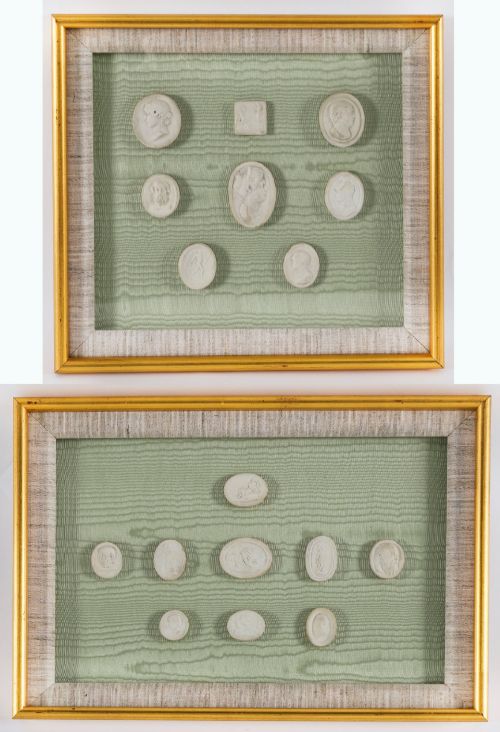
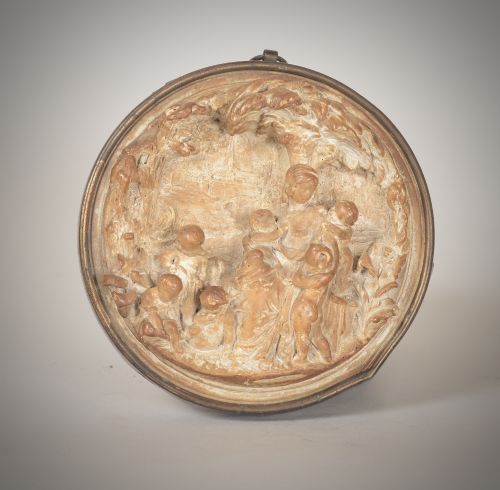
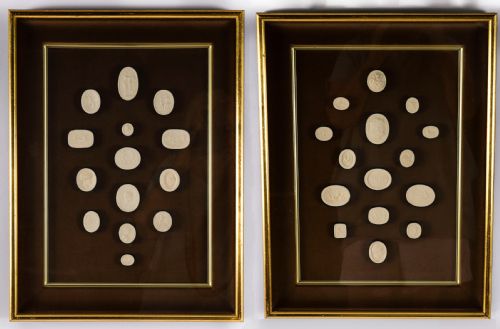
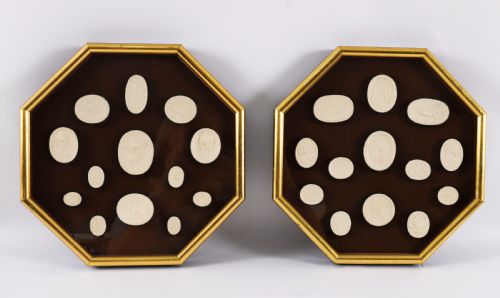
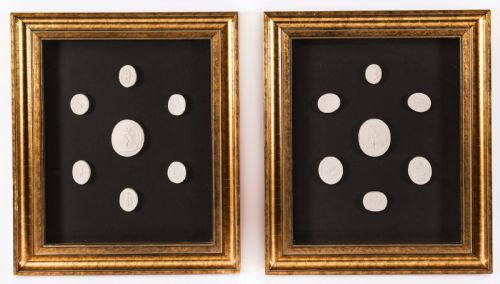
Plaster cast relief cameos capture the spirit of classical antiquity, often collected during the Grand Tour by travellers journeying through Italy. These miniature works reproduce ancient carved gems and sculptures in crisp white plaster, mounted against backgrounds of velvet, fabric, or dark wood.
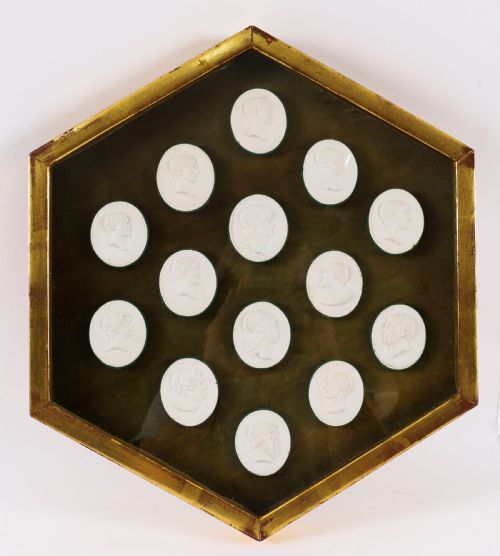
The versions you meet most frequently on this page date from the nineteenth century, including Edwardian arrangements and pieces from around eighteen hundred. They appear as individual wall plaques, pairs, and extensive framed collections containing multiple medallions.
Makers such as Giovanni Liberotti and Pietro Bracci produced these intricate casts, which take the form of wall art, framed intaglios, and decorative objects. Neoclassical styling dominates the selection, reflecting the period fascination with Greek and Roman art.
How they were made
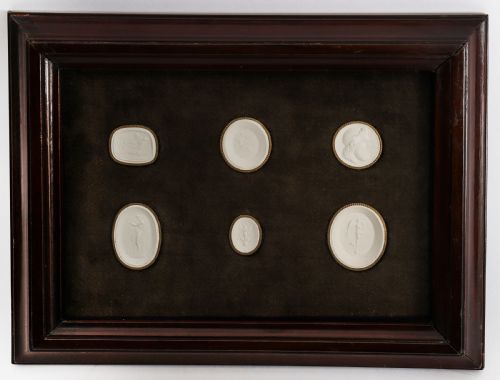
Plaster provides the primary medium for the delicate reliefs, cast to capture every nuance of classical subjects with sharp detail. Artisans set these bright white medallions against contrasting backdrops of dark velvet or fabric to accentuate the modelling.
Frames employ wood, often enhanced with gold leafing as giltwood, giving the displays a formal presentation suitable for domestic walls. Makers housed individual pieces and large sets within bespoke wooden boxes or glazed frames to protect the fragile plaster surfaces.
Travellers returning from Italy transported fragile plaster casts across rough roads, trusting small wooden boxes to preserve their miniature galleries.
What varies in quality
Presentation elevates certain pieces above standard examples, particularly those with harmonious groupings by named makers housed in period giltwood frames. The quality of the mounting materials, from rich velvet backgrounds to secure wooden framing, shapes the overall visual impact.
Giovanni Liberotti·Pietro Bracci
The Plaster Cast Relief Cameos Glossary
- Grand Tour
- A traditional journey through Europe undertaken by upper-class young men in the eighteenth and nineteenth centuries to study arts and antiquities. Travellers collected plaster casts and intaglios as tangible records of their cultural education.
- Intaglio
- A gem or medallion carved into the surface so that the design dips below the plane, differing from a cameo which projects outward. Plaster casts of intaglios reverse this to show the design in relief.
- Giltwood
- Wood that has been treated with gold leaf or a gold-coloured finish for decorative effect. This framing material provides a warm, reflective border around dark-backed wall art.
- Neoclassical
- A style of art and architecture inspired by the classical arts of ancient Greece and Rome. This aesthetic governed the subject matter and composition of nineteenth-century plaster casts.
- Medallion
- A circular or oval plaque used for commemorative or decorative purposes. These form the individual units within framed collections and wall plaques.
Plaster Cast Relief Cameos: Frequently Asked Questions
What are grand tour plaster intaglios?
These are nineteenth-century plaster casts taken from ancient carved gems, collected as souvenirs by travellers on European cultural journeys.
Craftsmen arranged the miniature white reliefs inside protective frames, often grouped in sets against contrasting velvet or fabric backgrounds.
How were these framed pieces displayed?
Owners typically hung them on walls as decorative artwork or placed them in studies to showcase classical knowledge and refined taste.
The inclusion of giltwood frames and wooden shadow boxes allowed delicate plaster medallions to be viewed safely as wall plaques.
How do I date nineteenth century plaster casts?
Dating relies on the framing style, materials, and documented periods associated with specific makers like Giovanni Liberotti or Pietro Bracci.
Nineteenth-century examples often feature Neoclassical motifs, early wood framing techniques, and handwritten labels indicating the Grand Tour origin.
Are these pieces fragile?
Plaster requires careful handling because the material can chip or crack if subjected to impact or excessive moisture.
Glazed frames protect the delicate reliefs from dust and physical contact, making them durable enough for domestic display when hung securely.